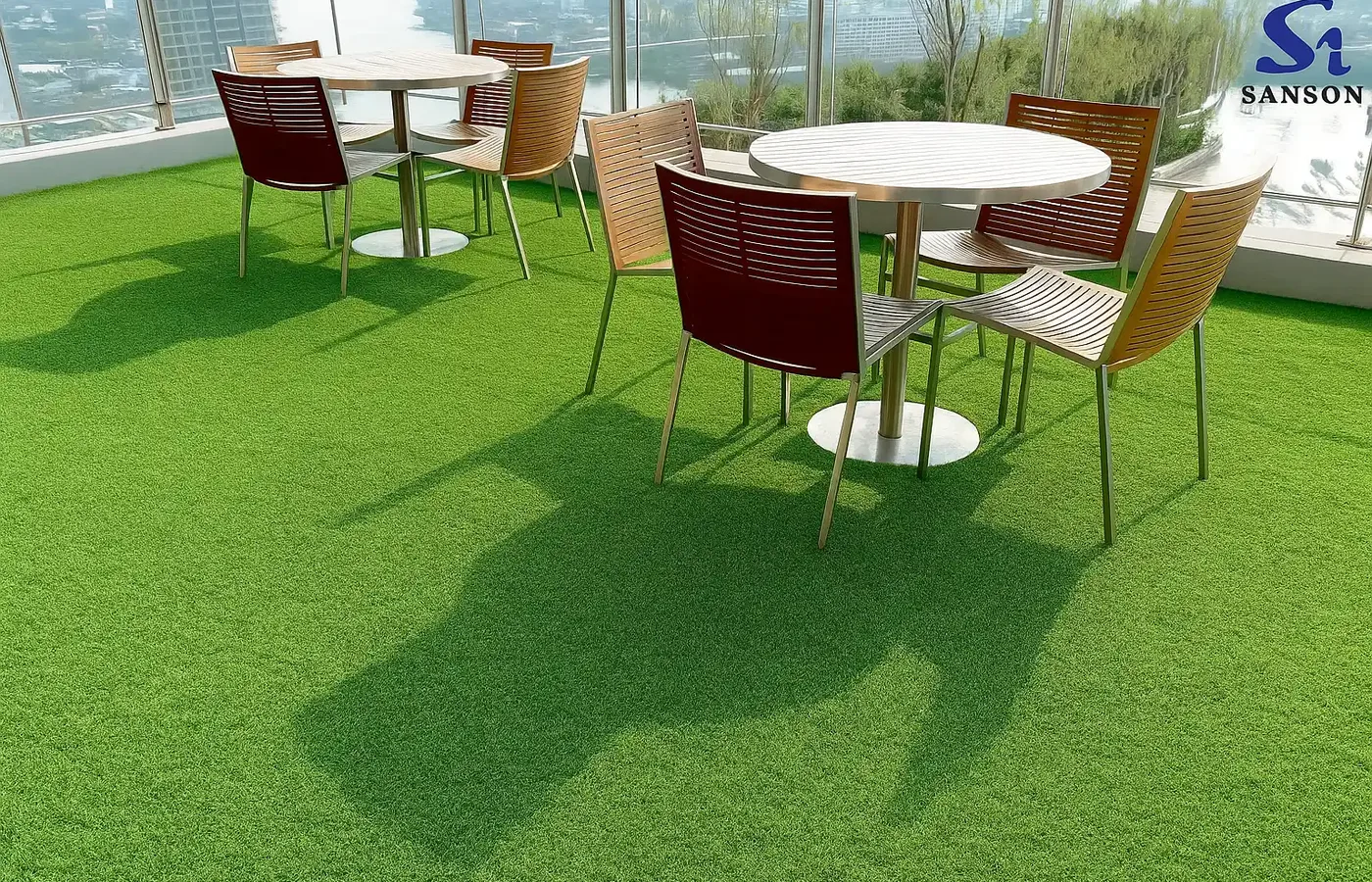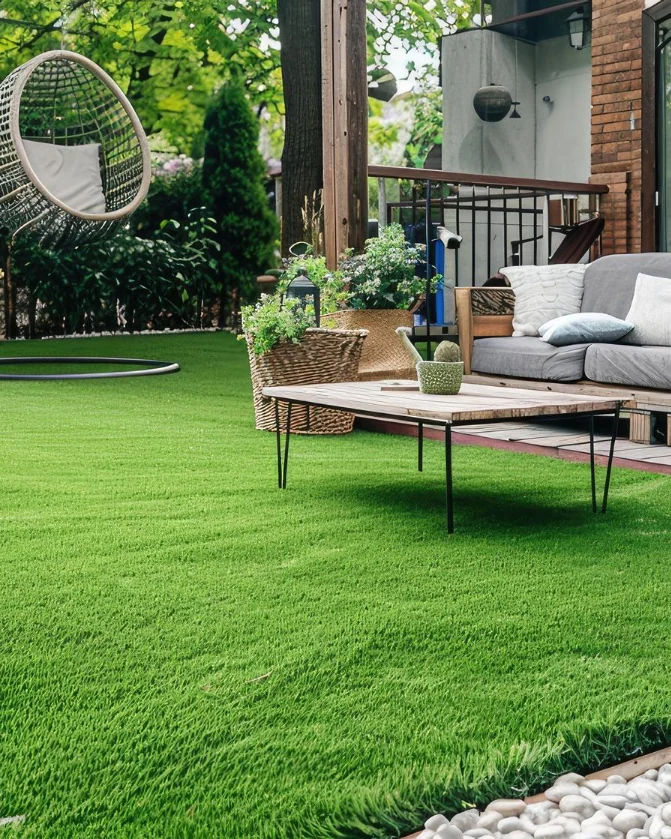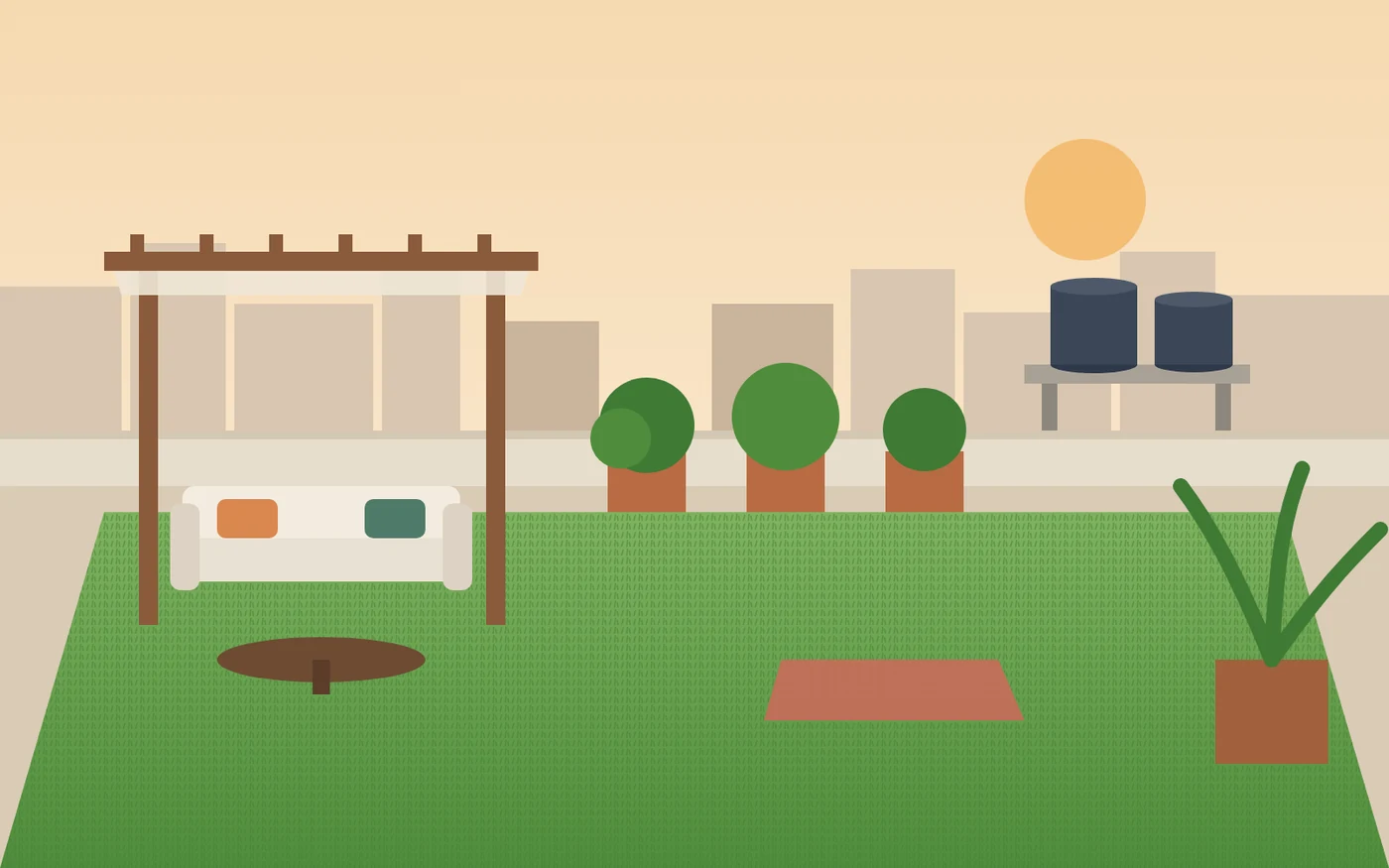
Artificial grass works well on a terrace or rooftop, provided three things are right first: the waterproofing is sound, rainwater can still reach the outlets, and the edges are held down against wind. Get those right and a bare roof becomes a green, usable space with no soil to carry and nothing to water.
The terrace is often the largest open space a city home has, and it is usually the least used: hot by day, littered with water tanks and pipes, and left to the pigeons. A soft green floor changes how it feels more than anything else you can add. A roof is not a balcony, though. It takes the full force of the monsoon and the wind, it keeps the rain out of the rooms below, and it often belongs, in part, to the whole building. Those three facts decide how the grass should go down.
Before you lay grass on a roof
- Fix leaks first: grass laid over a failing roof hides the problem until it reaches the ceiling below.
- Never pierce the waterproofing: no nails, pegs or screws through the roof membrane.
- Keep every rainwater outlet open: cut the grass around it and leave it reachable.
- Secure the perimeter: wind lifts loose edges and joins, not the middle of the lawn.
- Leave service routes clear: tanks, solar panels and outdoor AC units all need access.
Can you put artificial grass on a terrace?
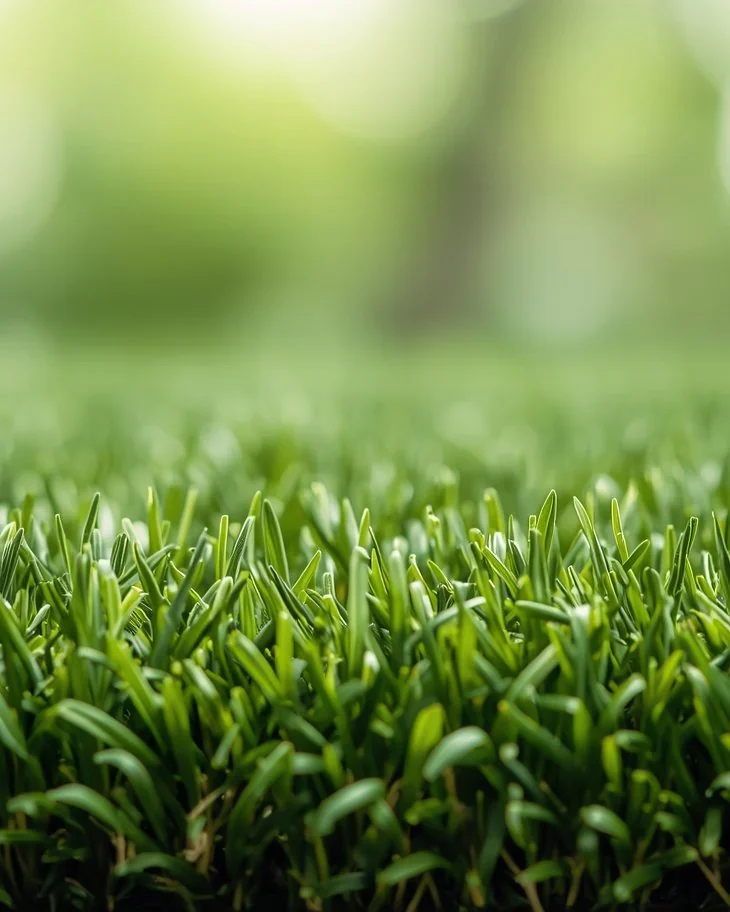
Yes. A flat roof with a sound, level surface is one of the best places for it, because real grass on a roof needs a deep, irrigated soil bed that adds weight and keeps the slab wet. Artificial grass needs neither. GAIA Landscape Grass is made for gardens, terraces and rooftops, and on a large terrace a fuller, lawn-like pile has room to look its best. The balcony article lists every pile height in the range.
Does artificial grass damage terrace waterproofing?
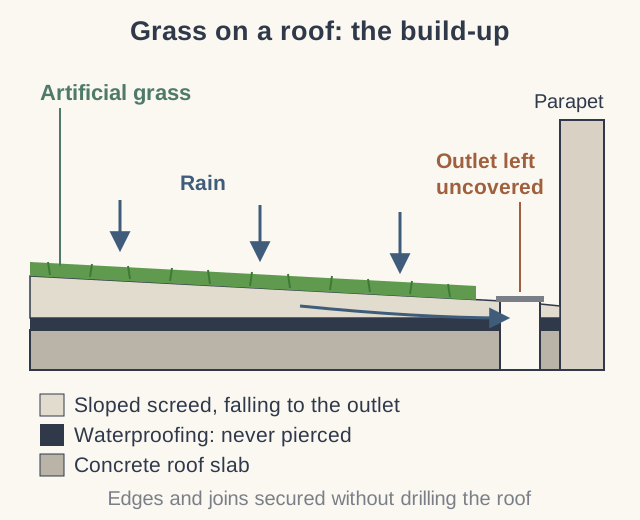
Not by itself. The damage comes from how it is fixed and from what it hides. Fixings driven through the roof into the slab puncture the waterproofing and let water in at every point. Grass laid over cracked screed or a tired membrane hides the cracks until the ceiling below starts to stain. Inspect the roof after a heavy rain, repair anything doubtful, and then lay the grass so it can be lifted again if the waterproofing ever needs work. Our team will specify a fixing method for your roof that leaves the membrane untouched.
How does rainwater drain from a rooftop lawn?
The same way it drained before the grass went down. A roof terrace is built with a slight fall towards its rainwater outlets, and the grass must leave that path intact. In practice that means cutting the grass neatly around each outlet, keeping the outlet grating clear and reachable for cleaning, and not raising the low side of the roof with planters, decks or edging that dam the flow. Before the monsoon, lift a corner near each outlet and check that leaves and silt have not collected underneath.
Will wind lift artificial grass on a roof?
It can, at loose edges and joins, which is why they matter more on a roof than in a garden. Wind speeds increase with height, and gusts curl over the parapet onto the terrace. A lawn whose perimeter and seams are properly secured stays put; a loose corner lets the wind get underneath and peel it back. Heavy planters and fixed furniture along the edges add security, and lightweight cushions and umbrellas should be stored in strong winds.
Rooftop checklist: what to inspect first
- Signs of past leaks on the ceiling of the floor below.
- Cracks, hollow-sounding patches or ponding on the existing roof surface.
- The position of every rainwater outlet, and which way the roof falls towards it.
- Parapet height, and whether children will use the space.
- Water tanks, solar panels, outdoor AC units and pipes, with the routes to reach them.
- Who controls the roof, and whether the housing society needs to approve the work.
- Hours of direct sun, and where shade could go.
How hot does artificial grass get on a rooftop?
Hotter than on a shaded balcony, because a roof catches sun from morning to evening. Plan shade into the design rather than adding it later: a pergola over the seating, a shade sail anchored to the parapet, or tall planters on the west side. For what years of full sun do to the colour of the yarn, see sun and fading.
Ideas for a terrace with artificial grass
- A rooftop lawn across the open centre, framed by a strip of tiles or pebbles along the parapet.
- An outdoor room under a pergola, with grass under the seating and a low table.
- A morning yoga lawn on the east side, where the sun is gentler early in the day.
- A children's corner well away from the parapet, behind a fixed planter or screen.
- A kitchen-garden edge of raised planters on feet, so water runs off rather than soaking the grass.
What to send us
- the terrace measurements, with outlets, tanks and other fixtures marked;
- photographs of the roof surface and the parapet;
- when the waterproofing was last done, and any history of leaks;
- how you plan to use the space.
Terrace grass questions
Is artificial grass heavy for a roof?
No. It weighs far less than a soil lawn, which needs a deep, wet growing bed. Heavy planters, water features and built-in furniture are the items to check with a structural engineer.
Can artificial grass be lifted when the roof needs repairs?
Yes, if it was laid without fixings through the waterproofing. The affected area is rolled back, repaired and relaid.
Do I need permission to lay grass on a shared terrace?
Often, yes. Where the roof is common property, check with the housing society or building management before work starts.
Make the roof a room
Plan artificial grass for your terrace
Send GAIA by Sanson Floorings your terrace measurements and photographs, and we will suggest the grass, the layout and how it should be secured.