Acoustic panels or acoustic foam? Choose PET panels for any room people will see and use every day, and keep foam for studios, booths and treatment hidden behind fabric. Both absorb echo. The difference is in how they look, how they last, how they can be mounted and how they behave in a fire.
The question usually comes up with an echoing room and two very different quotations on the table. Foam looks like the obvious acoustic product because recording studios are always pictured with it. PET panels look more like a wall finish. Since both work on the same principle, the real decision is about where the treatment goes, who will see it and how long it has to keep looking good.
The main differences
- Material: foam is a soft open-cell sponge; a PET panel is a dense, firm board of polyester fibre.
- Mounting: foam is normally glued flat; a PET board can also stand off the wall or hang from a ceiling.
- Finish: foam comes in wedges and pyramids; PET panels take colour, carved grooves and print.
- Life in a busy room: foam marks and crumbles; a PET panel keeps its edges and can be vacuumed.
- Fire: check test documentation for either, and take extra care with untreated foam.
What is the difference between acoustic panels and acoustic foam?
Acoustic foam is usually open-cell polyurethane or melamine, cut into wedges, pyramids or flat sheets and stuck to a surface. Sound enters the open cells and loses energy there. A PET acoustic panel does the same job with fibres instead of cells, but the fibres are bonded into a firm sheet that holds a straight edge, can be cut cleanly and can carry a finish.
GAIA PET acoustic panels are heat-bonded boards of recycled polyester fibre, made without chemical binders, and are GreenPro certified. They are made in four thicknesses between 9 and 24 mm, with plain, grooved or printed faces.
Which absorbs more sound, panels or foam?
It depends on the product, its thickness and how it is mounted, so compare tested NRC figures rather than material names. Mounting can matter as much as material. A GAIA PET panel rated NRC 0.3 when fixed flat reaches NRC 0.85–0.90 once it stands on an air gap. Because a board is rigid, it can sit on battens or hang as a baffle, reaching high absorption behind a slim, finished face. Foam is normally glued flat, so its absorption depends mostly on its own thickness, which is why studio foam is so thick. Our article on air gaps behind acoustic panels explains why the cavity helps so much.
Acoustic panels or foam: which should you use where?
Match the product to the room and to how long it needs to last.
- Offices, restaurants, hotels and homes: PET panels. They read as a wall finish and stay presentable for years.
- Recording booths, rehearsal rooms and treatment behind fabric: foam is a common choice, because appearance matters less and it cuts easily into odd shapes.
- Tall rooms and open-plan floors: PET baffles and clouds hung from the ceiling, coloured or printed to suit the space.
- Corridors, classrooms and receptions, where walls get touched: PET panels, because a firm board shrugs off knocks that would dent foam.
- Brand and feature walls: printed PET panels, where artwork and absorption share one surface.
- Short-term or rented rooms where nothing can be fixed to the wall: rugs, heavy curtains and panels hung from picture rails avoid drilling; glued foam can damage the paint when it comes off.
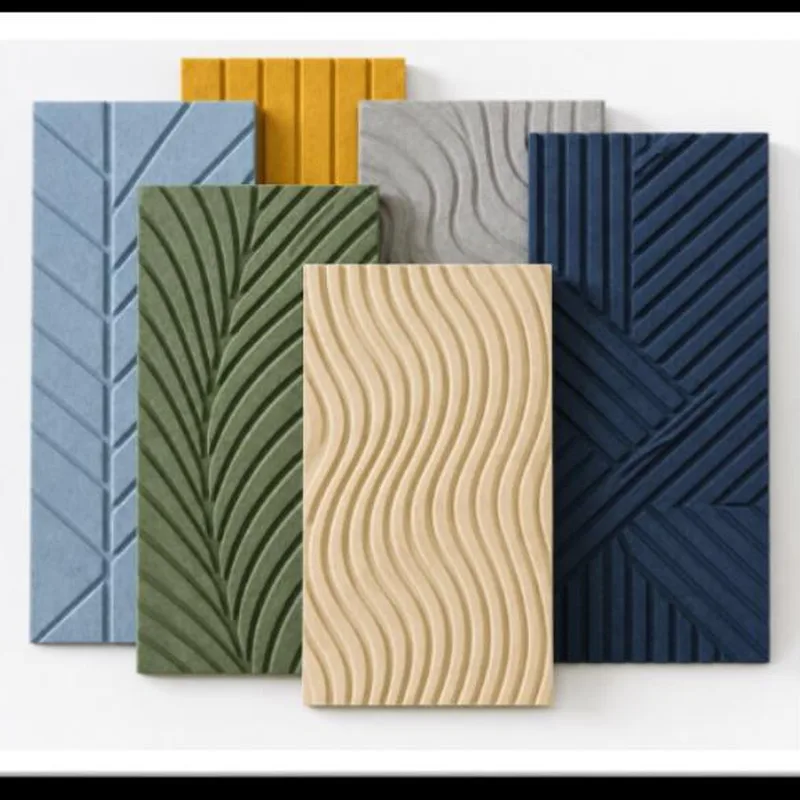
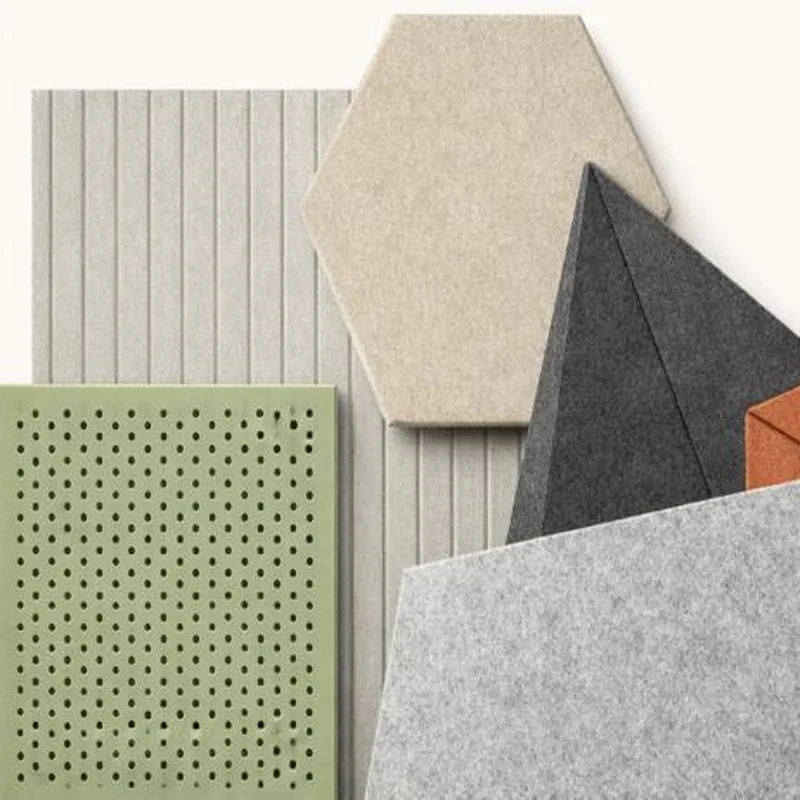

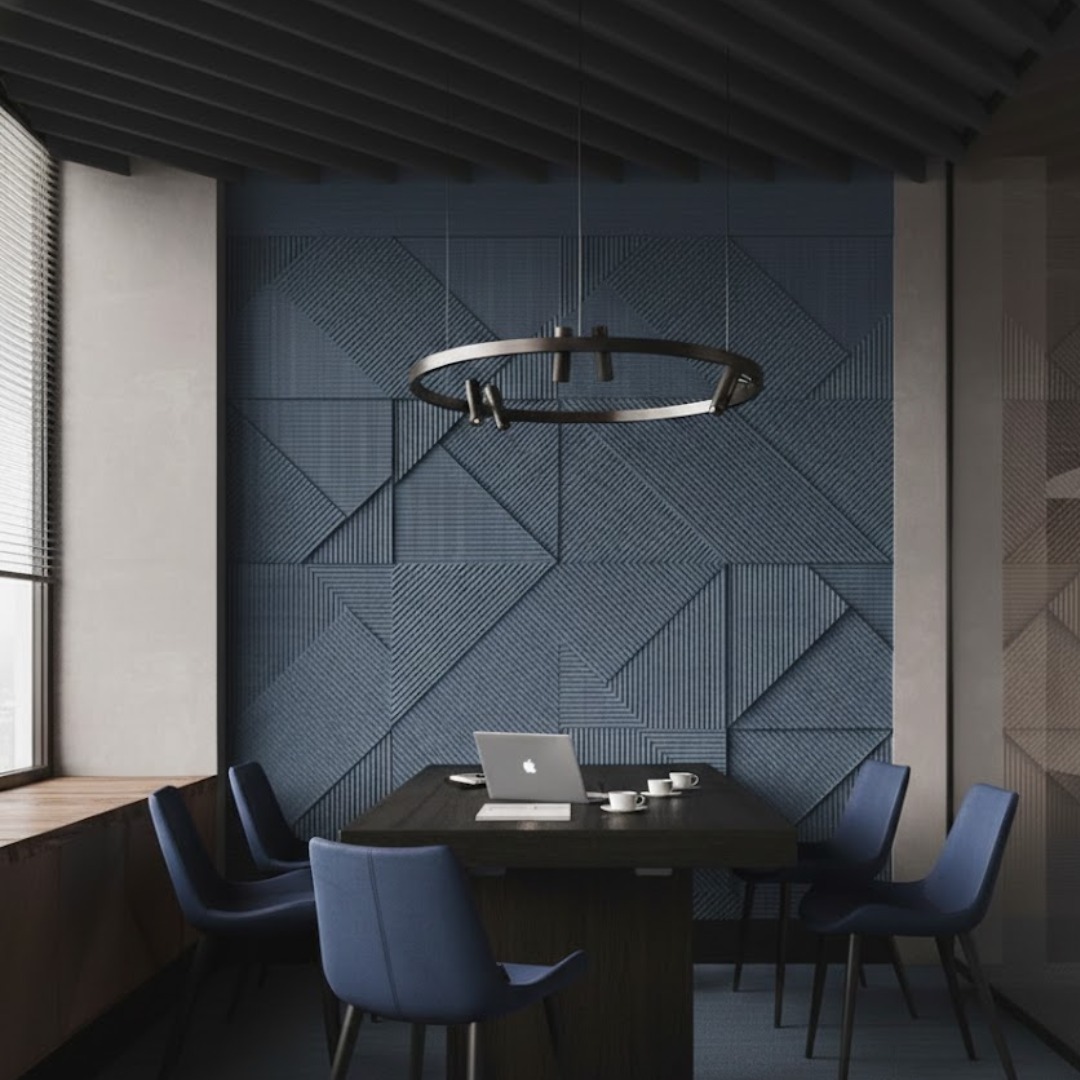
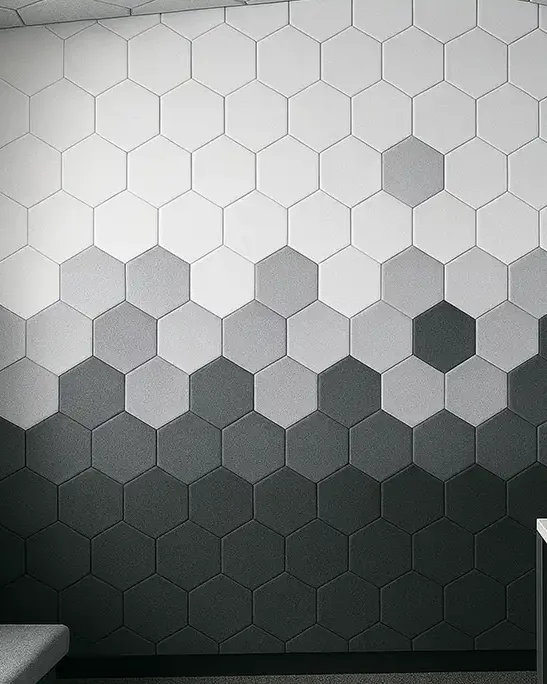
Grooved, shaped, perforated and cut-pattern GAIA PET panels: finishes foam cannot offer, on boards that still absorb sound.
How long do acoustic panels and foam last?
A PET panel is built for a fit-out that runs for years: it keeps its shape, and dust comes off its surface with a vacuum. Exposed foam ages badly. It marks easily, is hard to clean and, as an open-cell material, can discolour and crumble at the surface over time, faster in sunlight. Hidden behind fabric or in a studio that hardly matters; on a restaurant or reception wall it matters a great deal.
Is acoustic foam a fire risk?
It can be. Untreated polyurethane foam ignites easily and has fuelled fatal venue fires, as the investigation of the 2003 Station nightclub fire found. Whatever you choose for a commercial interior, foam or panels, ask for fire test documentation for that exact product and check it against the requirements of the building with whoever is responsible for fire safety on the project.
Are acoustic panels worth it?
Where people spend hours talking, listening or concentrating, yes. Echo makes conversation tiring, calls unclear and restaurants exhausting, and it does not improve with time. A panel that doubles as the wall finish is installed once rather than replaced every few years, and a modest number in the right places changes how a room feels. Placement is as important as product, which is why our guide to treating an echoing room starts with where sound travels.
What we need to recommend panels
- the room's dimensions and ceiling height;
- photographs of the walls you are thinking of treating;
- how the room is used, and what the noise sounds like;
- any artwork or brand colours the panels should follow.
Our team will recommend thickness, mounting and finish across GAIA's acoustic panels. For artwork walls, see how to light printed panels.
Panels and foam: quick answers
Are PET acoustic panels better than foam?
For finished interiors, usually yes, because they look like a wall finish, last longer in busy rooms and can stand off the wall. Foam remains a reasonable choice for studios and hidden treatment.
Do thicker acoustic panels absorb more?
Generally yes, especially lower-pitched sound. Standing a panel off the wall has a similar effect, so a slimmer panel on an air gap can outperform a thicker one fixed flat.
Can you paint acoustic foam?
It is best avoided. Paint seals the open cells that let sound in, so painted foam absorbs less. If colour matters, a panel made in that colour is the better route.
Treatment made to be seen
Choose panels for your room
Tell GAIA by Sanson Floorings the room size and how it is used, with a few photographs, and we will recommend the right PET panels, mounting and finish.