Printed Acoustic Panels: How to Light a Feature Wall
Printed acoustic panels put artwork on a surface that also absorbs sound. What they are, where they work, and how to plan the artwork, fixing and lighting.
GAIA by Sanson Floorings · New Delhi · · Updated
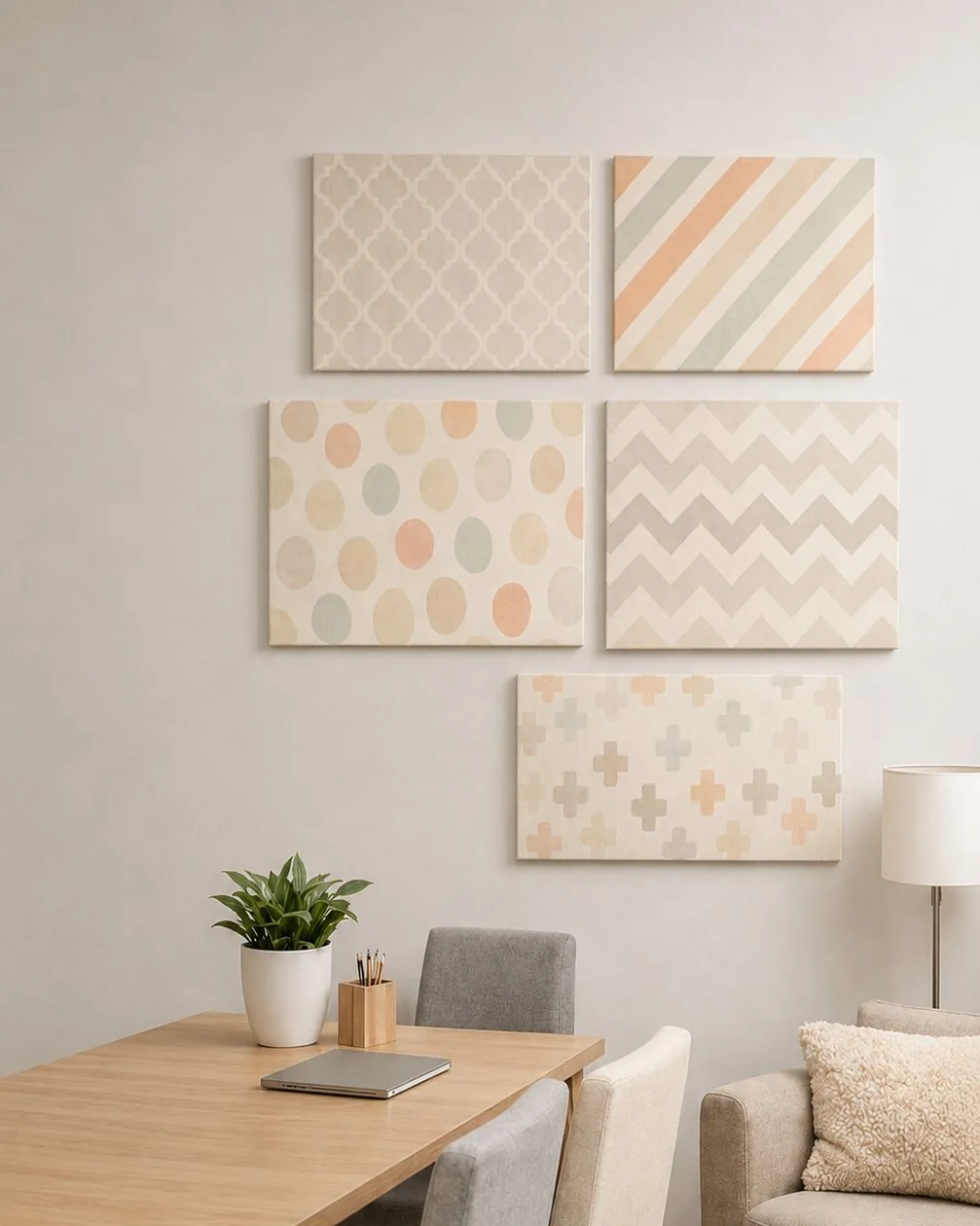
Printed acoustic panels are sound-absorbing PET boards with a pattern, illustration or logo printed onto the face, so one surface decorates the wall and cuts echo at the same time. GAIA makes them in India in 9, 12, 18 and 24 mm thicknesses on 1220 × 2440 mm sheets. Fixed with an air gap behind them, GAIA PET acoustic panels reach NRC 0.85–0.90.
They are usually specified for one of two reasons. A reception, café or meeting room sounds harsh and needs acoustic treatment, and nobody wants a wall of plain grey felt. Or a brand wall or mural is planned, and the room would benefit if it also absorbed sound. Printed panels answer both, provided the artwork, the fixing and the lighting are planned together.
Printed acoustic panels at a glance
- Material: recycled polyester (PET) fibres, bonded with heat rather than chemicals.
- Thickness: 9, 12, 18 or 24 mm.
- Standard sheet: 1220 × 2440 mm, at 1650 GSM in 9 mm and 2250 GSM in 12 mm; other GSM options are made to order.
- Print: UV printing onto the panel face, from a wide range of patterns or your own artwork.
- Sound absorption: NRC 0.3 fixed flat to the wall, NRC 0.85–0.90 with an air gap.
- Certification and origin: GreenPro certified, made at our Hyderabad facility.
How do printed acoustic panels reduce noise?
They absorb sound instead of reflecting it. A PET panel is a porous absorber: as sound waves move air through its fibres, part of that energy is lost as a tiny amount of heat, so less sound bounces back into the room.
How much a surface absorbs is measured as NRC, the noise reduction coefficient, where 0 reflects everything and 1 absorbs everything. The NRC values for GAIA PET panels are certified to ASTM C423, the laboratory method for measuring sound absorption. NRC 0.3 means about 30 per cent of the sound reaching the panel is absorbed; NRC 0.85–0.90 means 85 to 90 per cent.
Panels reduce echo inside a room. They do not soundproof it: stopping sound travelling between rooms depends on the walls, doors and ceiling themselves, not on what is fixed to their surface.
Where do printed acoustic panels work best?
Anywhere a room has hard, parallel surfaces and a wall that deserves more than paint:
- Receptions and brand walls: a logo, mural or brand pattern that also softens a lobby full of glass and stone.
- Meeting rooms: echo makes video calls tiring; a printed panel on the wall opposite the screen breaks up hard reflections without looking like acoustic treatment.
- Cafés and restaurants: a feature wall that keeps conversation at the table as the room fills.
- Homes: children's rooms, media rooms and double-height living spaces where sound carries.
Can you print your own artwork or logo?
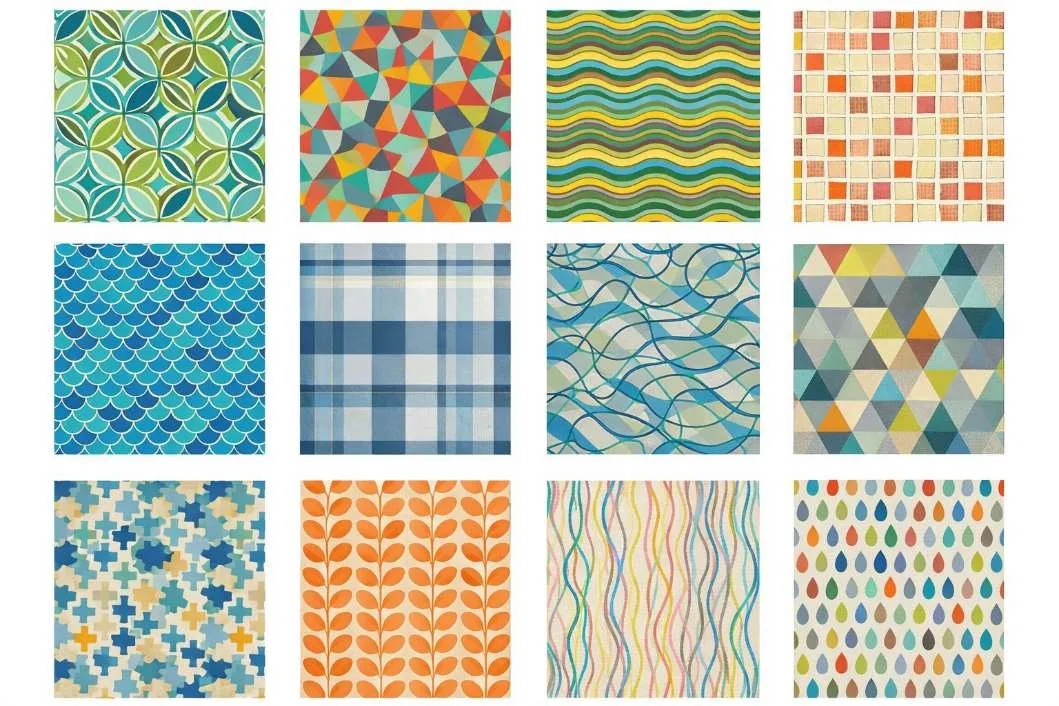
Yes. Every printed panel can carry a GAIA pattern, an adapted version of one, or artwork you supply. Three decisions make the difference between a wall that looks printed and one that looks designed.
Plan the joints. A continuous mural wider than one 1220 × 2440 mm sheet will cross a joint. Decide where the joints fall before the artwork is signed off, so that faces, lettering and logos do not break across them.
Check colour on a real sample. Ink on a fibrous acoustic surface behaves differently from ink on paper or vinyl. Compare brand colours on a printed sample against the brand's colour standards before production, and settle file resolution and format at the same stage, since both depend on the final print size.
Choose the pattern scale for the viewing distance. A fine plaid that looks crisp at arm's length can blur into a flat tone from across an open office. Large, simple shapes hold up better at a distance.
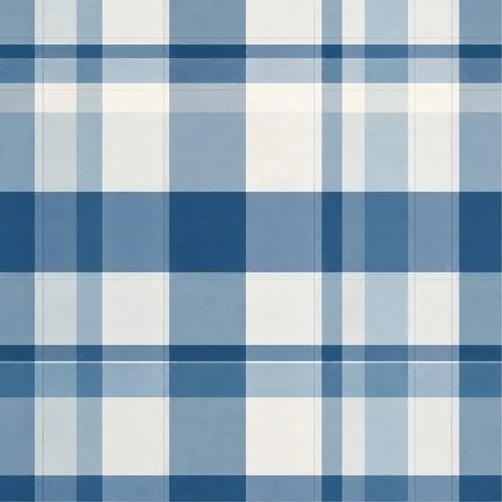

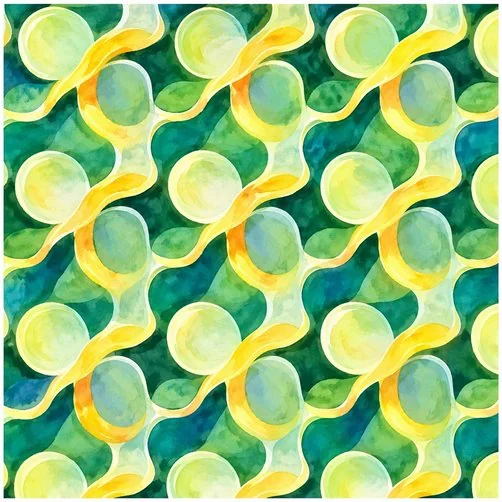
Three GAIA printed designs at very different pattern scales. Judge each one from the distance people will actually see it.
Direct fix or air gap: how are they installed?
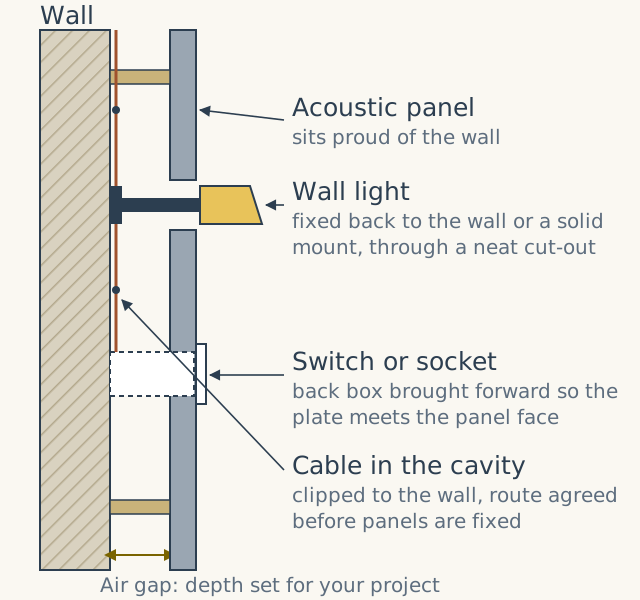
Fixing flat to the wall is the simplest installation and gives NRC 0.3. Standing the panel off the wall on an air gap lifts the same panel to NRC 0.85–0.90, because it places the fibres where sound moves air most freely. If the room genuinely needs acoustic help, the air gap is usually worth its extra depth.
That depth has to be planned before any sheet is cut. Wall lights are best fixed back to the wall and brought through a neat cut-out, never hung on the panel face. Switches and sockets need their back boxes brought forward to meet the new surface. Cables can run in the cavity if they are clipped to the wall and the routes agreed in advance. Our team will specify the gap depth and fixing for your room.
How should a printed acoustic wall be lit?
With a wall washer. Wall washing sets fittings back from the wall to spread light evenly from top to bottom, so colour and pattern read as printed. Recessed wall washers, a track with wide-beam spots or a concealed linear fitting in the ceiling all work; what matters is even coverage without a hot band below the ceiling.
Avoid grazing a flat print. Grazing puts the light close to the wall so it rakes across the surface, which flatters grooved panels but picks out joints and fixings on a printed one. On a panel mounted proud of the wall, a downlight too close to it also throws a shadow along each lower edge. Specify fittings with good colour rendering for the feature wall, and look at a printed sample under the real fittings, in daylight and after dark, before approving the artwork.
Printed, grooved or plain: which acoustic panel should you choose?
- Choose printed when the wall should carry an image, a pattern or a brand.
- Choose grooved when texture matters more than image: V-shaped carved grooves turn a flat panel into relief, and they respond well to grazing light.
- Choose plain PET panels when the panel should recede into the room, in a colour matched to the scheme.
- Look overhead when the walls are glass or already busy: ceiling baffles and clouds treat echo from above.
All of these sit within the GAIA acoustic panel range.
What to send us for a printed panel quote
- the wall elevation with dimensions, doors, windows and columns;
- the artwork, pattern reference or brand files;
- switches, sockets and light fittings on or near the wall;
- what the room is used for, and how much the acoustics matter.
With that, our team will advise on thickness, layout, joints and fixing for your wall.
Questions that come up often
Are printed acoustic panels soundproof?
No. Printed acoustic panels absorb sound inside a room and reduce echo. Stopping sound from passing between rooms depends on the construction of the walls, doors and ceiling.
Can I print my company logo on acoustic panels?
Yes. GAIA printed acoustic panels can carry your own artwork or logo. Plan where panel joints fall and approve colours on a printed sample before production.
What sizes do printed acoustic panels come in?
GAIA printed acoustic panels come in 9, 12, 18 and 24 mm thicknesses. The standard sheet is 1220 × 2440 mm.
Art that absorbs sound
Plan a printed acoustic wall
Send GAIA by Sanson Floorings your wall elevation and artwork, and we will help you plan the panel thickness, joints, fixing and lighting for a printed acoustic wall.