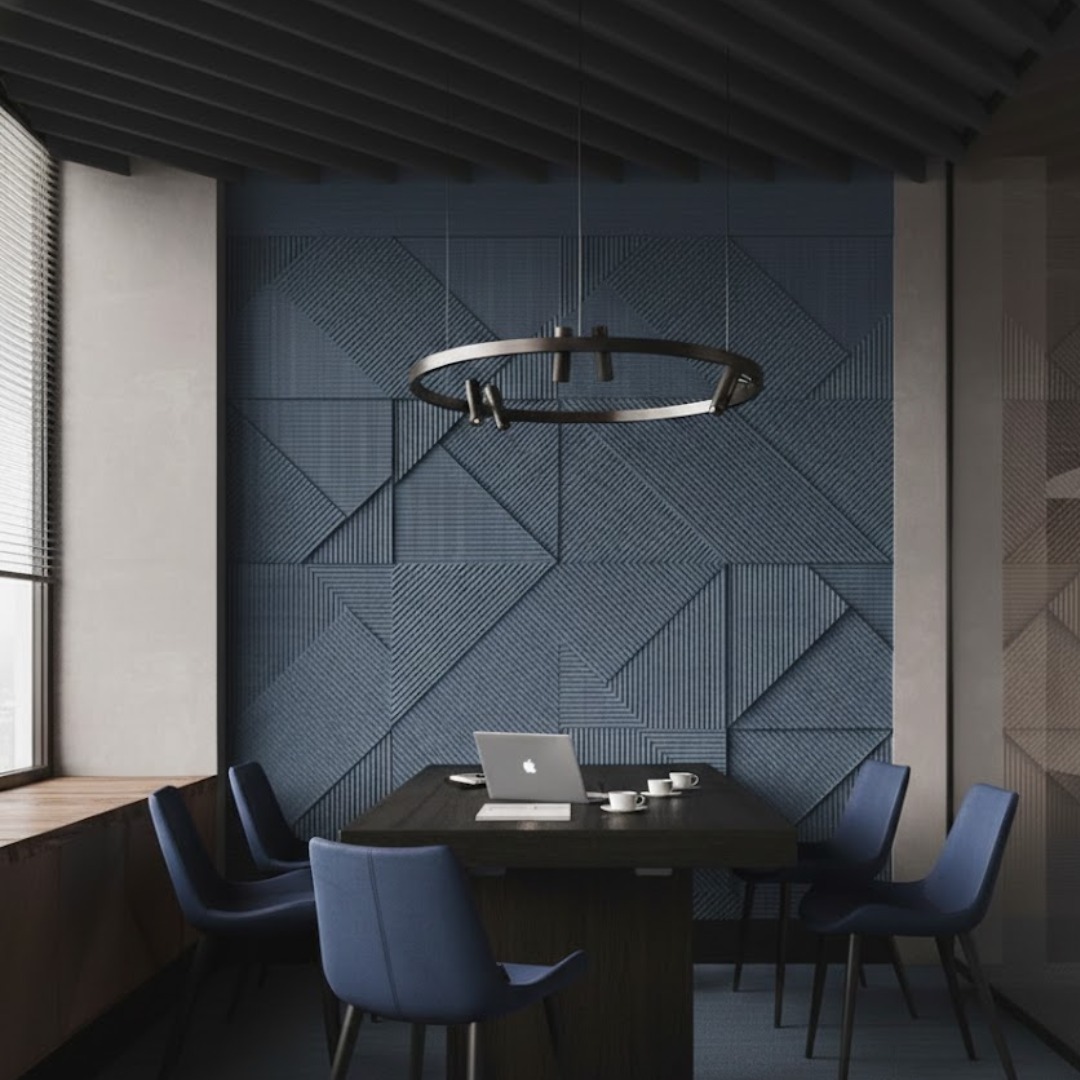
To reduce echo in a room, give sound fewer hard surfaces to bounce between. Start with the two walls that face each other, add soft absorption overhead if the ceiling is high, then soften the floor. A handful of well-placed absorbent surfaces, spread around the room, usually fixes a room that rings.
Echo tends to arrive with the finish everyone wanted: a stone floor, a wall of glass, crisp plaster and very little upholstery. The room looks right and sounds wrong. Calls pick up a hollow ring, two conversations feel like six, and people raise their voices without noticing. None of this needs building work to put right. It needs absorption in the places where sound actually travels, and a clear order in which to add it.
Five rules for a quieter room
- Facing walls come first. Sound trapped between two parallel hard walls produces the sharpest ring.
- High ceilings need treatment overhead. In a double-height room, much of the reverberation happens above head height.
- Spread absorption out. Several smaller areas on different surfaces beat one large block on a single wall.
- Keep some panels at head height. That is where voices travel and where the first reflections land.
- Finish with the floor. A rug, carpet tiles or broadloom deals with the surface every other treatment misses.
What causes echo in a room?
Hard surfaces return almost all the sound that hits them, so it arrives at your ears again a fraction of a second after the original. In ordinary rooms that shows up in two forms. Reverberation is the general wash that lingers after someone stops talking; it is why an empty hall sounds boomy and a busy café sounds tiring. Flutter echo is a fast, buzzing repeat between two parallel hard surfaces, such as bare side walls or a polished floor beneath a flat ceiling.
Three things make both worse: hard finishes, parallel surfaces and a large volume of air. A small bedroom full of fabric rarely rings. A new living room with marble underfoot, floor-to-ceiling glass and a double-height void almost always does.
How can you tell if a room has an echo problem?
A two-minute listening test is enough for most rooms, and it also tells you where to begin. Wait until the room is quiet, stand near the middle and go through these checks.
- Single clap. A metallic buzz after your hands stop means flutter echo. Turn to face each pair of walls and clap again to find the pair responsible.
- Normal speech. If your own voice sounds boxy or louder than expected, the room is reverberant.
- Video call. When colleagues keep asking you to repeat yourself, or comment on the room, reflections are reaching the microphone.
- Surface count. A hard floor, a hard ceiling and two or more bare walls together almost guarantee a problem.
- Build-up. A room that grows steadily louder as it fills is one where people are talking over their own reflections.
If two or more apply, the room will benefit from absorption. Begin with whichever pair of walls rang loudest when you clapped.
Where should you treat a room first?
Treat the surfaces sound reaches first and most often: the walls facing each other at about head height, then the ceiling if the room is tall, then the floor. The diagram shows that order.
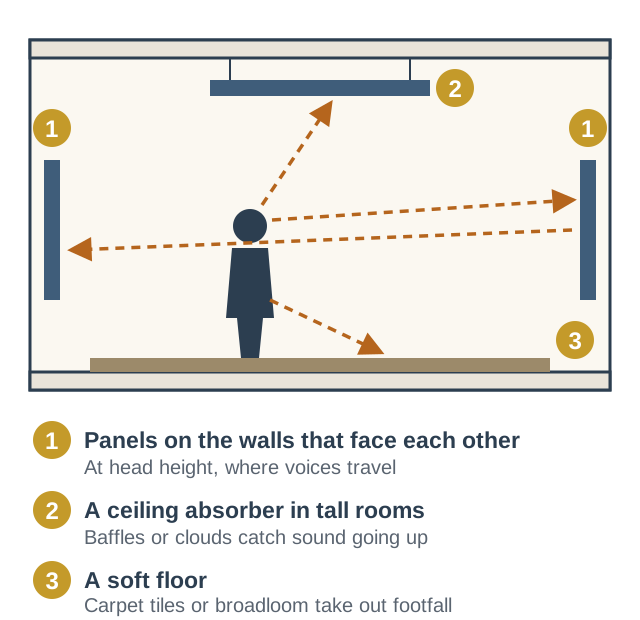
Each absorbent surface takes energy out of the sound that strikes it, so every later bounce is weaker than the last. That is why spreading treatment works: two or three panels on each of the facing walls interrupt the back-and-forth path far better than the same area grouped together on one side. In meeting rooms, the wall opposite the screen and the wall behind the main seats usually matter most, because that is where voices are aimed.
What materials absorb echo?
Porous materials do the work: sound that enters them loses energy among the fibres instead of bouncing straight back. Purpose-made acoustic panels are the most efficient for the wall area they occupy. Carpet, heavy curtains, upholstered seating and full bookshelves help in proportion to how much of the room they cover. Glass, tile, stone, plaster and lacquered timber contribute almost nothing.
Absorption is measured as a noise reduction coefficient (NRC), on a scale from 0 for a surface that reflects everything to about 1 for one that absorbs almost everything. Laboratories measure it to ASTM C423. How a panel is fixed changes its rating considerably, which our article on acoustic panel air gaps explains with GAIA's tested figures.
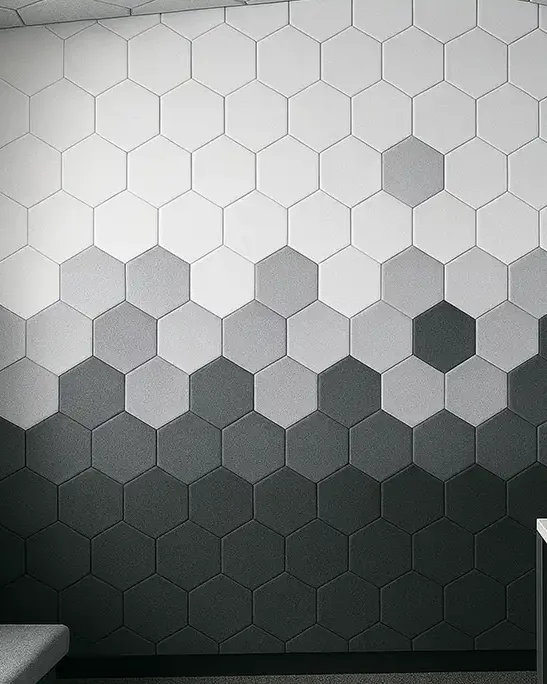
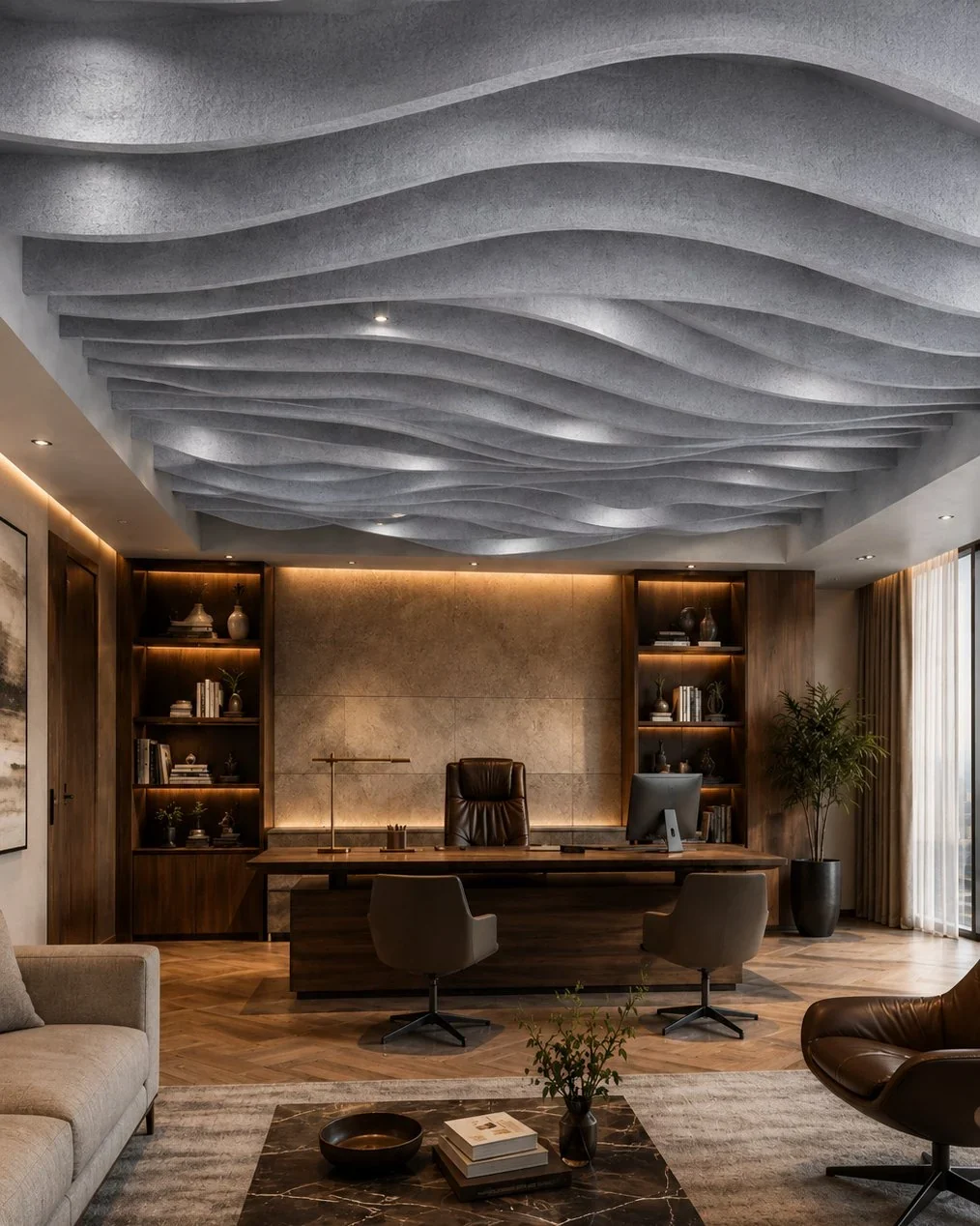
Appearance matters too, because acoustic treatment in a home, office or restaurant is on show every day. GAIA PET panels come as plain colours, carved grooves and printed artwork, so a wall can be quiet and still look finished. The GAIA acoustic range also includes baffles and clouds for ceilings.


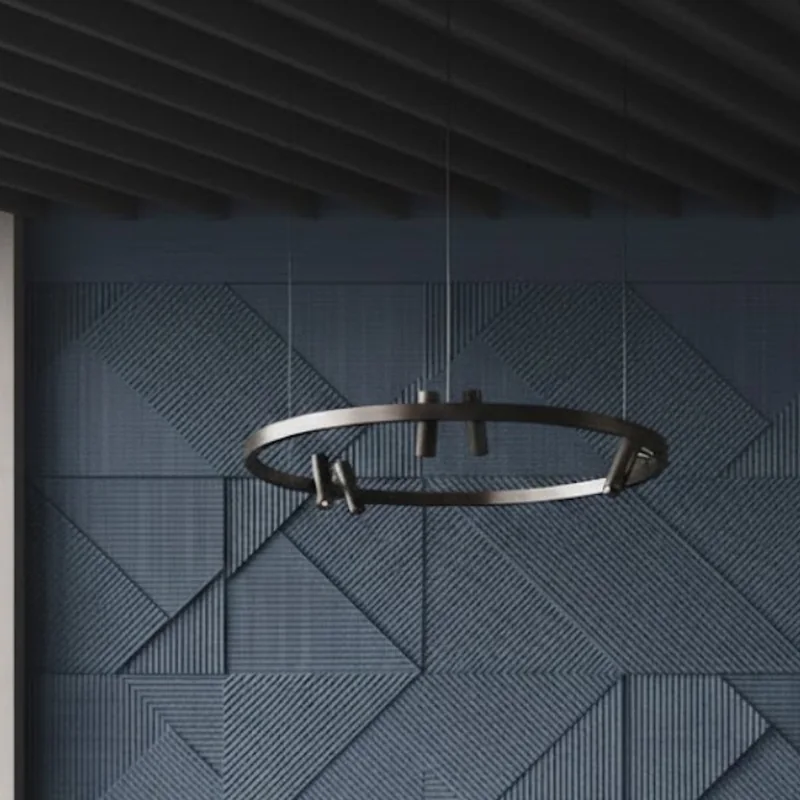
GAIA PET acoustic panel designs styled in a lounge, a dining nook and a meeting room, on the walls people talk towards.
Do carpets reduce echo?
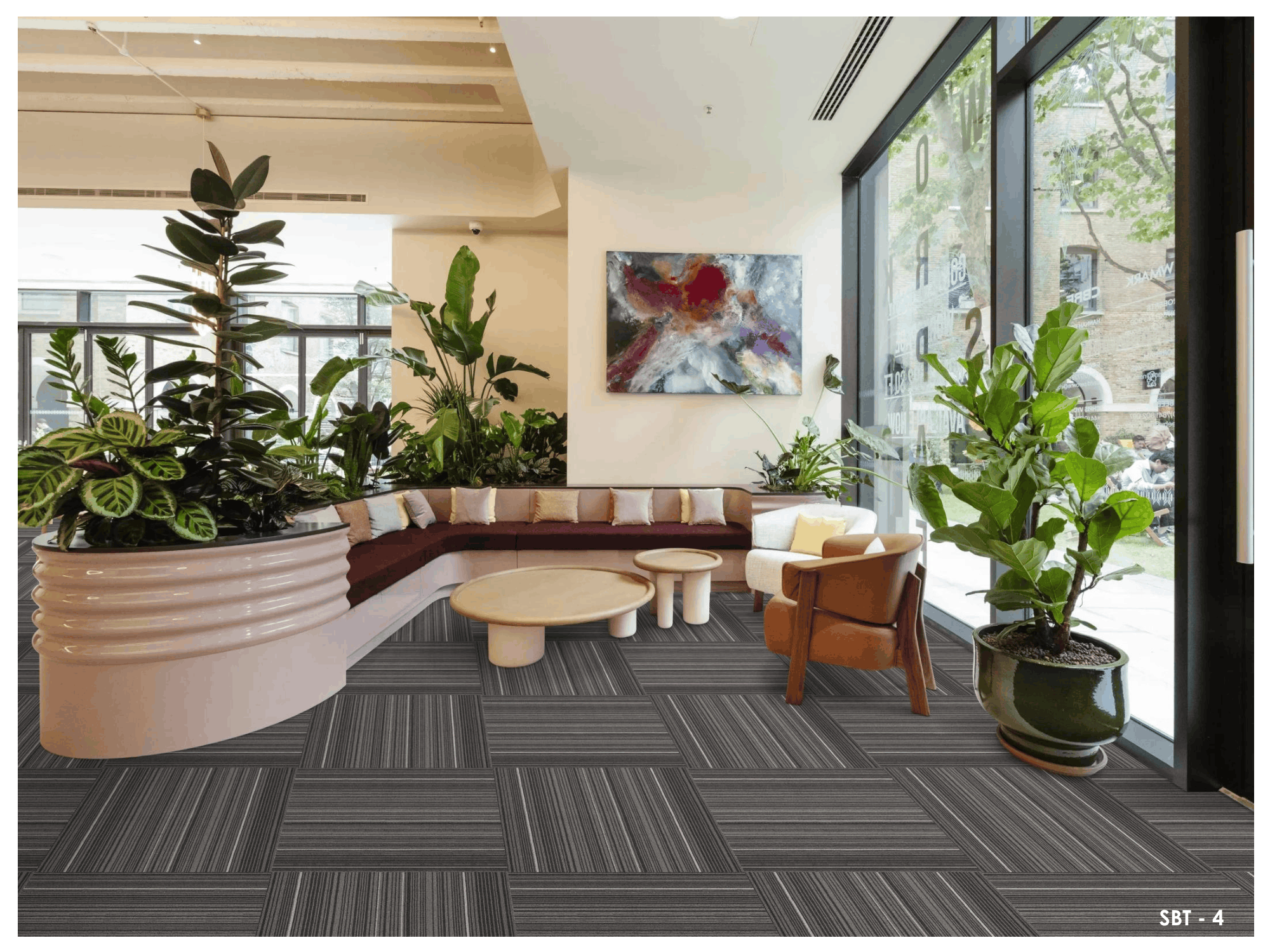
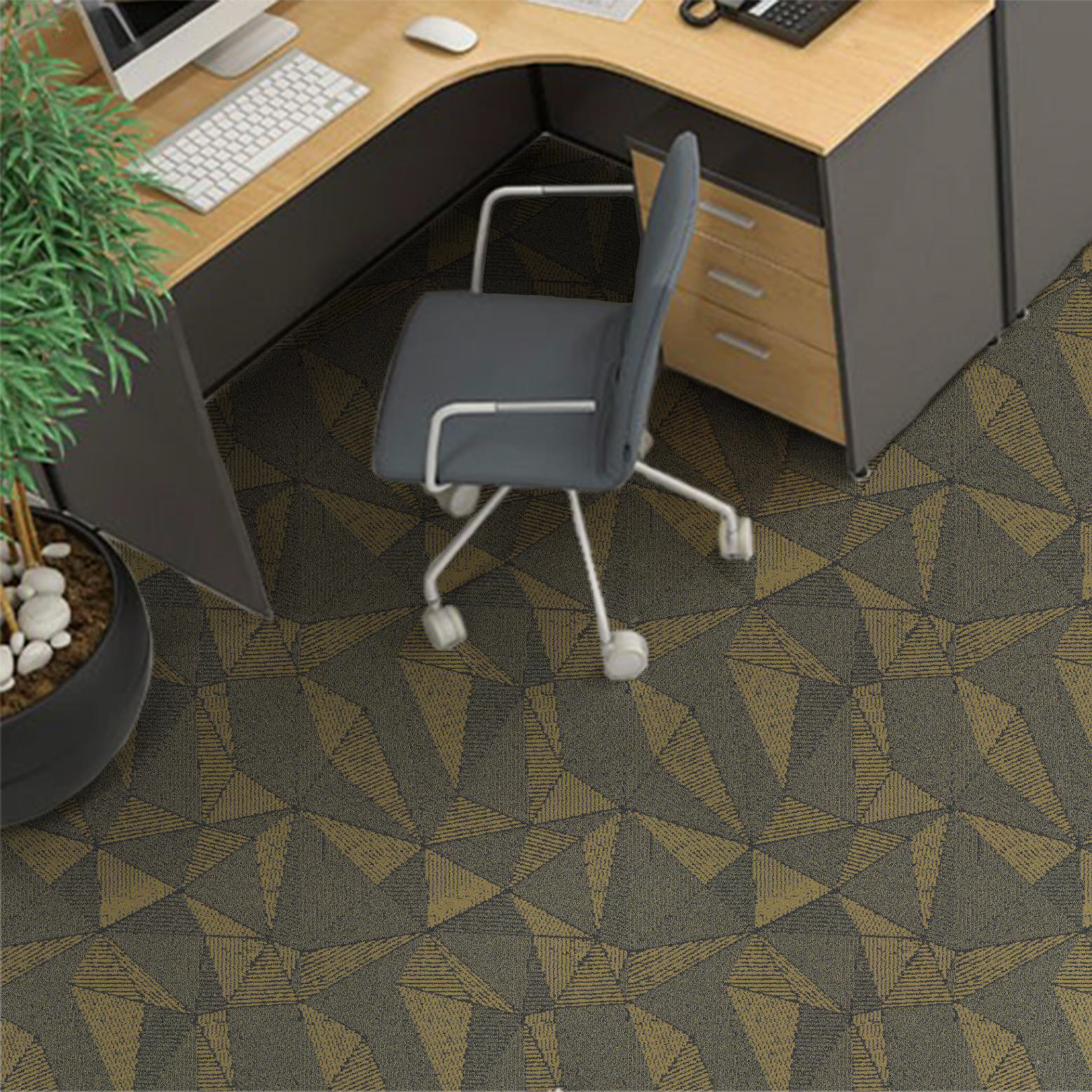
Yes, though a floor alone rarely fixes a room. Carpet stops the floor acting as a mirror for sound, which matters most under dining tables, in long corridors and in rooms where people sit close to the ground. It cannot reach sound that bounces between the walls or up to the ceiling, so in a tall or glass-walled space it is one part of the answer rather than all of it.
The format depends on the room. GAIA carpet tiles suit offices, hotels and homes. Ballrooms and hotel corridors that call for one continuous finish suit GAIA broadloom carpet, laid wall to wall with only a few seams.

How do you reduce echo in a large hall or a double-height room?
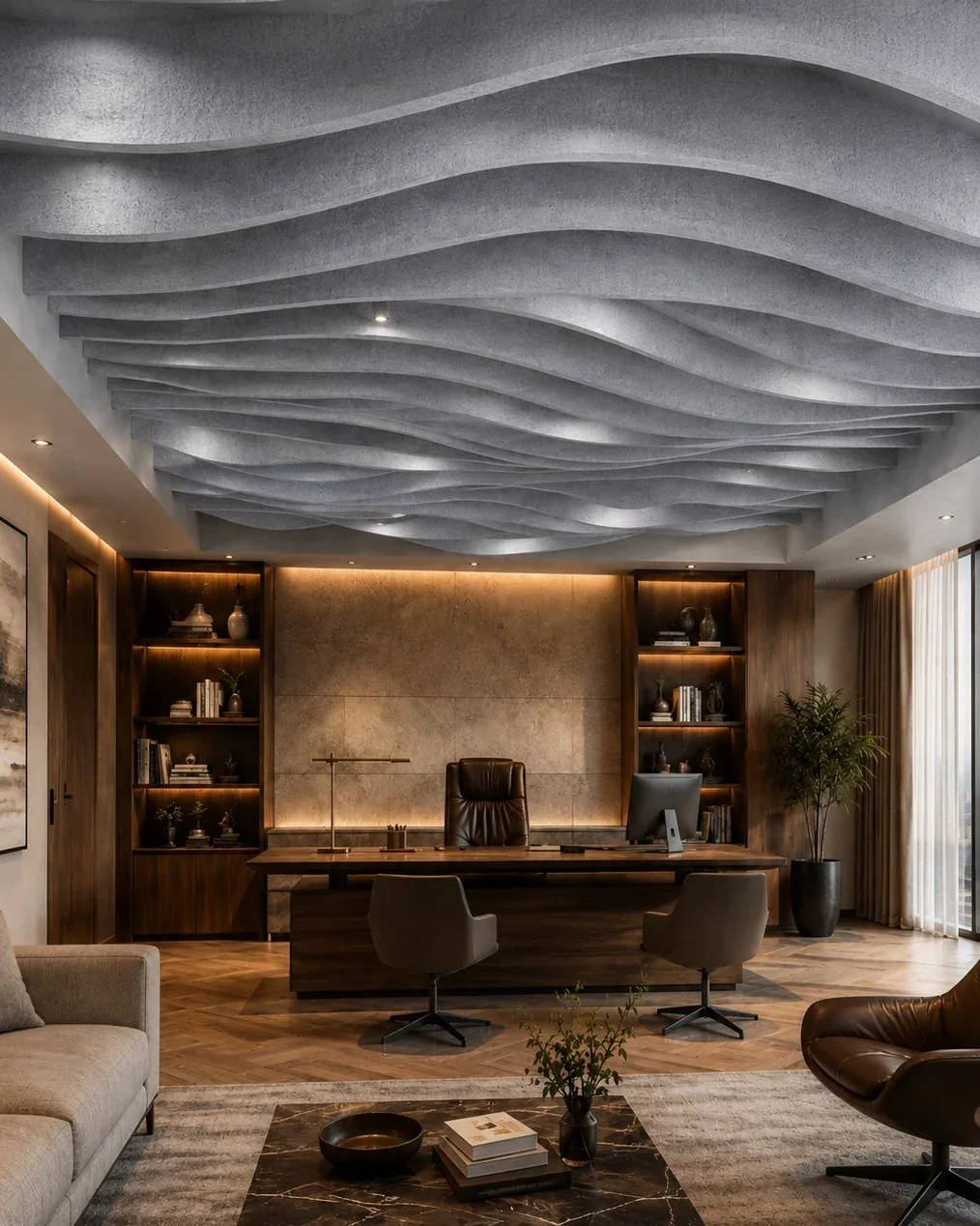
Work overhead first. In a big volume, sound spends much of its time travelling up and back down, out of reach of anything fixed to the walls. Absorbers hung from the ceiling intercept it without lowering the whole ceiling, and they leave walls free for windows, art and doors. Once the ceiling is treated, add panels at head height on the longest walls and soften the floor wherever the use allows. Banquet halls and atriums follow the same sequence.
How do you reduce echo in a house?
Begin with the room the family complains about, which is usually a living room with a stone floor and a glass wall, or a double-height lounge. A large rug under the seating, curtains that can be drawn across the glass and a few panels on the wall facing the sofa make an immediate difference. Full bookshelves help as well, because their uneven face scatters sound.
Home offices deserve their own attention, because the microphone hears the room before anyone else does. One panel on the wall behind the screen and another behind the chair, both at head height, noticeably clear up your voice on calls. Printed or grooved panels do this without making a study look like a studio, and our article on lighting a printed acoustic wall covers artwork, joints and light.
How much of a room needs acoustic treatment?
There is no single percentage that suits every room, because size, finishes and use all change the answer. A small study may need two or three panels, while a glass-walled boardroom or a banquet hall will need treatment across walls, ceiling and floor. A sensible approach is to treat the surfaces your clap test identified, spread across the room, and then judge the result in use. Our team will work out quantities and positions from your drawings.
Do acoustic panels soundproof a room?
No. Panels change how a room sounds from the inside; keeping noise out is a construction question of mass and airtightness. If sound is leaking in from a corridor, check the door first: gaps around and under it often let through more noise than the wall itself.
Which mistakes make echo worse?
Most come from treating the wrong surfaces, or the right ones in the wrong way.
- Covering every surface. Too much absorption makes a room feel muffled and dead. Treat enough to stop the ring, then listen before adding more.
- A blocked cavity. Packing board or solid material behind a panel designed to stand off the wall gives up the absorption the gap was there to add.
- Choosing by appearance alone. A surface can look acoustic and still do little. Ask for tested figures for the product and the way it will be fixed, and read how panels and foam compare before choosing between them.
How do you reduce noise in an open-plan office?
The same principles apply at office scale, with one addition: keeping loud and quiet work apart. We rank seven fixes, from moving teams around to rebuilding the layout, in our guide to a quieter open-plan office.
Before you contact us
- a floor plan, plus a section or a note of the ceiling height;
- the finishes on the floor, walls and ceiling;
- how the room is used and when it sounds worst;
- a photograph of each wall, showing lights, switches and vents.
From those, we can say which surfaces to treat first and how panels, ceiling absorbers and flooring should work together.
More questions about echo
Do plants reduce echo?
Only slightly. Large, leafy plants scatter some sound and soften a corner, but they absorb far less than panels, carpet or curtains of the same size.
Why does my new house echo so much?
New homes are finished in tile, plaster and glass and have little soft furniture at first. With every surface reflecting, echo is at its worst before rugs, curtains and sofas arrive.
Quieter rooms start with the right surfaces
Tell us about the room that echoes
Share a plan, a few photographs and how the room is used, and GAIA by Sanson Floorings will point out where panels, ceiling absorbers and soft flooring will make the biggest difference.