Carpet tiles are warmer underfoot and soak up footsteps and chair noise. Vinyl flooring, whether sheet vinyl or luxury vinyl tiles and planks, is easier to mop where spills are frequent. For most offices the answer is both, chosen by zone: carpet tiles for desks, meeting rooms and quiet areas, and a hard floor for pantries and washroom approaches.
Office floors get chosen in a hurry, usually on price per square metre, and then lived with for years. The right floor depends less on which material is better in general than on what happens in each part of the office: where people sit for hours, where they talk, where coffee gets spilt and where rain comes in at the door. Getting that split right affects how the office sounds, how it feels to work in and what it costs to keep presentable.
The comparison in brief
- Noise: carpet tiles absorb footsteps and chair noise; vinyl is louder underfoot, even with an acoustic backing.
- Comfort: people standing or walking all day find carpet kinder on their feet.
- Spills and wet cleaning: vinyl is easier to mop; carpet needs vacuuming, spot cleaning and periodic deep cleaning.
- Repairs: carpet tiles and glue-down vinyl tiles can be replaced piece by piece; click-together planks and sheet vinyl are harder to repair.
- Zoning: most offices are best served by carpet in work areas and a hard floor in wet areas.
What counts as vinyl flooring in an office?
Two different products share the name. Sheet vinyl comes in wide rolls and is laid with few joints, often welded in wet or clinical areas. Luxury vinyl tiles and planks, usually called LVT, are modular pieces with a printed wood or stone look under a clear wear layer, glued down or clicked together. LVT is the vinyl most often weighed against carpet tiles in offices, so that is the main comparison here. Carpet tiles are the soft modular equivalent: squares or planks of carpet on a stable backing, laid so that each piece can be lifted later.
Which is better for an office, carpet or vinyl?
Neither wins everywhere, so decide area by area. Carpet tiles belong where people sit, think and talk; a hard floor belongs where water and food are part of the day. At the door itself, entrance matting catches rain and grit before it reaches either. The decision list further down applies this zone by zone.
Is carpet quieter than vinyl?
Yes. Carpet cushions the impact of footsteps, heels and wheeled chairs at source, and it absorbs some airborne sound that would otherwise bounce off a hard floor. Vinyl is louder underfoot: a hard surface makes more impact noise and reflects more airborne sound. LVT with an acoustic backing or underlay narrows the gap for footsteps, but carpet remains the quieter floor. On a busy open-plan floor that difference adds up, which is why soft flooring is one of the first steps in our article on noise reduction in open-plan offices. A hard floor in a room with glass walls and a hard ceiling is a common reason meetings sound hollow, as our guide to treating echo in a room explains.
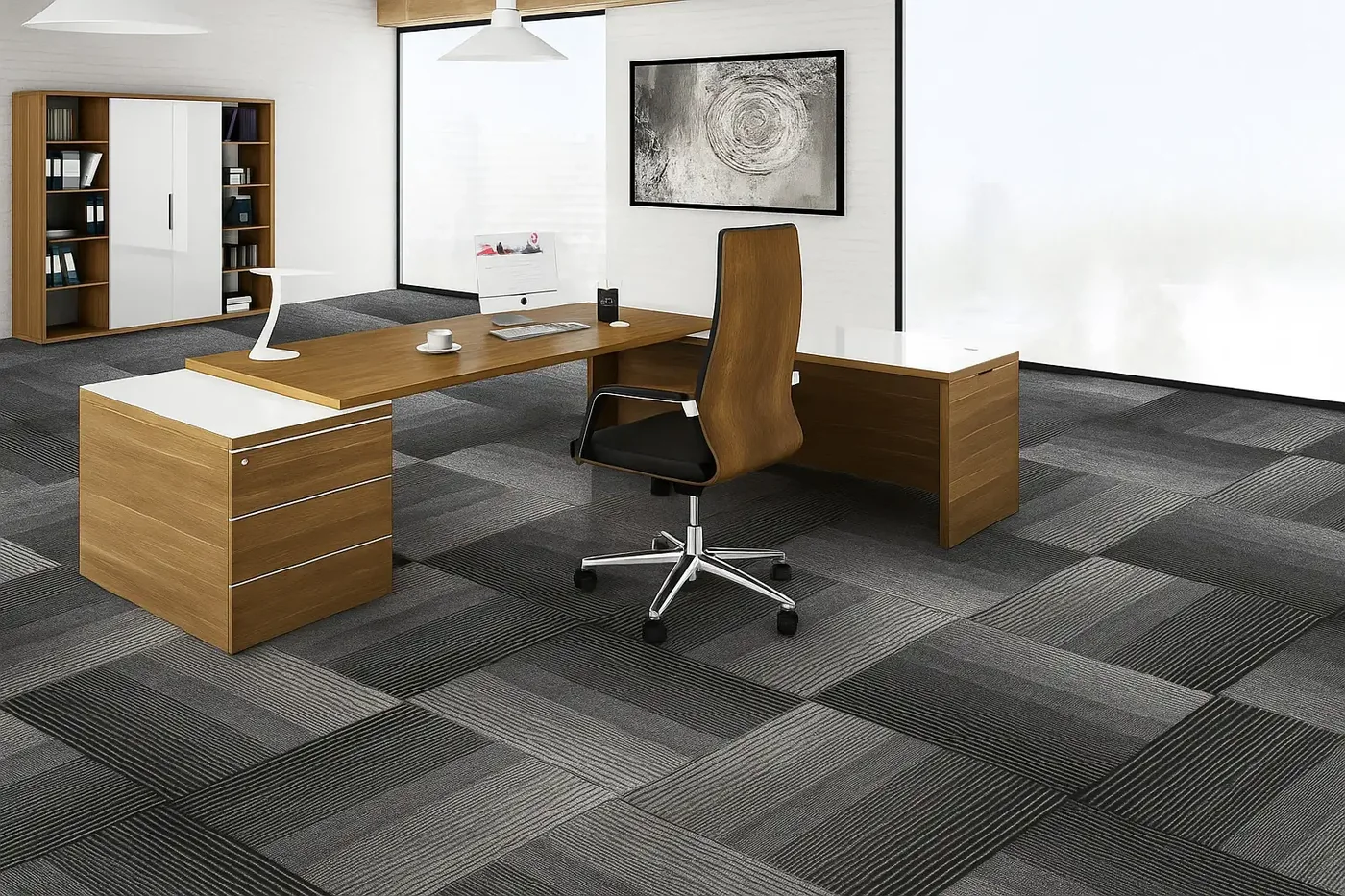
Which is easier to maintain?
Neither is maintenance-free; they simply need different routines. Vinyl is mopped and suits spills, food and wet footwear. Carpet tiles are vacuumed regularly, spot-cleaned when something is spilt and deep-cleaned periodically by a professional cleaner. Between cleans, a patterned or textured carpet hides everyday marks better than a plain, smooth floor, which shows every footprint in a bright office.
For repairs, a stained or burnt carpet tile is lifted and replaced with a spare without moving the furniture around it. Glue-down vinyl tiles can be swapped in the same way, while click-together planks and sheet vinyl usually mean a patch or a larger section. Whichever you choose, keep a box of spares from the same batch.
How do carpet tiles and vinyl compare on comfort?
Carpet is softer and warmer underfoot, which people notice when they stand at desks, walk long corridors or sit with their feet on the floor for hours. It also makes a space feel furnished, which matters in client-facing rooms. Vinyl feels firmer and cooler, which suits areas used briefly, such as a pantry.
What are GAIA carpet tiles made of?
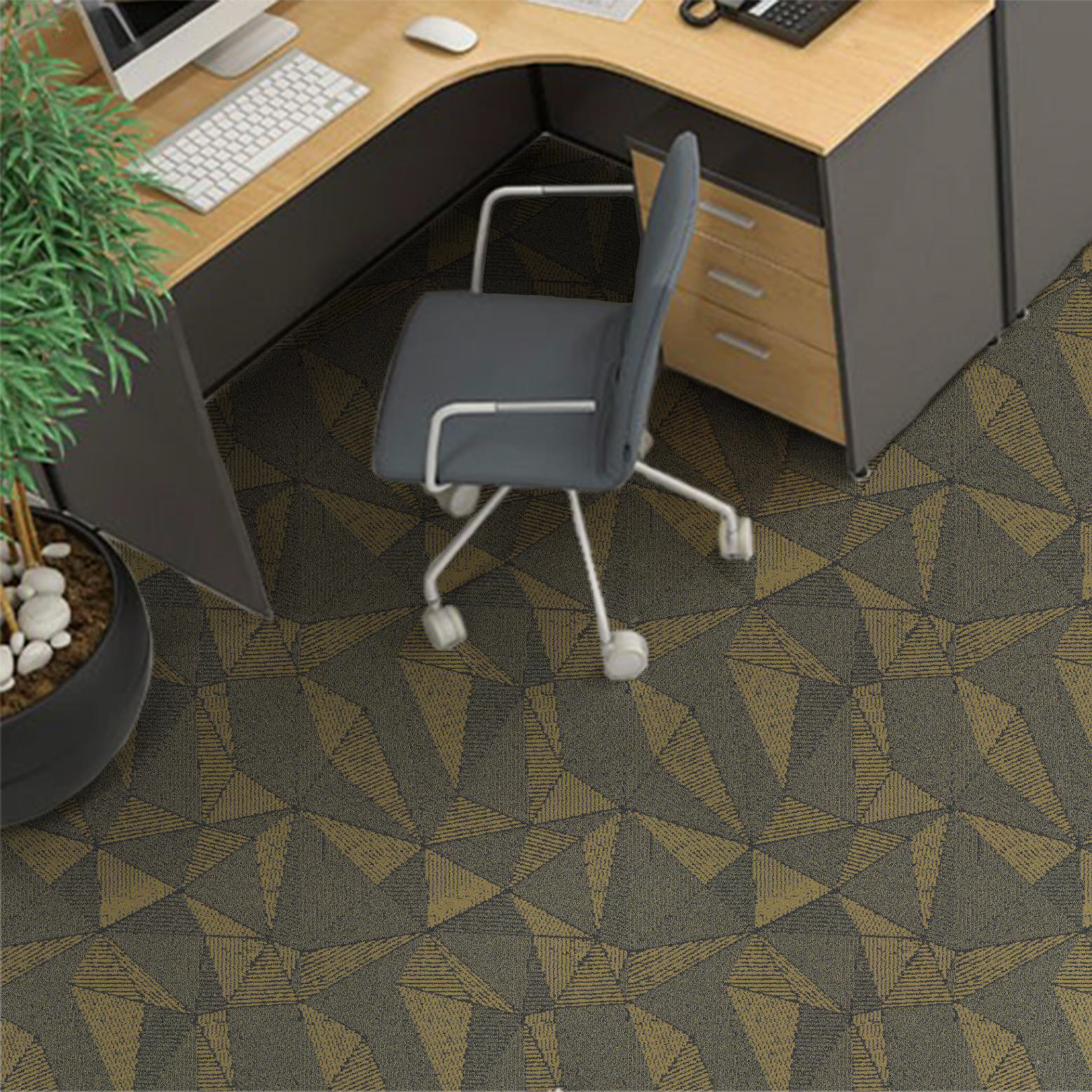
GAIA carpet tiles are tufted from Olefin (polypropylene) or nylon yarn, depending on the collection, and come as 50 × 50 cm squares or 25 × 100 cm planks. That construction is the real difference from vinyl. Luxury vinyl is a firm PVC layer with a printed image under a clear wear layer; a carpet tile is a soft textile pile, and the pile is what cushions footsteps and absorbs chair noise. Both are modular, so quantities are estimated the same way: a box of 20 GAIA carpet tiles covers 5 m², whichever format you choose. If you are weighing square tiles against long planks, our comparison of carpet tiles and carpet planks covers sizes and layouts.
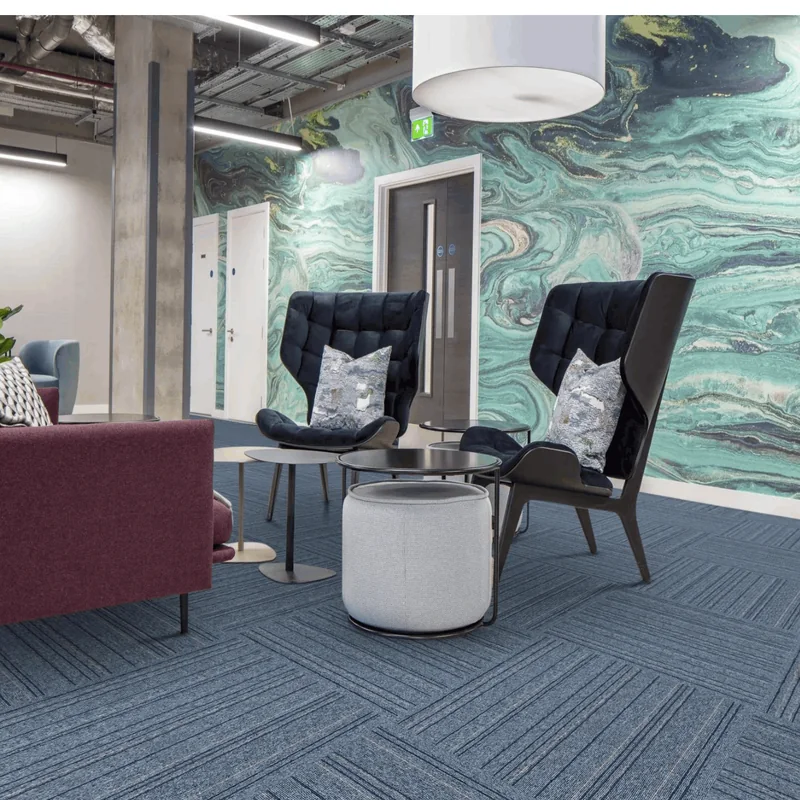
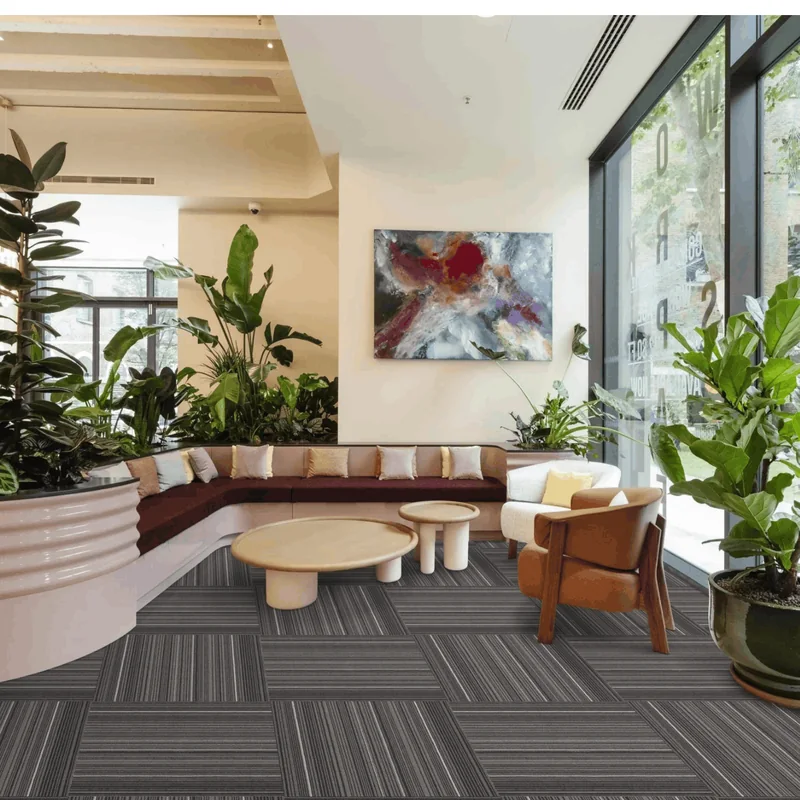
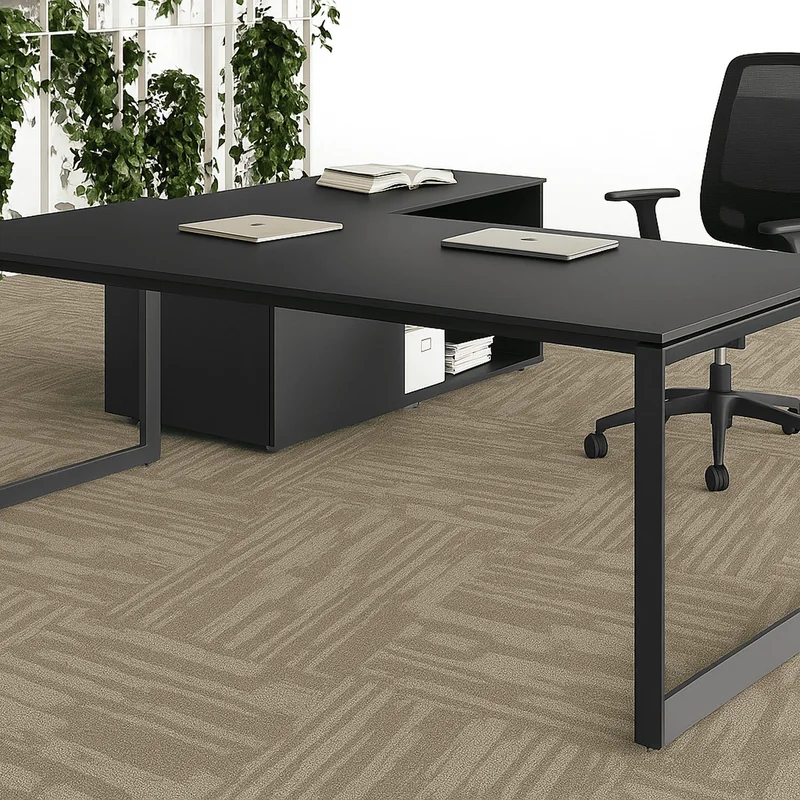
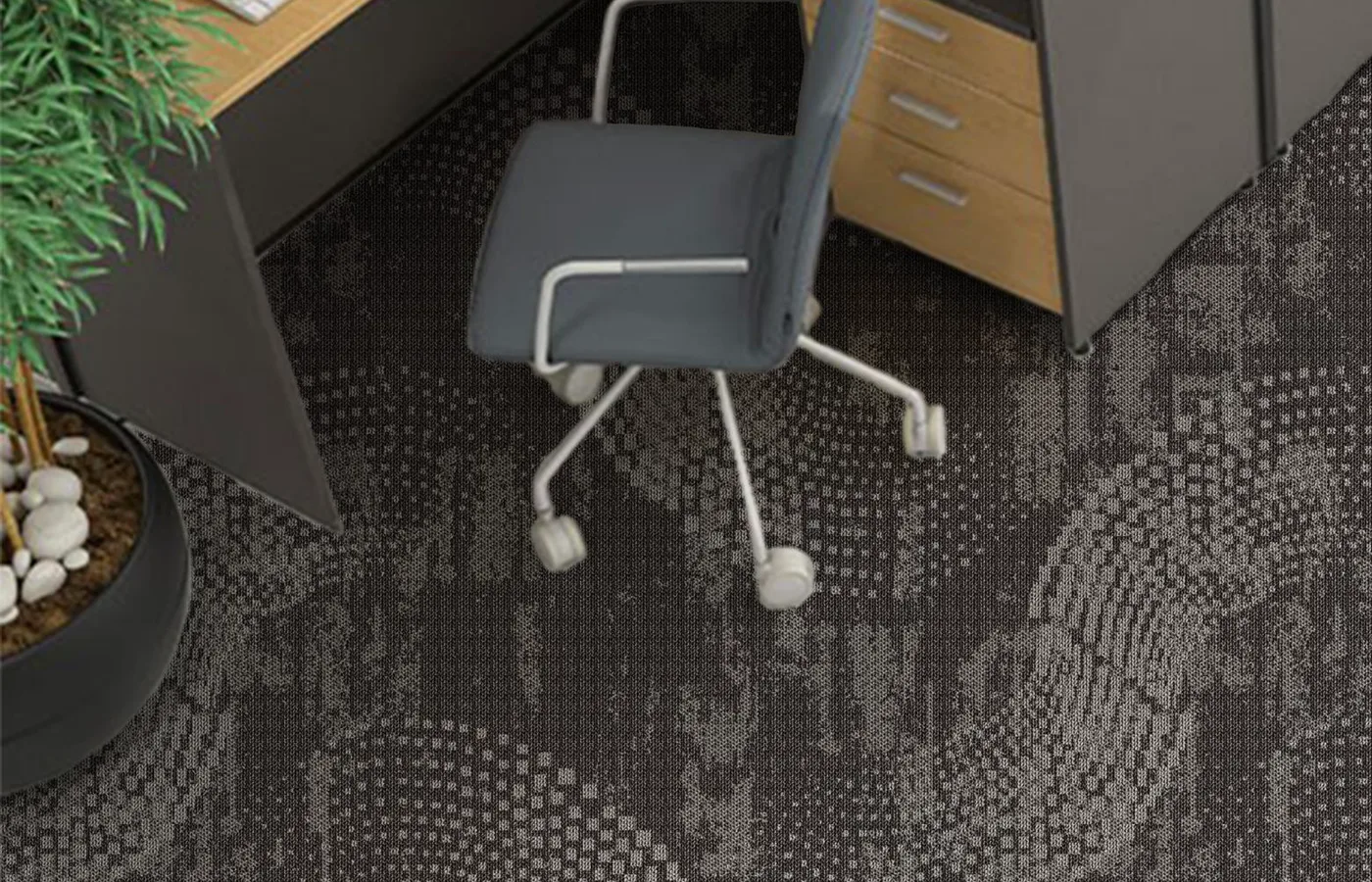
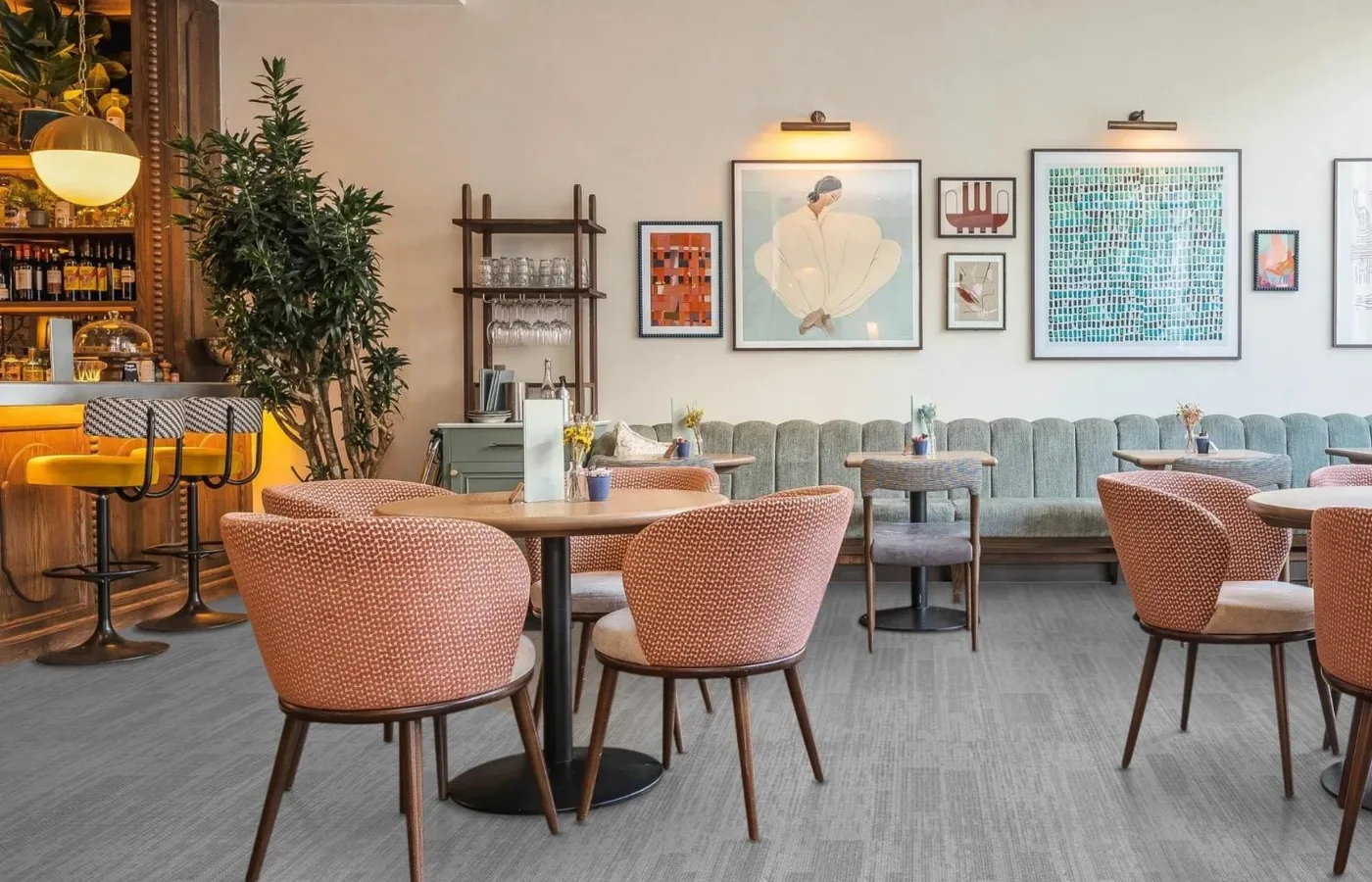
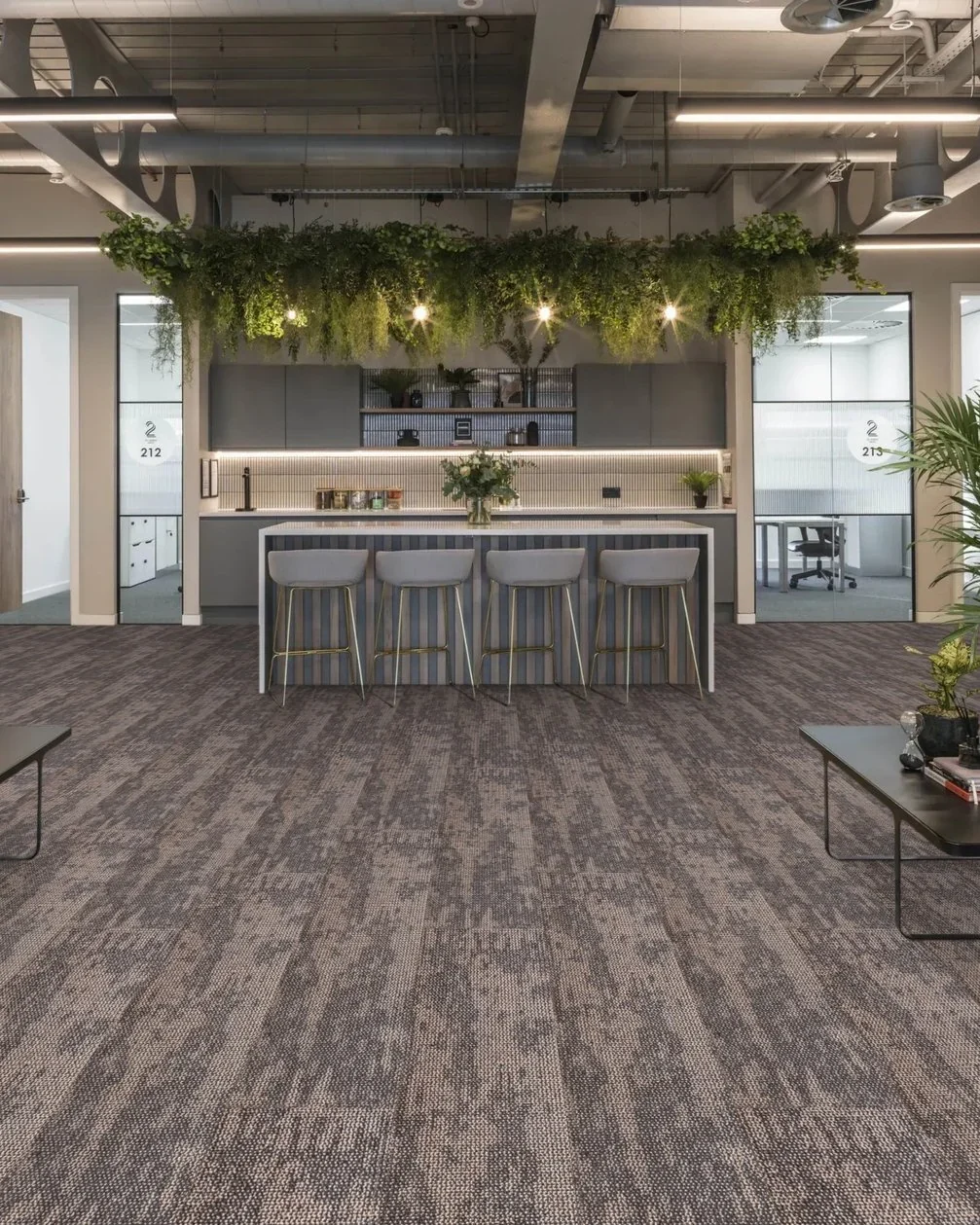
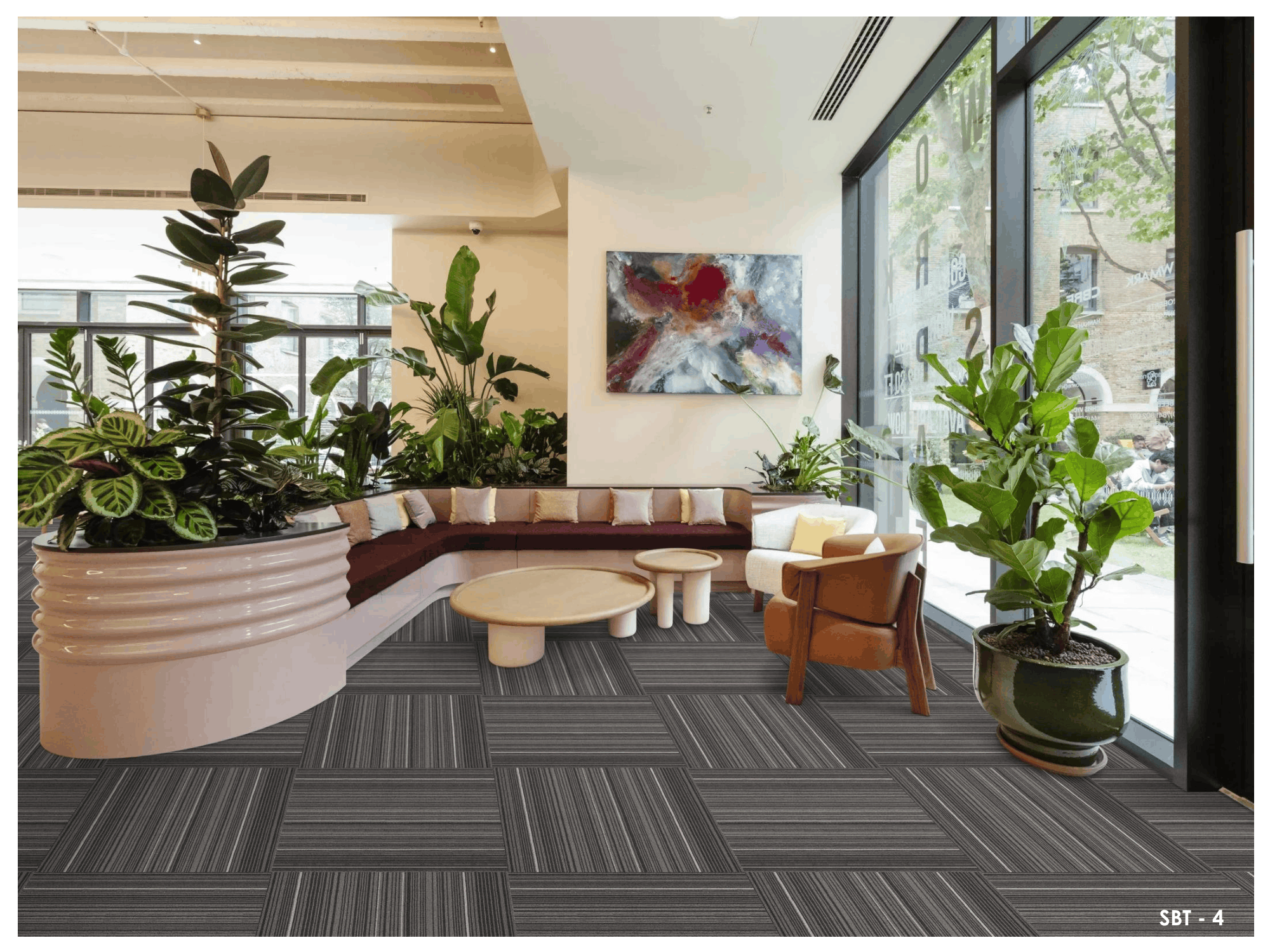
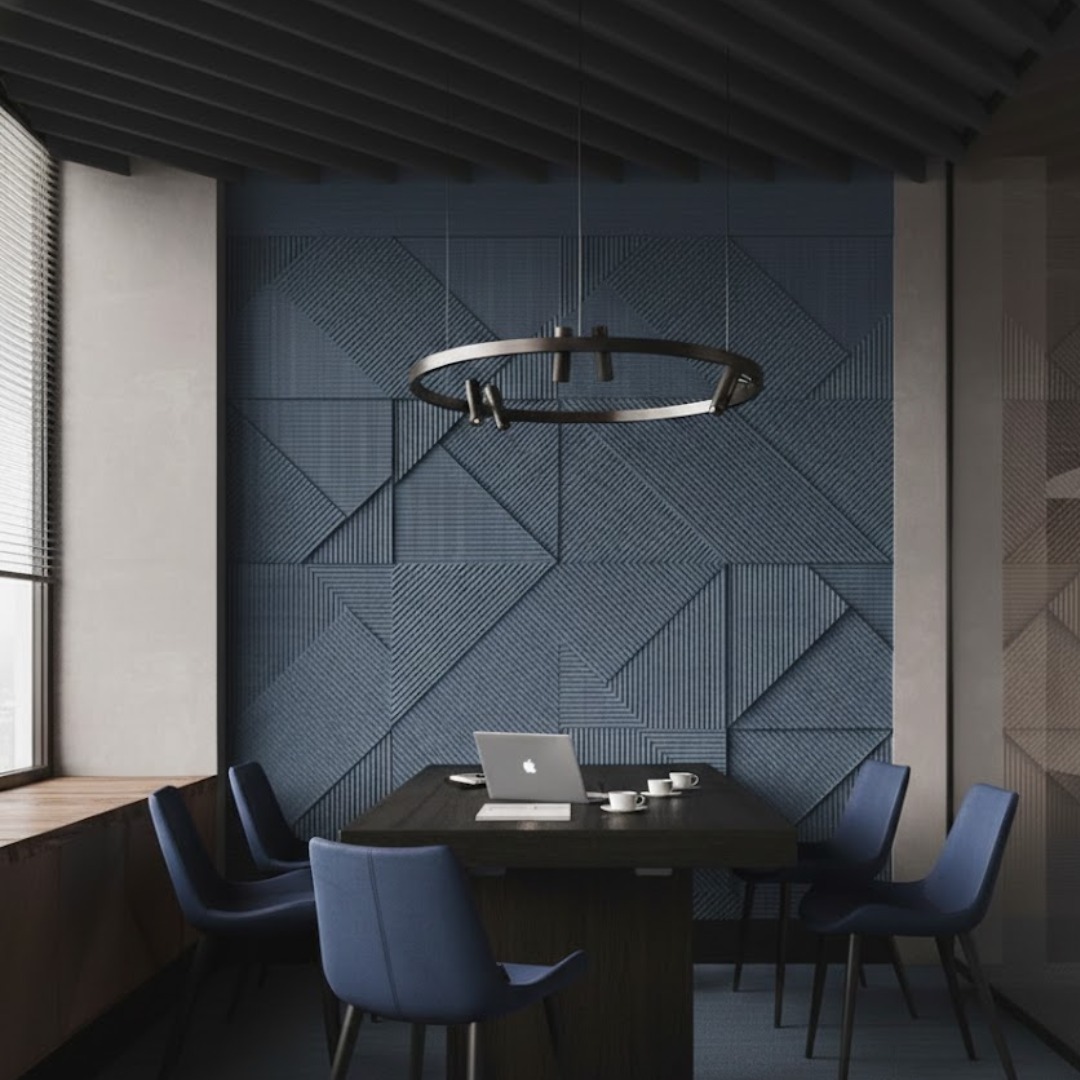
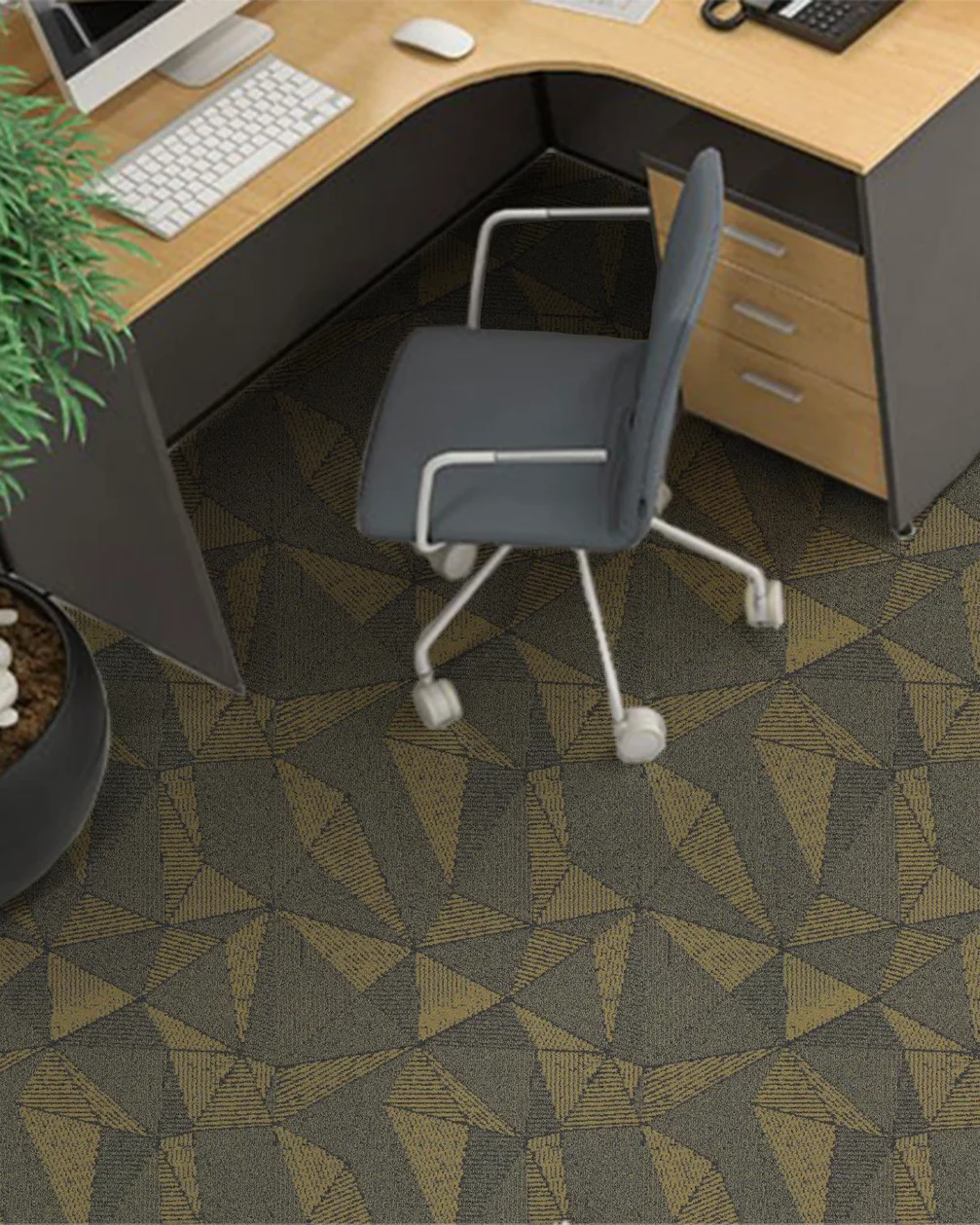
GAIA carpet tiles in a lounge, a reception and a work area: the zones where a soft floor matters most.
Carpet tiles or vinyl: a zone-by-zone decision list
Use this list with your floor plan. Colour each zone by its main activity, then pick the floor.
- Open-plan desks: carpet tiles, for quieter footfall and a calmer background.
- Meeting rooms and cabins: carpet tiles, so voices and calls stay clear rather than boomy.
- Reception and client areas: carpet tiles for the waiting area, with entrance matting at the door to catch rain and grit before it spreads.
- Corridors: carpet tiles, which cut the sound of people passing meeting rooms and desks.
- Pantry, café and printer areas: a hard floor such as vinyl, for spills and frequent wet cleaning.
- Washroom approaches and service areas: a hard floor.
- Areas that change often: carpet tiles, because tiles can be lifted, re-laid and re-zoned as teams move.
Where carpet meets a hard floor, use a proper transition strip at the doorway or the edge of the zone, and match the finished heights so that nobody trips and trolleys roll across smoothly.
Do carpet tiles cost more than vinyl?
Prices vary widely within each material, so compare specific products and include installation, maintenance and replacement over the life of the floor, not only the price per square metre. Re-using tiles when a layout changes also affects what a floor costs over the years. Our team will prepare quantities and a quotation for GAIA carpet tiles from your floor plan.
What to share for a floor plan quote
- a floor plan marking the desks, meeting rooms, pantry and entrances;
- which areas need to be quiet and which see spills or heavy traffic;
- the collections or colours you are drawn to;
- your timeline and whether the office will be occupied during installation.
Every collection is on the GAIA carpet tiles page if you want to shortlist designs first.
Office flooring questions
Are carpet tiles good for offices?
Yes, for desks, meeting rooms, cabins and corridors. They are the quieter, more comfortable choice wherever people sit and talk for long periods.
Can carpet tiles be used in a pantry or kitchen area?
A hard floor is usually the better choice where spills and wet cleaning are daily events. Use carpet tiles in the surrounding work areas and a transition strip where they meet.
Can carpet tiles be laid over an existing vinyl floor?
Often, if the existing floor is flat, clean and firmly bonded. Loose or damaged vinyl should come up first. We check the existing floor and the fixing method before quoting.
Choose the floor by the zone
Plan your office floor
Share your office plan with GAIA by Sanson Floorings, marking how each area is used, and we will map where carpet tiles fit and which collections suit the space.