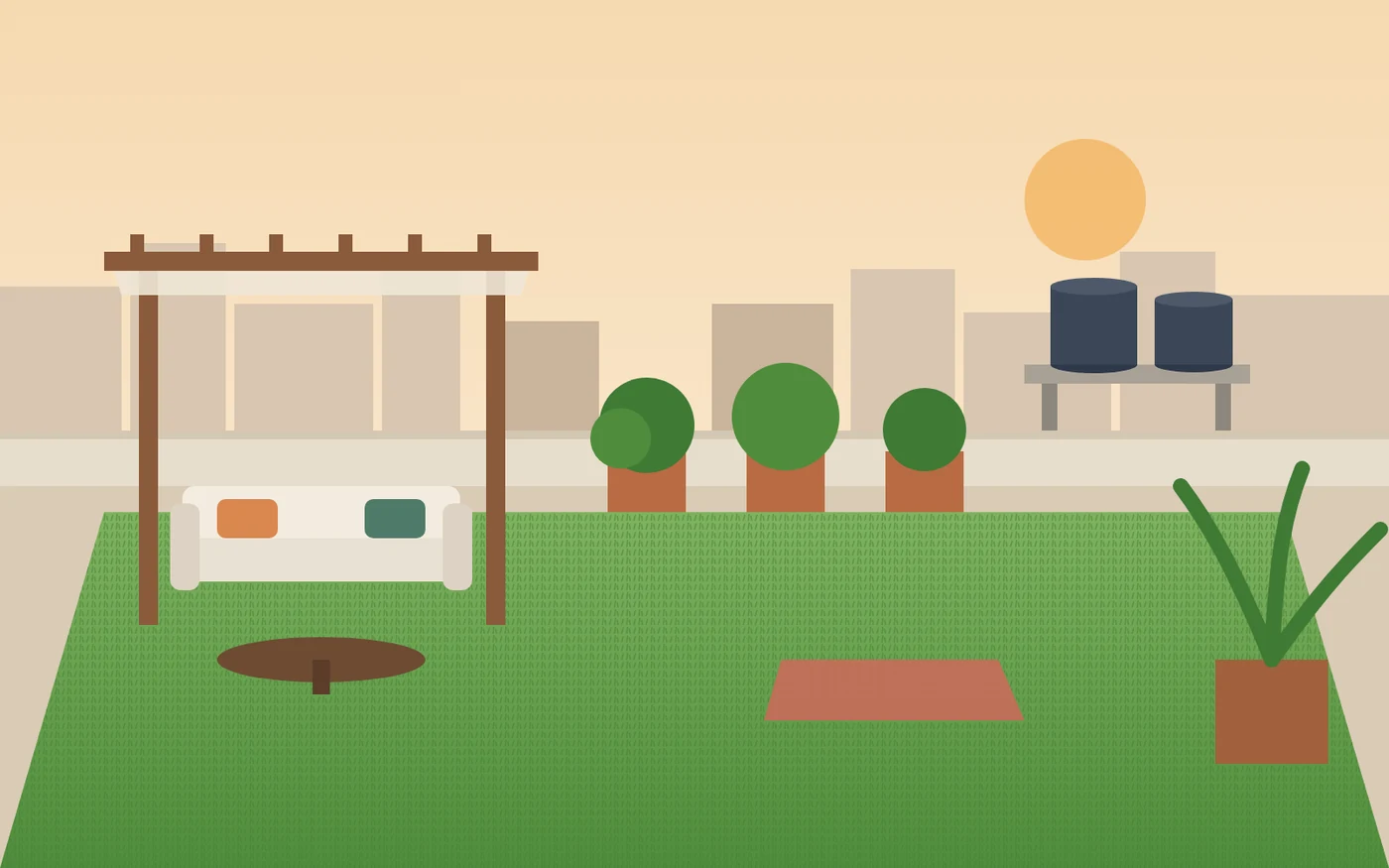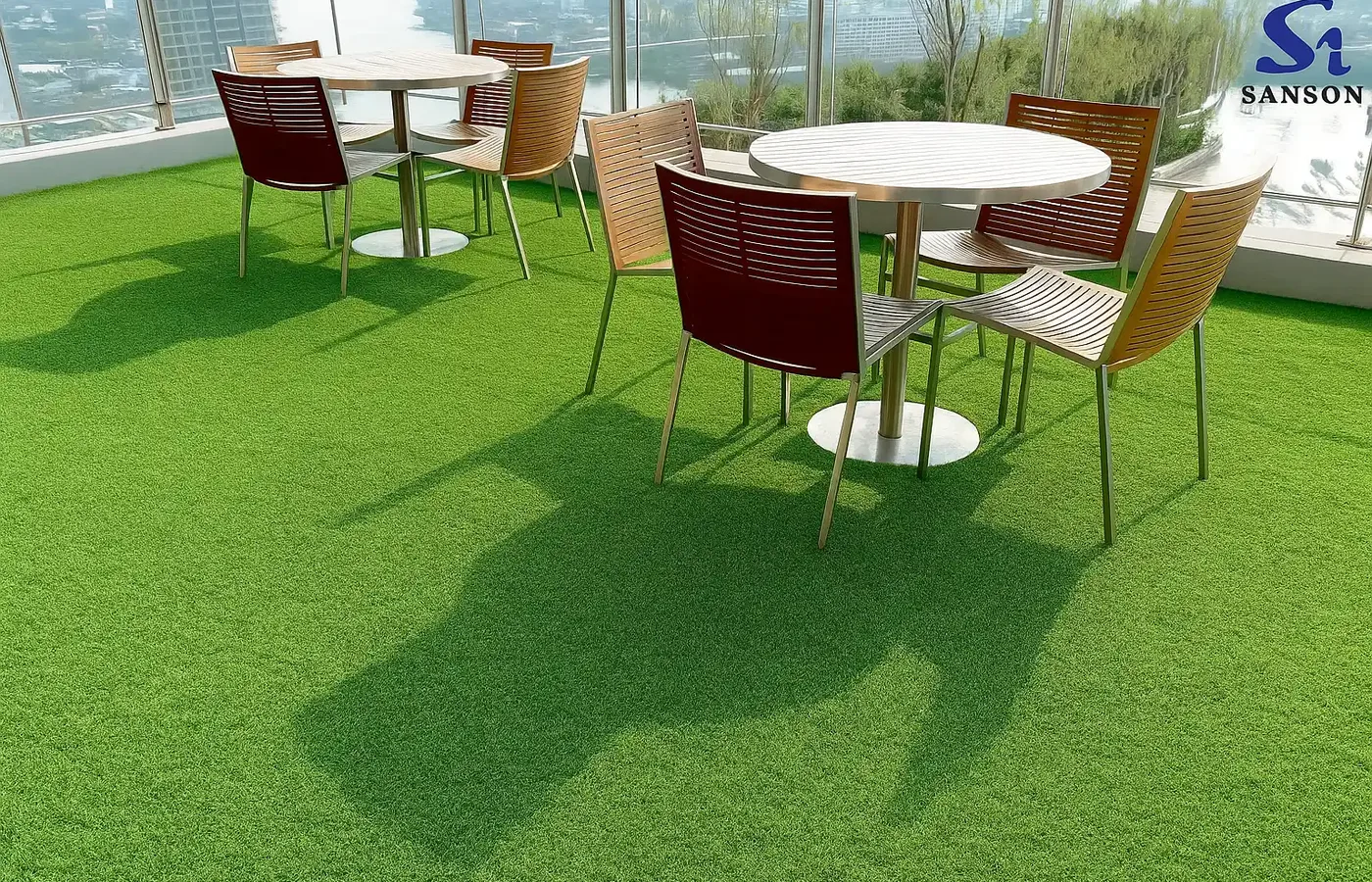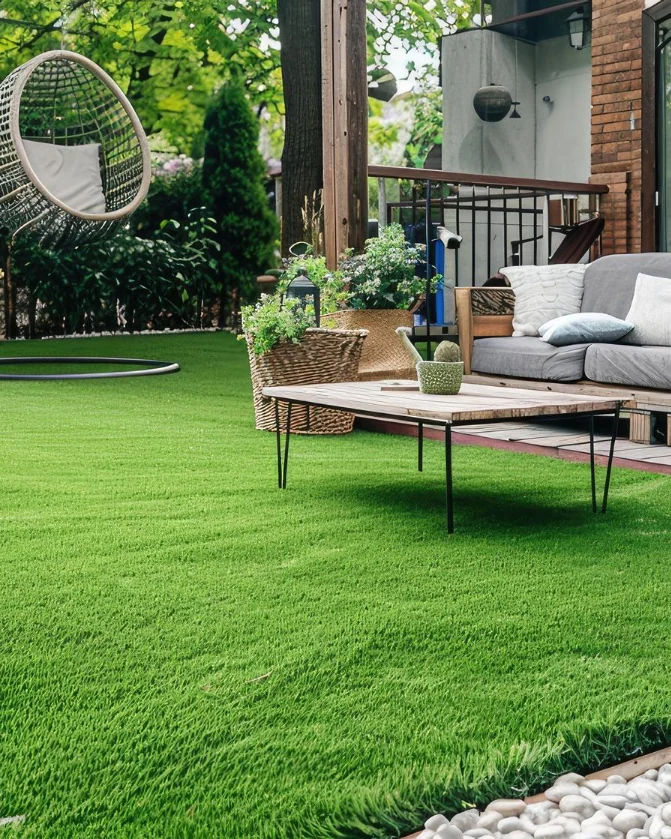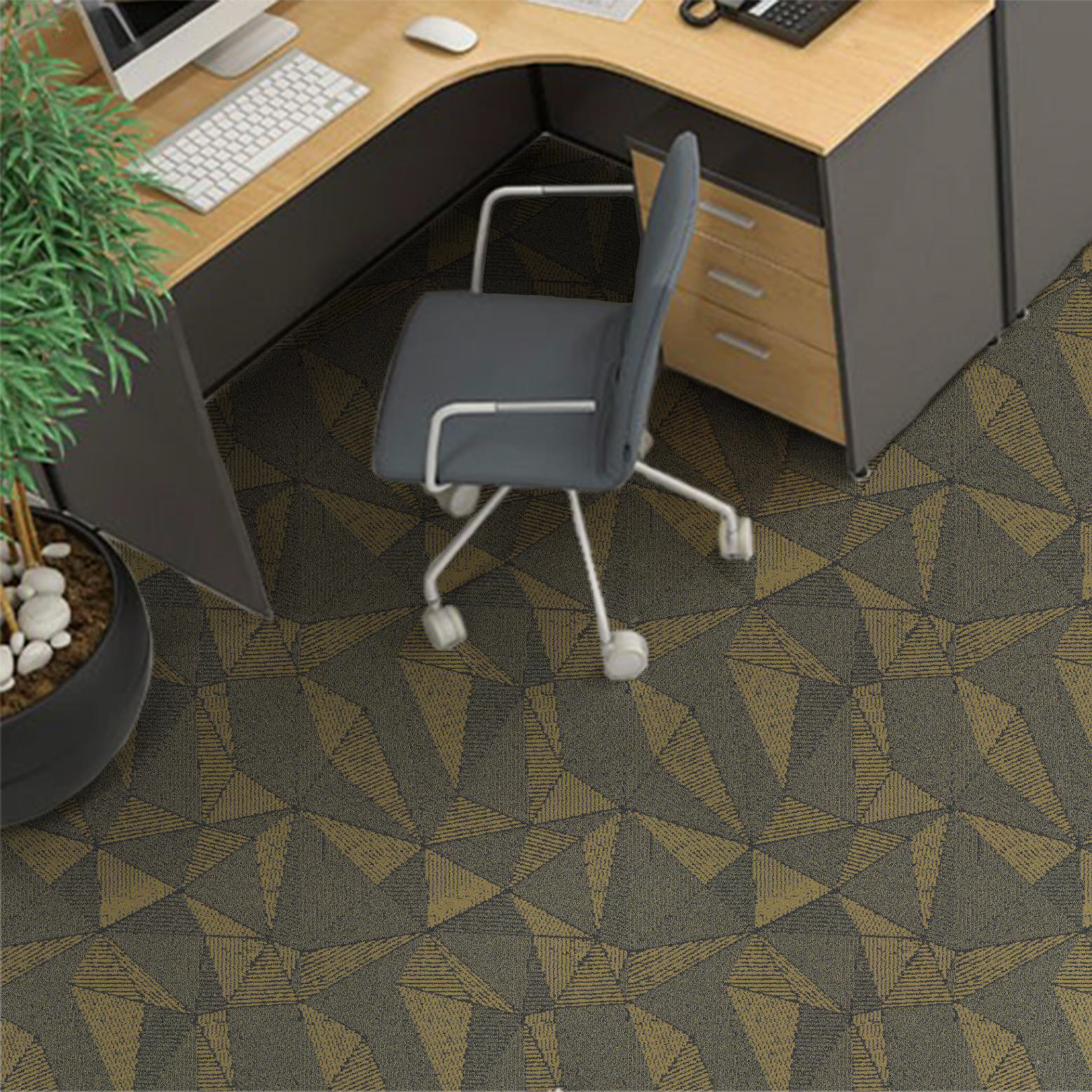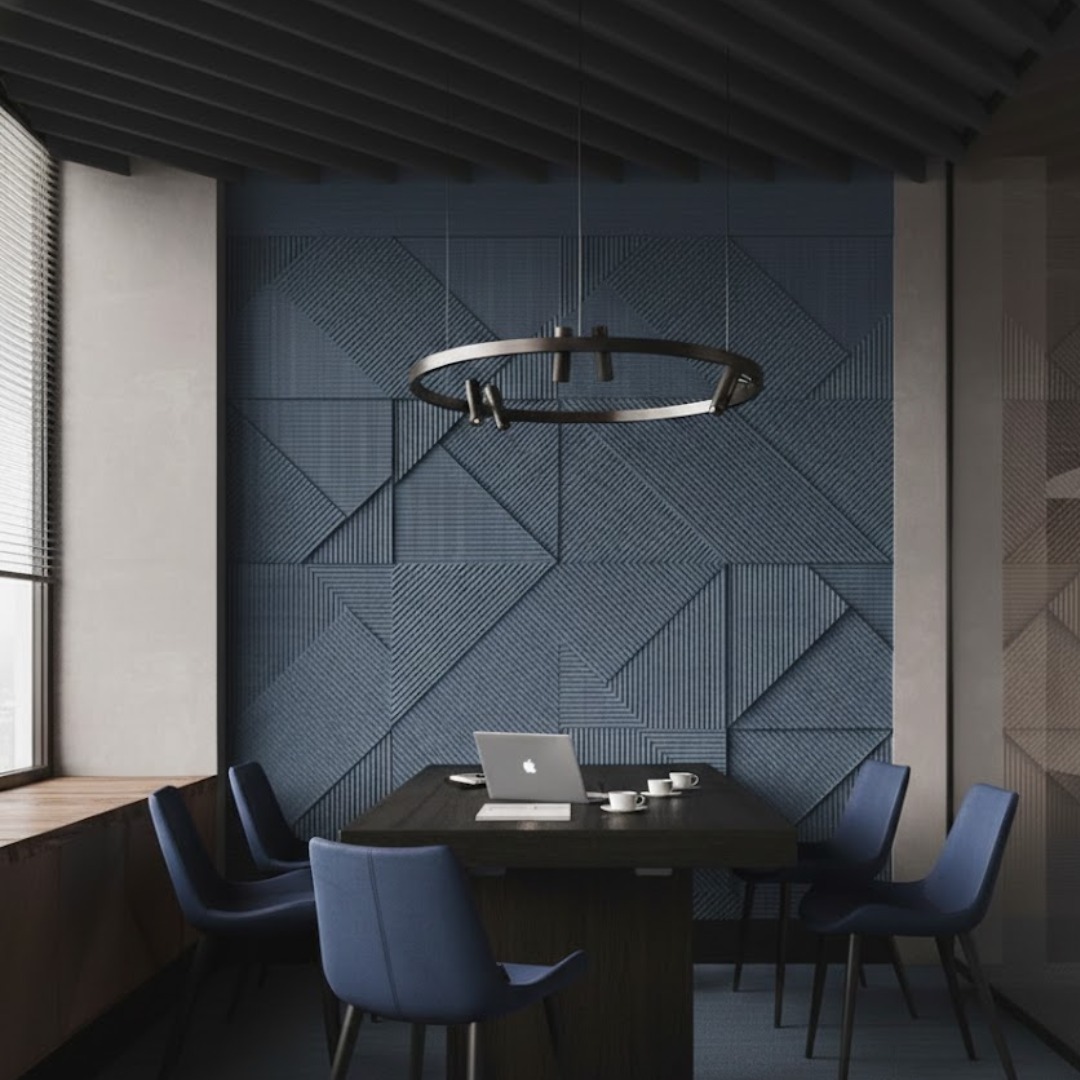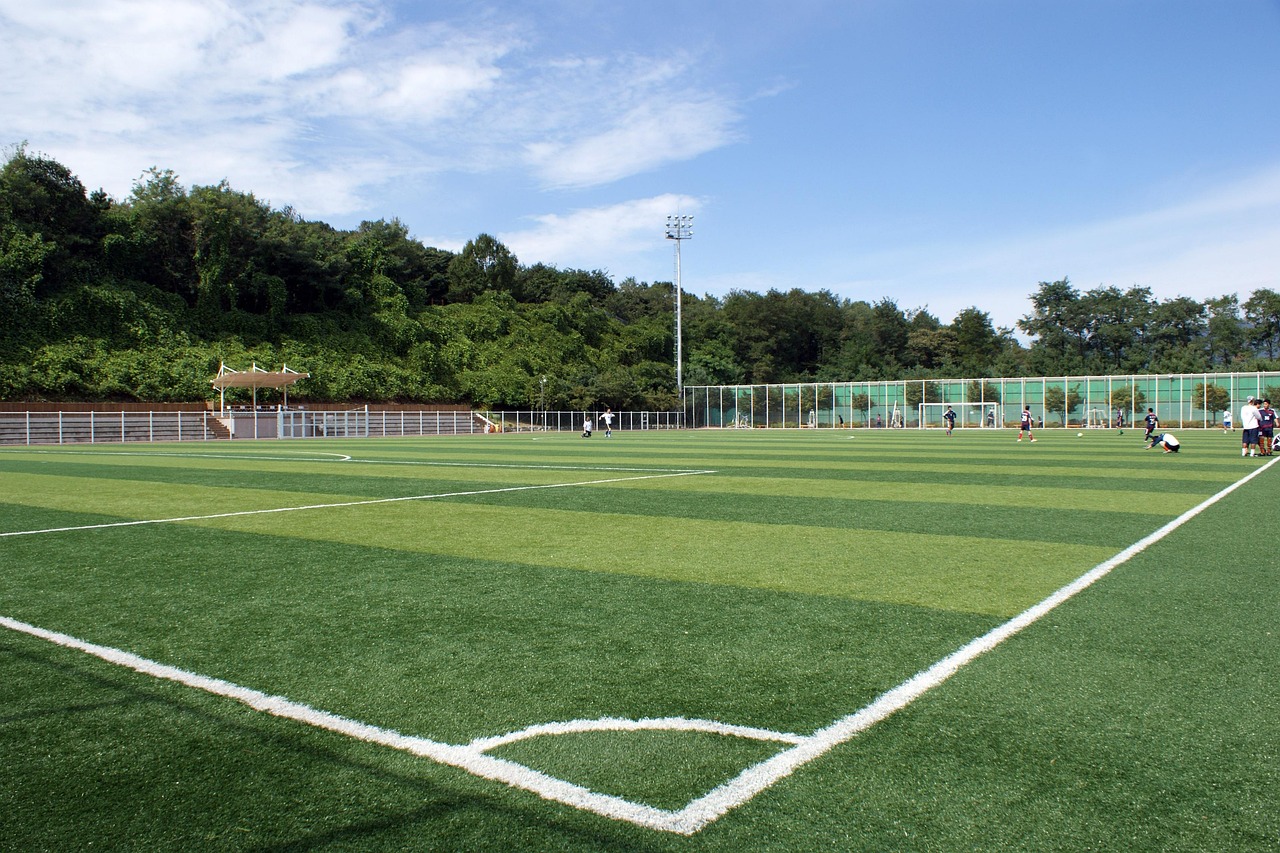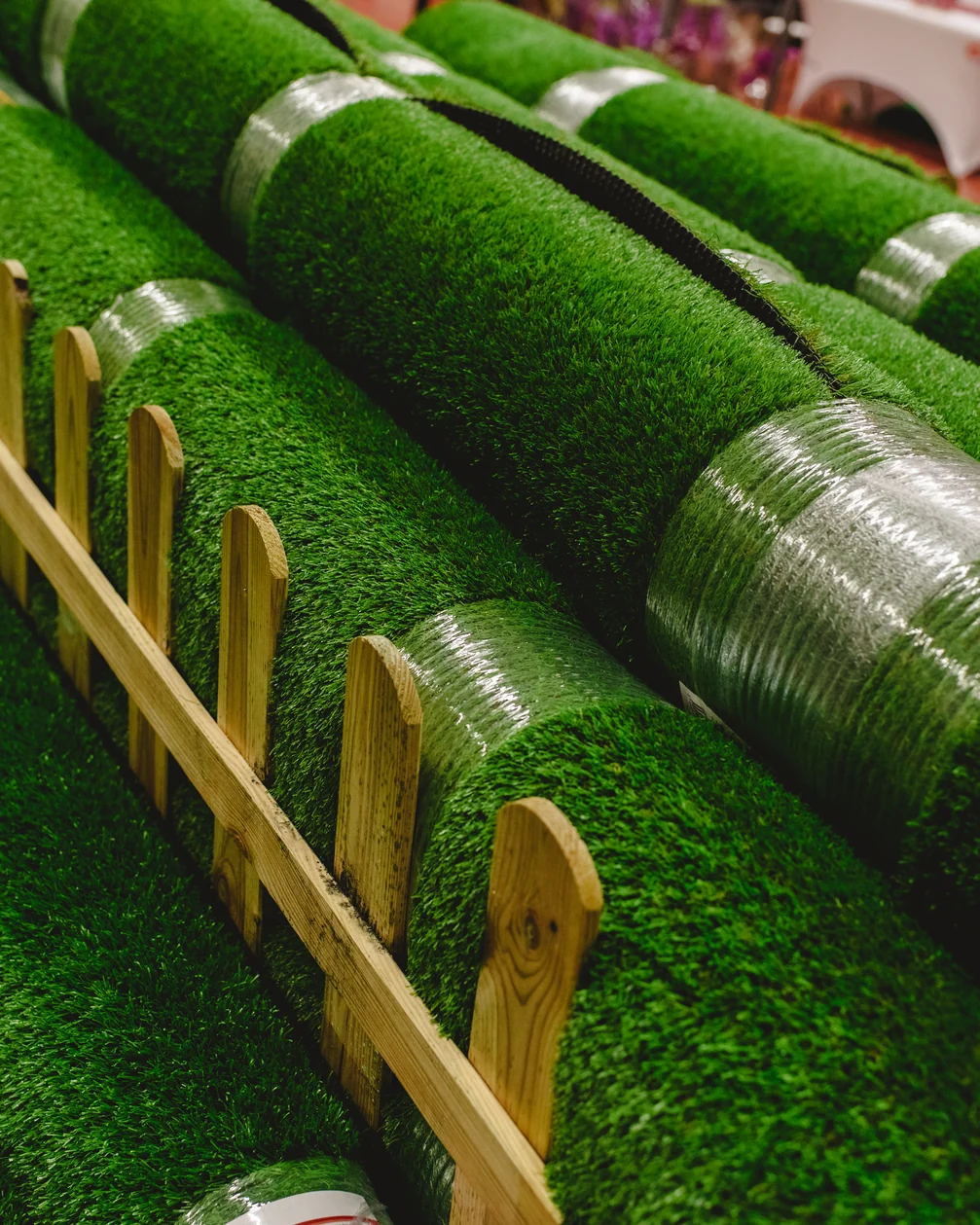
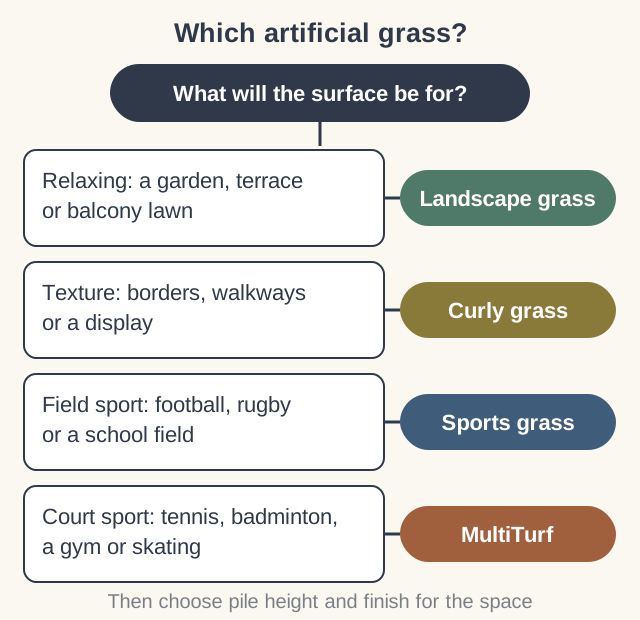
There are four main types of artificial grass, each made for a different job. Landscape grass imitates a natural lawn for gardens, terraces and balconies. Curly grass adds a textured, thatched look to borders and display areas. Sports grass carries football and other field sports, and MultiTurf gives a compact surface for tennis, badminton and gyms.
Ask for "artificial grass" and you could be shown anything from a soft, lawn-like roll for a villa garden to a dense, short turf for a badminton court. They look alike in a photograph and behave very differently underfoot. Choosing the wrong type is a frequent reason an artificial lawn disappoints: a sports turf that feels harsh on a terrace, or a long decorative pile that flattens on a court. Start with what the surface is for, and the type more or less chooses itself.
The four types at a glance
- Landscape grass: a natural lawn look and a soft feel, for gardens, terraces, balconies and hotel lawns.
- Curly grass: a textured, thatched surface for walkways, borders, balcony layers and retail displays.
- Sports grass: a longer, resilient turf for football, rugby, training fields and school grounds.
- MultiTurf: a short, compact turf for tennis, badminton, gym floors and skating zones.
What are the main types of artificial grass?
Artificial grass is best grouped by use, because use decides everything else: pile height, density, the shape of the yarn and how the surface is laid. Decorative and landscaping grasses are made to look and feel like a lawn. Sports grasses are made to perform, so they prioritise how a ball rolls and bounces and how the surface responds to running, turning and sliding. Within each group, products differ by pile height, yarn and colour, so the same family can cover a small balcony and a large garden.
What is landscape grass?
Landscape grass is artificial grass made to look like a well-kept natural lawn, soft enough to sit and walk on barefoot. It is the type for home gardens, terraces, rooftops, balconies, villas and hotel lawns. GAIA Landscape Grass comes in a range of pile heights, from short piles that sweep easily on a balcony to full, lawn-like heights for larger gardens, all made with UV-resistant yarn in two shades of green. Our balcony grass guide sets out the heights, and our article on sun and fading covers how the yarn stands up to Indian summers.
What is curly grass?
Curly grass has a textured, thatched surface rather than upright blades, so it reads as a decorative finish rather than a lawn. That makes it a good base for low-maintenance and accent areas: walkways, garden borders, a layer on a balcony floor, or a display zone in a shop or showroom where a green surface sets off the products. GAIA Curly Grass suits places where texture matters more than a lawn-like look.
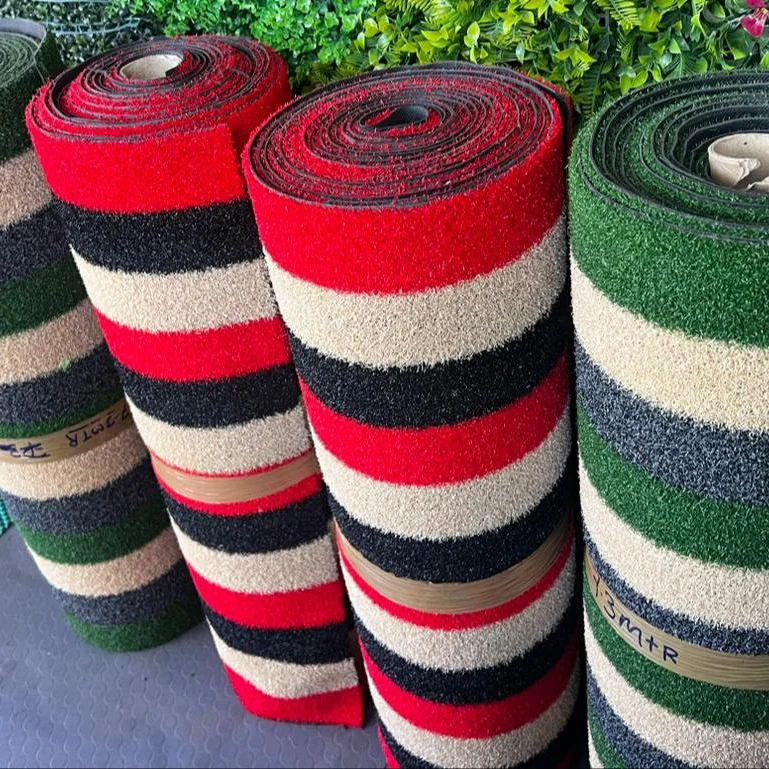
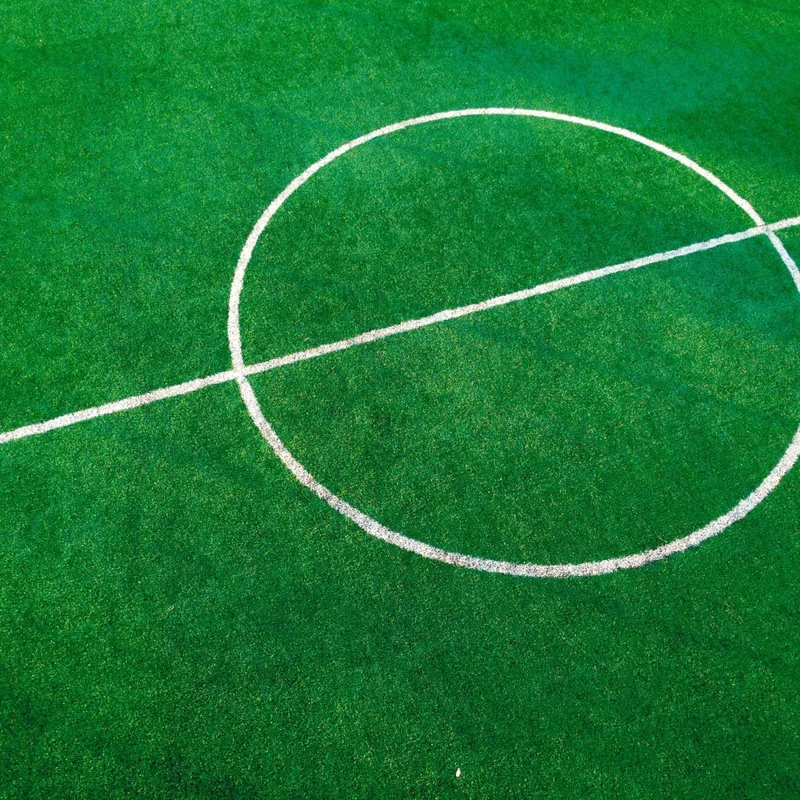
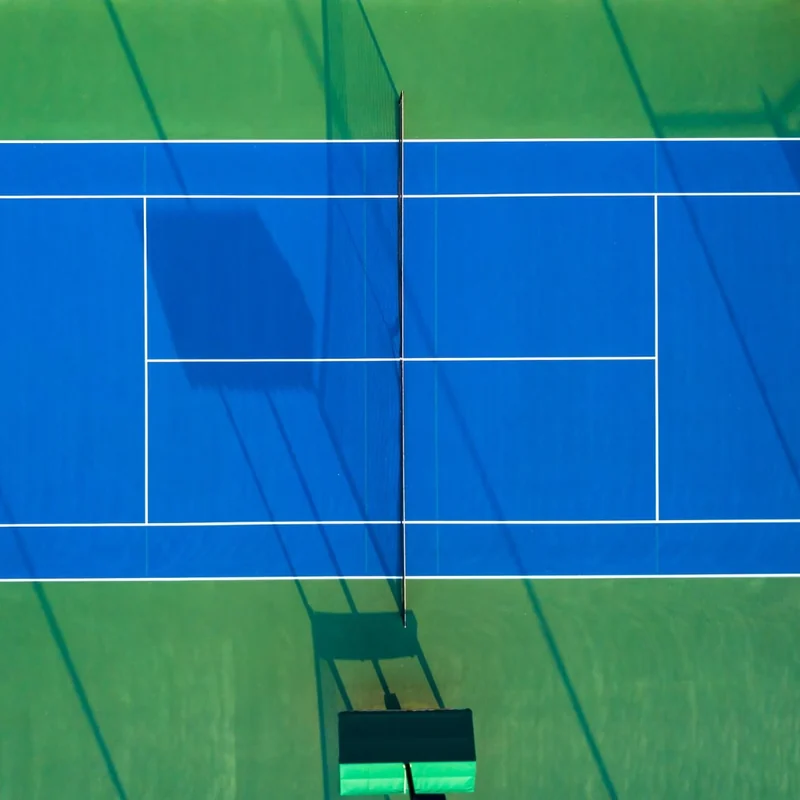
GAIA Curly Grass, Sports Grass and MultiTurf: three types made for decoration, field sport and court sport.
What is sports grass?
Sports grass is turf built for play on full-size and small-sided fields: football, rugby, athletic training areas and school grounds. Compared with a landscape lawn it is designed to be resilient under studs, turning and heavy daily use, and football turf is usually laid with infill between the blades to support the ball roll and the players. Competitive football pitches are often tested under the FIFA Quality Programme for Football Turf, which sets the laboratory and field tests a pitch must pass. See GAIA Sports Grass for fields and training grounds.
What is MultiTurf?
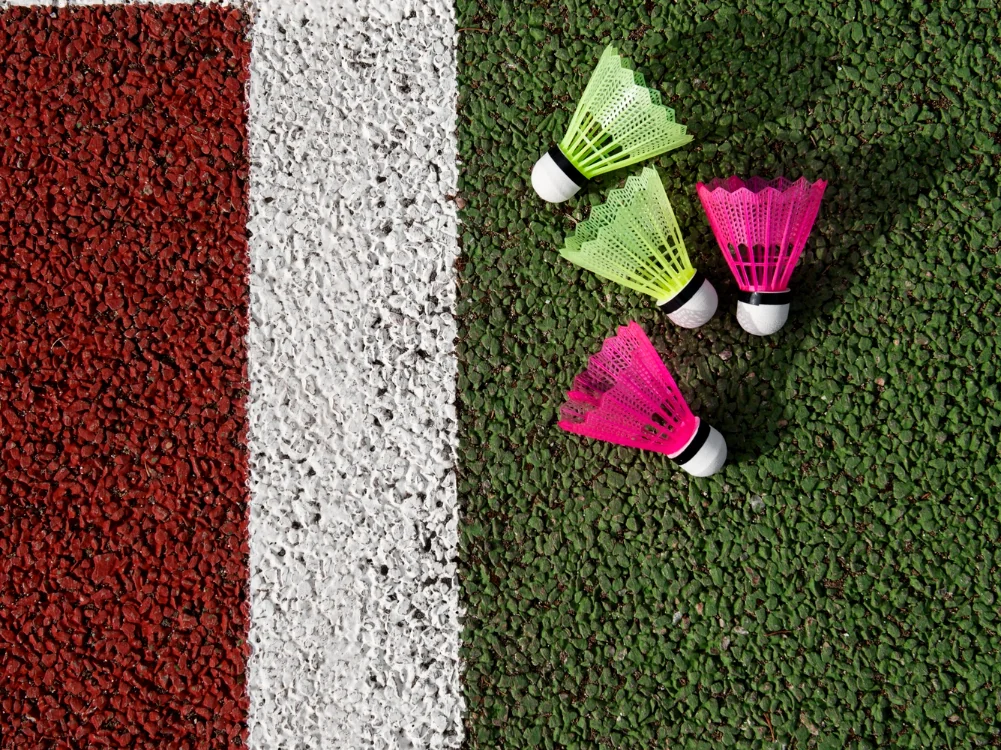
MultiTurf is a short, compact artificial turf for faster, multi-use surfaces: tennis courts, badminton courts, gym floors and skating zones. Its low pile keeps the surface firm and even, so a ball or shuttle behaves predictably and wheels and shoes move freely. It suits sports clubs, schools, housing societies and home courts where one surface has to serve several activities. See GAIA MultiTurf, and the wider GAIA artificial grass range.
What is artificial grass made of?
Synthetic yarn tufted into a backing. The yarn is usually polyethylene, polypropylene or nylon, extruded as flat, shaped or textured fibres in one or more shades of green, and sometimes in other colours for court markings or decoration. The backing holds the tufts in place and gives the roll its stability. Pile height, the length of the blades above the backing, and density, how closely they are tufted, decide most of how a grass looks and feels.
Which type suits a home?
For a lawn, a terrace or a balcony, landscape grass. Short piles suit balconies and areas with furniture; taller piles suit open lawns where people walk and sit on the grass. Add curly grass where you want a border, a path or a contrasting texture, and MultiTurf if the home has a badminton or tennis court. A family with young children may want two types side by side: a soft lawn for play and a firmer, shorter turf where bicycles and balls get the most use. For a roof, read our guide to artificial grass on a terrace before choosing, and if you are still weighing a real lawn, our comparison of artificial and real grass covers water, upkeep and where each does better.
Which artificial grass for which space?
- Balcony: landscape grass in a short pile, or curly grass as a textured layer.
- Terrace or rooftop lawn: landscape grass, with the pile chosen for the size of the space.
- Garden lawn and play area: landscape grass in a fuller pile.
- Garden borders and paths: curly grass.
- Shop window or exhibition stand: curly grass or a short landscape pile.
- Football or box-cricket turf: sports grass.
- Tennis, badminton, gym or skating area: MultiTurf.
Does artificial grass need infill?
Sports turf usually does, landscape lawns often do not. Infill, typically sand or rubber granules brushed between the blades, keeps sports turf upright, weighted and consistent under play. On a home lawn or balcony the decision depends on the product, the pile height and how the area is used. Our team will advise whether infill suits the grass and the site.
How is artificial grass laid?
It depends on what lies underneath. On soil, the ground is excavated and rolled firm, a drainage layer of crushed stone goes down, and the grass is rolled out, joined and fixed at the edges. On a sound concrete or tiled surface, such as a balcony, a terrace or a shop floor, the grass usually goes straight on top, cut to fit around drains and fixtures. Sports fields need an engineered base with a carefully controlled level and drainage, which is why they are a specialist job. Whatever the surface, the joins between rolls should run in the same direction, so the pile leans one way and the seams disappear.
How do you look after artificial grass?
Very little compared with a lawn, but not nothing. Clear leaves and litter before they rot into the pile, brush the grass against its lean every few weeks so the blades stand up, and rinse away dust and spills. Remove pet waste promptly and hose the area down. Sports turf needs more: regular brushing to keep infill level, topping up infill in goalmouths and other heavy-wear areas, and a periodic deep clean. A written routine agreed at handover keeps any artificial surface looking even.
How long does artificial grass last?
It depends on the yarn, the sun, the traffic and the care, far more than on the type alone. A balcony lawn used for a morning coffee wears very differently from a five-a-side pitch played on every evening. Strong sun is the main enemy of colour, which is why UV resistance matters for any outdoor grass in India; heavy play is the main enemy of the pile. Choosing the right type for the use, and keeping it clean and brushed, does more for its life than any other decision.
Can artificial grass be used indoors?
Yes, and it often is. Curly grass and short landscape piles make green floors for shop windows, exhibition stands, event lawns and play corners in malls. MultiTurf is made for gym floors and indoor courts, where a firm, even surface matters more than a natural look. Indoors the grass needs no UV protection or drainage, but it does need regular vacuuming or brushing, because dust has nowhere to wash away to. Check any fire requirements of the venue before laying it, particularly for temporary events.
What artificial grass suits schools and play areas?
It depends on what the children will do on it. A playing field for football and athletics needs sports grass laid on a proper base. A multi-use court for badminton, tennis or skating suits MultiTurf. A nursery play corner or a garden for younger children suits a soft landscape grass, with shade over it for the hottest hours. Whatever the type, plan the edges and joins carefully where children run, and keep a clear routine for cleaning.
How do you compare artificial grass products?
Look past the photograph and check the details that decide how the grass performs:
- Pile height: matched to the use, not just to how lush the sample looks.
- Yarn: the material, and the evidence of UV resistance for outdoor use.
- Feel: a sample in your hand and under your feet, not only on a screen.
- Colour: two-tone or multi-tone greens look more natural than a single flat shade.
- Base and drainage: how the grass will be laid on soil, concrete, tiles or a roof.
- Test reports: for sports surfaces, the tests the project or league requires.
What to send us
- where the grass will go, with measurements;
- how the area will be used, and by whom;
- the existing surface: soil, concrete, tiles or a roof;
- photographs, and the style you are after.
Artificial grass questions
What is the difference between artificial grass and artificial turf?
The terms overlap. "Artificial grass" usually means landscaping products for homes and gardens; "artificial turf" or "sports turf" usually means surfaces built for play.
Can landscape grass be used for sports?
For casual play in a garden, yes. For regular football, tennis or badminton, sports grass or MultiTurf gives a more consistent, harder-wearing surface.
What is the best artificial grass for a balcony?
A short-pile landscape grass, which is easy to sweep and stands up under furniture. Curly grass works where a textured, decorative layer suits the design.
The right grass for the job
Find the artificial grass that suits your space
Tell GAIA by Sanson Floorings where the grass will go and how it will be used, and we will recommend the type, pile height and quantity.