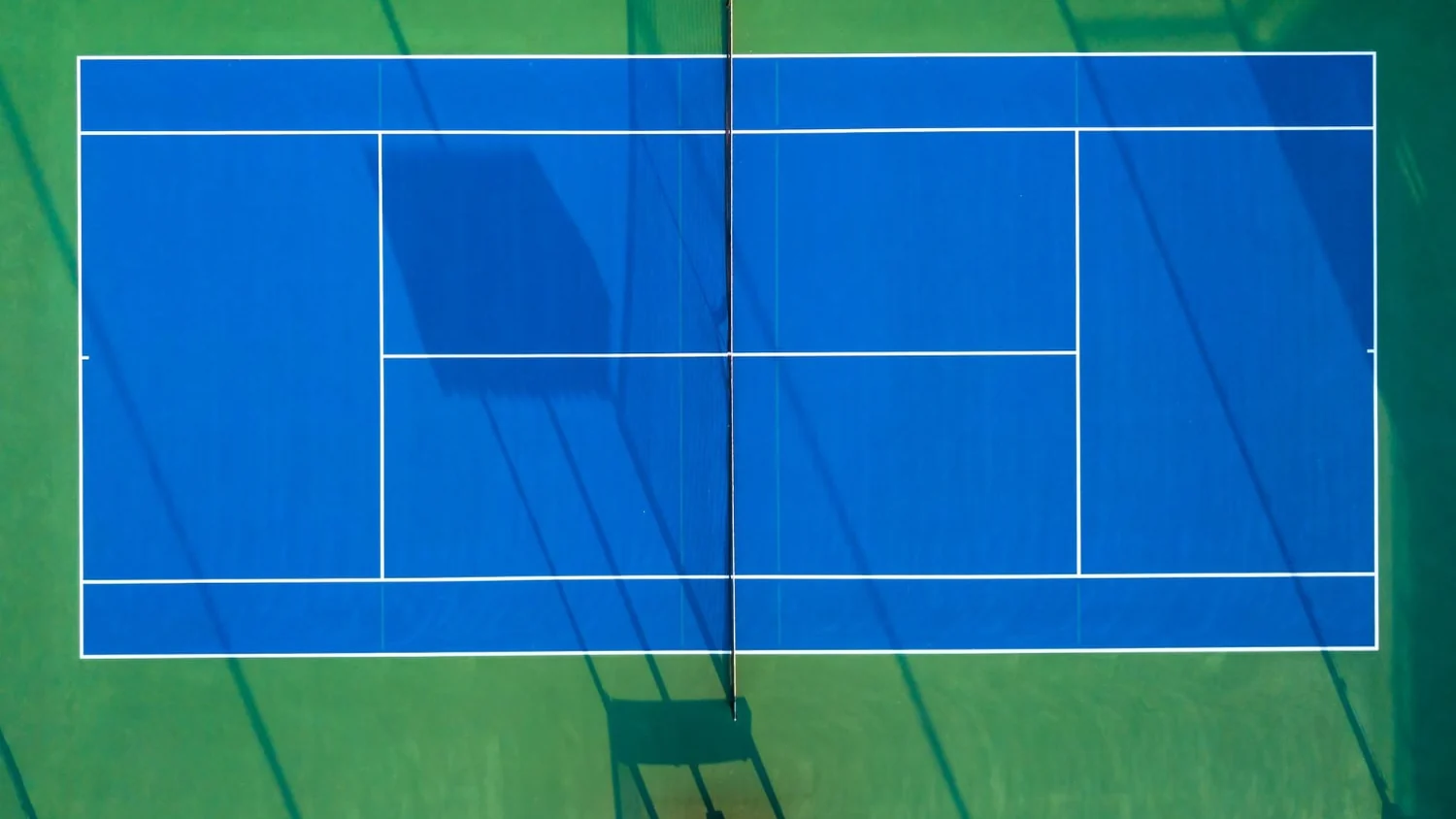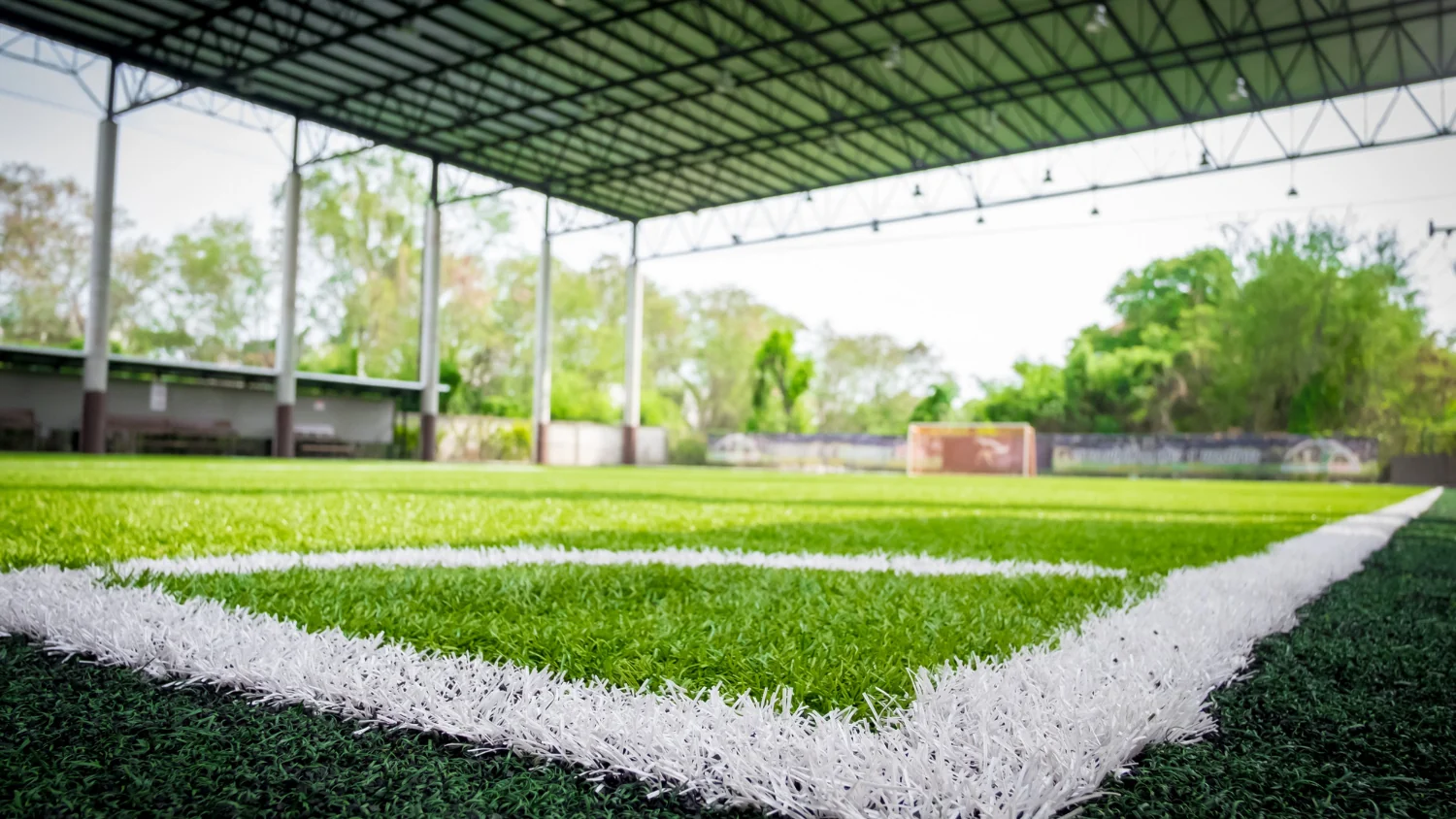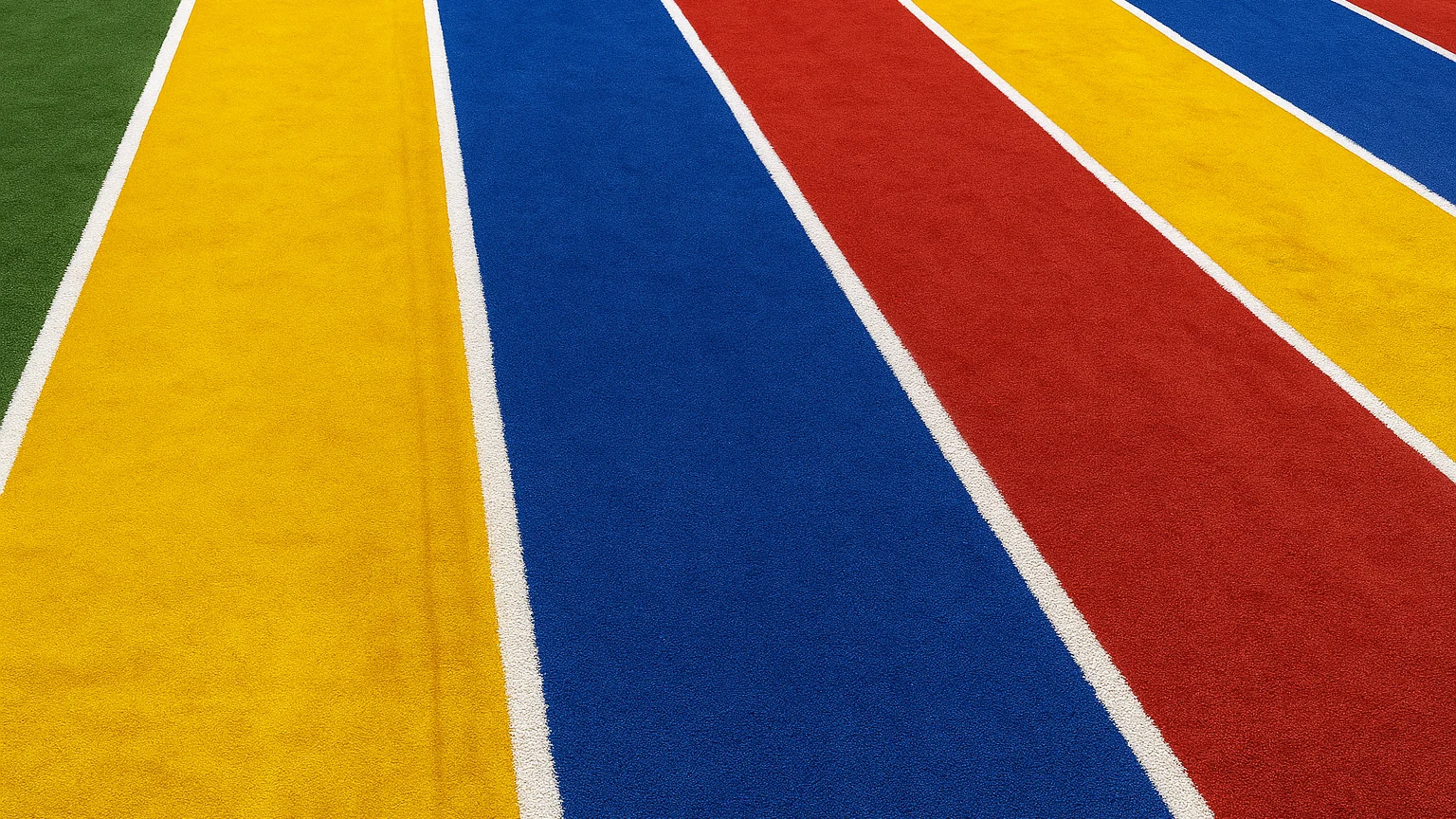
Artificial turf suits a gym's functional zone: sled pushes, sprints, agility drills, crawls and stretching. GAIA by Sanson Floorings recommends a short, dense pile such as GAIA MultiTurf at 10 or 15 mm, laid on a firm, level base, with free weights kept on rubber flooring.
Turf tracks have become a fixture of modern gyms, from large commercial clubs to compact studios and home gyms on a terrace. They give members somewhere to push a sled, run short sprints and work through drills without dodging benches, and a strip of green transforms the feel of a room full of black rubber and steel. The surface still has to be chosen and placed carefully. The wrong pile makes sleds drag and ankles roll, and turf in the wrong part of the gym wears out under dropped weights.
Gym turf at a glance
- Use it for movement: sleds, sprints, agility, crawls, stretching and group classes.
- Keep the pile short: short, dense turf lets sleds glide and gives stable footing.
- Not for dropped weights: lifting platforms and dumbbell areas belong on rubber.
- Plan the length: a track along a wall gives the longest straight run.
- Clean it often: sweat, chalk and dust collect quickly in a busy gym.
Why do gyms use artificial turf?
Because it supports exercises that other gym floors do not. A weighted sled glides across a short turf with steady, controllable resistance, where it would grip and judder on rubber. Turf gives good traction for sprint starts and lateral drills, is comfortable to kneel and crawl on, and marks out a clear zone for functional training so that members know where to go. It also changes the feel of the space, which matters for boutique studios and home gyms that want to look different from a standard weights room.
Indoor sports floors are judged on properties such as shock absorption, grip and evenness, the same ones set out in the European standard for indoor multi-sport surfaces, EN 14904. Those are useful questions to ask of any gym surface, turf included.
What pile height is best for gym turf?
Short and dense. A long, soft pile slows a sled, makes footing less stable during cuts and turns, and traps more dirt. Gym floors are one of the uses GAIA designs MultiTurf for, and both of its heights, 10 and 15 mm, work on a track; see GAIA MultiTurf. The shorter of the two gives the fastest sled glide and the firmest footing; the 15 mm pile is slightly softer for crawling, stretching and floor work. Landscape grasses with taller piles are made for lawns, not for training.
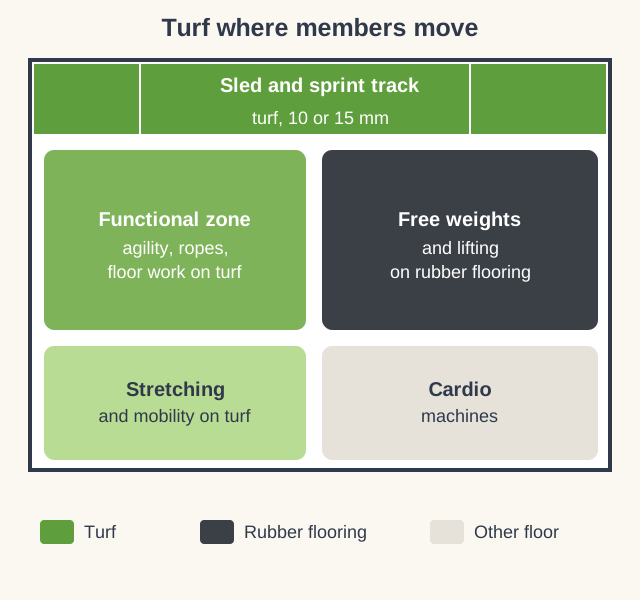
Where should turf go in a gym?
Where the training is about movement rather than lifting. A turf track along one long wall gives the longest straight run for sleds and sprints, and keeps that traffic out of the way of the rest of the floor. A wider turf area suits agility work, battle ropes, kettlebell flows and group classes. A stretching or mobility corner on turf invites members to use it. Plan a clear run-out at each end of the track, and keep benches, racks and cardio machines off it.
Can you drop weights on gym turf?
Not heavy ones. Turf is not designed to absorb barbells, heavy dumbbells or slammed loads, and repeated drops will damage both the turf and the floor beneath. Lifting platforms and free-weight areas belong on thick rubber flooring designed for impact. Light kettlebell work and medicine-ball drills are fine on turf when the ball or bell is not dropped from height.
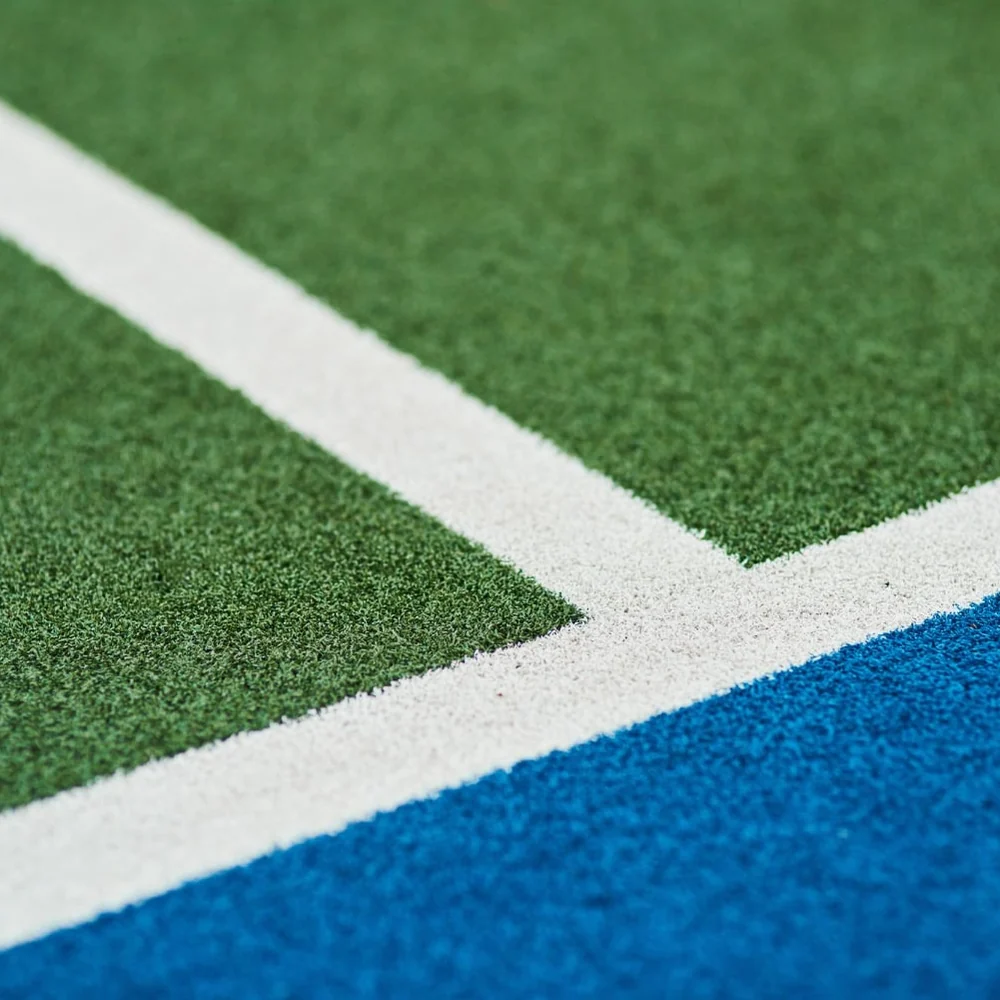
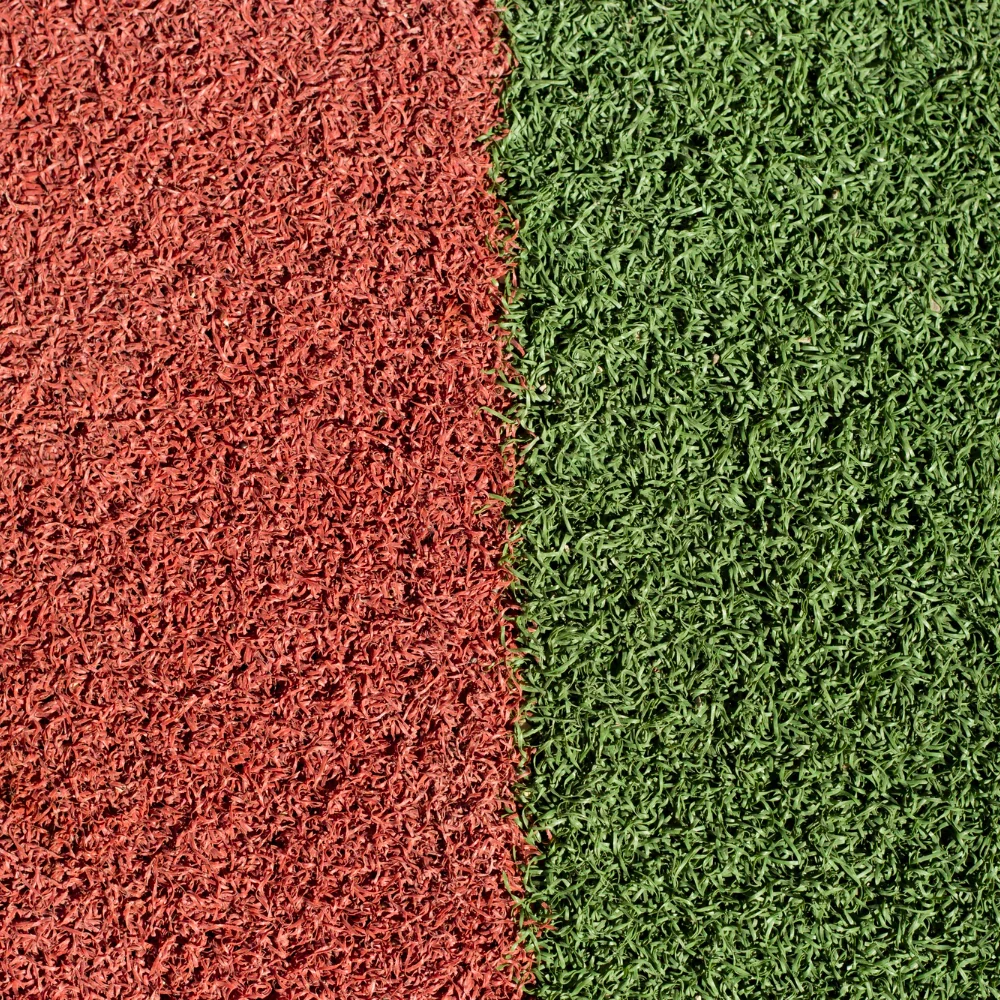
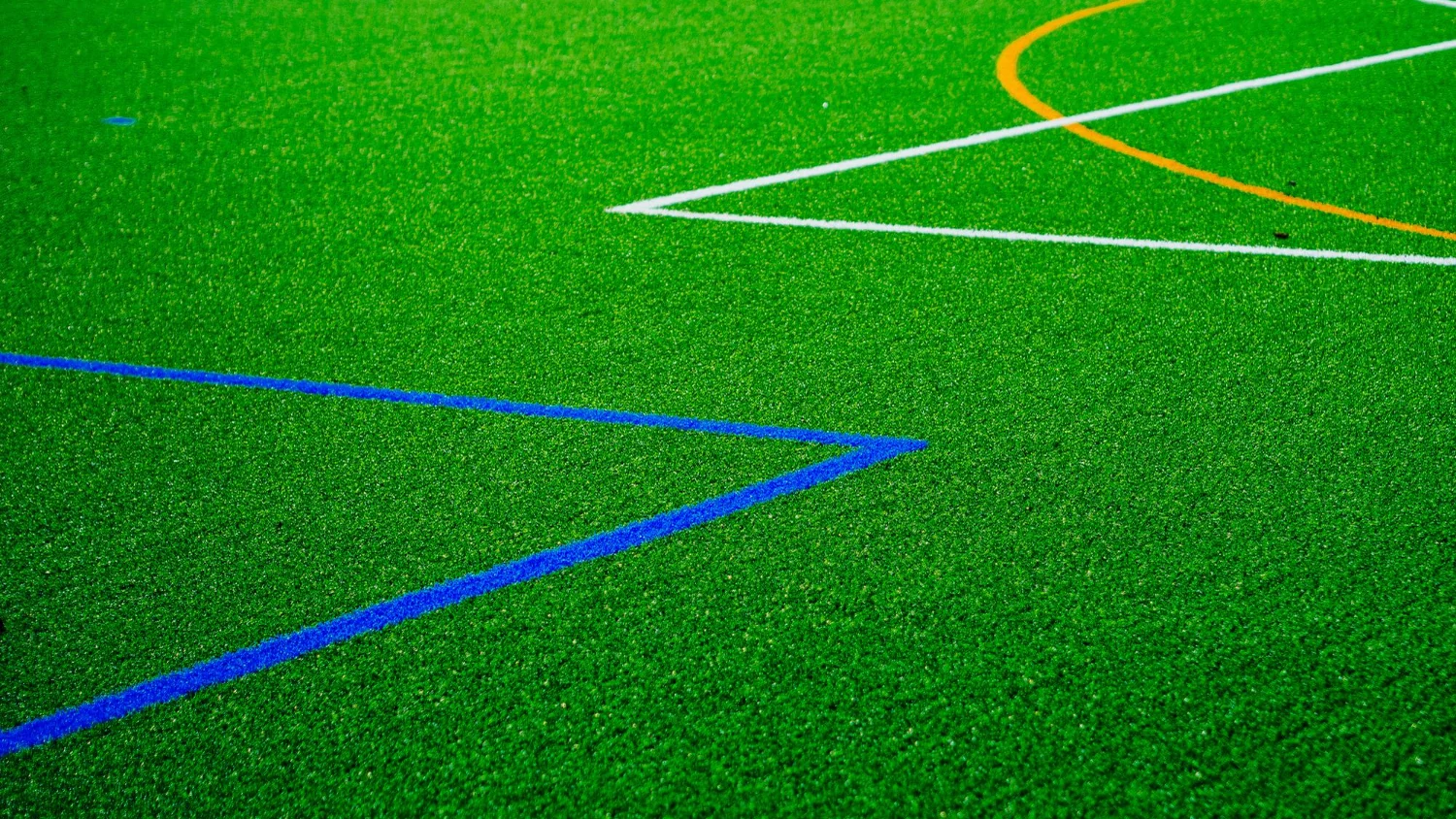
Short, dense turf with inlaid lines gives a gym a defined zone for movement work.
How is gym turf installed?
On a clean, level and dry floor, usually a concrete screed. The turf is laid in lengths, joined on seaming tape and bonded to the floor, so sleds cannot lift or ruck it. Edges next to rubber tiles or other floors are finished flush, with no lip to catch a foot. Lane lines and distance markers are best inlaid in a contrasting turf colour rather than painted. On a terrace or rooftop home gym, protect the waterproofing and allow for drainage, and plan shade, because turf in direct sun gets hot.
How do you clean gym turf?
Vacuum or sweep it daily in a busy gym, wipe up sweat and spilled drinks straight away, and wash it with a mild, turf-safe cleaner on a regular cycle. Brushing against the grain keeps the pile upright along the sled track, where it flattens fastest. The wider routine in how to clean artificial grass applies to gym turf too, and the Synthetic Turf Council's guidelines make the same point for every synthetic surface: regular grooming keeps it performing as designed.
How long and wide should a gym turf track be?
As long as the room allows, and wide enough for the equipment and a safe margin either side. A straight run along the longest wall gives the most useful sled and sprint work, with clear space at each end for stopping and turning a sled. Width depends on use: a single lane for sled work, or a wider strip where two members train side by side or a coach runs drills. Mark the lane with inlaid lines in a contrasting turf colour, keep racks and benches clear of it, and plan the run-out before the equipment layout is fixed. The difference between short and long piles, and why the shorter end of the range suits sleds, is set out in which pile height to choose.
If you are planning a court or play surface alongside the gym, multi-sport court flooring covers the same turf outdoors.
What to send us
- the gym plan with equipment marked;
- the track length and width you want;
- the existing floor: concrete, rubber tiles or a roof slab;
- the exercises the turf will be used for.
Our team will recommend the MultiTurf pile height and the layout for your gym.
Gym turf questions
How long should a sled track be?
As long as the room allows. Even a short track supports pushes and pulls, but a longer straight run gives more useful sprint and sled work.
Can artificial turf be laid over rubber gym flooring?
Usually it is laid on the screed beside the rubber, finished flush. Laying turf on top of loose rubber tiles makes the surface uneven and unstable.
Is 10 mm or 15 mm turf better for a gym?
The 10 mm pile gives the fastest sled glide and the firmest footing; the 15 mm pile is a little softer for crawling, stretching and floor work.
Does gym turf need infill?
Short gym turf is usually laid without loose infill, so it stays clean and sleds glide freely. Follow the installation method specified for the turf you choose.
Room to push, pull and sprint
Plan your gym turf
Send GAIA by Sanson Floorings your gym plan and the track you have in mind, and we will recommend the turf and layout.