For a 5-a-side pitch, choose football turf by how hard and how often it will be played: GAIA by Sanson Floorings makes it in 30 mm and 50 mm pile heights. Lay it on a compacted, level, free-draining base, fill it as specified, and size the pitch to the plot.
Five-a-side has become one of the busiest ways to play football in Indian cities. Rooftop pitches, school grounds, club facilities and pay-and-play arenas are booked from early morning to late at night, often by players who would struggle to find a full-size ground. That kind of use is hard on a surface. The turf you choose, and especially what lies beneath it, decides whether the pitch still plays well after a year of evening bookings or starts to feel hard, patchy and uneven.
5-a-side turf at a glance
- Pitch size: usually 25–50 m by 16–35 m, plus room for run-off and netting.
- Pile height: 30 mm for a firmer, faster game; 50 mm for a fuller, more cushioned feel.
- Base: compacted, level and sloped to drain; it matters as much as the turf.
- Infill: holds the fibres upright and controls bounce and grip.
- Care: regular brushing, debris removal and infill top-ups.
What size is a 5-a-side football pitch?
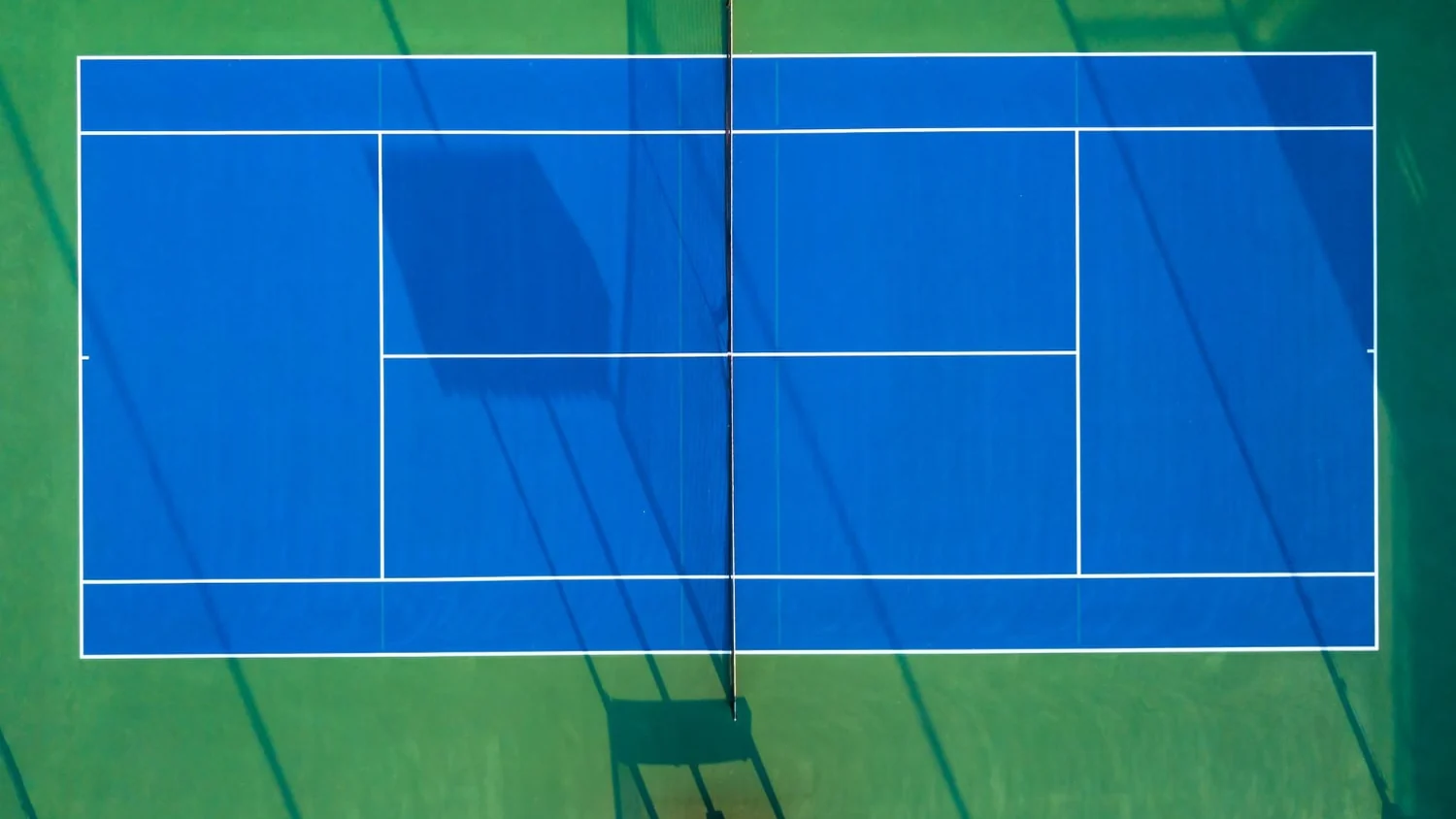
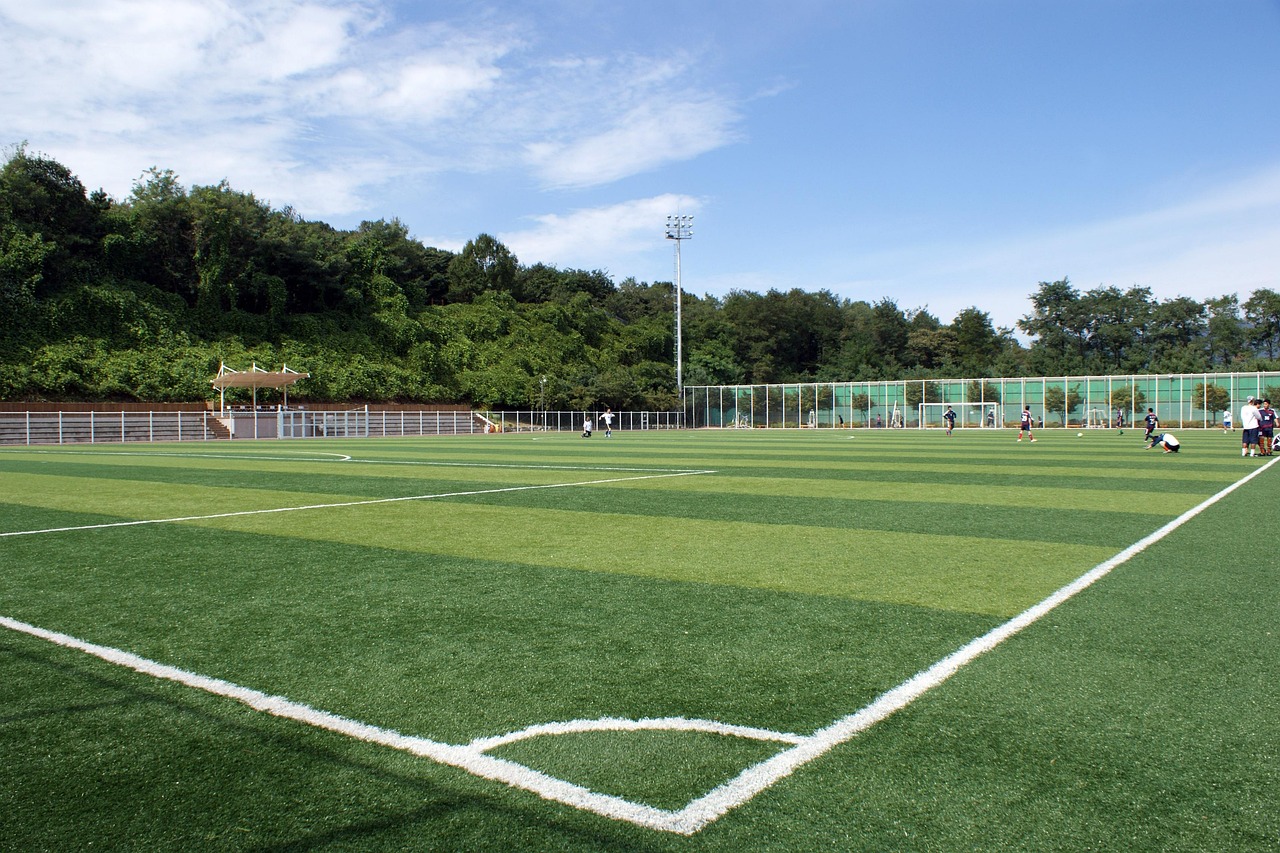
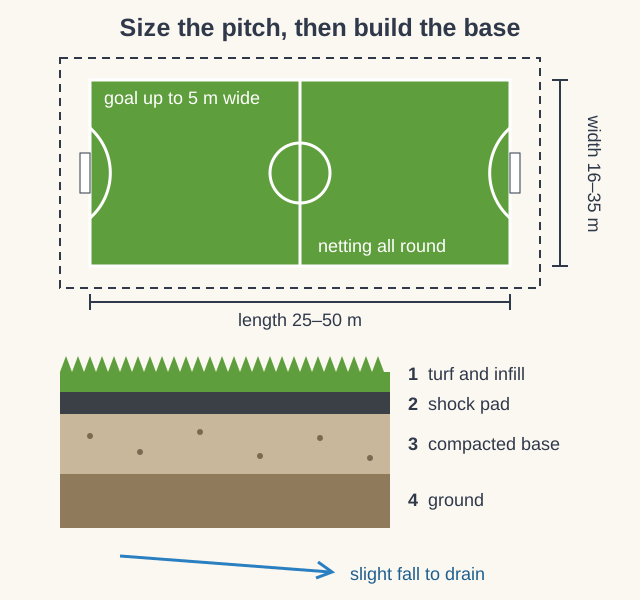
There is no single fixed size. The FA's law on the playing area for small-sided football recommends a rectangular pitch 25–50 m long and 16–35 m wide, on a surface that is smooth, flat and non-abrasive, with goals up to 5 m wide. Within that range, the plot usually decides: a smaller pitch can leave room for a second one beside it. Allow extra space beyond the lines for run-off, netting posts and a walkway, and check the clear height for netting or a roof if the pitch is enclosed.
30 mm or 50 mm football turf: which should you choose?
It depends on the game you want and the place it is going. A 30 mm turf plays firmer and faster, takes less infill and adds less weight, which helps on rooftops and on pitches used for training, schools or mixed activity. A 50 mm turf gives a deeper, more cushioned surface once filled, closer to the feel of a full-size artificial pitch, and suits heavy commercial use and players in studded boots. Both are part of GAIA Sports Grass, and how they compare with lawn and court grasses is set out in our pile height comparison. Competition football turf is tested under the FIFA Quality Programme for football turf, which measures ball roll, bounce, shock absorption and player grip; ask any supplier which of those properties their turf has been tested for. If the turf will also host cricket nets, yoga or events, mention it at the start, as that may tip the choice.
For how football turf differs from landscape grass and MultiTurf, see the types of artificial grass.
What goes under football turf?
A properly built base, which is where many small pitches go wrong. On open ground, that means removing soil and roots, laying and compacting a granular sub-base, and finishing it level with a slight fall so rain runs off the surface and through the turf's drainage holes. Bumps or hollows in the base show through as uneven bounce within weeks. A shock pad between base and turf adds cushioning and helps the surface play consistently. The general sequence is set out in how artificial grass is installed.
Rooftop pitches need two extra checks before anything is ordered: a structural engineer's confirmation that the slab can carry the turf, infill and players, and protection for the waterproofing with clear paths to the roof drains. Both are explained in laying turf on a terrace.
Does 5-a-side turf need infill?
Almost always. Sand at the base of the fibres weighs the turf down and keeps it stable, and a performance infill on top supports the blades, cushions the players and controls how the ball rolls and bounces. The amount depends on the pile height, which is one reason a 30 mm pitch is lighter than a 50 mm one. Infill moves with play, collecting in goalmouths and along the centre, so it has to be brushed back and topped up.
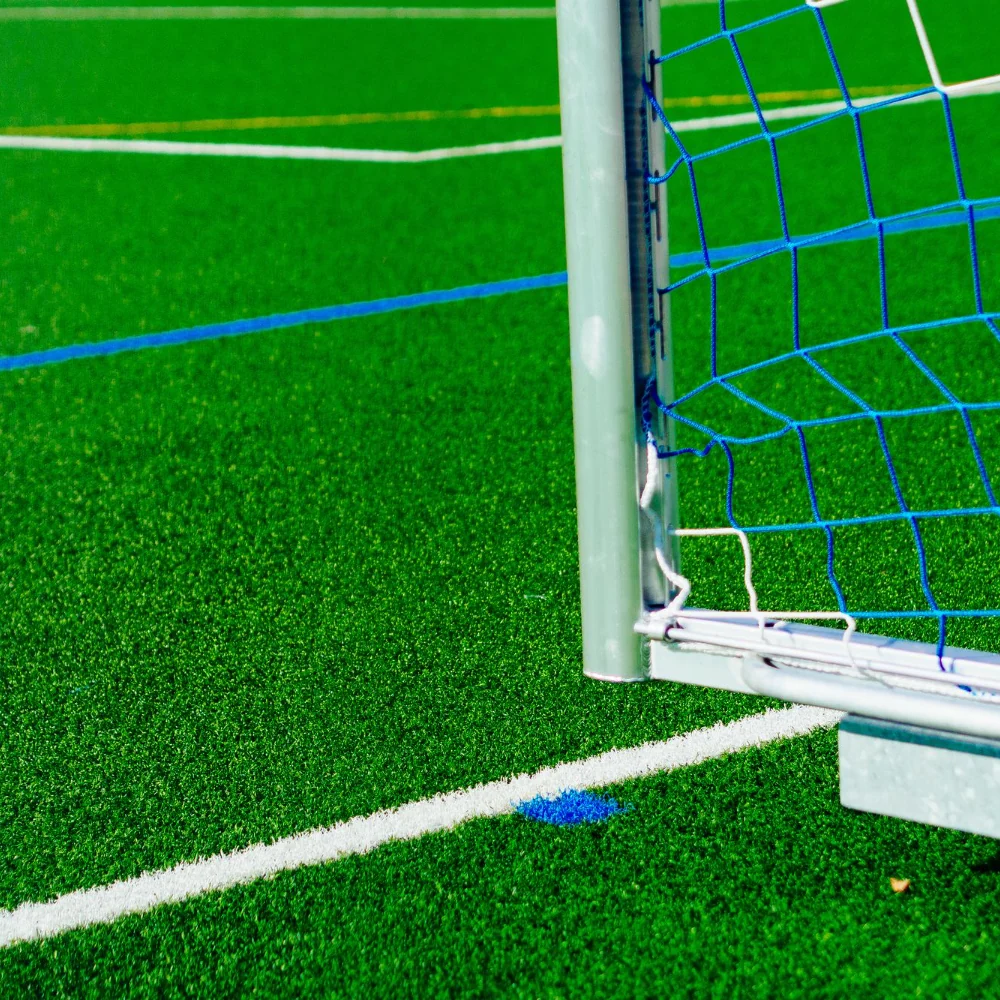
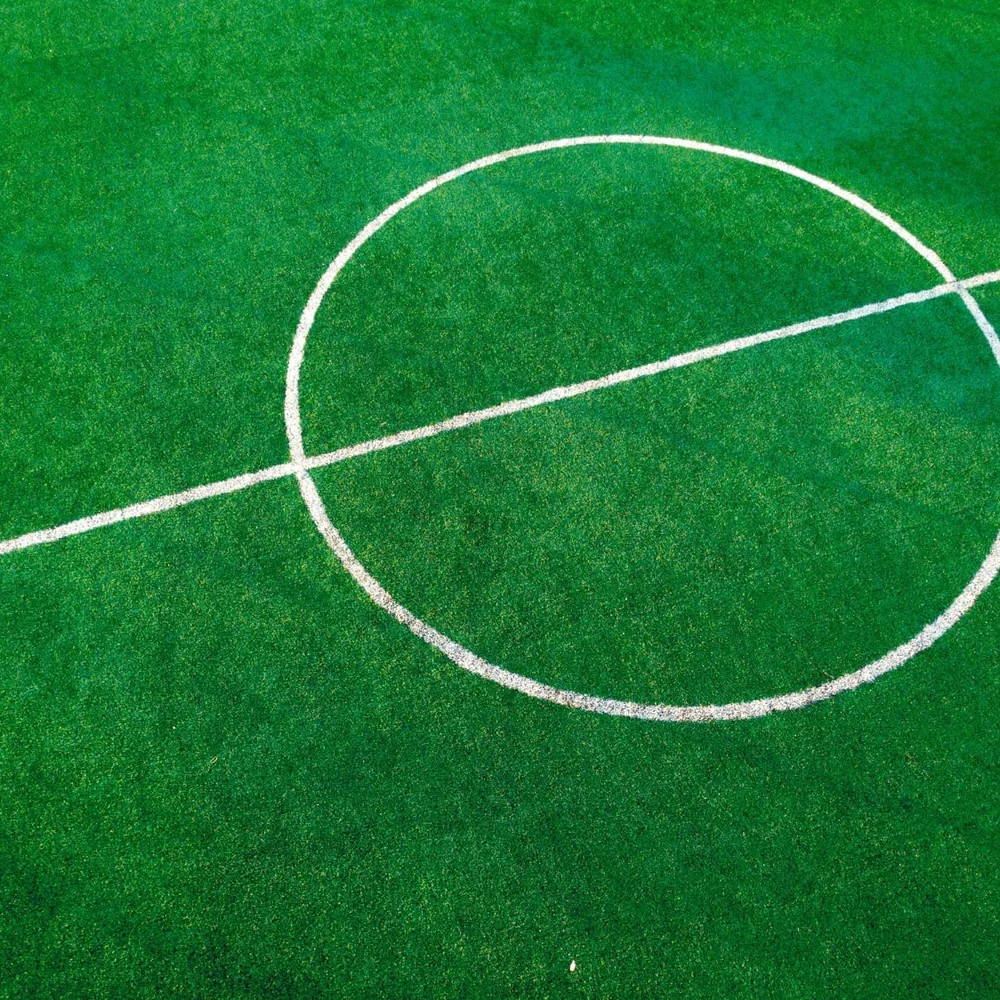
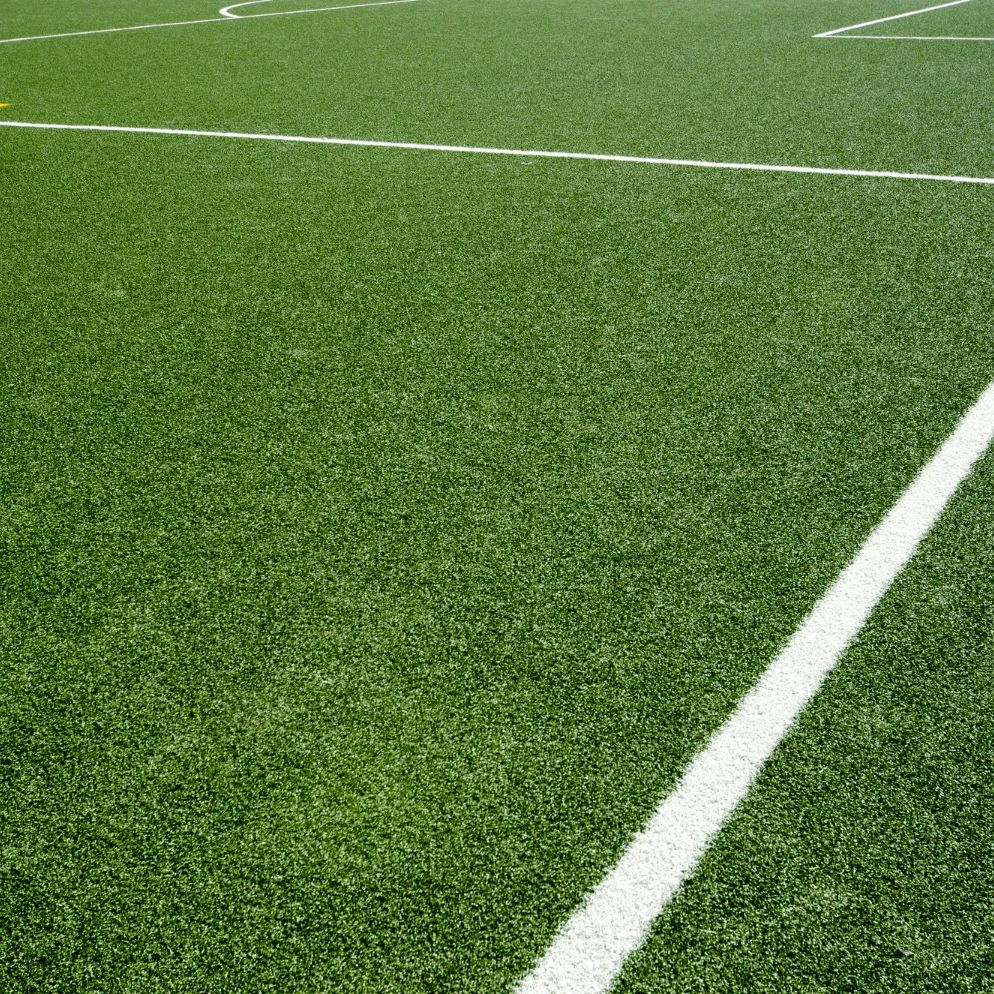
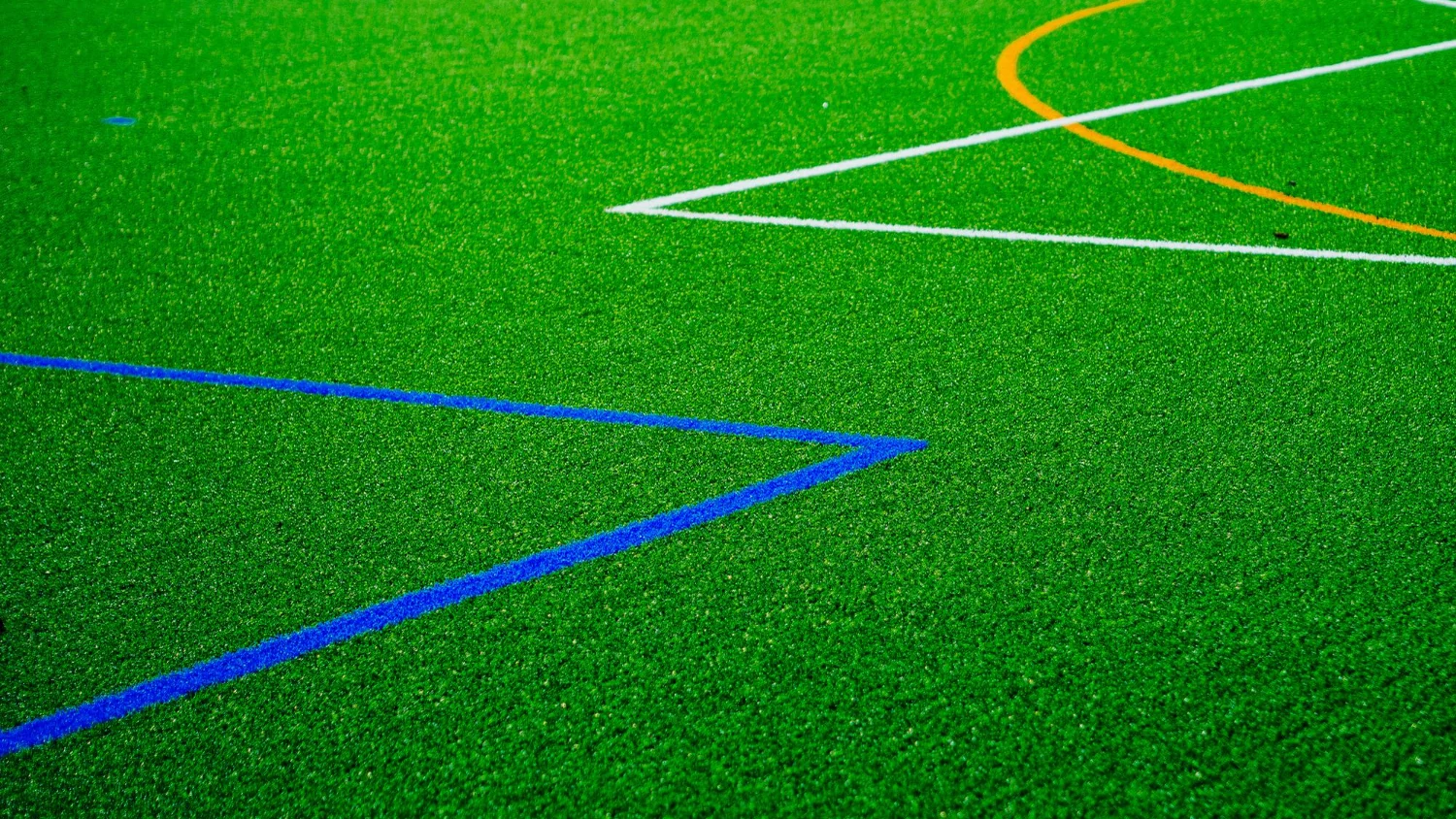
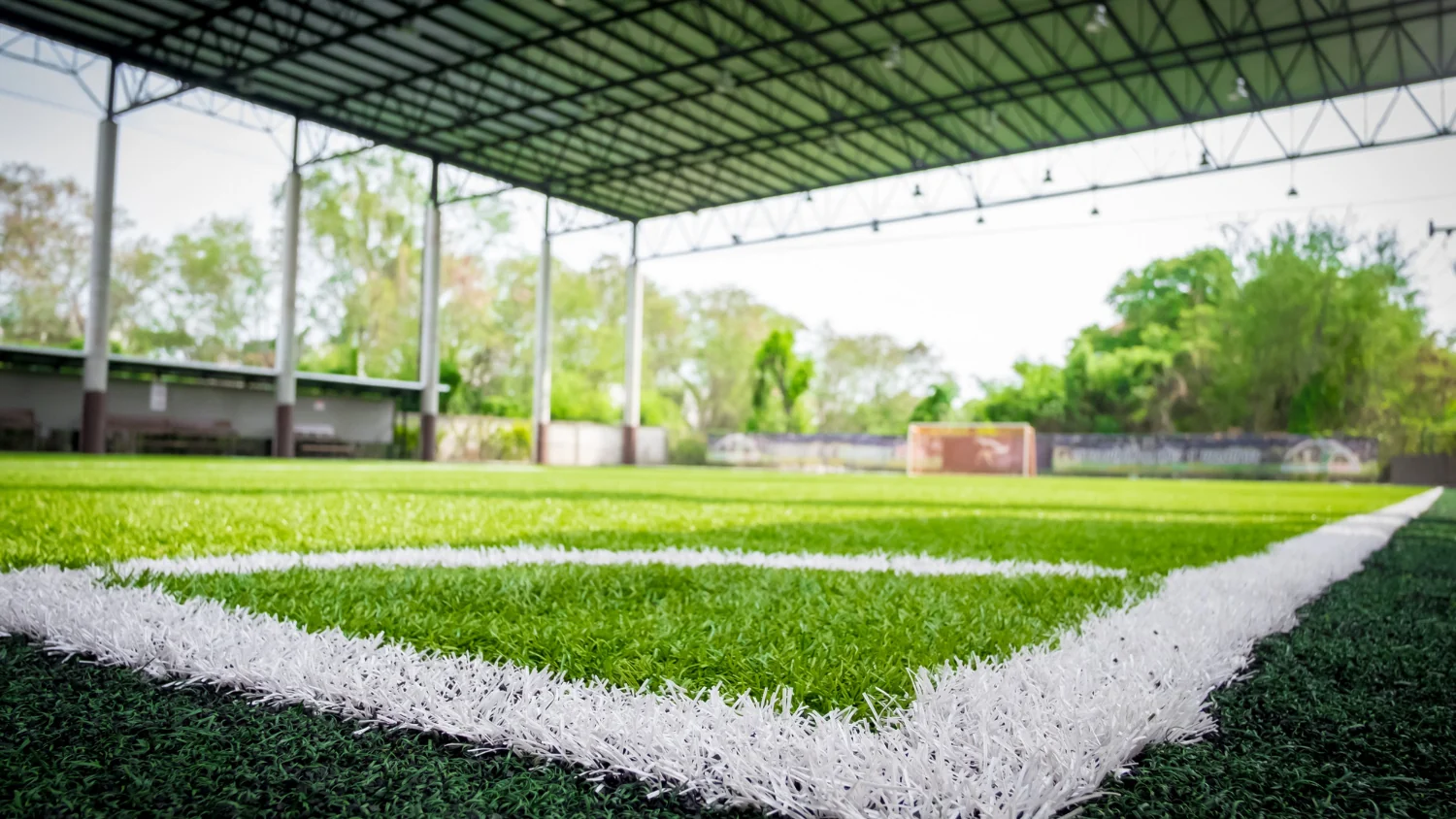
Goalmouths, centre circles and touchlines: inlaid white lines never need repainting.
Lighting, netting and line marking
Most 5-a-side games are played after work, so floodlighting is part of the pitch, not an extra. Position masts outside the playing area and aim the lights to avoid glare for players and neighbours. Netting on all sides keeps the ball in play and protects windows and passers-by. Lines are best inlaid in white turf during installation, so they never need repainting.
How do you maintain a 5-a-side pitch?
- Brush the surface weekly, more often on heavily booked pitches.
- Remove leaves, litter and chewing gum before they are pressed into the infill.
- Replenish infill where it thins, especially in front of the goals.
- Check seams and line joints and repair any lifting edges promptly.
- Ban food, smoking and fireworks on the pitch.
What to send us
- the plot or roof dimensions, and the pitch size you want;
- what is underneath now: soil, concrete or a roof slab;
- how many hours a week the pitch will be booked;
- any other sports or events planned on the same surface.
Our team will recommend the turf height and the build-up for your pitch.
5-a-side turf questions
Can football turf be laid on a rooftop?
Yes, once a structural engineer has confirmed the slab's capacity and the waterproofing is protected. A 30 mm turf keeps the infill load lower.
Is 50 mm turf too long for 5-a-side?
No. Filled correctly, it gives a cushioned, consistent surface for heavy play; a 30 mm turf simply gives a faster, firmer game.
Can you play cricket on football turf?
Casual box cricket, yes. For regular net practice, a dedicated pitch strip gives a truer bounce than football turf.
How much infill does football turf need?
It depends on the pile height. A 50 mm turf holds more sand and performance infill than a 30 mm turf, which is one reason the shorter turf suits rooftops.
Built for the evening rush
Plan your 5-a-side pitch
Send GAIA by Sanson Floorings your plot size and how the pitch will be used, and we will recommend the football turf and build-up.