The best play area flooring cushions falls, stays firm for running and wheeled toys, and cleans easily. GAIA by Sanson Floorings recommends artificial grass for outdoor lawns and open play, carpet tiles for indoor playrooms, and tested impact-absorbing surfacing under climbing frames, slides and swings.
A play area floor is a safety surface first and a design surface second. Children fall, slide, crawl, ride and sit on it, often all in the same ten minutes, and the floor has to take every one of those uses in its stride. Whether the space is a corner of a home, a housing society lawn, a school playground or the kids' zone of a restaurant, the questions are the same: how far can a child fall here, how will the surface be cleaned, and will it still look good after a year of hard use?
Play area flooring at a glance
- Under equipment: impact-absorbing surfacing rated for the fall height.
- Open play outdoors: artificial grass for a green, mud-free surface all year.
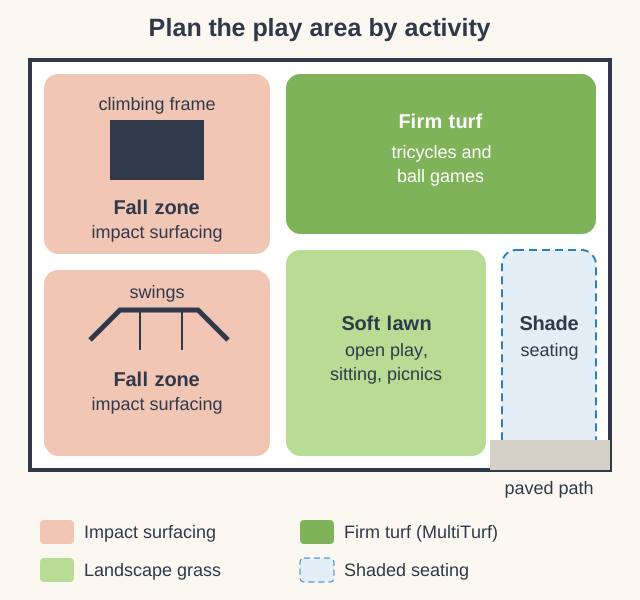
- Wheeled toys and ball games: a short, firm turf that wheels roll across easily.
- Indoor playrooms: carpet tiles that are soft to sit on and easy to repair.
- Every surface: shade, drainage and a simple cleaning routine.
What is the safest flooring for a play area?
The one matched to the fall height. Where children can climb, the surface beneath has to absorb an impact from that height, and in Europe such surfaces are tested under EN 1177, which sets out how to determine the critical fall height a surface protects against. In practice that means rubber surfacing, or artificial grass laid over a tested shock pad, under and around every climbing frame, slide and swing, extending well beyond the equipment's footprint. The US Consumer Product Safety Commission's Public Playground Safety Handbook recommends that this use zone extend at least 6 feet, about 1.8 m, in every direction around a freestanding climber, and that a surface's rated critical height be at least the fall height of the tallest equipment. It also warns that grass, soil and untested carpet do not count as protective surfacing. Grass laid directly on concrete looks soft but is not a fall surface on its own.
Away from the equipment, where children run, sit and play on the ground, the priorities shift to grip, comfort, cleanliness and drainage.
Should a play area have artificial grass?
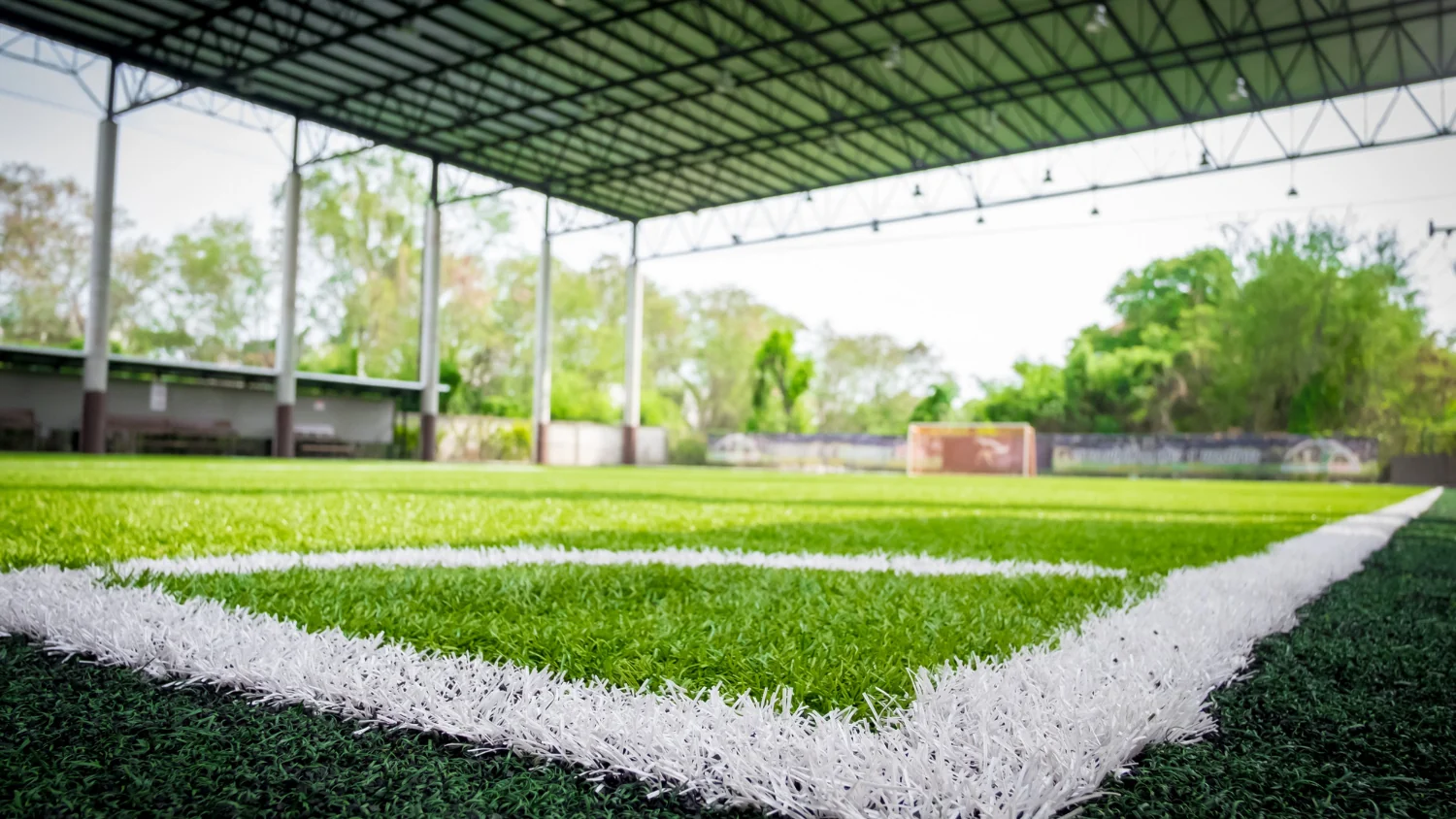
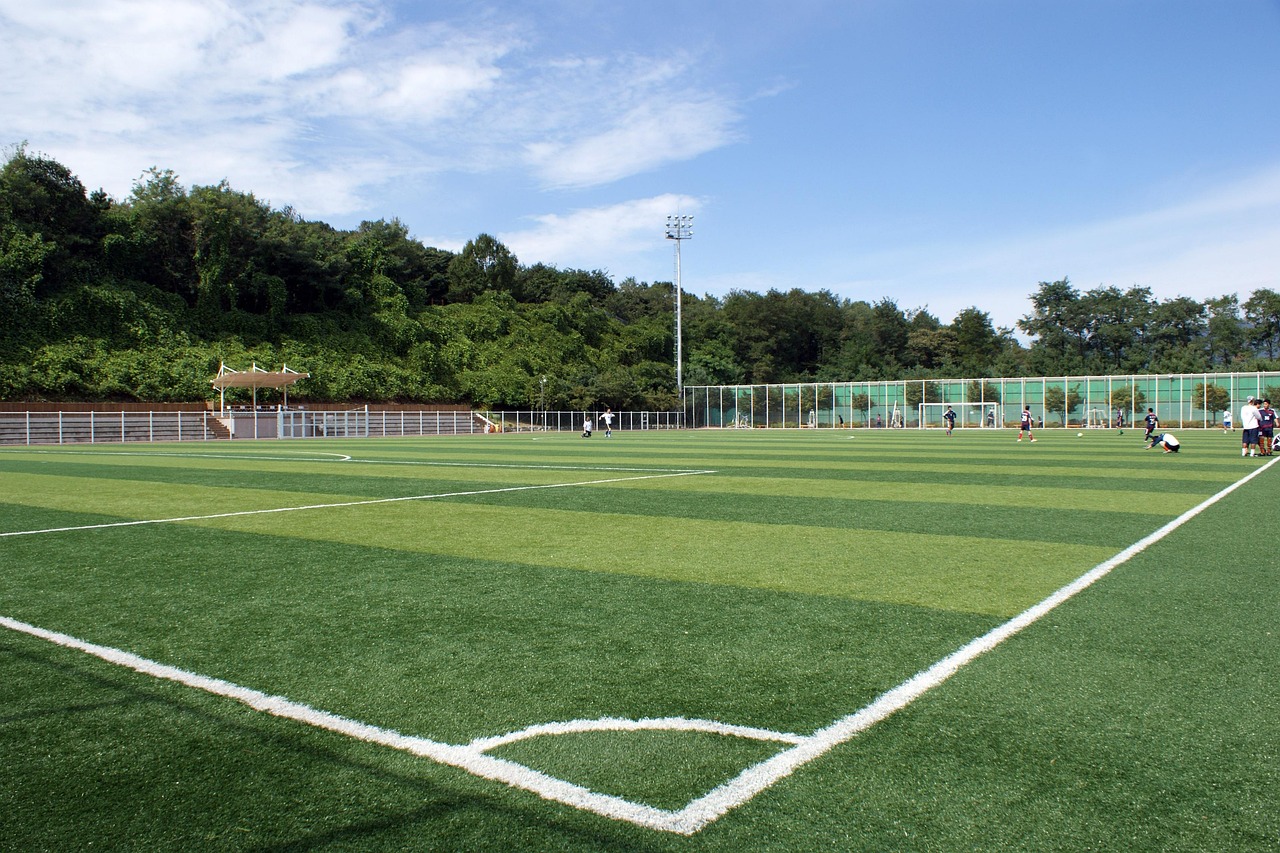
For open play, yes. It stays green through the dry months and the monsoon, there is no mud to carry indoors, and it drains after rain so the area is usable again quickly. For lawns and gentle play, GAIA Landscape Grass runs from a 20 mm to a 60 mm pile, and the taller options give a softer feel underfoot; see GAIA Landscape Grass. Where tricycles, scooters and ball games dominate, a shorter and firmer surface works better, because wheels roll freely and balls bounce predictably. GAIA MultiTurf, a compact turf offered at 10 and 15 mm, is made for that kind of active use, and the trade-offs between short and long piles are set out in which pile height to choose. The range is shown at GAIA MultiTurf.
Two cautions apply. Any synthetic surface warms up in direct sun, so shade over a play area matters in Indian summers, as explained in does artificial grass get hot. And, as above, grass needs a shock pad beneath it wherever children might fall from height.
What flooring suits an indoor play area or playroom?
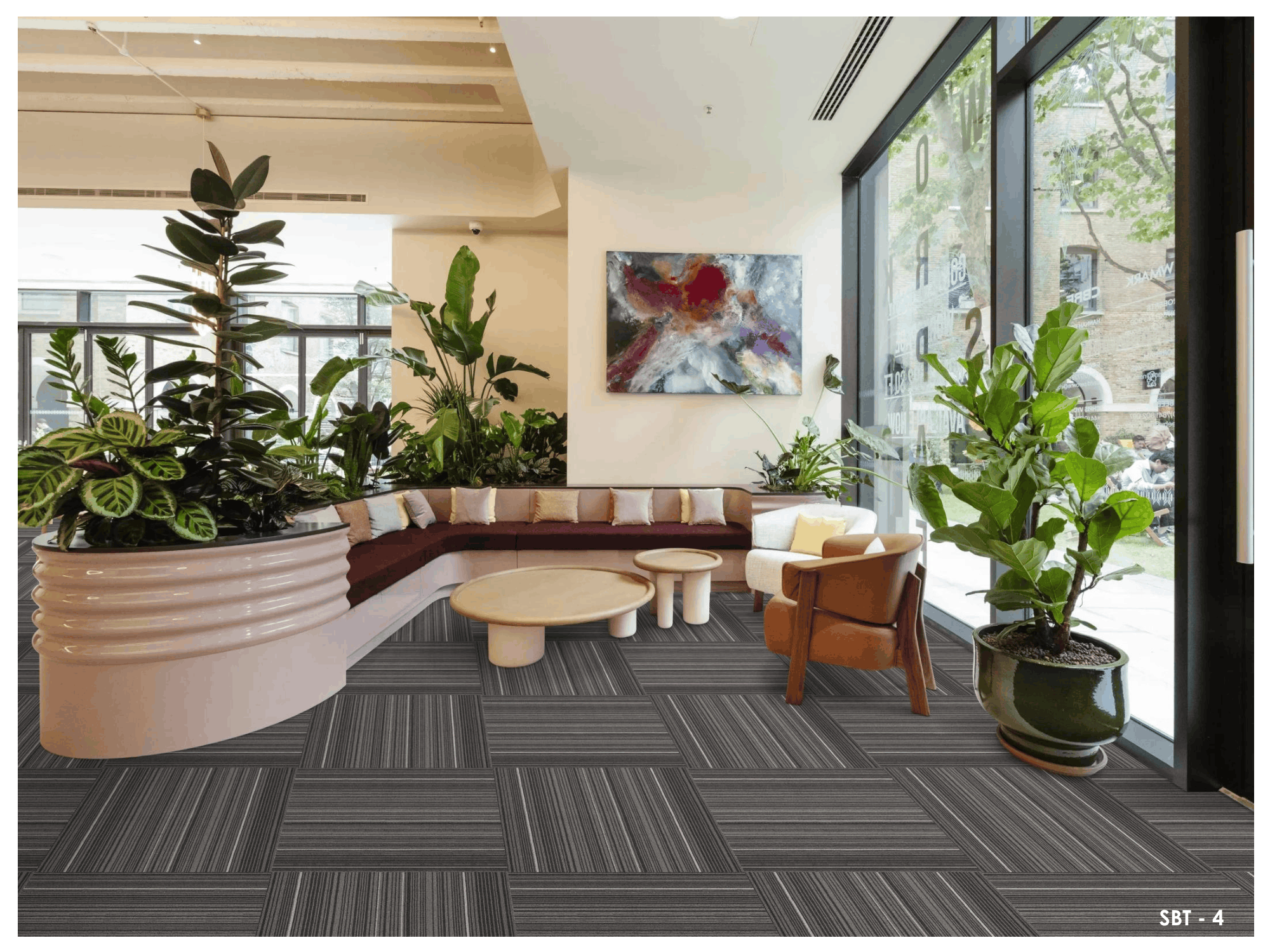
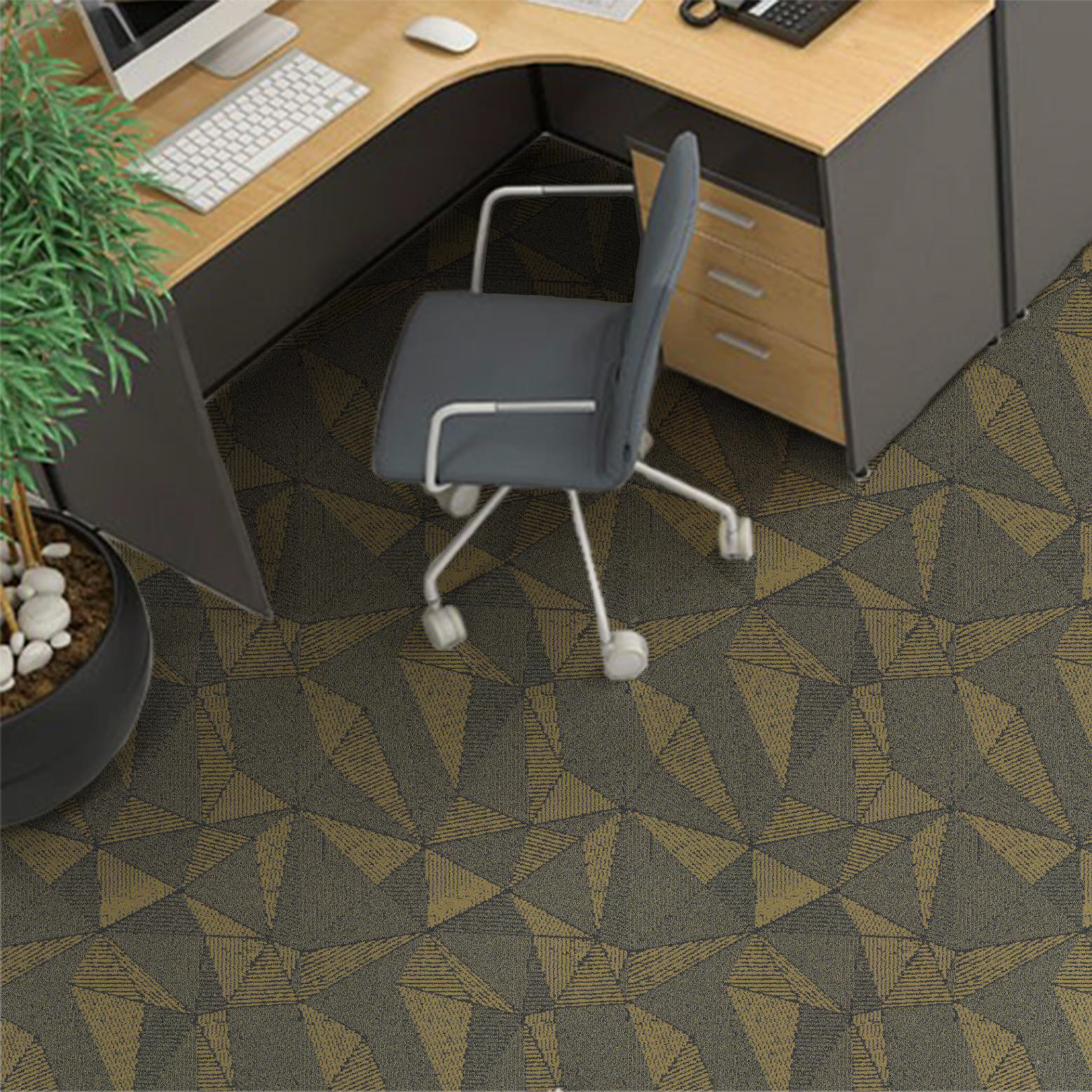
Carpet tiles, in most homes and schools. Children spend much of their indoor play time on the floor, and carpet is warmer and gentler than tile or stone for sitting, crawling and building. It also quietens a playroom, which parents and teachers notice quickly. When juice, paint or play dough lands on a tile, that single tile can be lifted out, cleaned or replaced. Colour can mark out a reading corner, a building area and a quiet zone. More ideas for homes are in carpet tiles for home, and school spaces are covered in flooring for schools.
Indoor play centres with soft-play frames still need impact surfacing under any climbing height, exactly as outdoors.
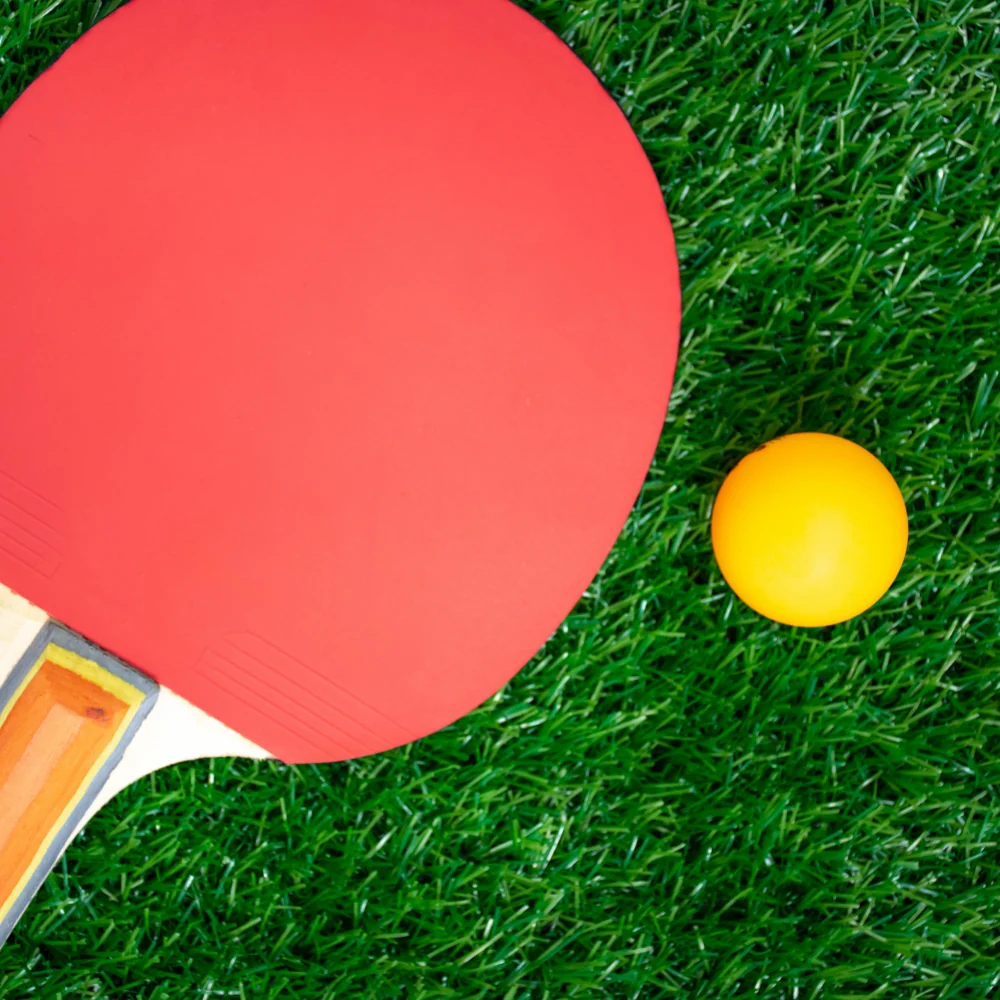
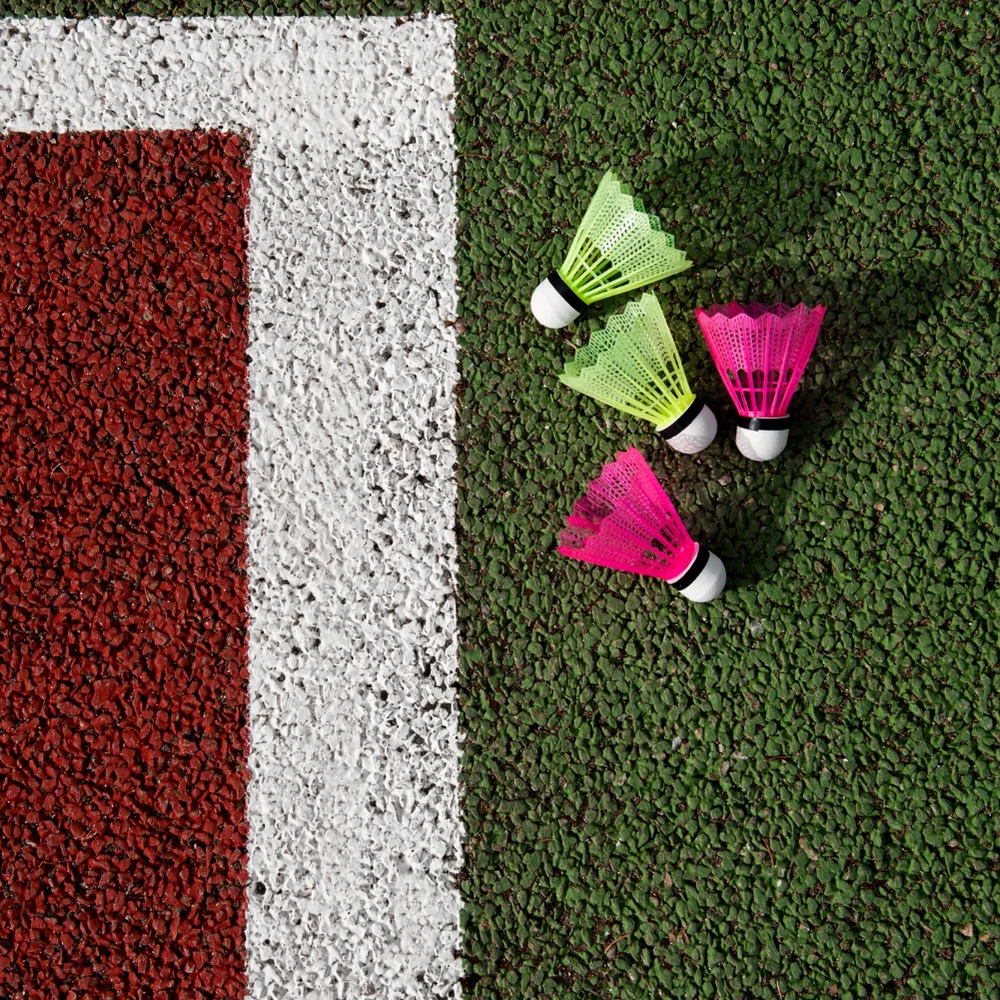
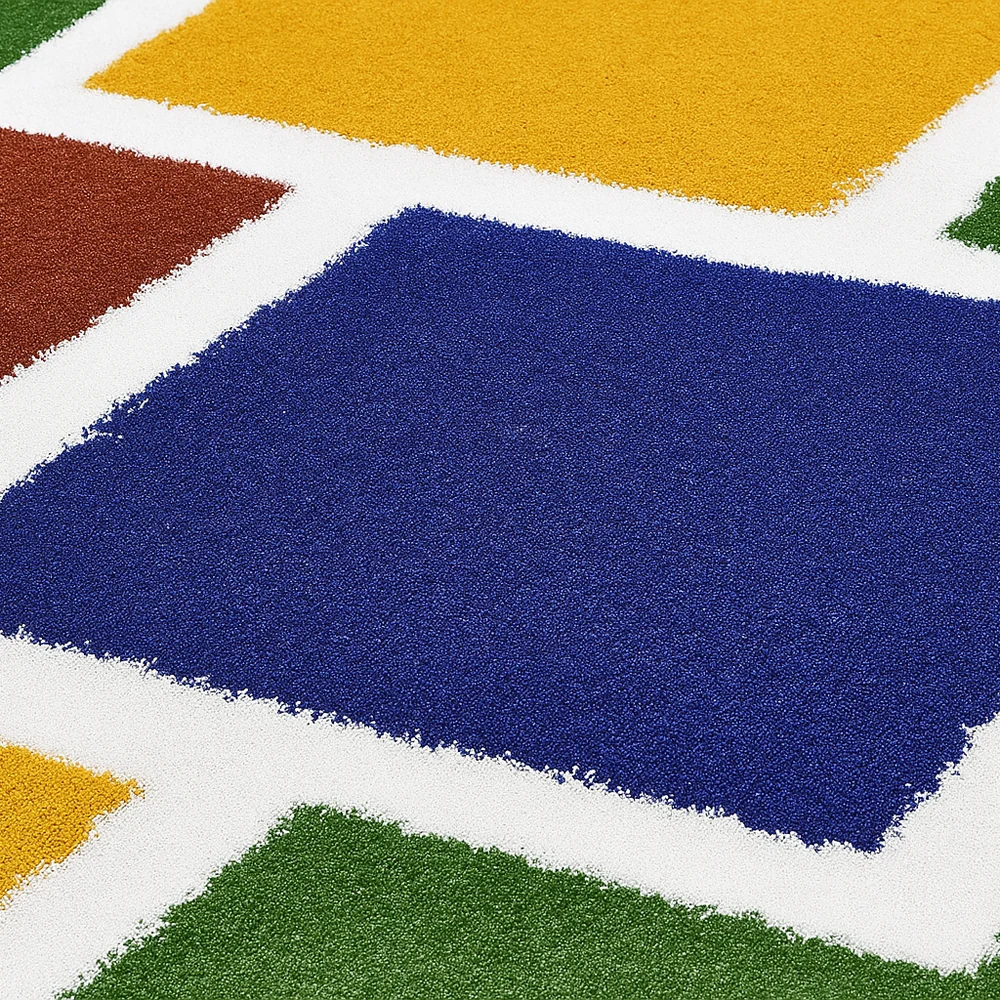
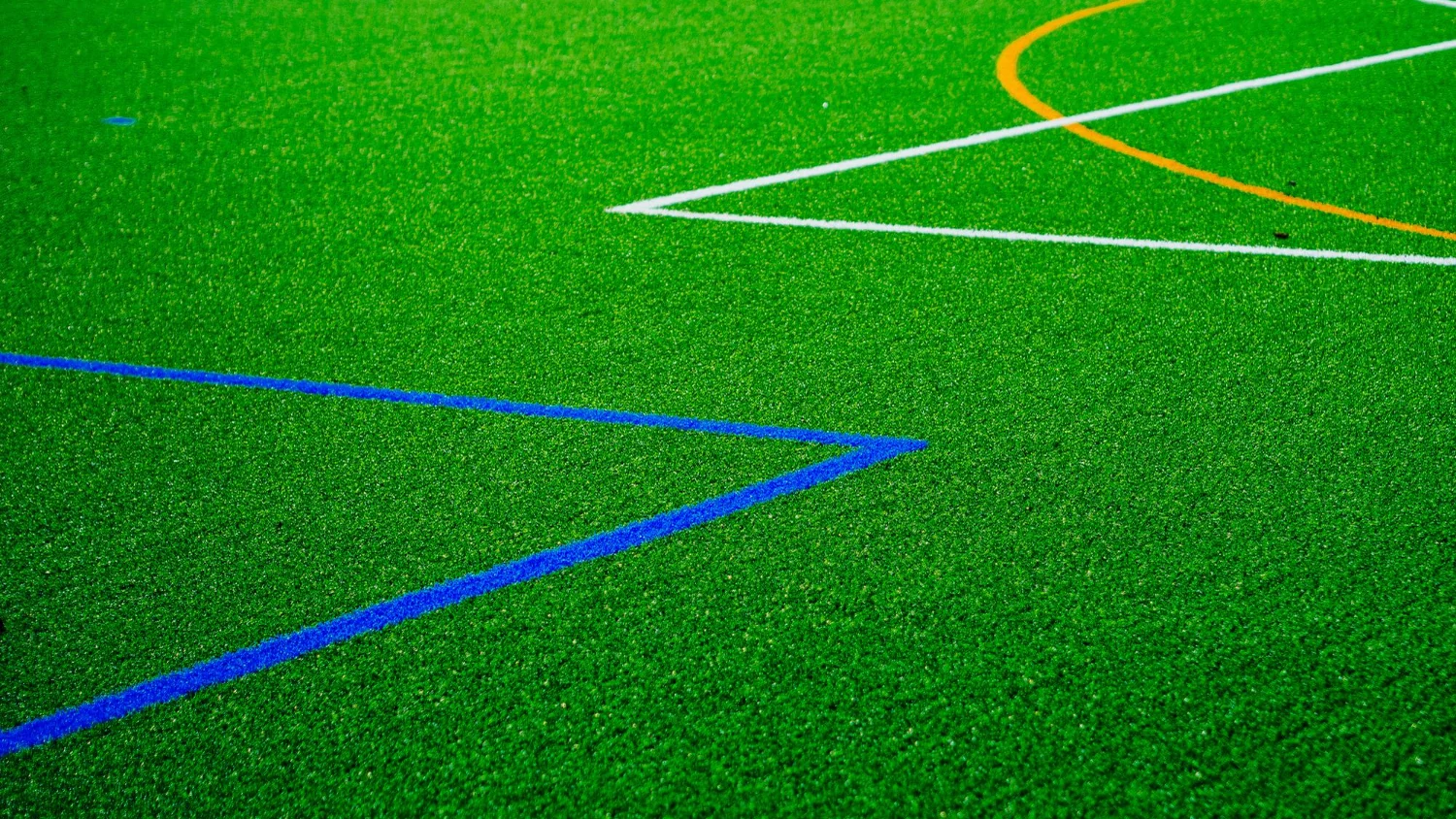
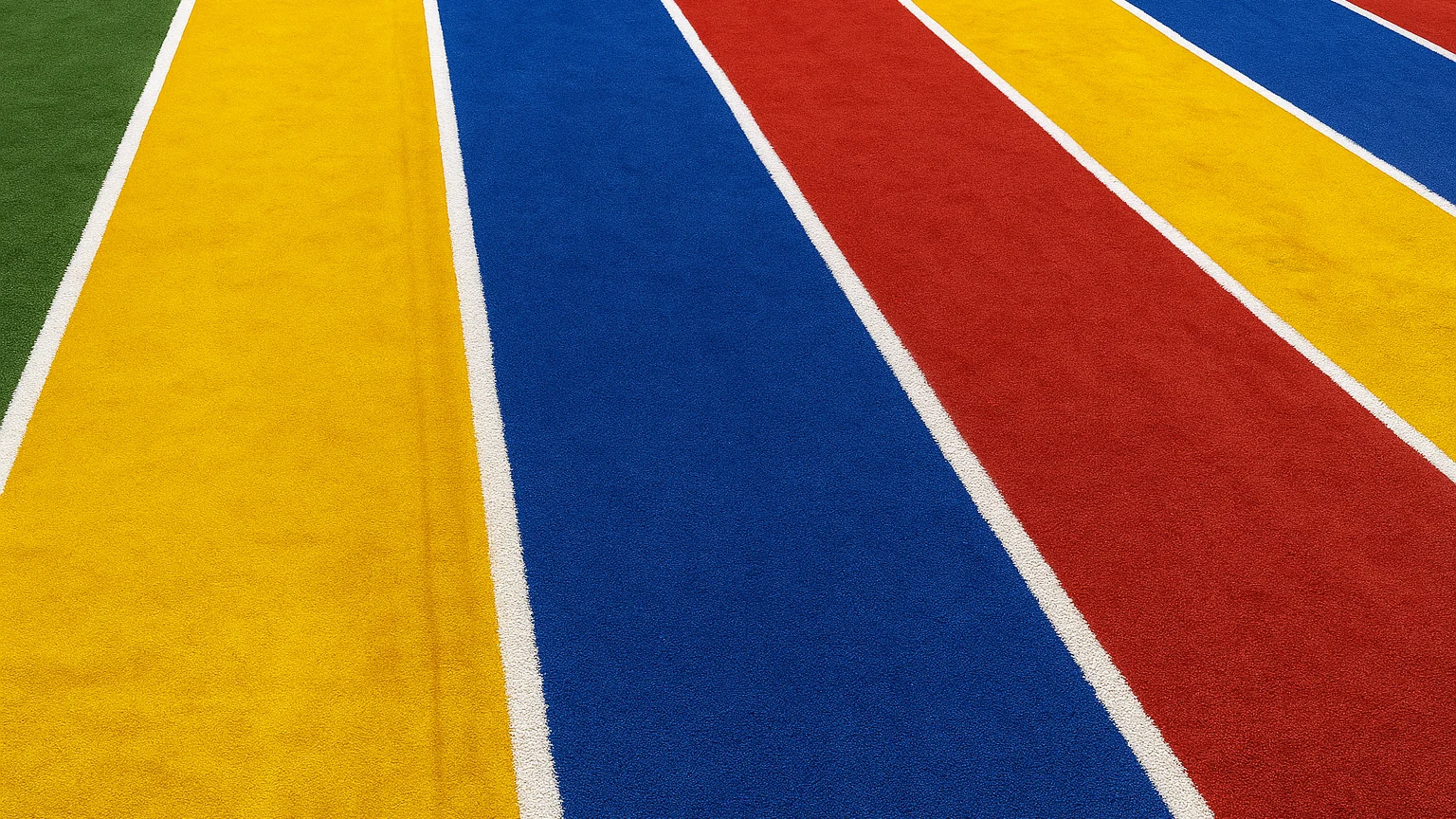
Short turf for games, coloured turf to mark zones: play areas work best when each surface has a job.
What should housing societies and schools plan for?
Heavy, daily use by many children, and maintenance by people who have other jobs too. A shared play area should have a clear layout, with fall zones, a firm area for wheels and games, and a softer lawn, rather than one surface trying to do everything. Plan drainage falls before laying anything, provide shade over the busiest areas, and fix a cleaning routine with the maintenance team from day one. Paths from the building should be paved, so prams, wheelchairs and older residents can reach the seating without crossing the grass.
How do you keep a play area clean?
Little and often. Remove leaves and litter weekly, rinse the surface during dusty spells and after any spill, and brush artificial grass against the grain now and then so the fibres stay upright. Check fall surfaces regularly for damage, gaps and loose edges, because those are trip hazards in their own right. A full routine is laid out in our turf cleaning guide.
Play area flooring checklist
- Measure every piece of equipment and the height children could fall from.
- Specify tested impact surfacing under and around each one.
- Choose firm turf for wheels and ball games, softer grass for open play.
- Use carpet tiles in indoor playrooms and reading corners.
- Plan shade, drainage, paths and a weekly cleaning routine.
What to send us
- the size and shape of the area, with any equipment marked;
- whether it is indoors, outdoors, on a roof or on soil;
- the age range of the children who will use it;
- current photographs of the area.
Our team will suggest the right grass or carpet for each zone of your play area.
Play area flooring questions
Is artificial grass safe for children?
For running, sitting and playing on the ground, yes, with shade in strong sun and regular cleaning. Under climbing equipment it must sit on a tested shock pad.
Which floor suits a toddler play area best?
A soft, clean, easy-to-wipe floor: carpet tiles indoors, or a soft landscape grass outdoors, with cushioned surfacing under any low climbing pieces.
How far should safety surfacing extend around play equipment?
At least 1.8 m in every direction around a freestanding climber, following the CPSC handbook, and further in front of slides and swings. Measure it on the plan before choosing surfaces.
Can coloured artificial grass be used in a play area?
Yes. Coloured turf can mark games, routes and quiet corners, and it plays like green turf of the same pile. Under climbing equipment it still needs a tested shock pad.
Safe ground for every game
Plan your play area
Share your play area's size and photographs with GAIA by Sanson Floorings, and we will recommend grass and carpet options for each zone.