Good classroom acoustics means a teacher's voice reaches the back row clearly, without echo or background noise blurring the words. The fix is to absorb sound overhead and on the rear wall, quieten the floor and keep noise from fans and corridors down. ANSI S12.60 sets 0.6 seconds of reverberation for typical classrooms.
Children hear speech differently from adults. They are still learning the language, they cannot fill in a missed word from context the way a grown-up can, and many lessons happen in a second language. A room that adults find merely lively can leave a nine-year-old guessing at half of what the teacher said. Most Indian classrooms are built from exactly the materials that make this worse: plastered walls, a hard ceiling, stone or vitrified tile underfoot and a ceiling fan turning overhead.
Classroom acoustics at a glance
- Reverberation target: 0.6 seconds for a typical empty classroom under ANSI S12.60, and 0.7 seconds for a larger one.
- Background noise target: no more than 35 dBA in an empty classroom of either size.
- Treat the ceiling first: it is the largest uninterrupted surface in most classrooms.
- Then the back wall: it sends the teacher's voice back to the front as a late, smeared echo.
- Keep the board wall reflective: a hard surface behind the teacher helps project the voice forward.
Why do children struggle to hear in a classroom?
Because the teacher's words arrive mixed with their own reflections and with everything else in the room. In a hard classroom each syllable keeps sounding for a moment after it is spoken, so the end of one word overlaps the start of the next. Add a fan, traffic through an open window and thirty children shuffling chairs, and the consonants that carry meaning, such as the difference between "fifty" and "fifteen", are the first to be lost. Pupils at the back, those with a cold or a mild hearing loss, and those learning in a second language feel it most.
What is the standard for classroom acoustics?
The most widely cited is ANSI/ASA S12.60, the American standard for classroom acoustics. It limits reverberation time, the time a sound takes to fade away after it stops, to 0.6 seconds in a core learning space of under 10,000 cubic feet (about 283 m³) and 0.7 seconds in one of 10,000 to 20,000 cubic feet (about 566 m³). It also caps background noise at 35 dBA in both. The figures apply to empty rooms, so a classroom full of children will measure lower reverberation and higher noise. Larson Davis sets out the limits by room volume. The standard is voluntary unless a school or authority adopts it, but it is a sound design target for any school.
A standard classroom of 8 × 7 m with a 3.2 m ceiling holds about 180 m³ of air, which puts it in the 0.6-second group.
Which surfaces should you treat in a classroom?
The ceiling and the back wall, in that order. Speech spreads upwards and outwards from the teacher, so an absorbent ceiling catches the largest share of reflections before they reach the pupils. The rear wall comes next, because a hard back wall returns the teacher's voice to the front of the room a fraction of a second late, which is the reflection that smears words most. Side walls can take panels at seated head height if the room still rings after those two are done.
Leave the area around the board largely hard. A reflective surface close behind the teacher reinforces the voice and sends it forward, which is useful. If a smart board or projector screen sits there, panels on either side of it are fine.
Classroom acoustic treatment checklist
Use this list when planning a new school block or refitting an existing classroom.
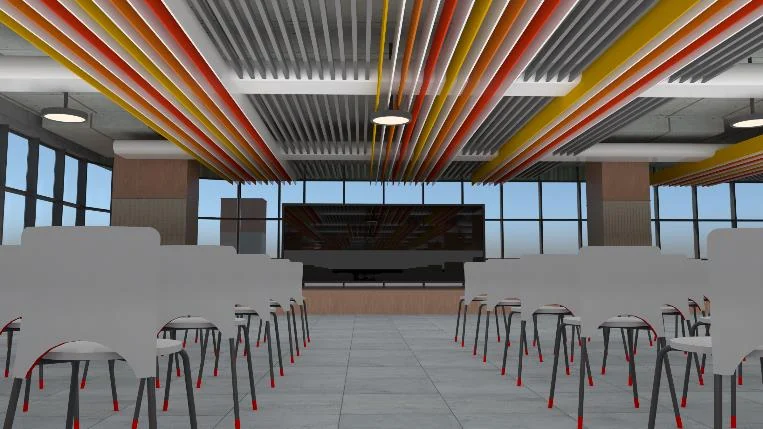
- Ceiling: an absorbent ceiling, or acoustic baffles or clouds where the ceiling must stay exposed, covering most of the area.
- Rear wall: acoustic panels across the back wall, starting just above the height of a seated child and extending upwards.
- Side walls: a band of panels at head height if the room still sounds lively.
- Floor: carpet tiles in the reading corner and early-years rooms; felt pads on chair and desk legs everywhere else.
- Noise sources: fans with a slow, quiet setting, air-conditioning units sited away from the teaching wall, and doors that close properly onto the corridor.
- Display walls: printed panels on the rear wall, so a map or the school's artwork absorbs sound as well.
What acoustic products suit schools?
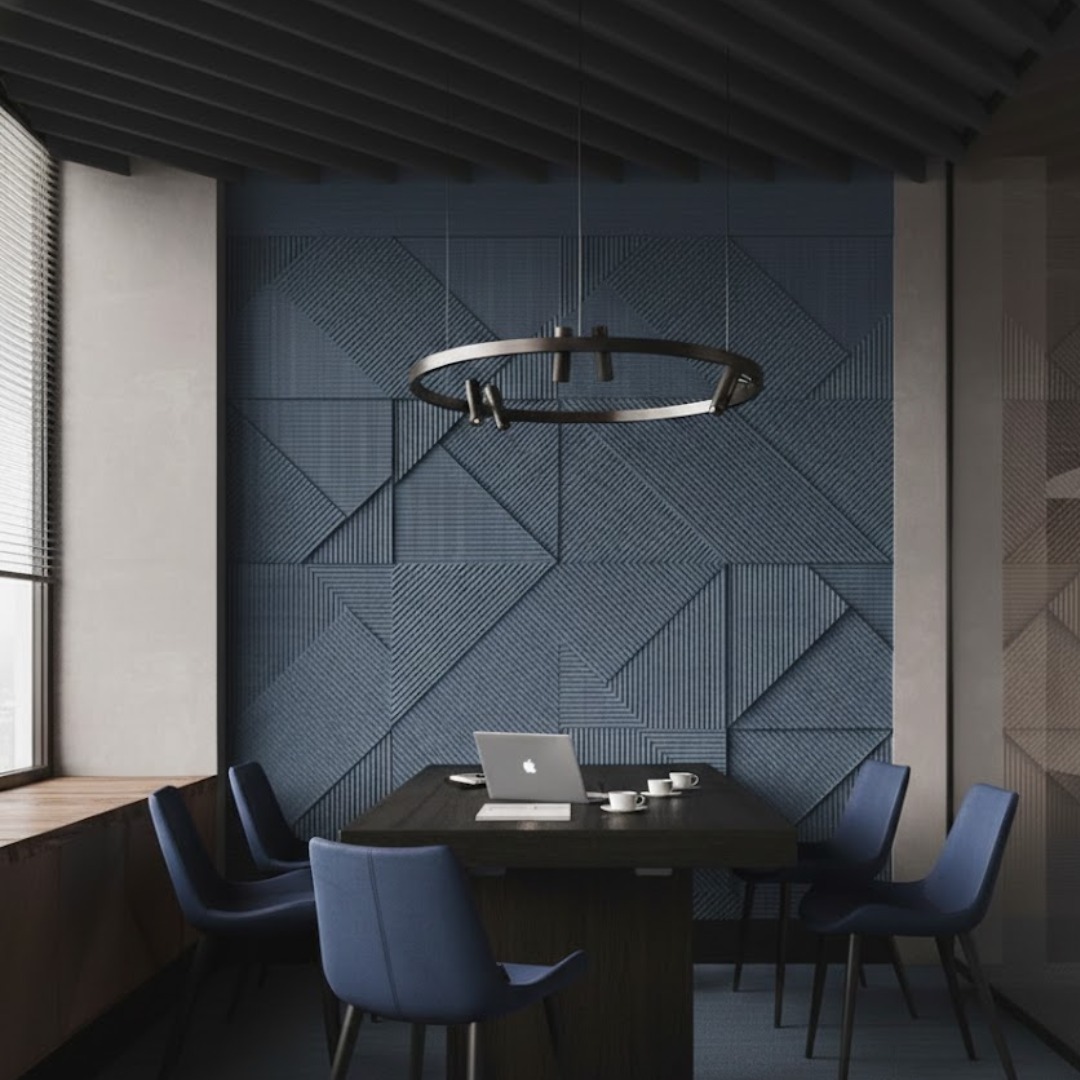
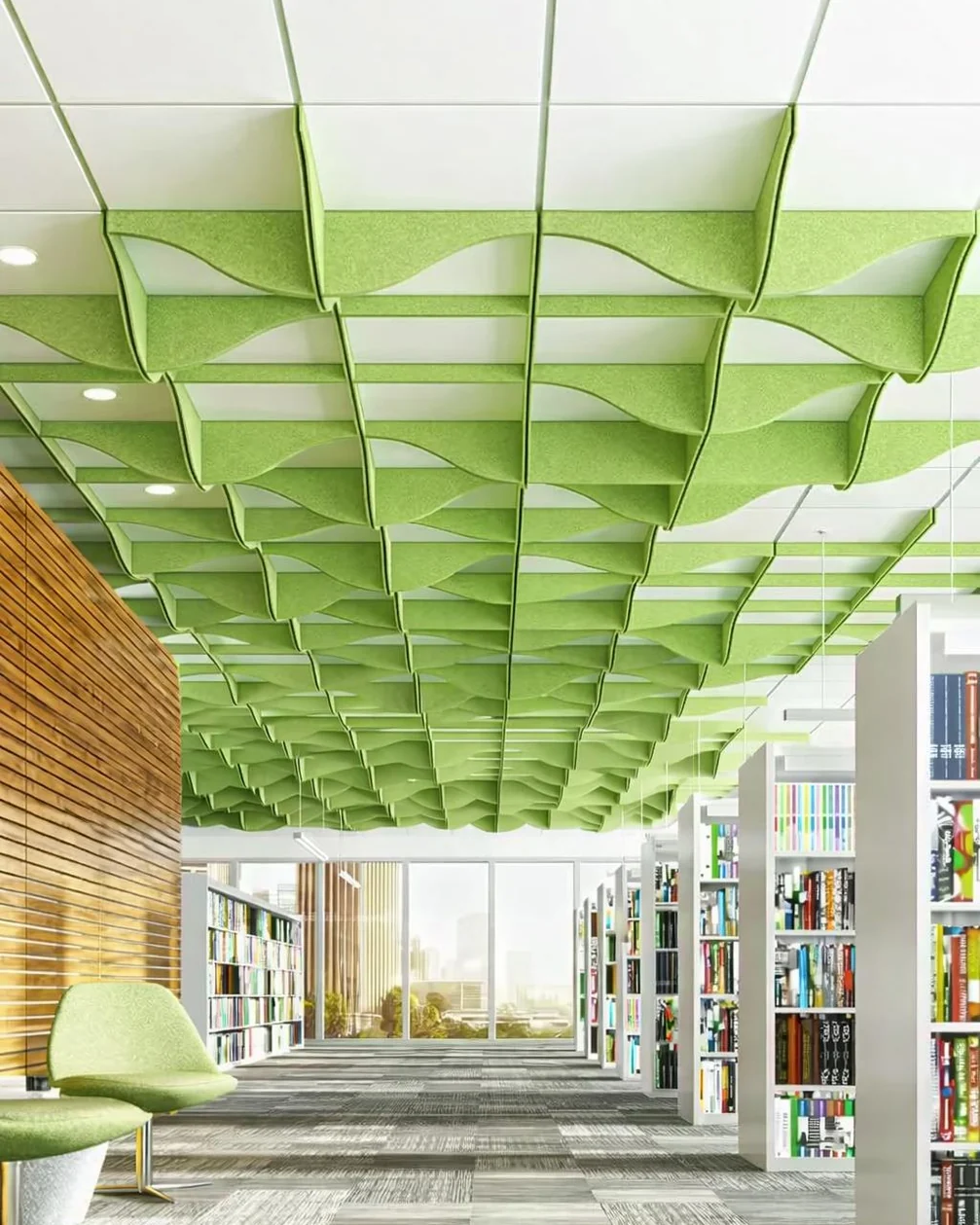
Ceiling products first, then wall panels. GAIA ceiling clouds hang below the slab and suit classrooms and halls where a full ceiling is not practical. The GAIA open cell ceiling gives an open grid that absorbs sound while leaving room for lights and fans. On the walls, GAIA PET panels come plain, grooved or printed, so a rear wall can carry a map, an alphabet or the school's own artwork; how artwork is printed onto a panel is explained in our piece on printed acoustic walls. Browse ceiling and wall products in the GAIA acoustic range.
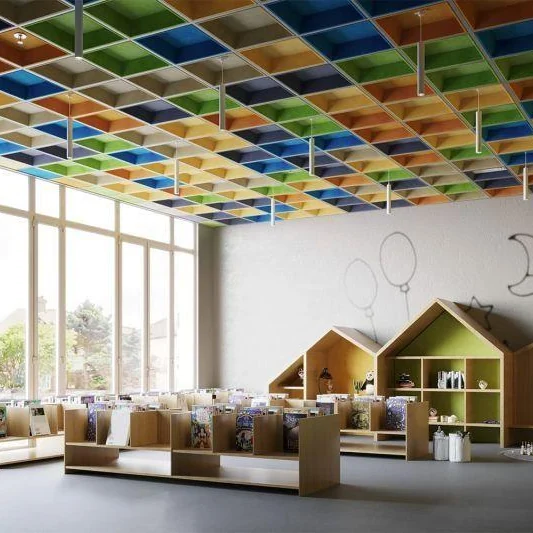
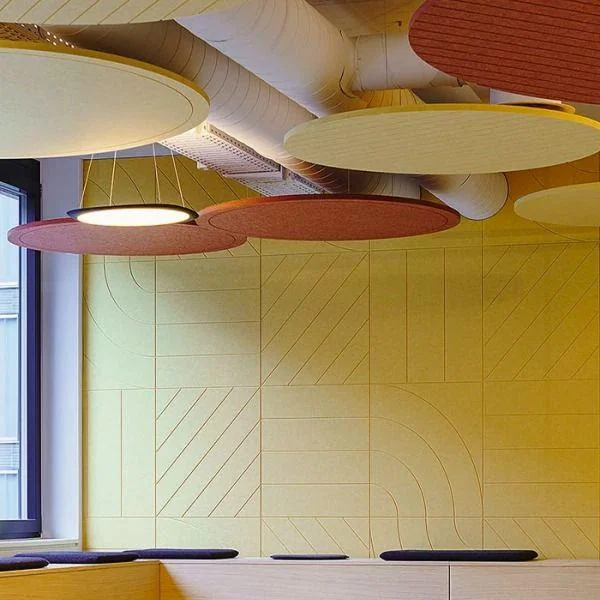
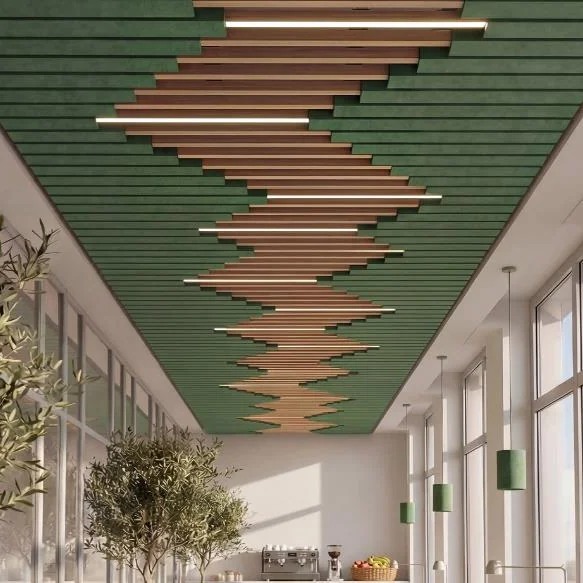
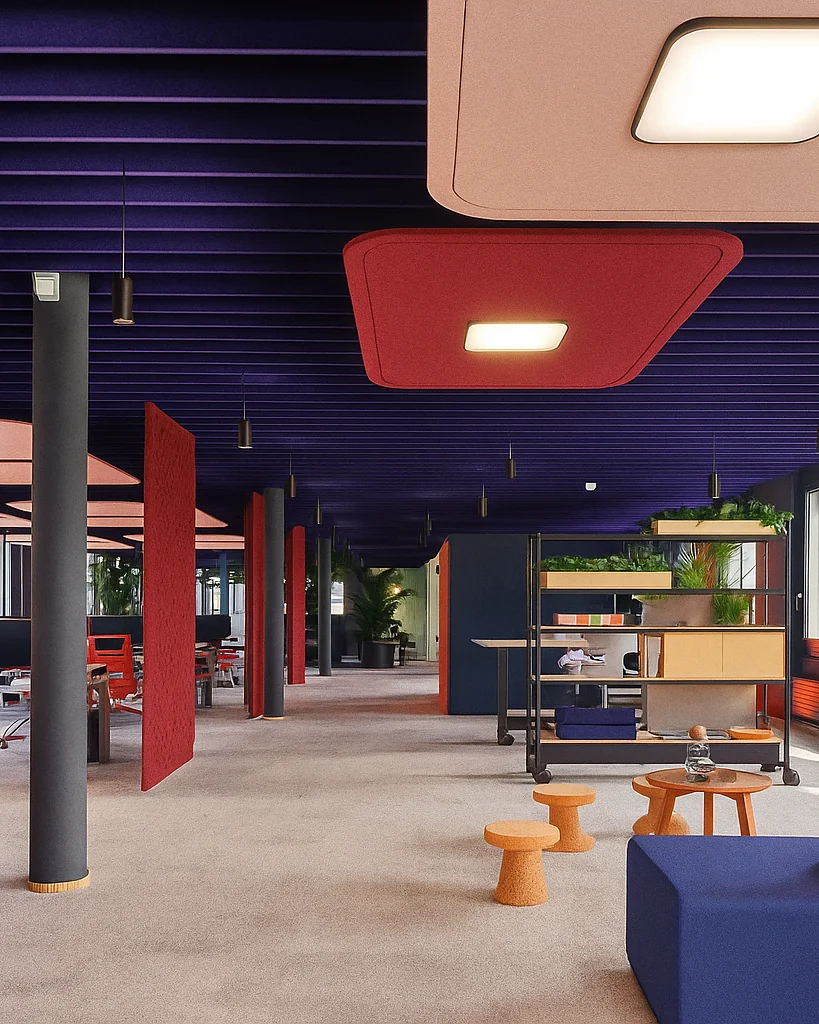
Acoustic ceilings in a children's library, a breakout space and a corridor: the places beyond the classroom where a school gets loud.
Should classrooms have carpet?
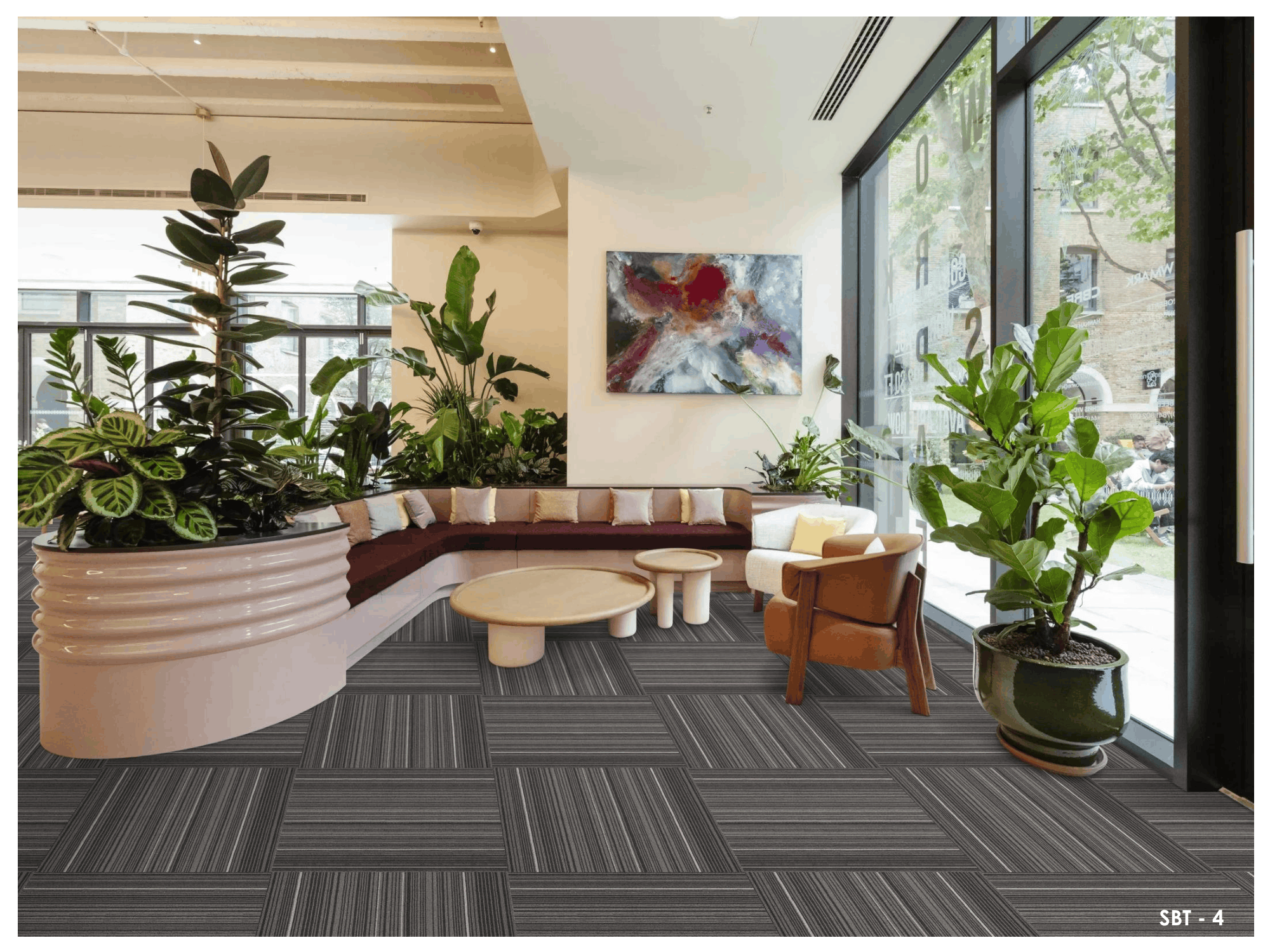
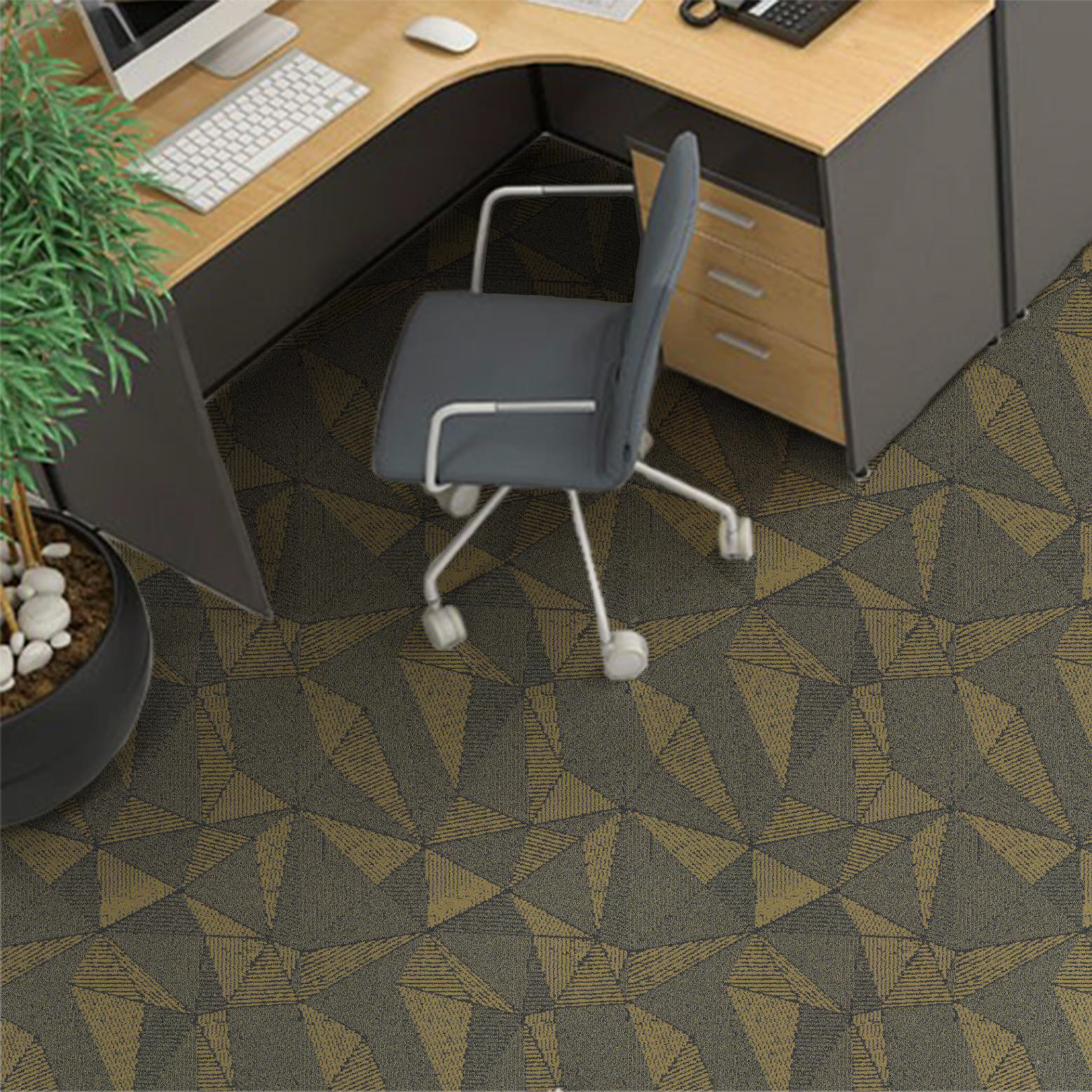
In some rooms, yes. Carpet removes the clatter of chair legs and footsteps at source, which a hard floor amplifies every time a class stands up. It suits reading corners, kindergarten and pre-primary rooms where children sit on the floor, music rooms and libraries. In general classrooms where food, paint and mud are part of the day, many schools prefer a hard floor with felt pads under every chair and desk leg. GAIA carpet tiles are the practical choice where carpet does go in, because a stained or worn tile comes up on its own and a spare goes in, with the rest of the room untouched.
How do you reduce noise from fans and corridors?
Deal with the sources, because no amount of absorption inside the room removes a noise that is still being made. Run ceiling fans on a lower speed during teaching, service wobbling fans, and mount wall-hung air-conditioning units on the side or rear walls rather than above the teacher. For corridor noise, a door that closes fully onto a seal makes more difference than the wall around it. Where traffic noise comes through windows, plan quieter rooms on the side of the building away from the road.
Do halls and libraries need the same treatment?
The same principles, at a larger scale. A multipurpose hall used for assemblies, sport and exams needs absorption high up and on the long walls, because sound spends most of its time in the air volume above people's heads. Our guide to reducing echo in any room explains how to treat tall spaces. Libraries benefit from a quiet floor and an absorbent ceiling, so that conversation at the issue desk does not carry to the reading tables.
What to send us
- classroom dimensions and ceiling height, or the school's drawings;
- the existing ceiling, wall and floor finishes;
- photographs of a typical classroom, showing fans, lights and boards;
- any rooms that are used for music, assemblies or exams.
Our team will suggest where panels, ceiling absorbers and carpet tiles should go in each type of room.
Classroom acoustics questions
How many acoustic panels does a classroom need?
It depends on the room's volume and finishes. A typical classroom with a hard ceiling usually needs absorption over most of the ceiling plus the rear wall to approach the 0.6-second target.
Do acoustic panels stop sound from the next classroom?
No. Panels only change how sound behaves inside the classroom. Sound passing between classrooms is controlled by the partition wall, the door and any gaps above the ceiling.
Rooms where every word counts
Plan quieter classrooms with GAIA
Share your classroom sizes and finishes with GAIA by Sanson Floorings, and we will suggest acoustic treatment for each type of room in your school.