Good home theatre acoustics come from treating three places: the side-wall points where sound from the front speakers first reflects, the wall behind the seats, and the ceiling between screen and sofa. That clears up dialogue and tightens the sound. Keeping the noise in is a separate job for the door, gaps and walls.
A home theatre is usually an ordinary room asked to do something extraordinary: a spare bedroom or a basement with plastered walls, a tiled floor and a large television, now expected to sound like a cinema. The equipment is rarely the weak link. A well-chosen speaker set in a bare, hard room sounds bright, boomy and confused, with voices that are hard to follow until the volume goes up. The room is half of the system, and it is the cheaper half to fix.
Home theatre acoustics at a glance
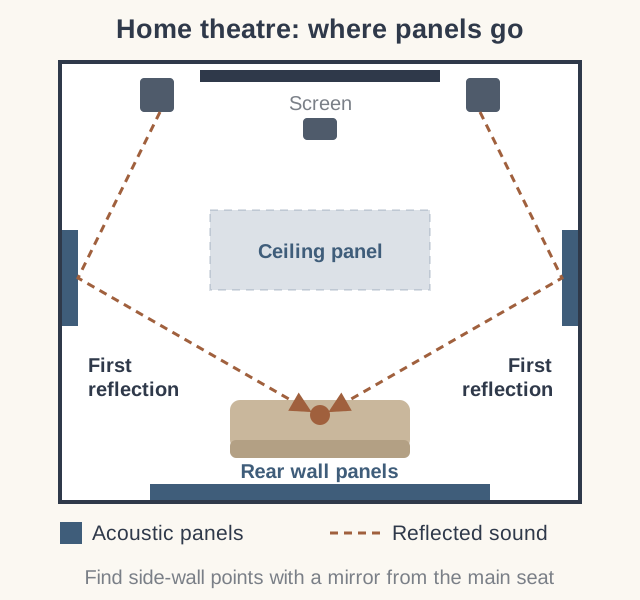
- First reflections: absorb them on the side walls between the front speakers and the main seat.
- Rear wall: treat it so sound does not bounce straight back at the listener's head.
- Ceiling: a panel or cloud between the screen and the seats catches the overhead reflection.
- Bass: needs depth, so it is handled in corners and with panels set off the wall.
- Keeping sound in: a matter of the door, gaps and construction, not panels.
Does a home theatre need acoustic treatment?
Almost always, if the room has hard walls and a hard floor. Sound from each speaker reaches you directly and then again, a few milliseconds later, from the nearest walls, floor and ceiling. Those early reflections blur the position of voices and effects, and the late reverberation that follows makes the room boom. Treatment does not make a room dead; it removes the reflections that compete with the sound the film was mixed to deliver.
Where do acoustic panels go in a home theatre?
Start with the first reflection points on the side walls. The simplest way to find them is with a mirror: sit in the main seat while someone slides a mirror flat along the side wall at ear height, and mark every spot where you can see a front speaker in it. Those are the points where sound bounces towards you first, and a panel at each one does more than the same panel anywhere else. Repeat for the ceiling if the room allows, then cover a good part of the rear wall at seated head height, because a hard wall close behind the sofa sends sound straight back at the listener's ears.
The front wall behind the screen benefits from dark, absorbent panels as well, especially if the speakers stand close to it. The rest of the side walls can stay partly untreated, which keeps the room from feeling airless.
What about bass in a small room?
Bass is the hardest part, because low notes have long wavelengths that pass through thin absorbers. Room corners are where bass builds up, so thick absorption across the corners does the most good, and panels set off the wall on a cavity absorb lower notes than the same panels fixed flat. Our article on acoustic panels with an air gap explains how the gap is planned. Moving the main seat away from the exact middle of the room and away from the rear wall also evens out the bass.
Which acoustic panels suit a home theatre?
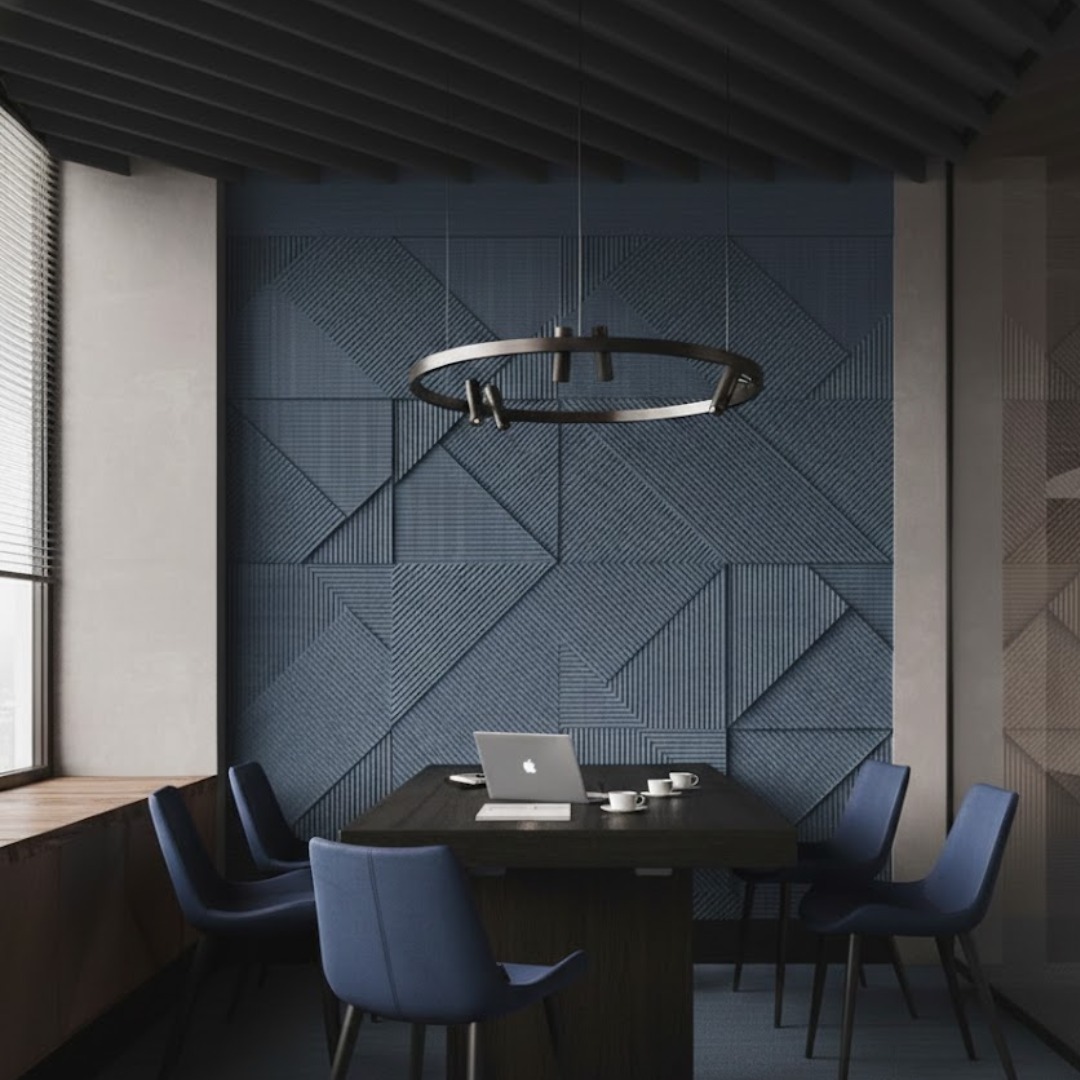
Dark, absorbent panels that look like part of the interior. Black, charcoal and deep blue reflect less light from the screen back onto the image, which helps contrast, and they disappear when the lights go down. GAIA PET acoustic panels come in a wide range of colours, including SF-27 Black, SF-28 Dark Grey and SF-16 Oxford Blue. GAIA fluted panels, with their flowing wave profile, are made for rooms such as home theatres where the wall should look designed rather than technical. Every finish is shown in the GAIA acoustic panel range.
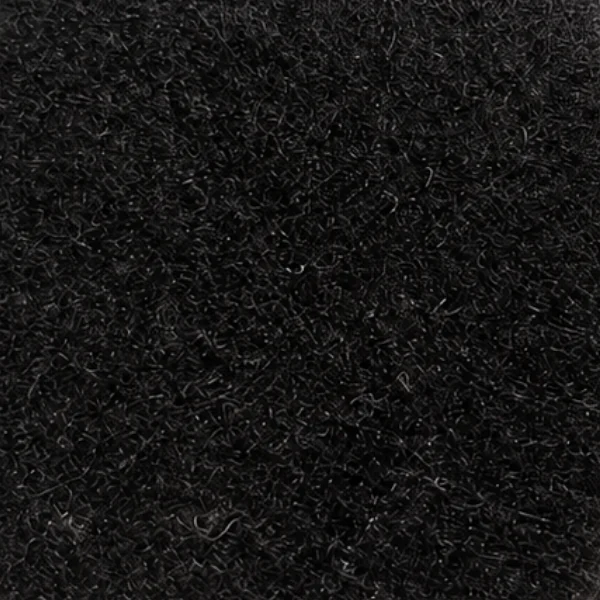


Three dark GAIA panel colours: around a screen, black, dark grey and deep blue absorb light as well as sound.
Should a home theatre have carpet?
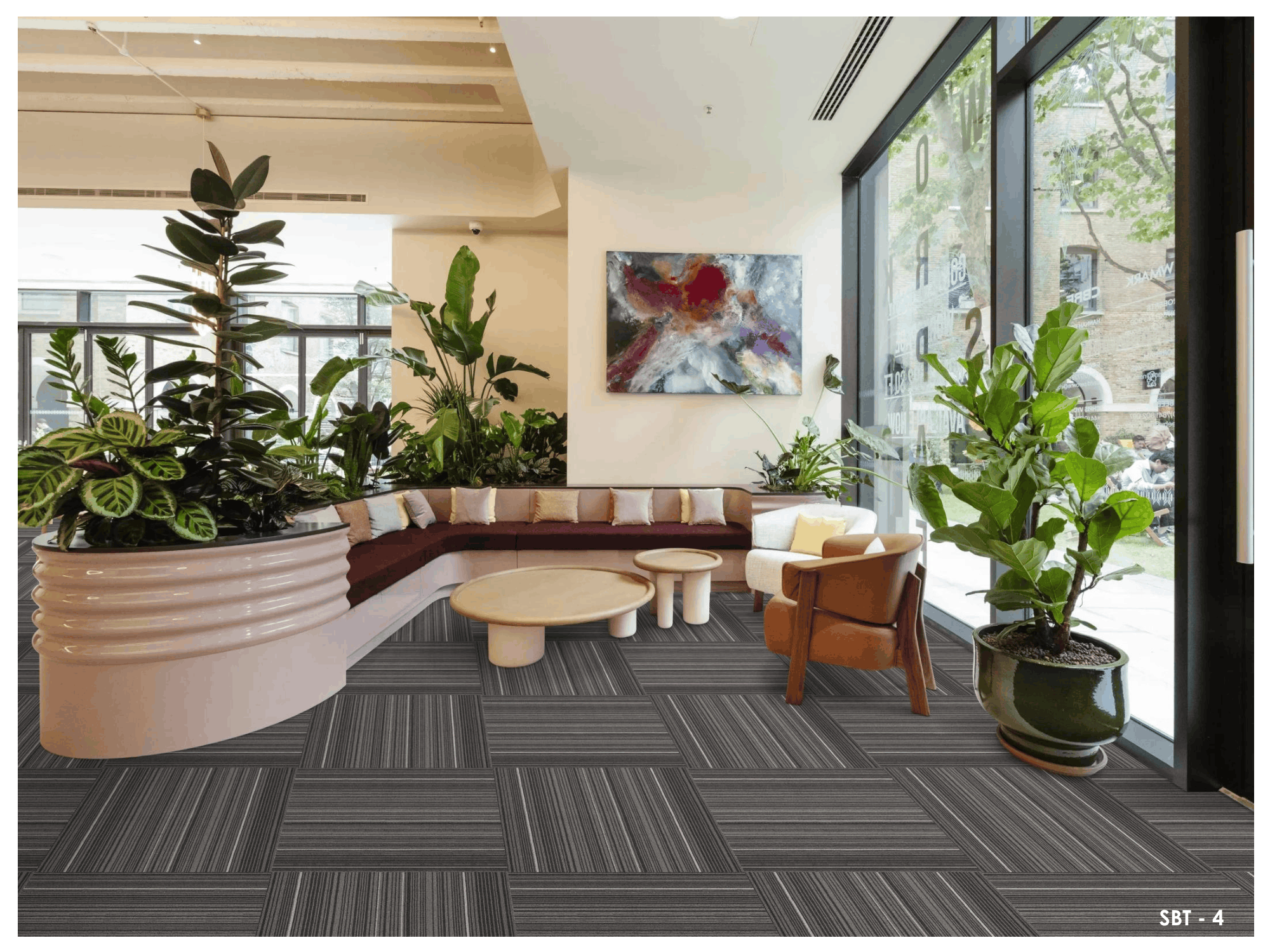
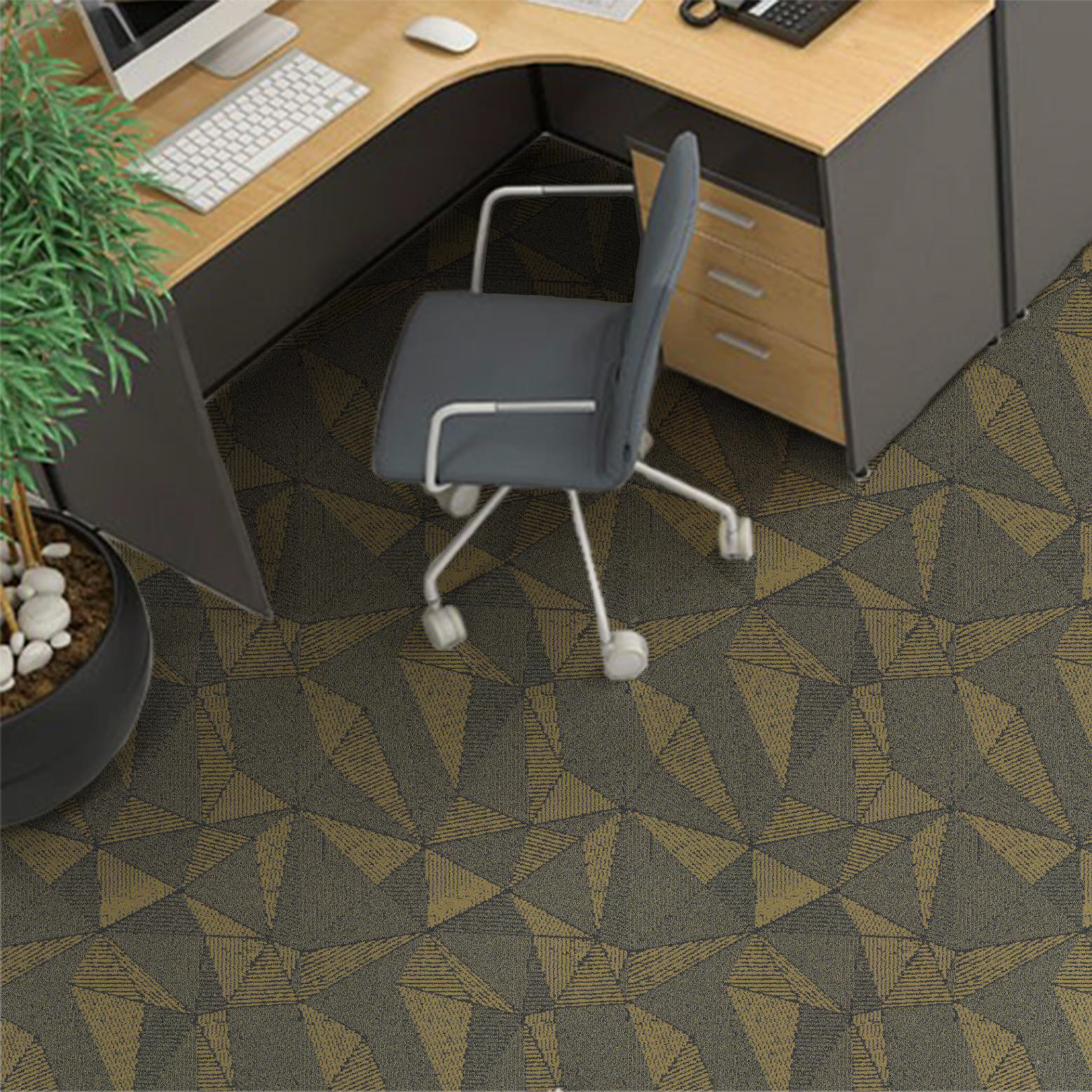
Yes, ideally wall to wall. A hard floor between the speakers and the sofa is one of the strongest reflections in the room, and carpet removes it while making the space more comfortable for long films. Choose a dark or mid-tone carpet so the floor does not throw light back towards the screen. GAIA broadloom carpet can be made in a colour and texture to suit the room, and a large rug over a tiled floor is the next best thing.
How do you stop home theatre sound reaching other rooms?
By blocking the paths it takes, which is a construction job. In most homes the door is the weakest point, so fit a solid-core door with seals on all sides and a drop seal at the bottom. Close gaps around pipes, cables and air-conditioning lines, and avoid sharing ductwork with bedrooms. Where neighbours or children's rooms are close, an independent wall lining or ceiling is the serious option. Acoustic panels improve the sound inside the room; they do not keep it in, as our pillar on reducing echo also explains.
Home theatre acoustic checklist
- Mark the first reflection points on both side walls using the mirror method.
- Cover much of the back wall at ear height when seated.
- Treat the ceiling midway between screen and sofa.
- Treat the room corners for bass, with thick absorption or panels on an air gap.
- Lay carpet or a large rug between the screen and the seating.
- Fit a sealed, solid-core door and close gaps around services.
What to send us
- room size, including the ceiling height;
- the positions of the screen, speakers and seating;
- the wall, floor and ceiling finishes, with photographs;
- the colours or look you want for the room.
Our team will mark panel positions on your room layout and suggest finishes to match it.
Home theatre questions
How much treatment does a media room need?
A small media room often starts with a panel at each side-wall reflection point, several across the rear wall and one overhead, then adds corner treatment for bass if the room still booms.
Can acoustic panels be used in a living-room home theatre?
Yes. Printed, grooved and fluted panels look like a designed feature wall, so a living room can be treated without looking like a studio.
The room is half the system
Plan acoustics for your home theatre
Send GAIA by Sanson Floorings your room layout and photographs, and we will suggest where panels and carpet will improve the sound most.