Yes. In direct summer sun, artificial grass gets far hotter than a watered lawn, because its blades absorb sunlight and cannot cool themselves with moisture. GAIA by Sanson Floorings recommends shade over seating and play areas, a rinse before afternoon use, and barefoot use in mornings and evenings.
Artificial grass is popular in Indian homes for good reasons: no mowing, no watering bill, green all year. Heat is the one thing buyers are rarely warned about. A lawn that feels pleasant at nine in the morning can be too hot for bare feet by two in the afternoon in May, and a terrace that catches sun all day can stay warm long after sunset. None of this means artificial grass is a poor choice. It means heat is a design question, best settled before the grass is ordered, not after the first hot season.
Artificial grass heat at a glance
- Cause: direct sunlight, not air temperature, drives most of the heat.
- Peak: the hottest hours are early to mid afternoon, especially on west-facing areas.
- Best fix: shade over the places people sit, play and walk barefoot.
- Quick fix: hosing the lawn down brings the temperature down, but only for a while.
- Timing: plan barefoot use for mornings and evenings in summer.
How hot can artificial grass get in summer?
Hot enough to matter in an Indian summer. A study by the University of Nevada, Las Vegas and the Desert Research Institute measured artificial turf surfaces up to about 76°C, roughly 34°C above the air temperature and far hotter than irrigated natural grass beside them. The researchers traced the heat mainly to solar radiation. Measurements in a desert climate will not match a Delhi terrace exactly, but the pattern holds wherever the sun is strong: in full sun, the surface runs far hotter than the air around it.
Why does artificial grass get hotter than real grass?
Because real grass sweats and plastic does not. A living lawn draws water from the soil and releases it through its leaves, which cools the blades in the same way sweat cools skin. Synthetic blades have no such mechanism. They absorb sunlight, warm up and pass some of that heat to whatever lies below, whether soil, a base layer or a concrete roof slab. A roof slab that has been in the sun all day also gives heat back in the evening, which is why rooftop lawns can stay warm after dark.
Does the colour or height of the grass change how hot it gets?
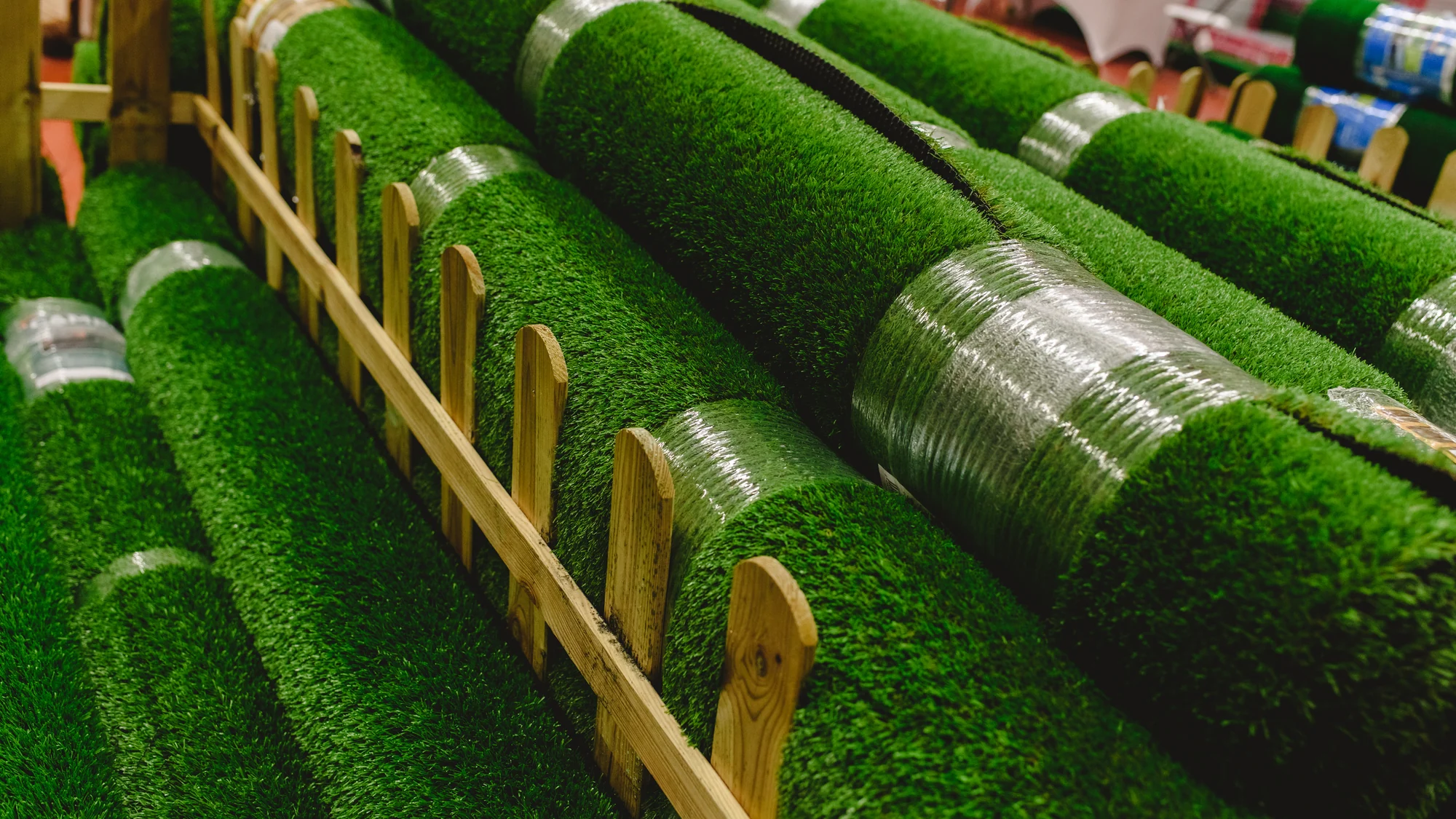
Less than shade does. Darker greens absorb a little more light than paler ones, and a dense pile holds more warm air close to the surface, but these are small differences next to the gap between a sunny lawn and a shaded one. Choose the pile height for how the lawn will be used, and solve heat with shade and timing. There are nine heights of GAIA Landscape Grass to choose from, SFL 20 being the shortest and SFL 60 the tallest, all in the same two-tone yarn. How height changes feel and upkeep is covered in our pile height comparison.
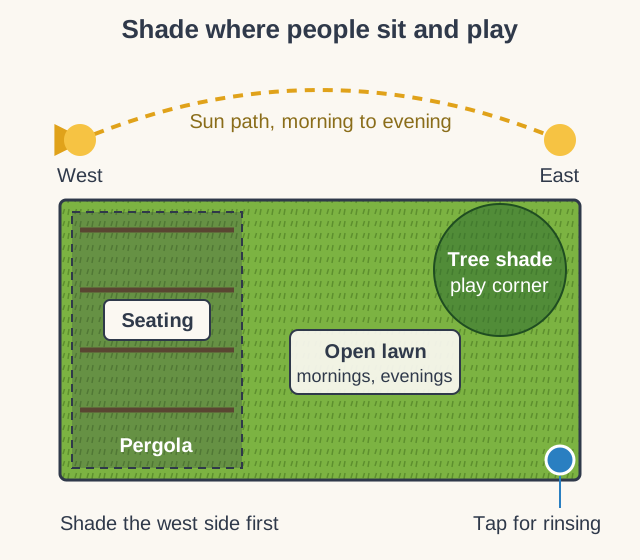
How do you keep artificial grass cool?
Mostly by keeping the sun off it at the hours people use it. In order of effect:
- Shade the seating and play areas. A pergola, a fabric sail or a tree canopy over the places people actually use does more than any product choice.
- Block the afternoon sun. West and south-west sides catch the hottest light; tall planters, screens or climbers on those sides help most.
- Rinse before use. Water cools the surface quickly. Penn State researchers found that watering lowered synthetic turf temperatures significantly, but the effect faded within hours, so rinse just before the lawn is used.
- Watch reflections. Glass railings and large windows can bounce sunlight onto one patch of lawn and overheat it.
- Use it at the right time. In April to June, plan barefoot play for before eleven and after five.
Is hot artificial grass safe for children and pets?
Treat it like any surface left in the sun. Sand, stone paving and car seats all get hot enough to burn in an Indian summer, and so can artificial grass. Feel the surface with the back of your hand before children or pets go on it in the afternoon, keep shoes and footwear nearby, and give pets a shaded, cooler spot to lie on. A lawn designed with shade from the start avoids most of the problem.
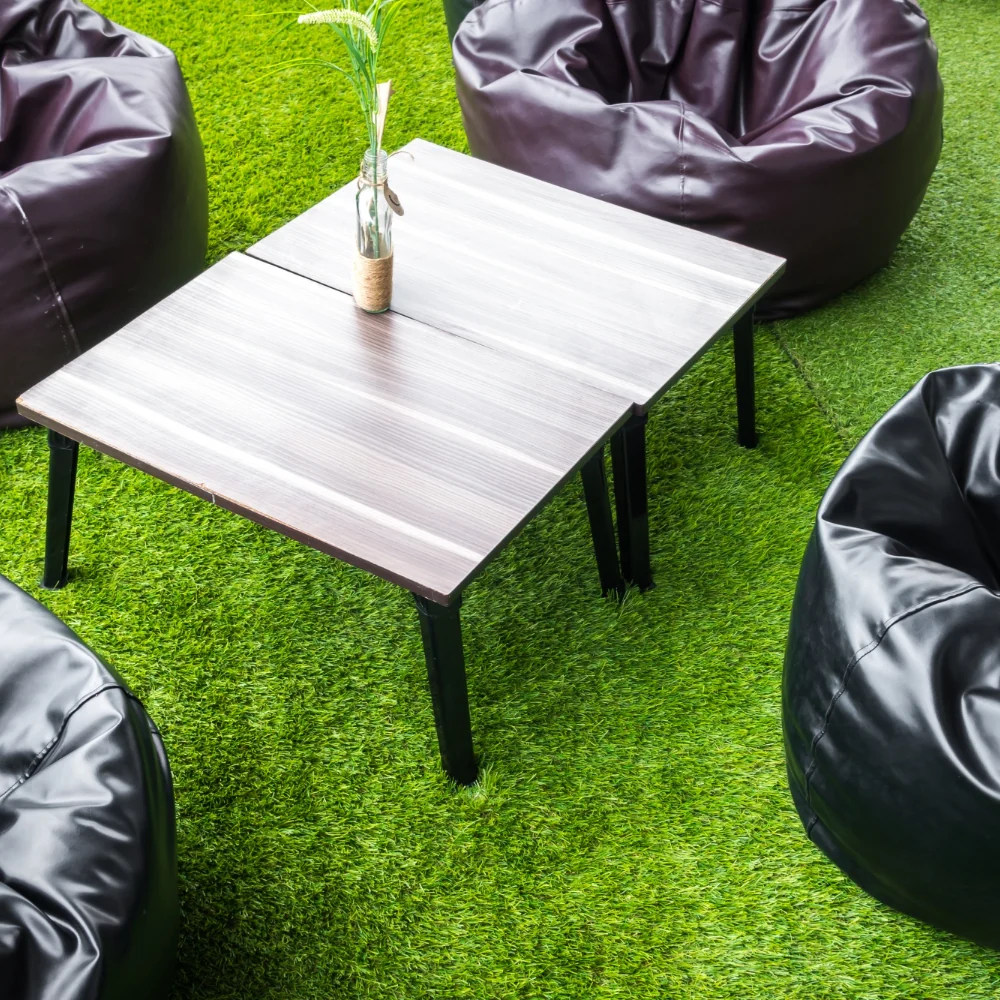
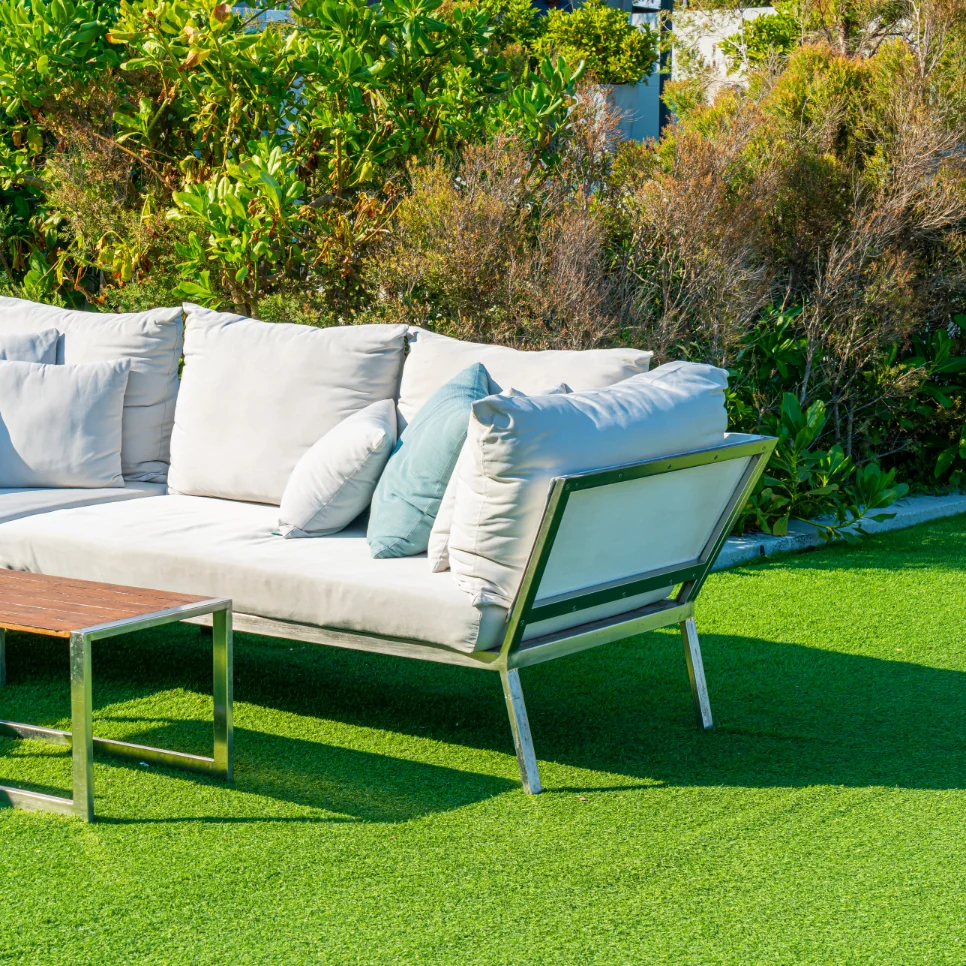
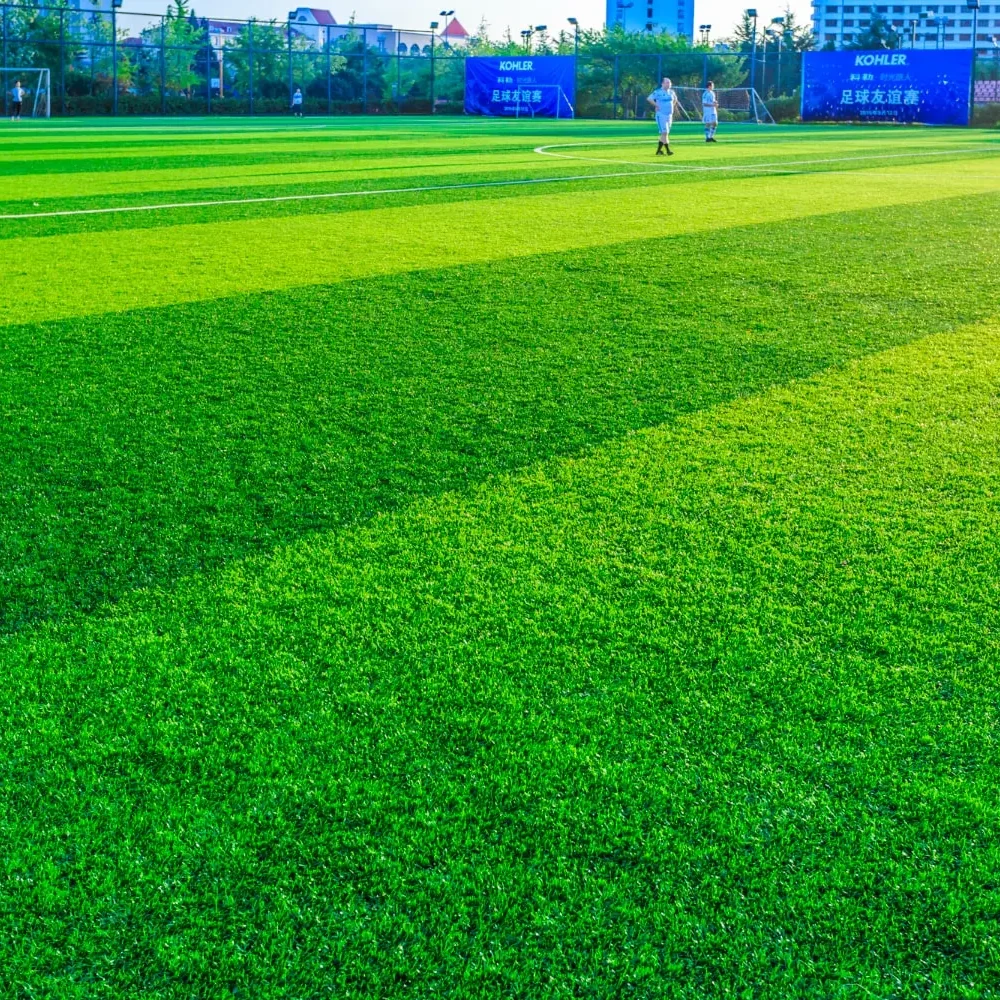
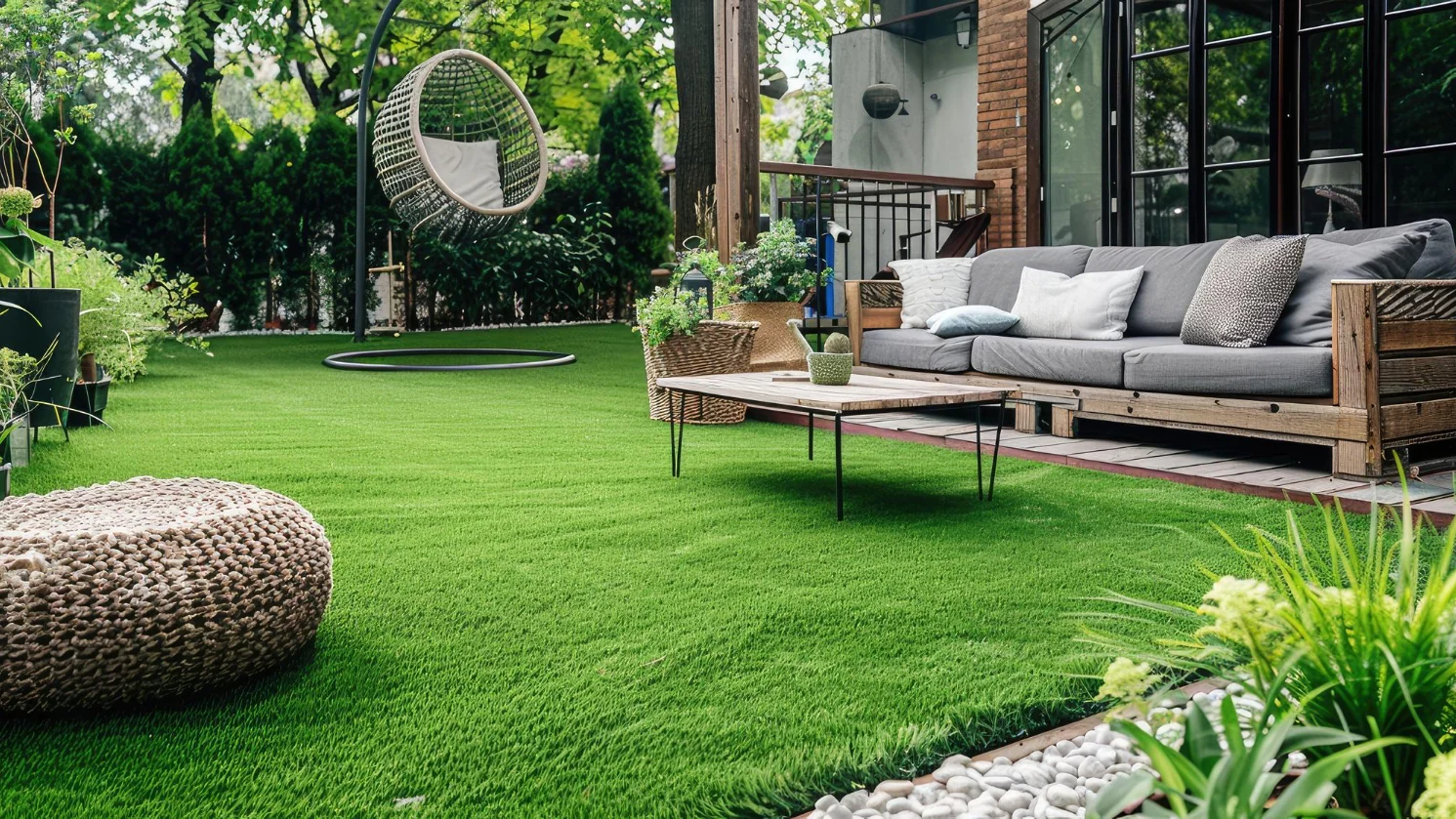
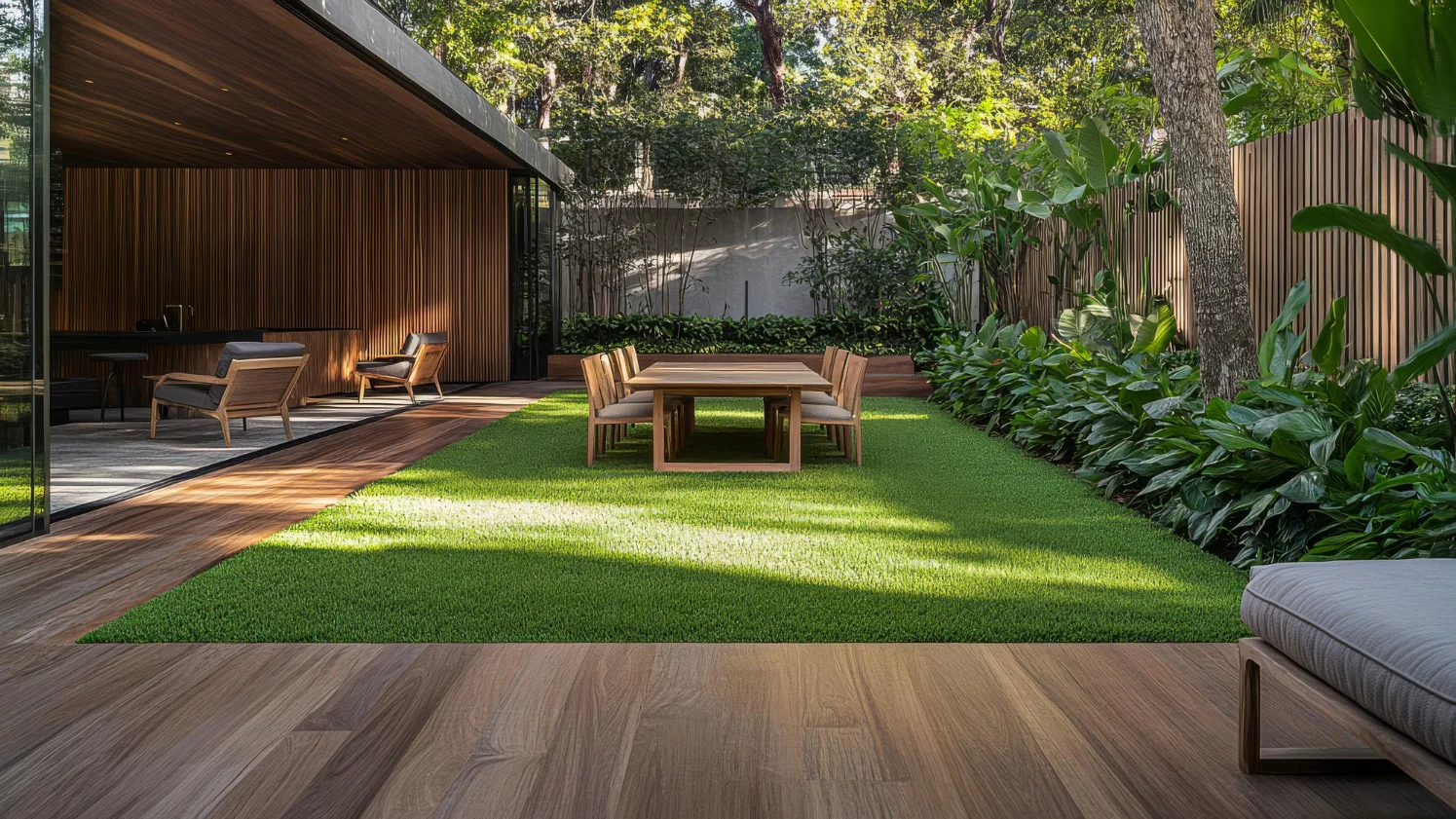
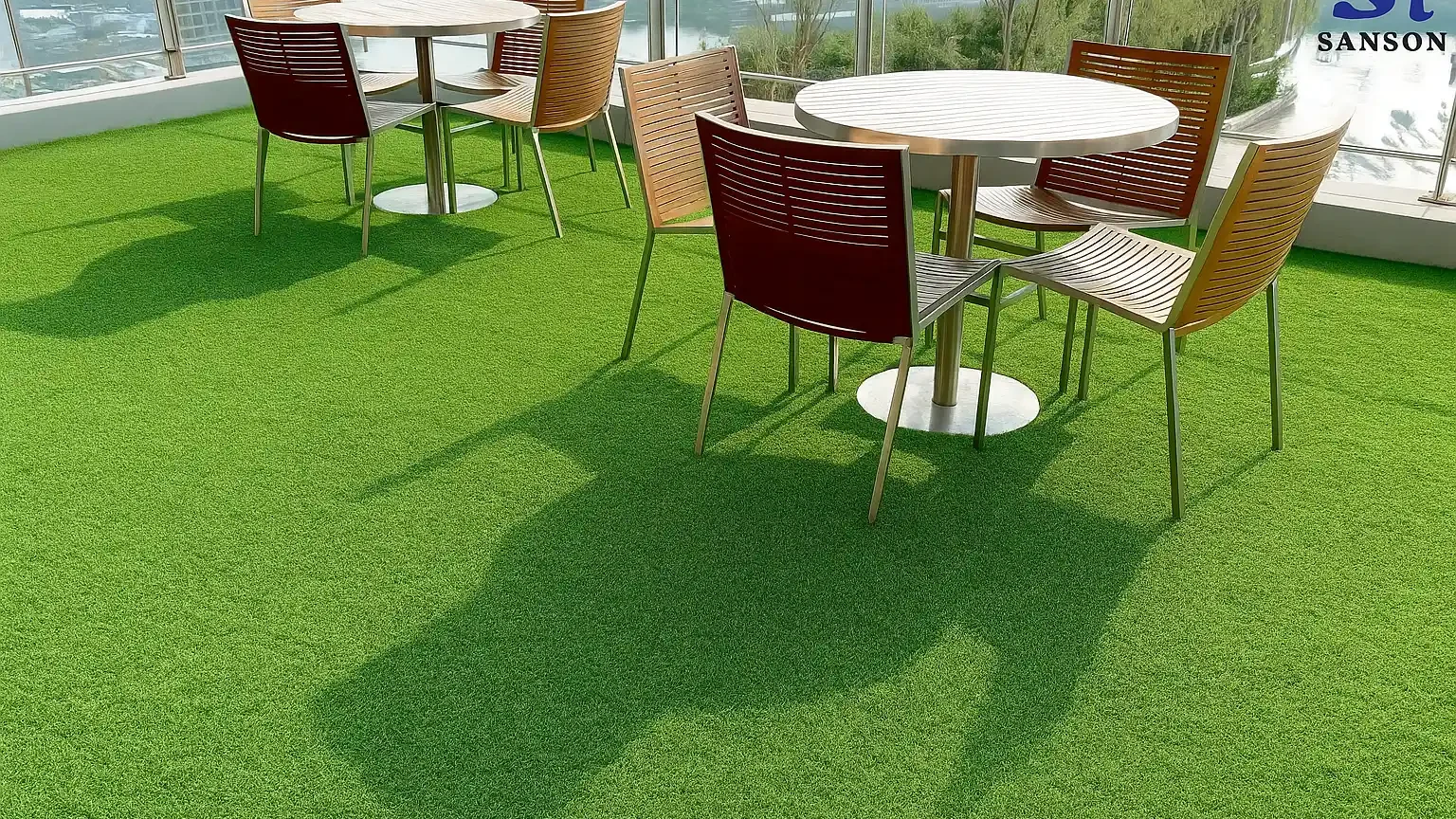
Seating, lounging and play on artificial grass: the areas people use most are the ones that need shade.
Does artificial grass get hot on a terrace or balcony?
Usually more than in a garden. A rooftop is exposed through most of the day, has little shade from neighbouring trees, and the slab below stores heat. Balconies vary: a north-facing balcony may never get hot, while a west-facing one on an upper floor can be the hottest spot in the home. Our articles on artificial grass on a terrace and balcony makeovers cover shade, drainage and fixing for both.
Does heat damage artificial grass?
Heat on its own is not what ages it fastest; long exposure to ultraviolet light is. UV breaks down pigment and polymer over time, so the yarn needs protection against UV wherever a lawn sits in Indian sun. The yarn in GAIA Landscape Grass carries UNE 14836 certification for UV resistance, and our explainer on sun and fading covers what that test measures. Keep hot objects off the lawn: barbecue embers, diyas and cigarette ends can melt the blades.
Shade checklist before you order
- Watch the space at 9 am, 1 pm and 4 pm, and note where the sun falls.
- Mark where people will sit, where children will play and where pets will rest.
- Plan shade over those areas first: pergola, sail, umbrella or trees.
- Check for glass railings and windows that reflect sunlight onto the lawn.
- Fit a tap or hose point within reach of the lawn.
- Choose the pile height for use, then browse the GAIA Landscape Grass range.
What to send us
- the area's measurements and which direction it faces;
- photographs at midday and in the afternoon;
- where shade exists now, and where you plan to add it;
- who will use it and for what: seating, children's play, pets.
Our team will suggest the grass, the pile height and where shade will make the biggest difference.
Artificial grass heat questions
Does watering artificial grass cool it down?
Yes, quickly but briefly. A rinse lowers the surface temperature straight away, and the cooling fades over the following hours as the water evaporates.
Is artificial grass hotter than paving stones?
Both get hot in full sun, and both cool down when shaded. The practical answer is the same for any outdoor floor: shade the areas people use most.
How hot does artificial grass get in an Indian summer?
In full sun it can run tens of degrees hotter than the air. Field measurements in hot climates have recorded artificial turf at around 76°C, so shade and timing matter in April to June.
Can artificial grass be used on a terrace in summer?
Yes, with shade over the areas people use and a tap within reach for rinsing. Roof slabs store heat, so a terrace lawn stays warm into the evening unless it is shaded.
A lawn you can use all year
Plan a cooler artificial lawn
Send GAIA by Sanson Floorings your measurements and a few photographs, and we will suggest the grass, the pile height and where shade will make the biggest difference.