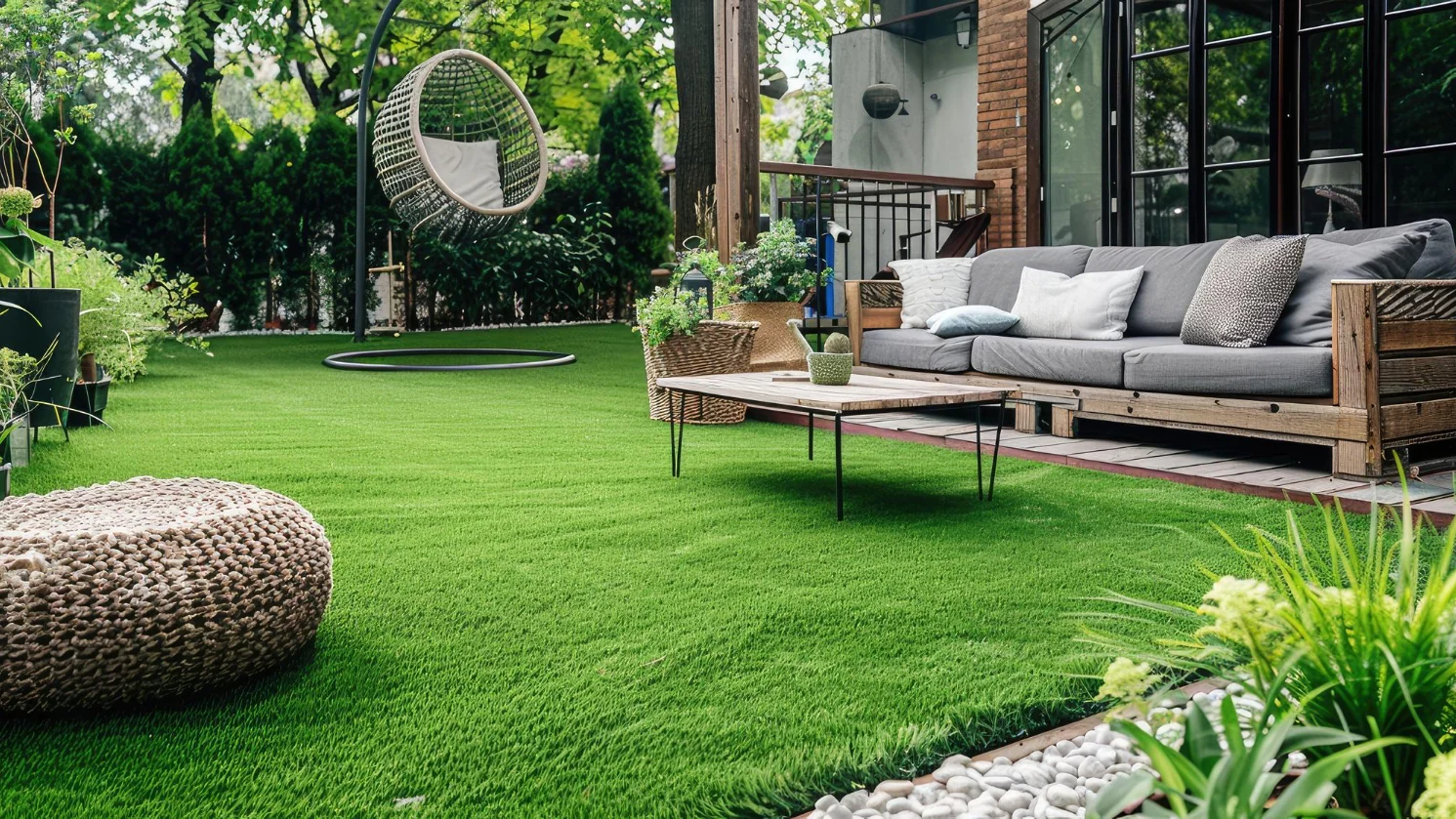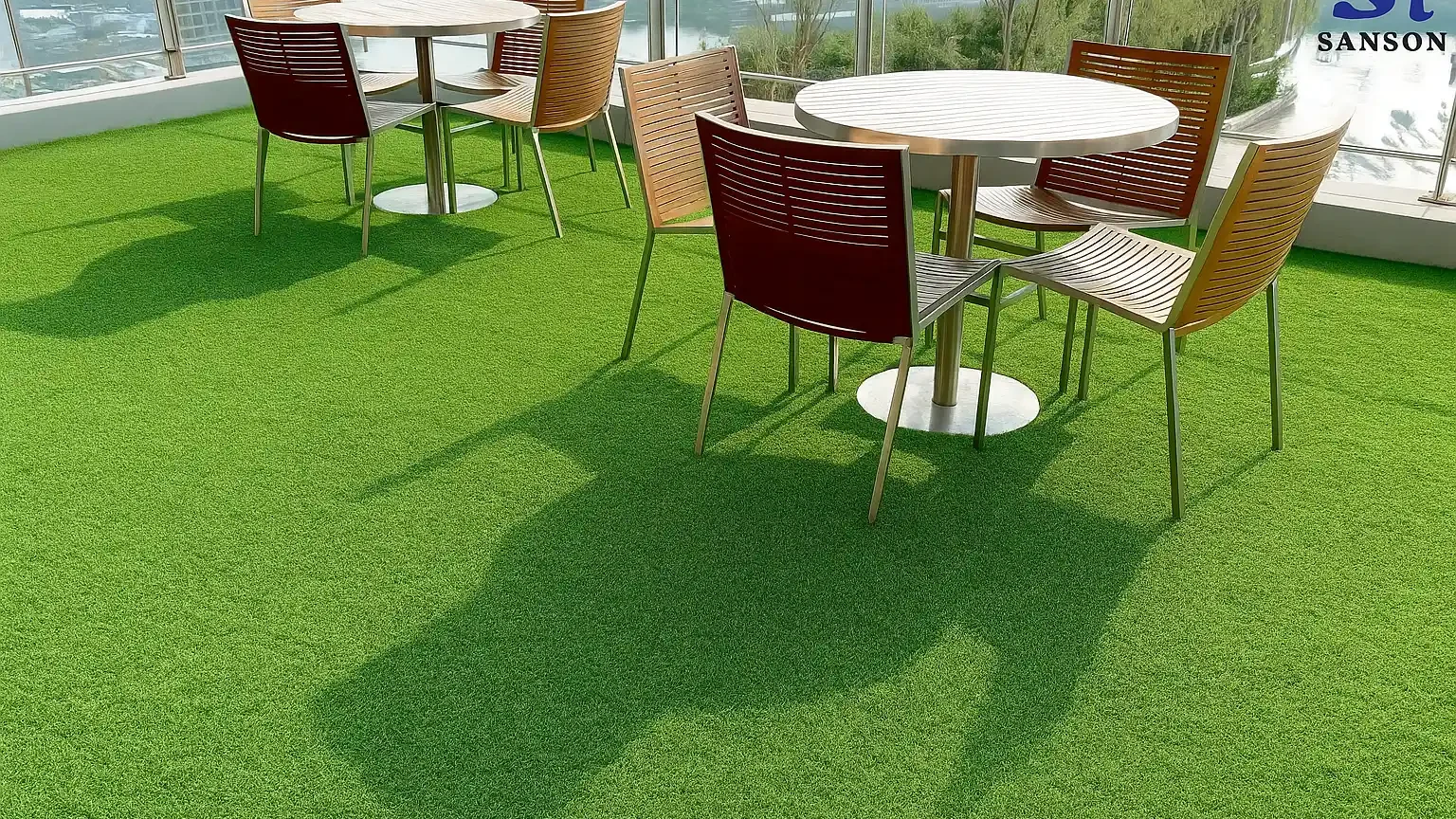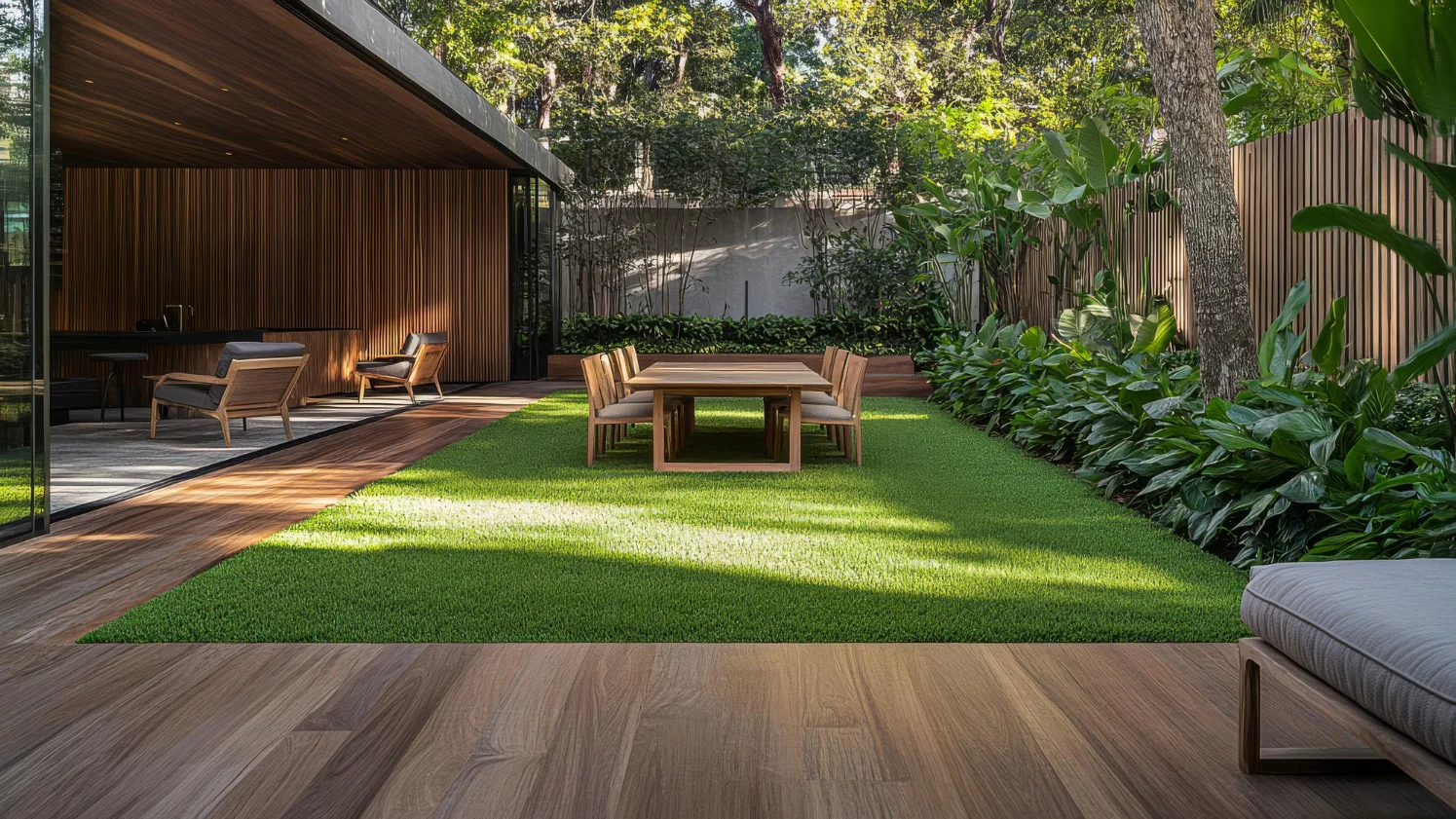
To install artificial grass on soil, dig out the topsoil, build a compacted, free-draining stone base with a fine levelling layer, lay every piece with its pile one way, tape and glue the seams, and fix the edges. On sound concrete or tiles, clean the surface, check drainage, then lay.
Most problems with an artificial lawn trace back to what is underneath it. Puddles after rain, bumps that show through the grass, seams that open and edges that lift are almost always base or fixing problems, not faults in the grass itself. Whether you are hiring an installer or checking the work as it goes, knowing the sequence makes it easy to spot a shortcut before the grass covers it.
Artificial grass installation at a glance
- On soil: excavate, lay a compacted stone base, level, then lay the grass.
- On concrete or tiles: clean, check the slope to the drain, then lay the grass.
- Direction: every piece's pile leans the same way.
- Seams: joining tape and outdoor adhesive under the meeting edges.
- Edges: fixed to a firm border so they cannot lift or fray.
What surfaces can artificial grass go on?
Yes, all three, with different preparation. Soil needs a built base, because bare earth settles, holds water and lets weeds through. Concrete, tiles and terrace slabs already give a firm, flat base, so the grass can go straight on top once the surface is clean and sloped to a drain. Wooden decking and very uneven paving usually need a levelling board or layer first. Whatever the surface, the base decides how flat and how dry the lawn stays.
How do you prepare soil for artificial grass?
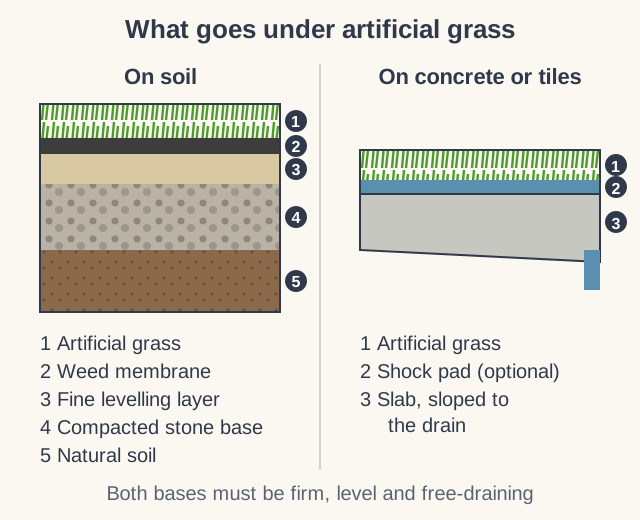
By replacing soft topsoil with a firm, free-draining base. The usual sequence:
- Clear and excavate. Remove existing turf, roots and topsoil, typically to a depth of 75 to 100 mm, more on clay or where heavy use is expected.
- Fix the edges. Install a firm border of timber, steel, concrete or kerb stones to hold the base and give the grass something to fix to.
- Lay the sub-base. Spread crushed stone in layers and compact each one with a plate compactor until it is firm underfoot.
- Level. Add a fine layer of stone dust or sharp sand, compact it and screed it smooth, with a gentle fall so water runs away from the house.
- Lay a weed membrane over the base to stop weeds growing up through the grass.
Industry guidance on landscape installation and base systems from the Synthetic Turf Council sets out the same principles in more detail, and Sport England's guidance on artificial surfaces for outdoor sport shows how much a sports surface depends on the base and drainage built beneath it.
What about concrete, tiles or a terrace?
Clean it, check it, then lay. Sweep and wash the surface, fill cracks and grind off high spots, and pour a bucket of water to confirm it runs to the drain rather than pooling. On a terrace, check the waterproofing first and never fix anything through it; drainage, wind and waterproofing on roofs are covered in our terrace lawn article. A foam shock pad under the grass makes a hard slab softer underfoot and hides small irregularities. Balconies follow the same steps on a smaller scale, as our balcony makeover article shows.
How are the rolls laid and joined?
All in one direction, with tight, flat seams.
- Unroll the grass and let it relax in the sun for an hour or two so creases from the roll flatten out.
- Lay every piece with the pile leaning the same way, ideally towards the house or the main viewpoint, where grass looks fullest.
- Trim the factory edge off pieces that will meet, so the stitch rows line up at the join.
- Fold the edges back, lay joining tape centred under the seam, spread outdoor turf adhesive on the tape and press both edges down so they just touch.
- Weigh the seam down while the adhesive cures, and brush the blades upright over the join.
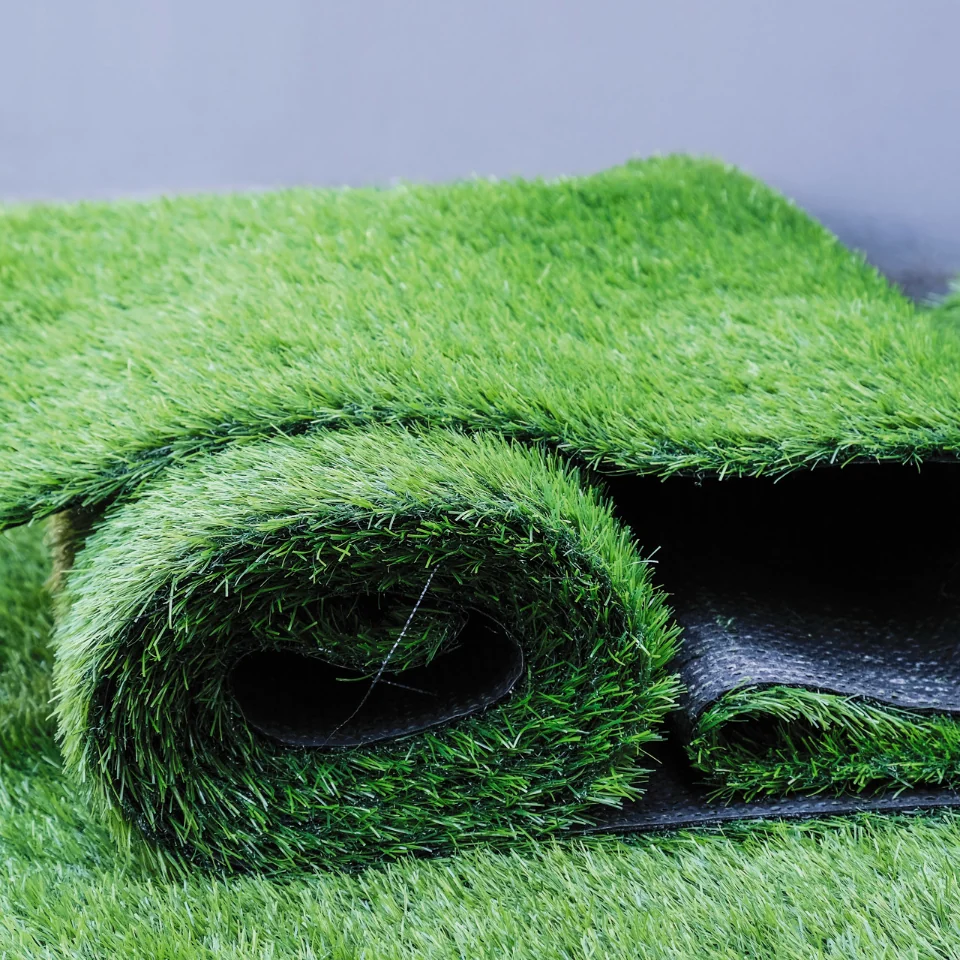
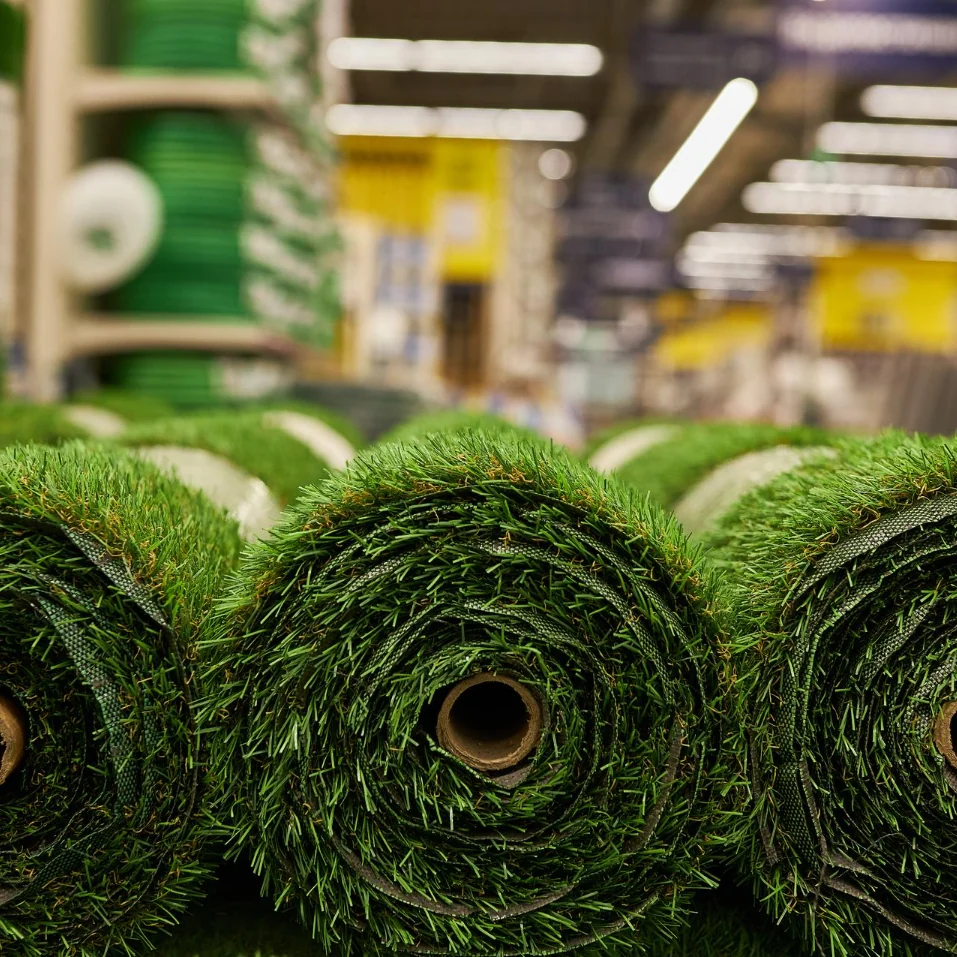
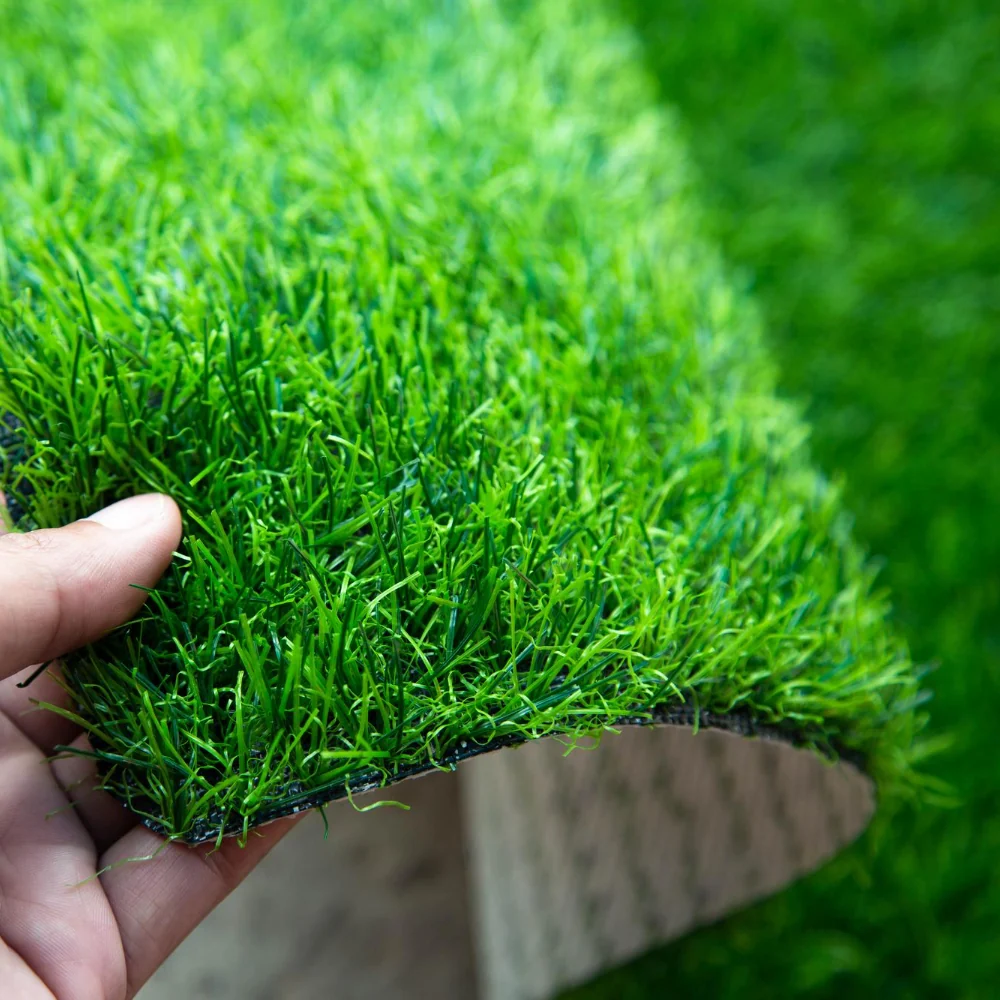
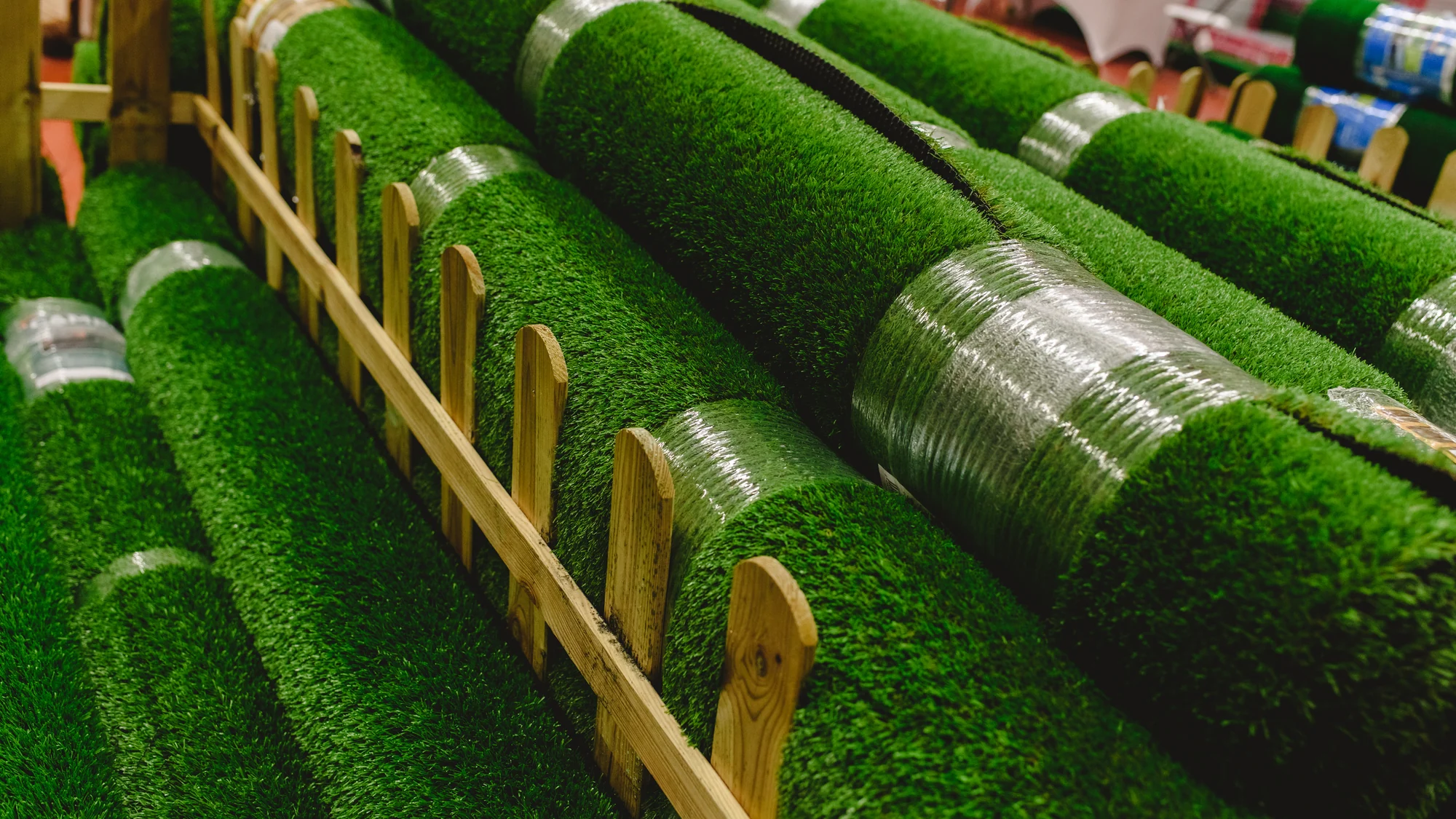
Rolls are laid with the pile running one way and joined on tape; the base beneath decides how flat the lawn stays.
How are the edges fixed?
To the border, firmly and neatly. On soil, the grass is cut tight to the edging and fixed with landscape pins or nails along the perimeter. On concrete and tiles, the edges are glued down, and a trim or a row of planters can finish a visible edge. Loose edges are the first thing to lift in wind or curl in sun, so this step deserves time.
Which grass and pile height should you install?
Choose for the use, not the look alone. Landscape Grass from GAIA by Sanson Floorings is offered in nine heights between SFL 20 and SFL 60, every height using the same UV-protected yarn. Shorter piles suit balconies, furniture and busy paths; taller piles suit open lawns people sit and walk on, as set out in which pile height to choose. For football or courts, sports turf and MultiTurf have their own bases and installation methods. Compare heights on the Landscape Grass page, and see which grass suits which job in types of artificial grass.
Common installation mistakes
- Laying straight onto soil: the lawn settles into bumps and dips within months.
- A base that does not drain: water pools under the grass after every heavy shower.
- Pile running in different directions: each piece looks a different shade.
- Visible seams: factory edges left on, or edges overlapped instead of butted.
- Fixing through terrace waterproofing: a leak waiting to happen.
What to send us
- the measurements of the area, with doors, drains and planters marked;
- what is there now: soil, concrete, tiles or a terrace slab;
- photographs, including where water collects after rain;
- what the lawn is for: play, seating, pets or display.
Our team will recommend the grass, the pile height and the quantity, allowing for seams and trimming.
Installation questions
Can I install artificial grass myself?
On a balcony or a sound concrete area, a careful homeowner often can. A lawn on soil needs excavation, compaction and levelling equipment, which is usually a job for an experienced installer.
Do you need sand on top of artificial grass?
Not always. Some landscape grasses are laid without infill, while sports turf usually needs it. Follow the installation method for the grass you choose.
Can artificial grass be laid on tiles?
Yes, on sound, level tiles that drain. Clean the surface, check water runs off towards a drain, and fix the grass at the edges; on a terrace, protect the waterproofing first.
How long does it take to install artificial grass?
A balcony or small terrace on a sound surface usually takes a day. A lawn on soil takes longer, because the base has to be excavated, built up, compacted and levelled first.
From roll to lawn
Plan your artificial grass installation
Share your space and what lies underneath with GAIA by Sanson Floorings, and we will recommend the grass, the pile height and how it should be laid.