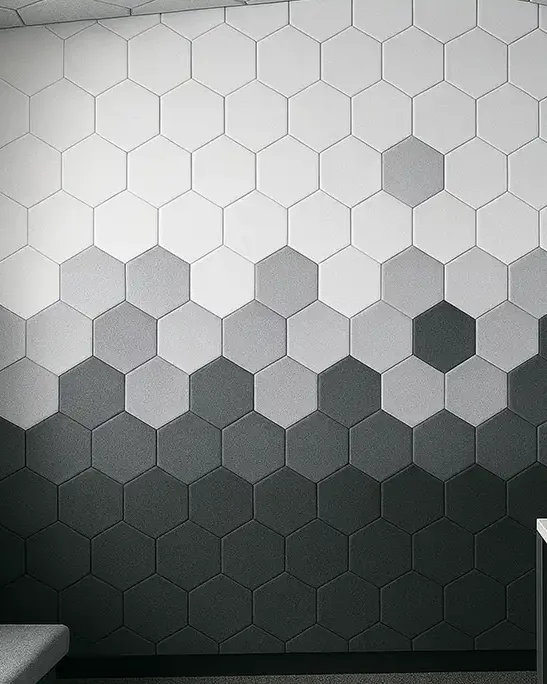
Soundproofing stops sound travelling between rooms; sound absorption controls echo inside a room. Soundproofing needs mass, airtightness and separated construction, and is rated by STC or Rw. Absorption needs soft, porous surfaces such as acoustic panels and carpet, and is rated by NRC. Most noise complaints need one or the other, not both.
"Soundproofing" is the word people search for, but it is often not what they need. A boardroom where every voice rings, a café that turns deafening at lunch, a home office where calls sound hollow: those are echo problems, solved by absorption. A bedroom where the neighbour's television comes through the wall, or a studio that must not disturb the flat next door: those are sound-insulation problems, solved by construction. Buying the wrong solution is an expensive mistake.
The difference at a glance
- Sound absorption: reduces echo and reverberation inside a room; uses soft, porous materials; rated by NRC.
- Soundproofing (sound insulation): reduces sound passing through walls, floors, doors and windows; uses heavy, airtight construction; rated by STC or Rw.
- Acoustic panels: absorb sound; on their own they do not soundproof a wall.
- Leaks: a gap under a door can undo a well-built wall.
- Diagnosis: if the noise is made in the room, absorb; if it comes from outside, insulate.
What is the difference between soundproofing and sound absorption?
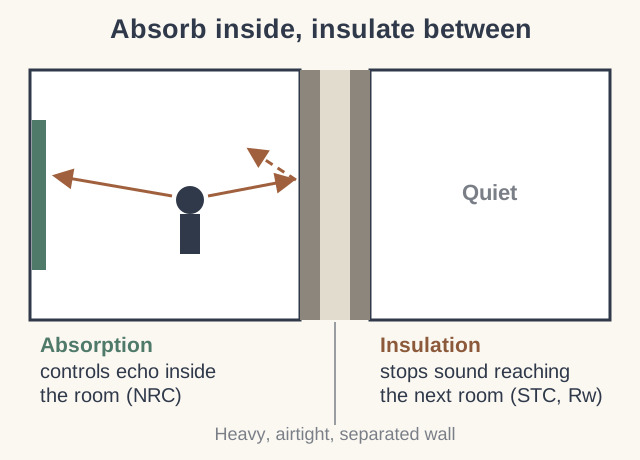
They act on different sound paths. Absorption deals with sound bouncing around inside the room where it is made: a porous surface soaks up part of every reflection, so the room sounds clearer and quieter. Soundproofing, properly called sound insulation, deals with sound passing from one space to another through the building: it relies on heavy, airtight, separated layers that the sound cannot shake through. A room can be beautifully absorbent and still let every word through its door, or perfectly insulated and still echo like a stairwell.
How do you know which one you need?
Ask where the noise comes from. If the problem is the room's own sound, such as echo in a meeting room, clatter in a restaurant or a voice that booms on calls, you need absorption. If the problem is sound from elsewhere, such as traffic, a neighbour's music or footsteps from the floor above, you need insulation. When a room has both, deal with insulation first, because it involves construction, then tune the room with absorption.
- "Our meeting room echoes": absorption.
- "We can hear the meeting room from the corridor": insulation, starting with the door and the gap above the partition.
- "The restaurant is exhausting when full": absorption.
- "Traffic noise keeps us awake": insulation, mainly the windows.
- "My podcast recordings sound hollow": absorption.
- "My drum practice disturbs the neighbours": insulation, usually a room built inside the room.
Can acoustic panels stop noise from next door?
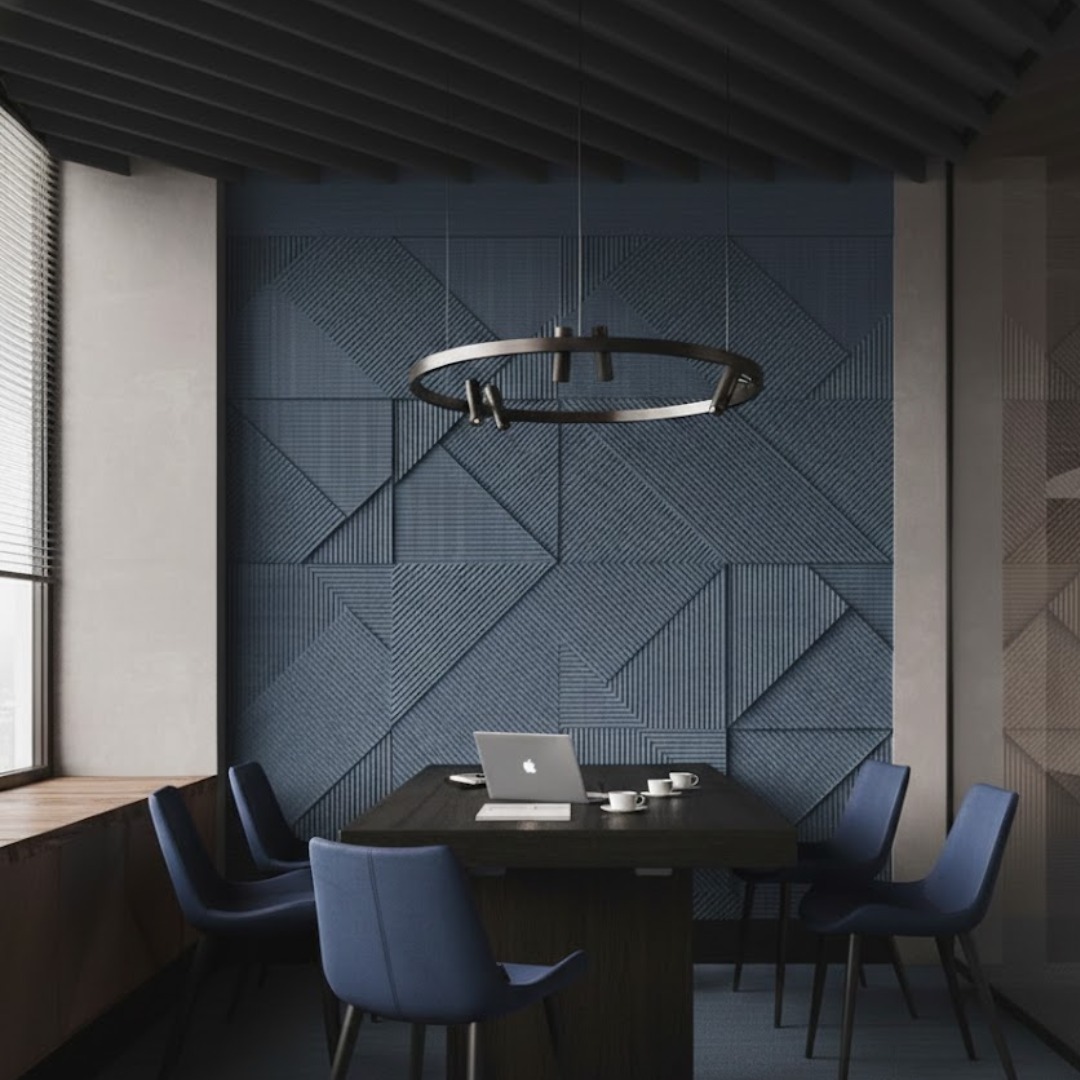
No, not on their own. A PET acoustic panel is light and porous by design, which is exactly what makes it absorb, and exactly why sound passes through it. Panels can reduce the build-up of noise inside a room, so slightly less escapes, but they will not stop a neighbour hearing a television. For what they do well, see where panels make the biggest difference.
How is each one measured?
With different tests and different numbers. Absorption is tested in a reverberant chamber and summarised as NRC, a figure between 0 and roughly 1; our explainer on NRC covers how to read it. Sound insulation is tested as the drop in level from one side of a partition to the other, using test methods such as ASTM E90, and summarised as an STC rating, or Rw under ISO standards. A higher STC means less sound gets through. An NRC tells you nothing about STC, and the reverse.



Studios need both: insulation in the building shell to keep sound in, and absorption inside so recordings sound clean.
How do you soundproof a room?
By adding mass, sealing air paths and separating layers. The practical order is usually:
- Doors: a heavy, solid door, sealed around its frame and with an automatic seal that drops to the threshold when it closes.
- Gaps: seal around pipes, cables, sockets and the top of partitions, including above false ceilings.
- Windows: laminated or double glazing with good seals for traffic noise.
- Walls: extra layers of dense board on resilient fixings, or an independent lining with insulation in the cavity.
- Floors: carpet with underlay or a floating floor to cut footstep noise reaching the room below.
Serious soundproofing is building work, best designed by an acoustic consultant for studios, cinemas and party walls.
Where does carpet fit in?
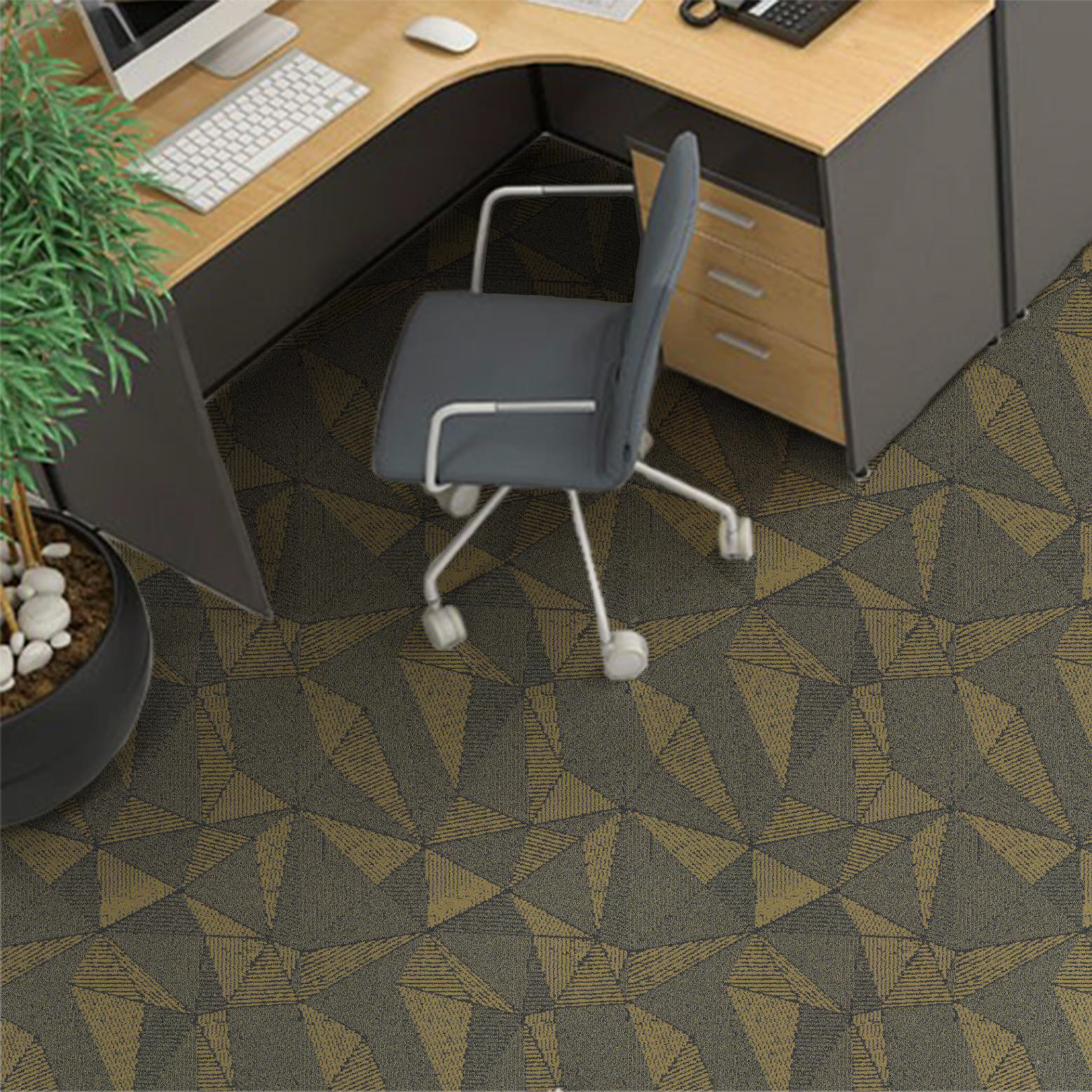
It helps on both counts in one specific way. Carpet absorbs some airborne sound in the room, and it greatly reduces impact noise: the footsteps, dragged chairs and dropped objects that travel through a floor slab to the room below. That makes it valuable in upper-floor homes, offices over occupied floors and hotels. GAIA carpet tiles suit both offices and homes; for room acoustics, see the GAIA acoustic panels.
What to send us
- what the noise is and where it seems to come from;
- the room's size, use and finishes;
- photographs of walls, doors and ceiling;
- whether the problem is worse at particular times or with particular activities.
Our team will tell you whether panels and carpet will solve it, or whether it needs construction work first.
Soundproofing questions
Is acoustic foam soundproofing?
No. Foam is an absorber, like a panel. It reduces echo inside a room but does very little to block sound travelling into the next room.
What is a good STC rating?
Higher is better; a typical single partition rates in the 30s or 40s, while walls between homes or around studios are designed to reach well above that.
Can I soundproof a rented flat?
Partly. Door seals, heavy curtains, rugs and sealing gaps help without building work. Wall linings and new windows need the owner's permission.
Solve the right noise problem
Tell us what you are hearing
Describe the noise and the room to GAIA by Sanson Floorings, and we will tell you whether absorption, flooring or construction is the right fix.