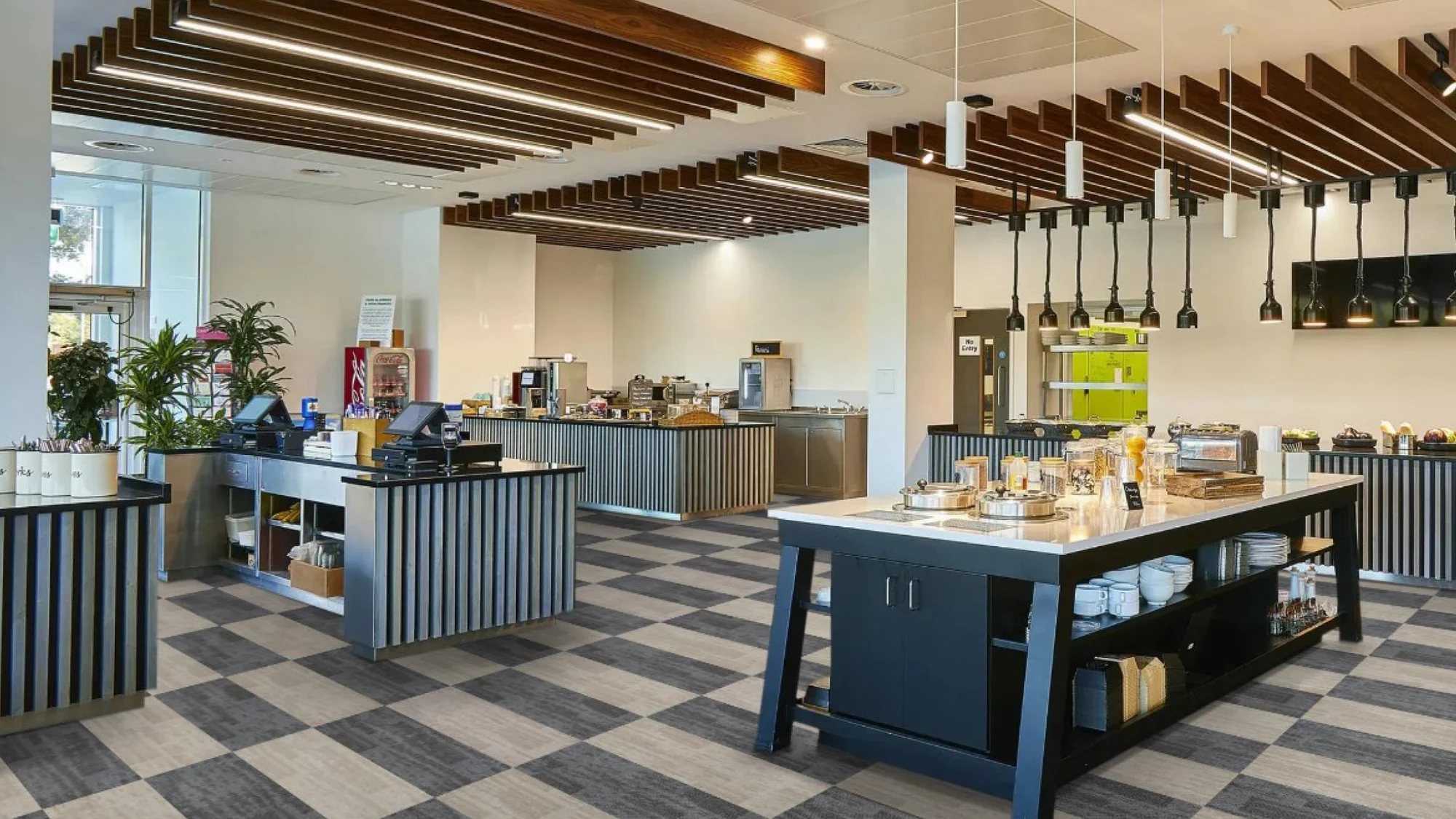
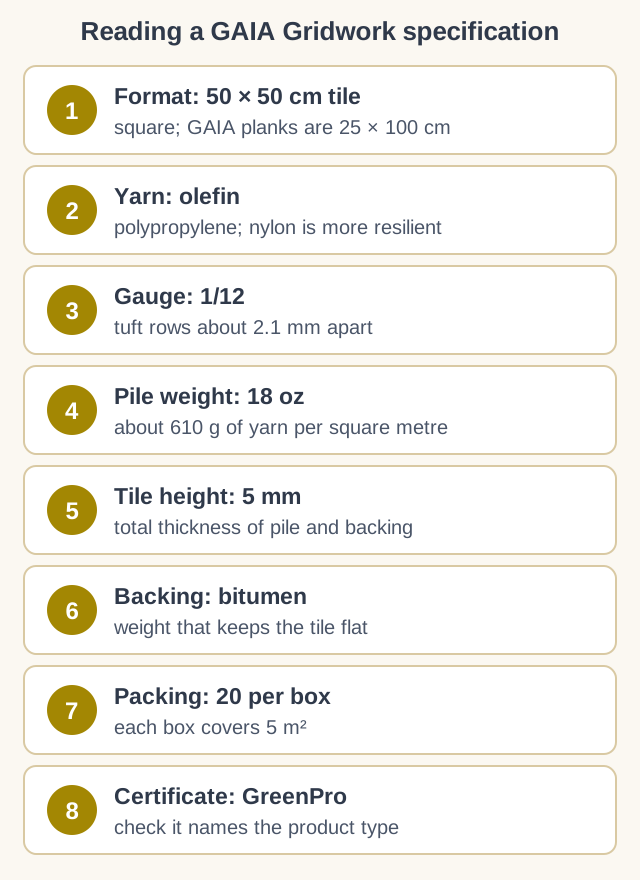
A carpet tile specification shows how a tile will wear: read its format, yarn, gauge, pile weight, height and backing. A Gridwork tile from GAIA by Sanson Floorings is 50 × 50 cm, tufted at 1/12 gauge in olefin, with an 18 oz pile, 5 mm height and bitumen backing.
Architects, interior designers and procurement teams compare carpet tiles from several makers on almost every commercial project, and the specification lines are where those comparisons are won or lost. Two tiles can share a colour and a price yet behave very differently after a year of chairs, trolleys and monsoon mud. Knowing what each line on the specification means, and which ones matter for the space, lets you compare like with like and ask the right questions before the order is placed. GAIA by Sanson Floorings makes its carpet tiles and planks at its plant in Kothur, Ranga Reddy district, near Hyderabad, Telangana. The examples below use GAIA's own collections.
Carpet tile specifications at a glance
- Format: GAIA tiles are 50 × 50 cm squares; GAIA planks are 25 × 100 cm.
- Yarn: olefin (polypropylene) or nylon, depending on the collection.
- Gauge: 1/12 or 1/10 across GAIA collections; a finer gauge packs tufts closer together.
- Pile weight: from 500 to 575 g/m², or 18 oz per square yard (about 610 g/m²).
- Tile height: 5 to 5.75 mm overall.
- Packing: 20 pieces per box, each box covering 5 m².
What does gauge mean on a carpet tile?
The distance between the rows of tufts across the width of the carpet. A 1/12 gauge means the tufting needles sit one-twelfth of an inch apart, about 2.1 mm; a 1/10 gauge means one-tenth of an inch, about 2.5 mm. A finer gauge, with rows closer together, packs more yarn into each square of surface, which usually gives a denser, crisper look and better resistance to crushing. GAIA Gridwork, Nevada, Miami, Salt and Plateau are tufted at 1/12 gauge; GAIA Trends and Rhythm at 1/10. Gauge is only one part of density, which is why it is read together with pile weight.
What is pile weight, and how much do you need?
The weight of yarn in the pile per unit of area, quoted in grams per square metre or ounces per square yard. One ounce per square yard is about 33.9 g/m², so an 18 oz tile carries about 610 g of yarn on every square metre. More yarn generally means a fuller surface that resists wear for longer. GAIA Gridwork and ArchiBrown carry an 18 oz pile. GAIA Nevada carries 575 g/m², and GAIA Trends and Rhythm 500 g/m², each within ±5 per cent. For a corridor or open office with constant footfall, favour the heavier, finer-gauge constructions. For cabins, meeting rooms and lower-traffic areas, a lighter construction is often enough.
Olefin or nylon yarn?
Both have their place. Nylon is the most resilient carpet fibre: it springs back after being crushed, so it holds its look in the busiest areas. Olefin, the carpet industry's name for polypropylene, does not absorb water, resists many stains and costs less, which makes it a practical choice for offices, schools and hospitality spaces with moderate traffic. The US National Institutes of Health facilities team sums up the trade-off in its carpet fundamentals bulletin: thermoplastic fibres such as polypropylene offer good stain resistance and texture retention but are not as strong or resilient as nylon. GAIA makes tiles and planks in both yarns. The full comparison is in nylon vs polypropylene carpet tiles.
What does the backing do?
It keeps the tile flat, stable and in place. A carpet tile has no separate underlay, so the backing provides the weight and dimensional stability that stop edges curling and tiles shifting under chairs. GAIA carpet tiles and planks use a bitumen backing, and several collections are made in an Eco Back construction. When comparing tiles, ask how the backing behaves through temperature swings, because a rooftop office in Delhi in May and a basement in Mumbai in August test it in very different ways. Installation also matters: the Carpet and Rug Institute's CRI 104 installation standard sets out subfloor and adhesive preparation that applies to any tile. Our article on installing carpet tiles covers the steps.
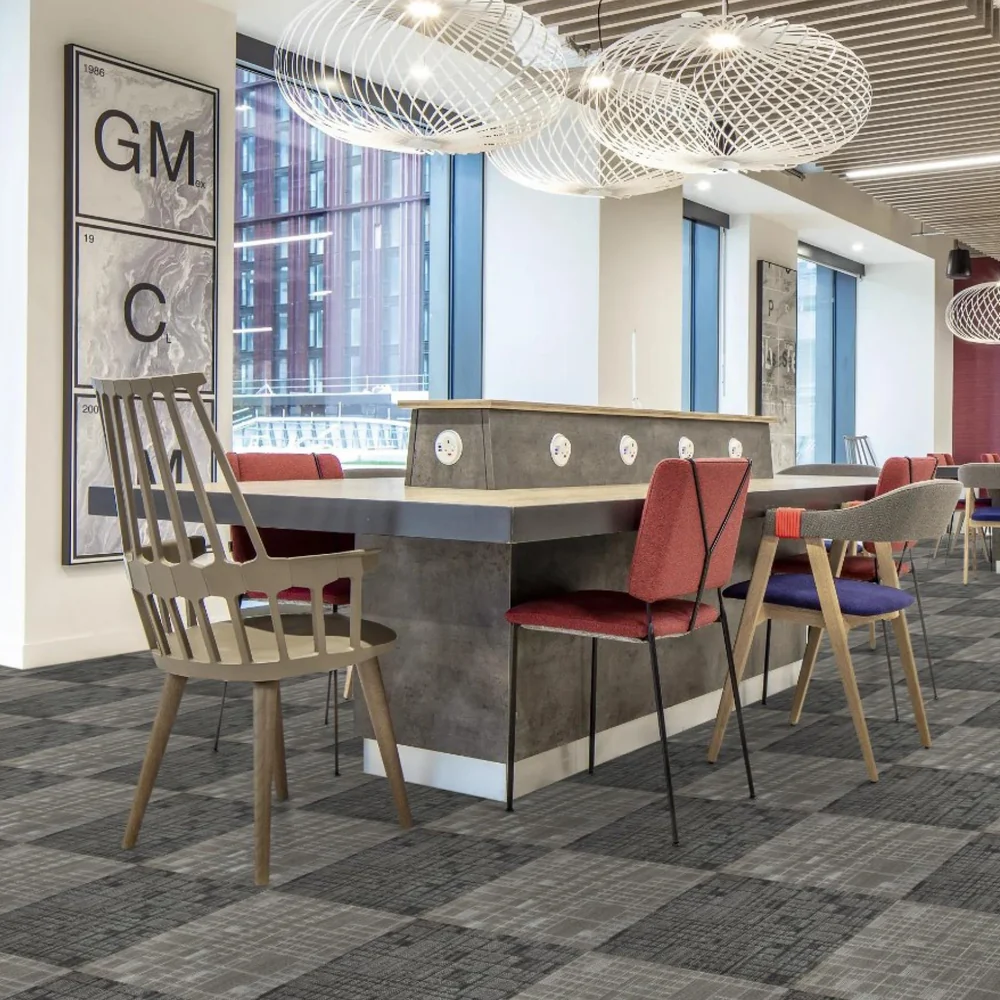
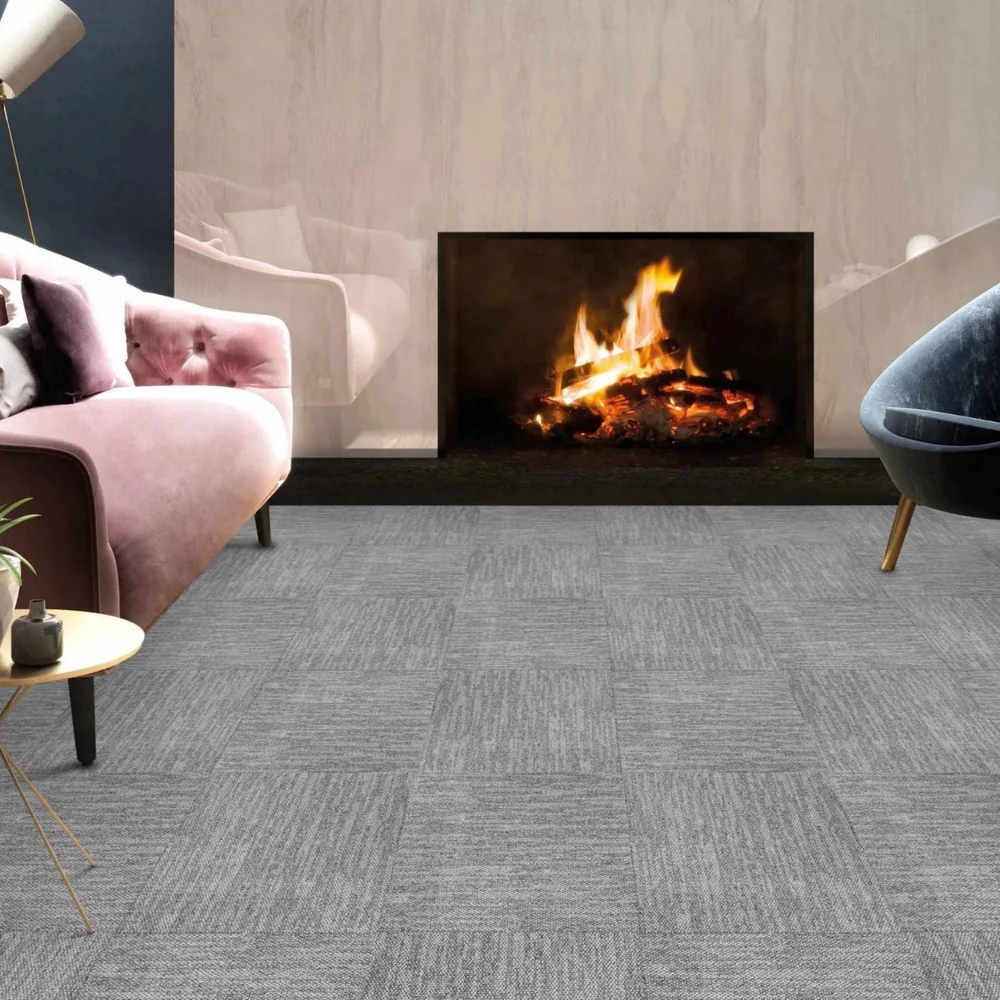
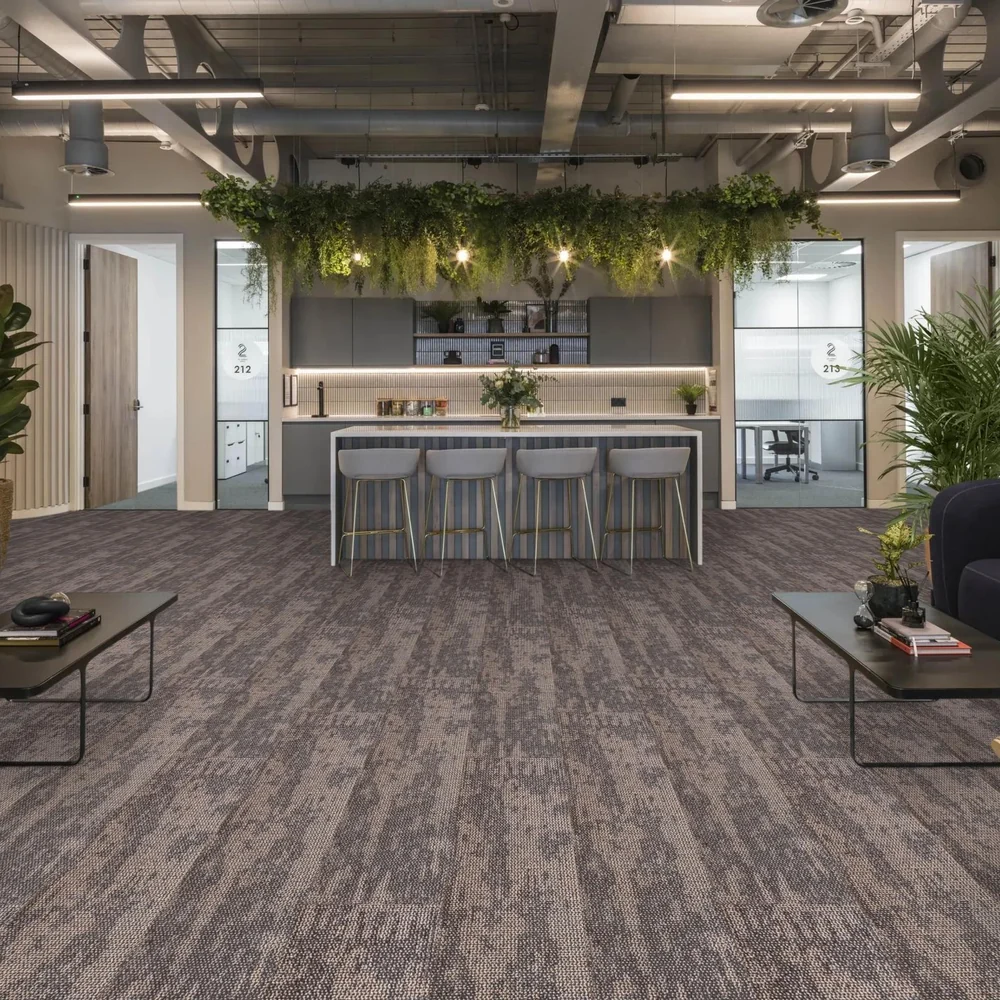
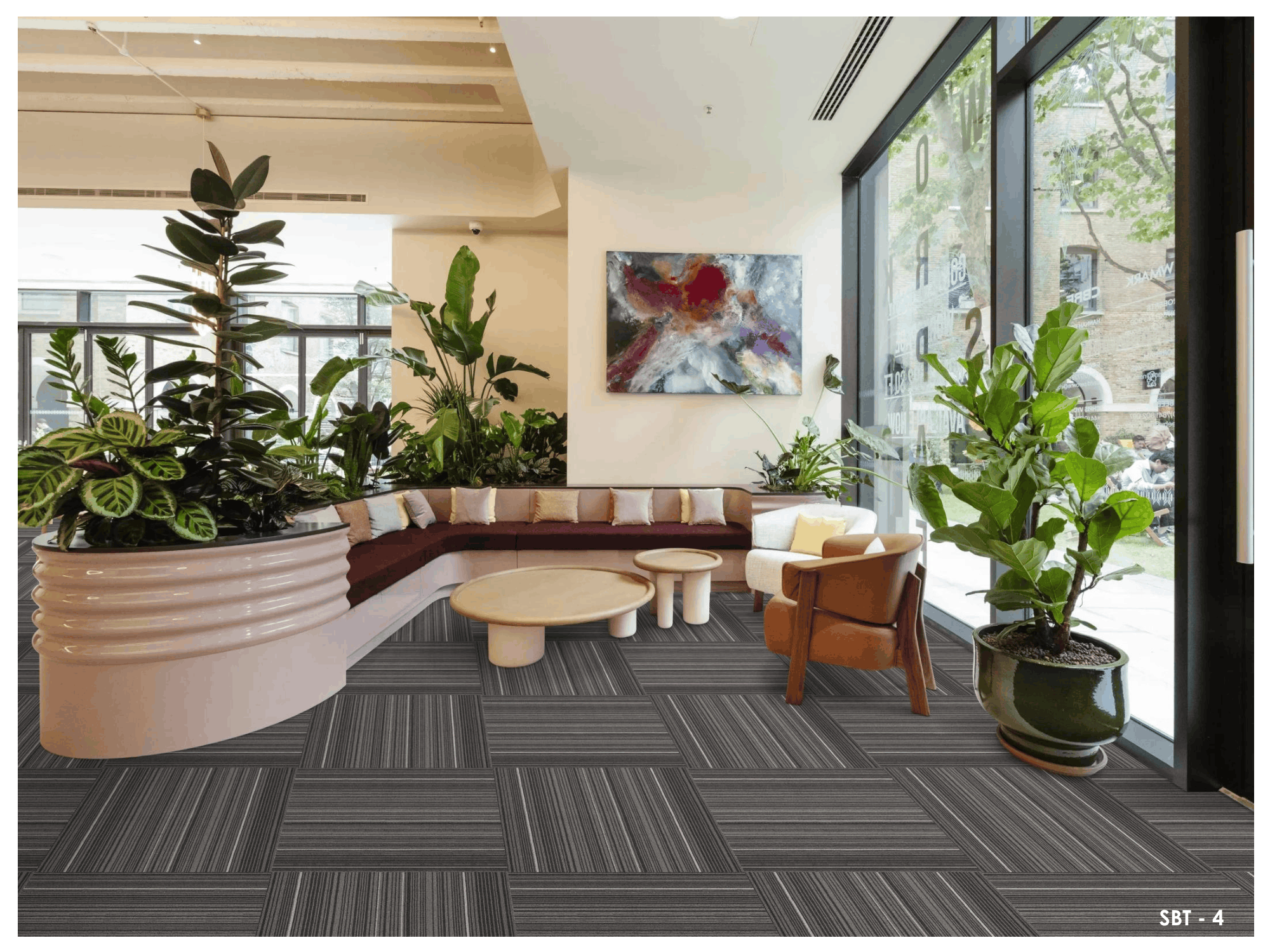
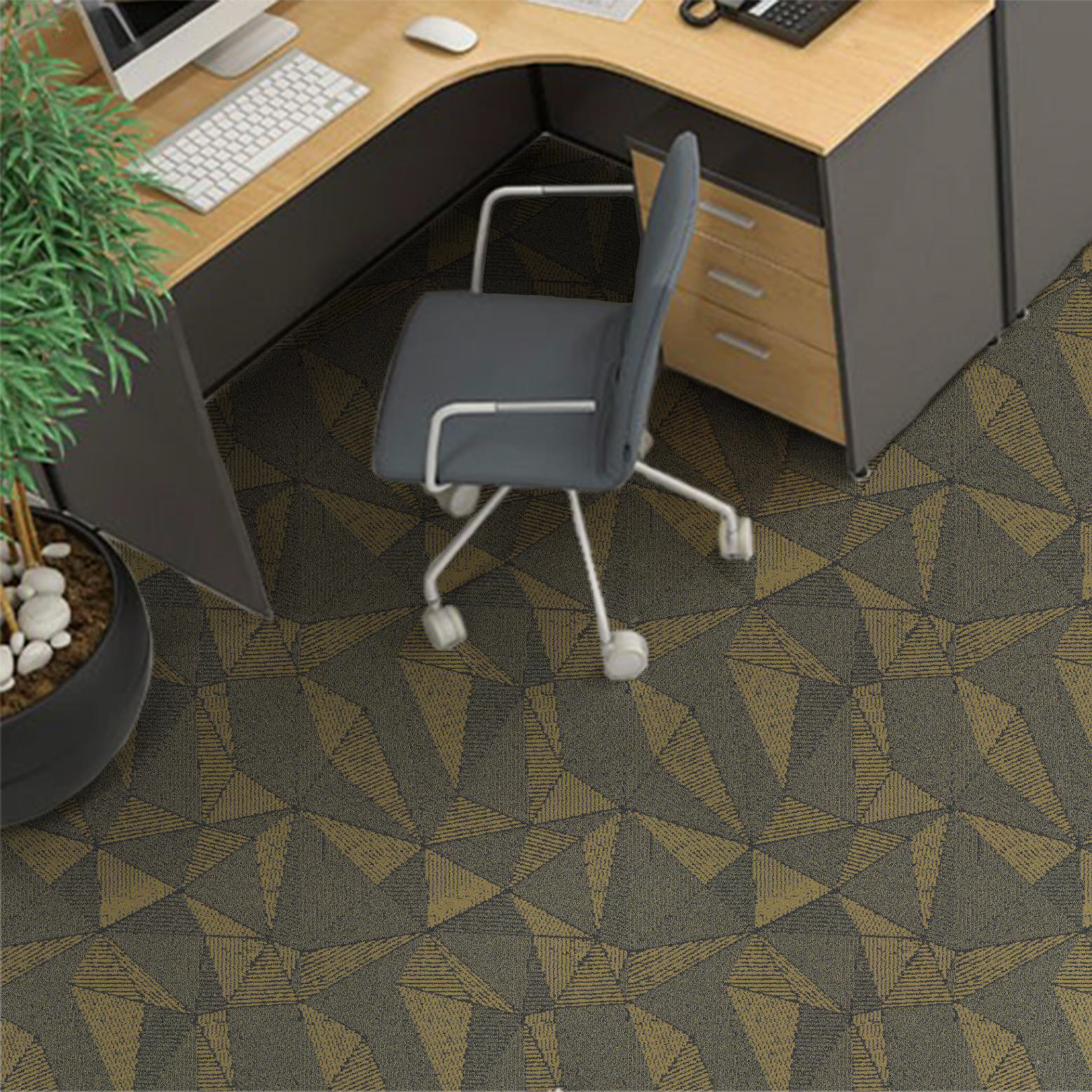
GAIA Gridwork tiles, Nevada tiles and Miami planks: three constructions for three kinds of space.
Tile or plank: does the format change the specification?
The construction can be identical; the format changes the layout. GAIA Miami, Salt and Plateau are 25 × 100 cm planks tufted at 1/12 gauge with an 18 oz olefin pile and a 5 mm height, the same build as Gridwork tiles. Planks can be laid in Ashlar (staggered) or Herringbone patterns, while square tiles go down in Quarter-turn, Brick, Ashlar or Monolithic layouts. Both formats pack 20 pieces to a box covering 5 m², which keeps quantity planning simple; the method is in how many carpet tiles you need, and the formats are compared in carpet tiles vs carpet planks.
Which certificates and test reports should you ask for?
A green certificate that names the product type, and test reports for the properties your project specifies. GreenPro, India's Type 1 ecolabel run by CII's Green Business Centre, certifies named products from a named plant. GAIA's GreenPro certificates, all issued to Sanson Floorings LLP for its Hyderabad, Telangana plant and valid until December 2027, cover:
- Bitumen PP Carpet Tiles: GPSFP576011
- Bitumen PP Carpet Tiles Eco Back: GPSFP576005
- Bitumen Nylon Tiles Eco Back: GPSFP576007
- Bitumen PP Carpet Plank: GPSFP576012
- Bitumen Nylon Carpet Plank: GPSFP576008
Beyond that, commercial specifications commonly list fire behaviour, colourfastness to light, dimensional stability, tuft withdrawal, static and VOC emissions. Ask for each report by the standard it was tested to, and check that the report names the collection you are buying. The complete range is shown under GAIA carpet tiles.
Carpet tile specification checklist
- Format and size, and the layouts that format allows.
- Yarn type, matched to the traffic in each zone.
- Gauge and pile weight together, not either alone.
- Tile height and backing type.
- Box coverage, for ordering and spares.
- A current certificate and test reports naming the product.
What to send us
- floor plans with the areas to be carpeted;
- how each zone is used and how busy it gets;
- the specification clauses or tests your project requires;
- the colours, patterns or layouts you are considering.
Our team will match GAIA collections to each zone and send the specifications and certificates for your submission.
Carpet tile specification questions
What is a good pile weight for office carpet tiles?
For busy open offices and corridors, a heavier pile on a fine gauge, such as GAIA's 18 oz, 1/12 gauge constructions, holds up best. Cabins and meeting rooms can use lighter constructions around 500 g/m².
Is a 1/12 gauge better than 1/10?
A 1/12 gauge places tuft rows closer together, so it usually gives a denser surface. Density depends on pile weight and height too, so compare all three lines together.
How many carpet tiles are in a box?
GAIA packs 20 tiles or planks to a box. A box of 50 × 50 cm tiles or 25 × 100 cm planks covers 5 m².
Where are GAIA carpet tiles made?
At GAIA's plant in Kodicherla village, Kothur mandal, Ranga Reddy district, near Hyderabad, Telangana.
Specifications you can compare
Specify carpet tiles with GAIA
Share your plans and specification with GAIA by Sanson Floorings, and we will recommend collections for each zone and send the documents your submission needs.