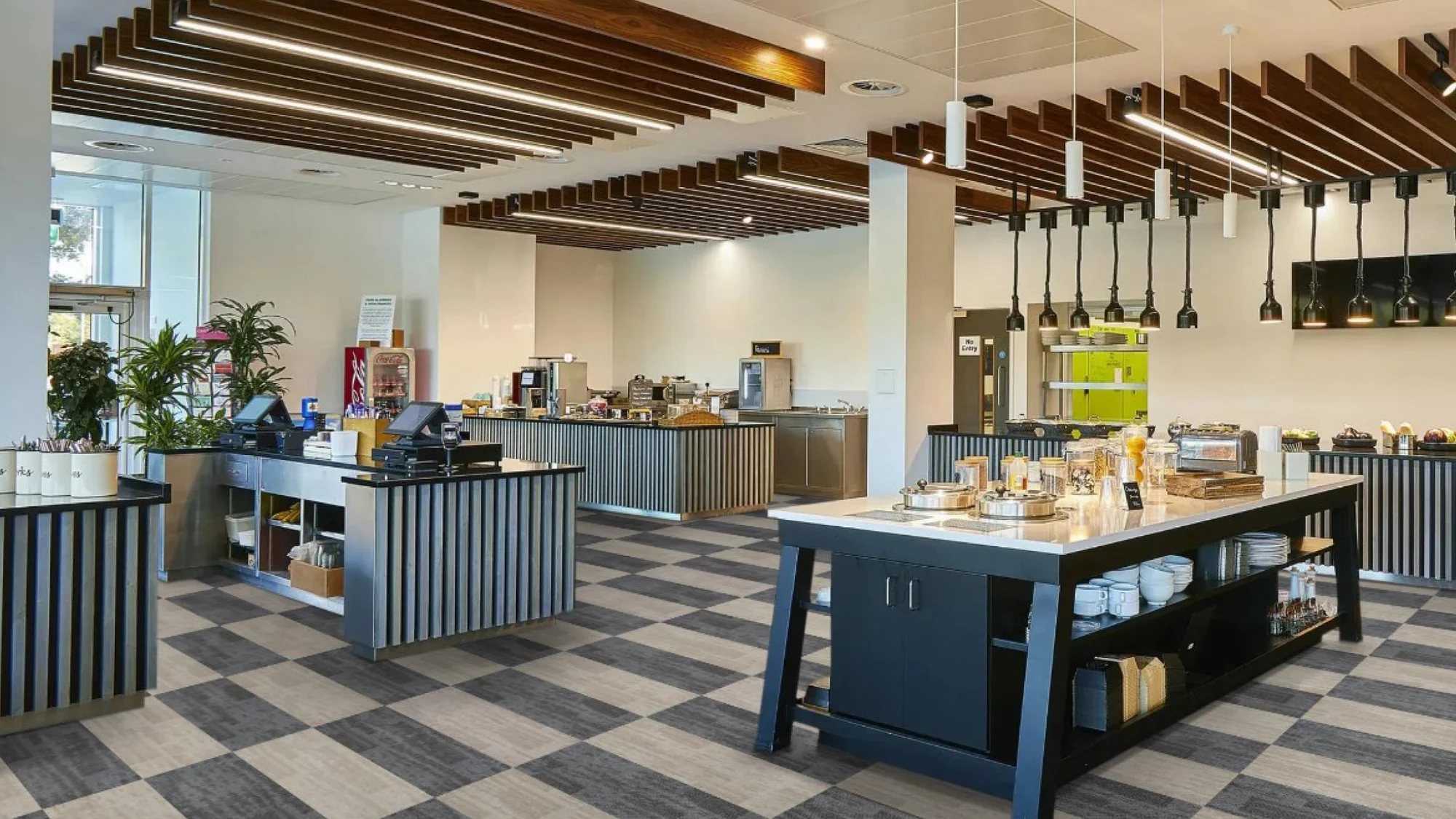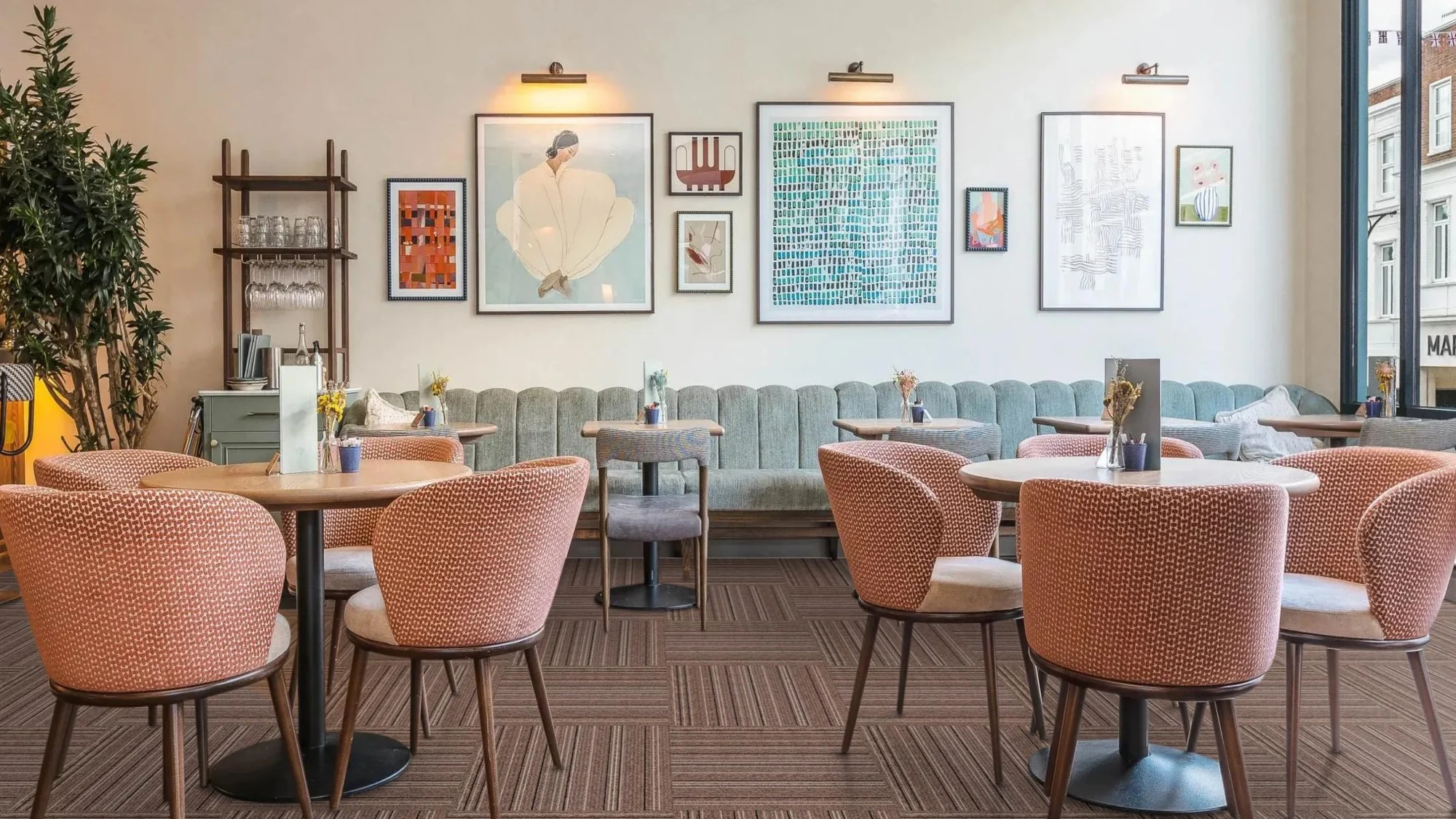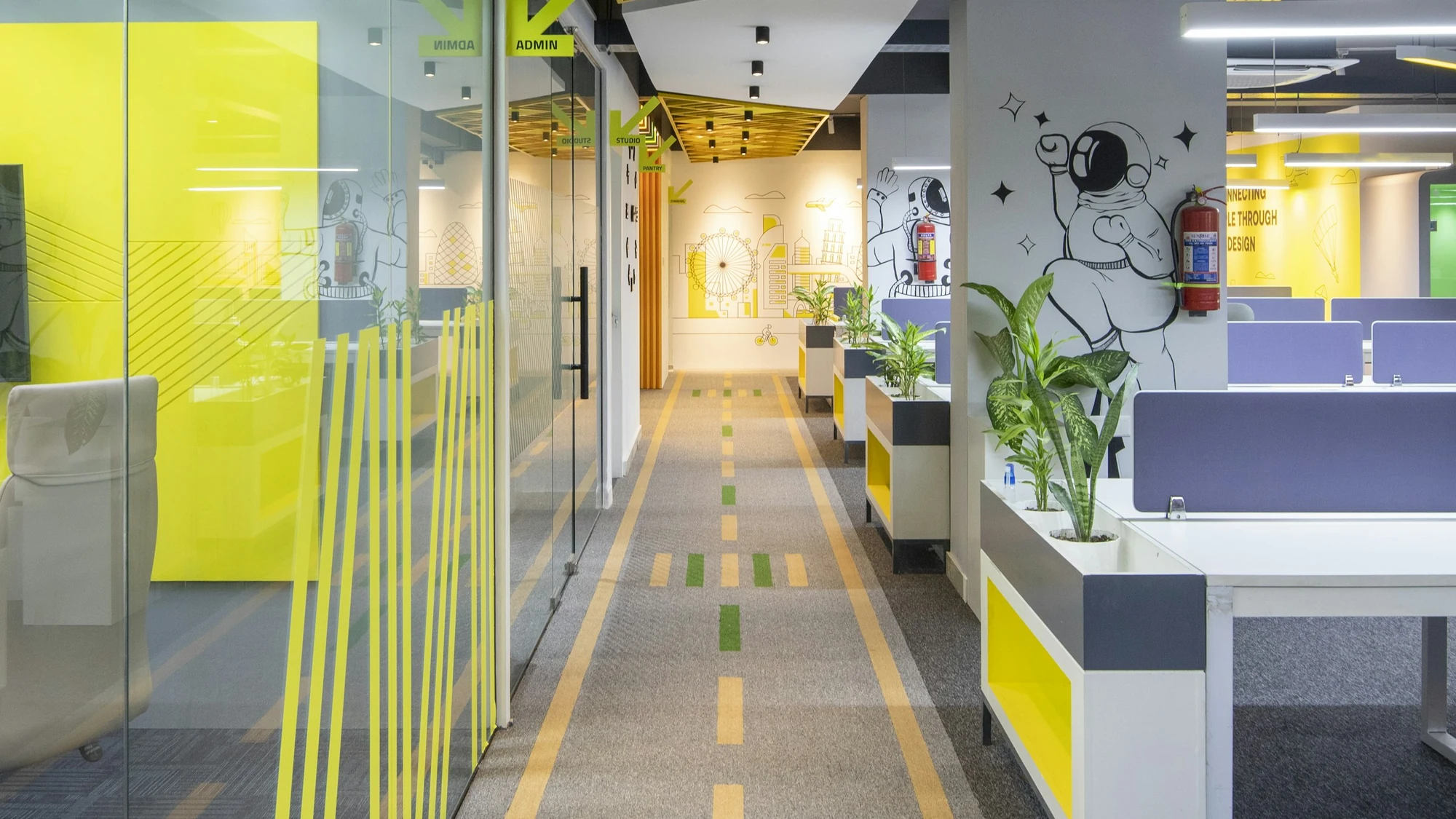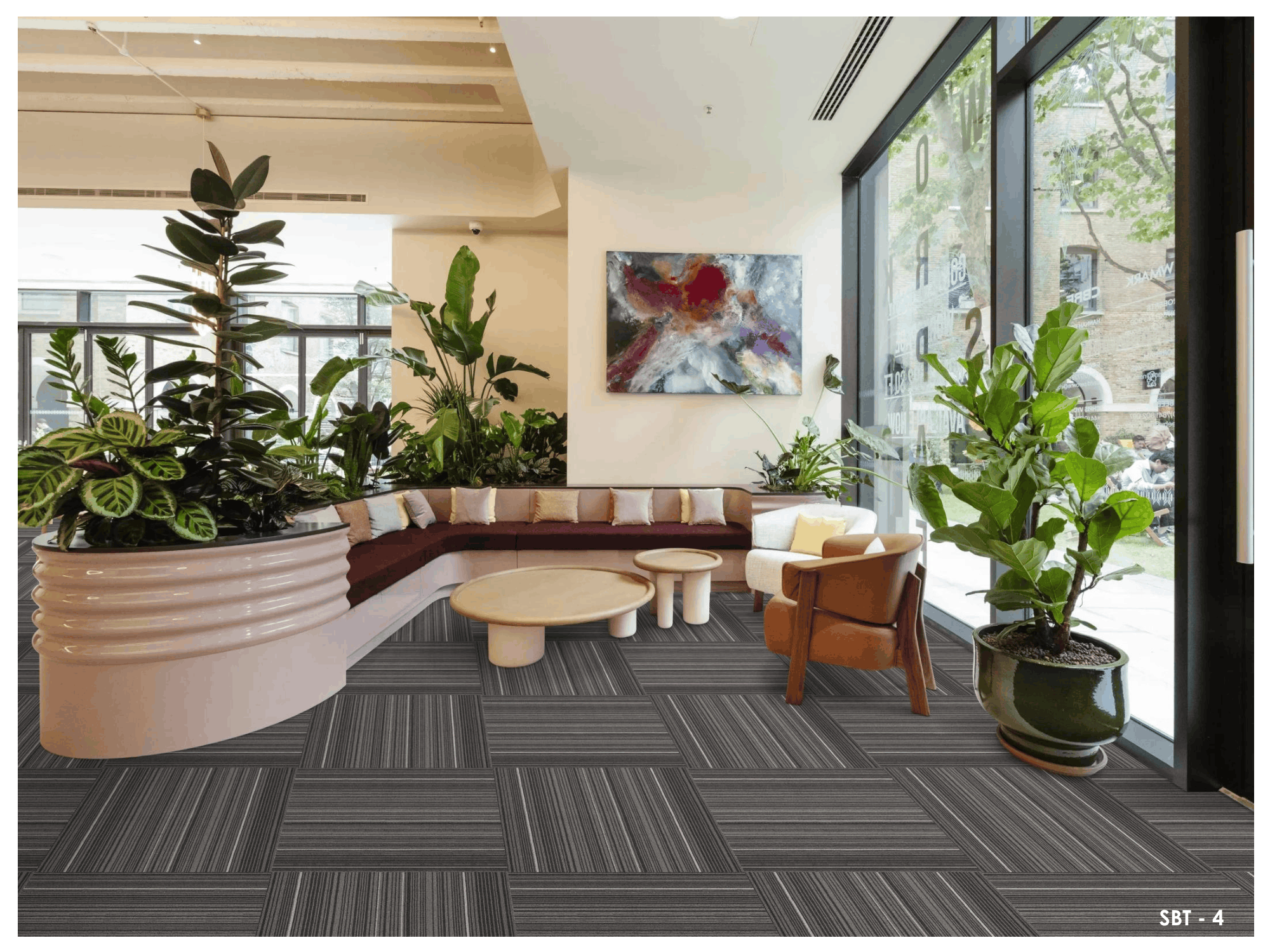
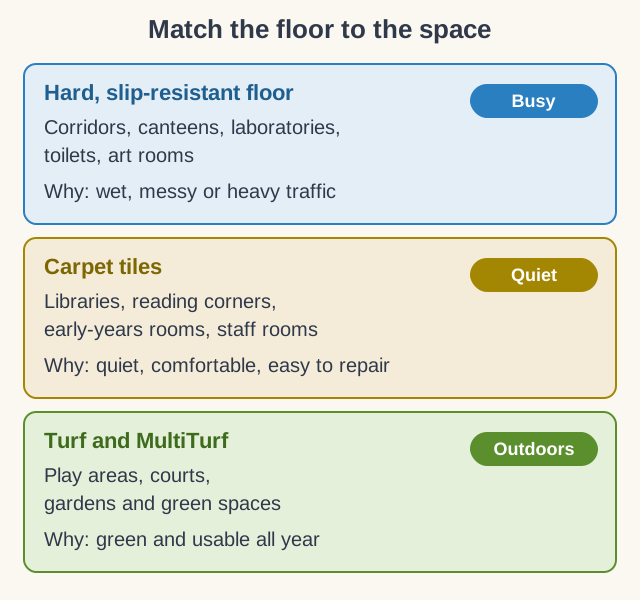
The best flooring for schools depends on the space. Corridors, laboratories, canteens and toilets need durable, slip-resistant hard floors; libraries, reading corners, early-years rooms and staff rooms suit carpet tiles; and outdoor play and sports areas suit artificial turf. GAIA by Sanson Floorings supplies the carpet and turf zones.
A school floor works harder than almost any other. It takes hundreds of pairs of shoes, monsoon mud, dust, spilled lunches and chairs dragged back and forth all day, then has to be cleaned in the few hours before the next morning. It also shapes how a school feels: how loud the corridors are, whether younger children can sit on the floor for a story, and how safe the playground is to fall on. No single product does all of that, so schools are best planned space by space.
School flooring at a glance
- Wet and messy spaces: slip-resistant hard floors in canteens, labs, toilets and art rooms.
- Busy routes: hard-wearing floors in corridors and entrances, with dirt control at the doors.
- Quiet spaces: carpet tiles in libraries, reading corners and staff rooms.
- Younger children: soft floors where they sit, play and learn on the ground.
- Outdoors: turf and multi-sport surfaces for play, games and green areas.
What flooring is best for classrooms?
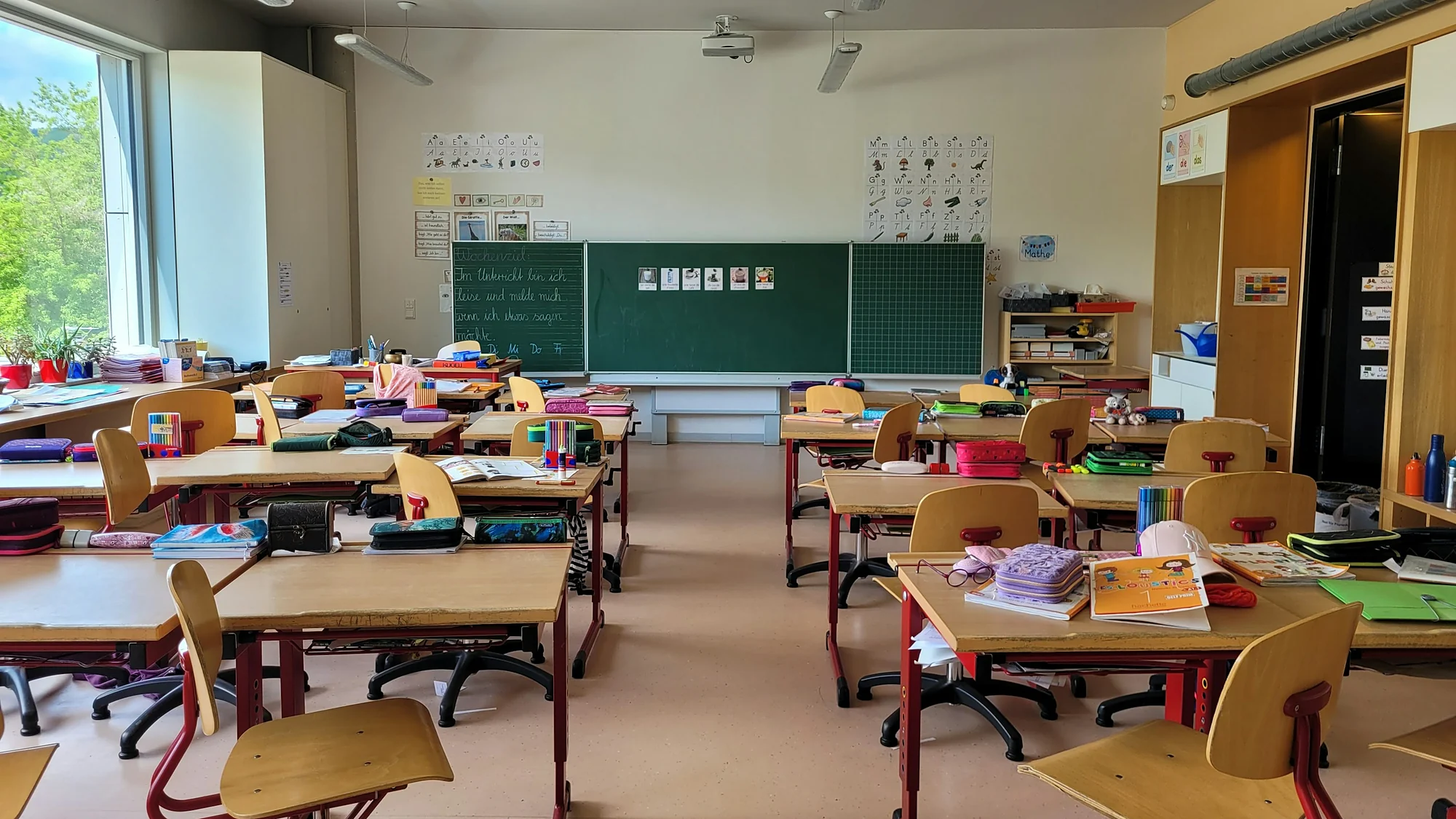
It depends on the age group and the subject. For older students in general classrooms, a durable hard floor is common, with sound-absorbing ceilings and wall panels keeping noise down. For early years and primary classrooms, where the class gathers on the floor, carpet tiles make the room warmer and quieter and give a comfortable surface for group time. Many schools combine the two: hard flooring near the sink and the door, carpet tiles in the teaching and reading area. Chair scrape and footfall are a large share of classroom noise, which is why flooring belongs in any plan for better classroom acoustics. The American classroom acoustics standard, ANSI/ASA S12.60, sets limits on background noise and reverberation in learning spaces, as this summary of the classroom standard explains; soft floors help a room stay within those limits.
What flooring suits corridors, canteens and laboratories?
Hard, slip-resistant floors that clean quickly. Corridors take the heaviest traffic in the building, canteens see spilled food and water, and labs and art rooms deal with chemicals, paint and clay. The UK's HSE points out in its guidance on slips in education that wet surfaces, obstructions and poor lighting at changes of level are common causes of falls, and that such incidents are preventable rather than inevitable. Good entrance matting, well-lit level changes and a sensible cleaning timetable matter as much as the floor itself.
Are carpet tiles a good choice for schools?
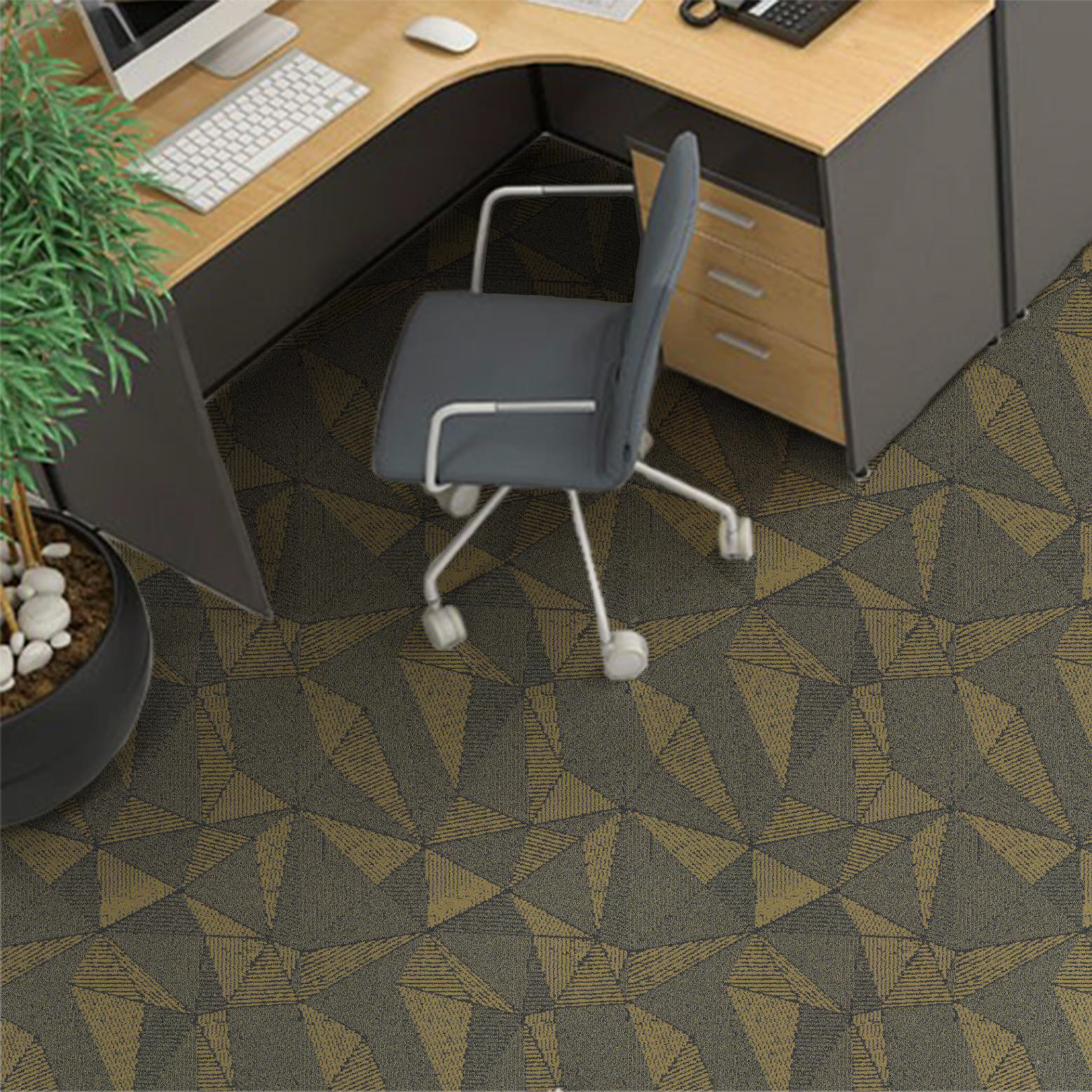
For the right rooms, they are one of the most practical options. When one tile is stained or worn, only that tile is changed, so a spill in the library never means a new floor. Tiles go down quickly, which helps when work has to fit into a school holiday, and colour can mark out zones for reading, group work or circulation without any construction. GAIA carpet tiles are made at GAIA's plant in Kothur, near Hyderabad, with olefin or nylon yarn, carry GreenPro certification, and come as 50 × 50 cm squares and 25 × 100 cm planks; see the collections in GAIA carpet tiles. For a school, a polypropylene tile copes well with spills and damp monsoon shoes, and a fine-gauge, heavier pile lasts longest in busy rooms; what those terms mean is explained in how to read a carpet tile specification. What the GreenPro label means is explained in our GreenPro explainer, and if you are weighing carpet against a hard alternative, see carpet tiles compared with vinyl.
Which floor works best in a school library?
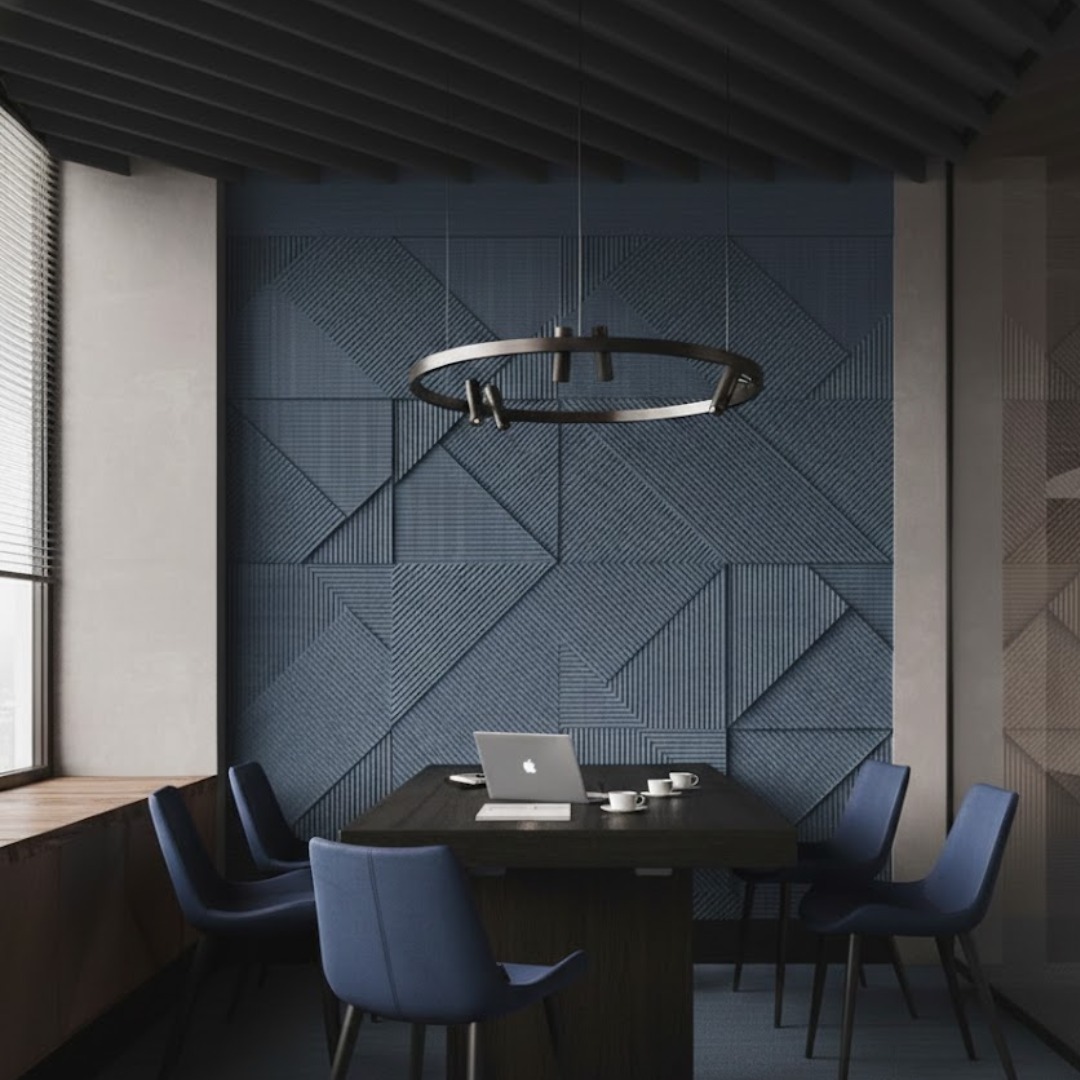
Carpet tiles, in most schools. A library needs to be the quietest room in the building, and a soft floor absorbs footsteps and chair movement that a hard floor would amplify. It also invites children to sit on the floor with a book. Choose a mid-tone with some pattern, so dust and daily marks disappear between cleans, and use a different colour or a plank layout to mark reading corners or a story area.
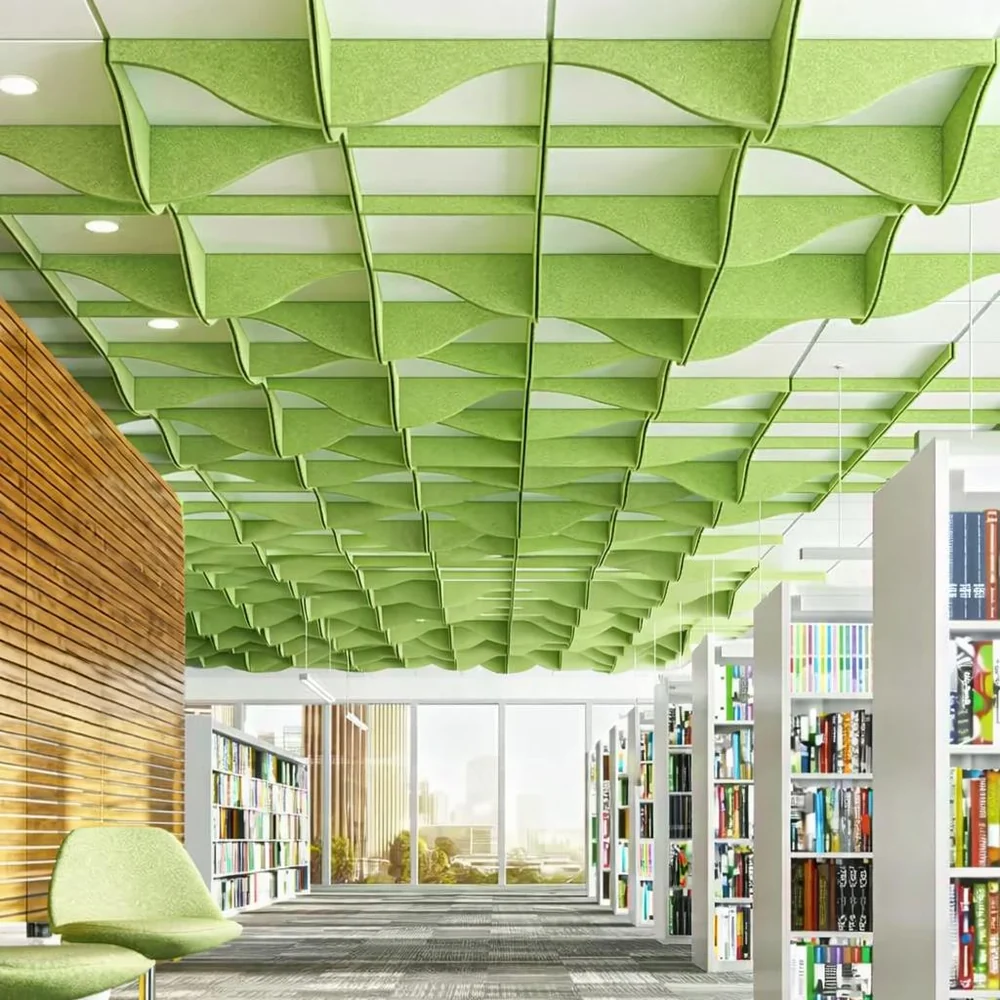
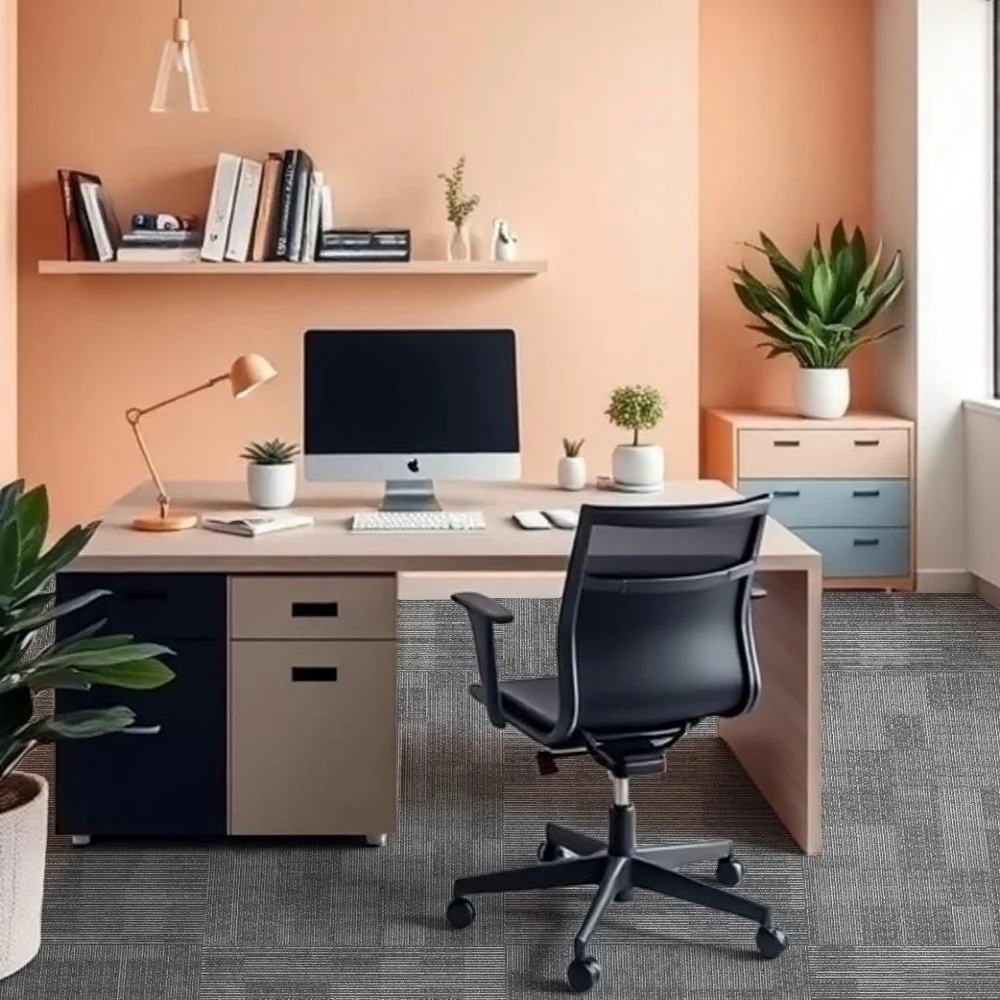
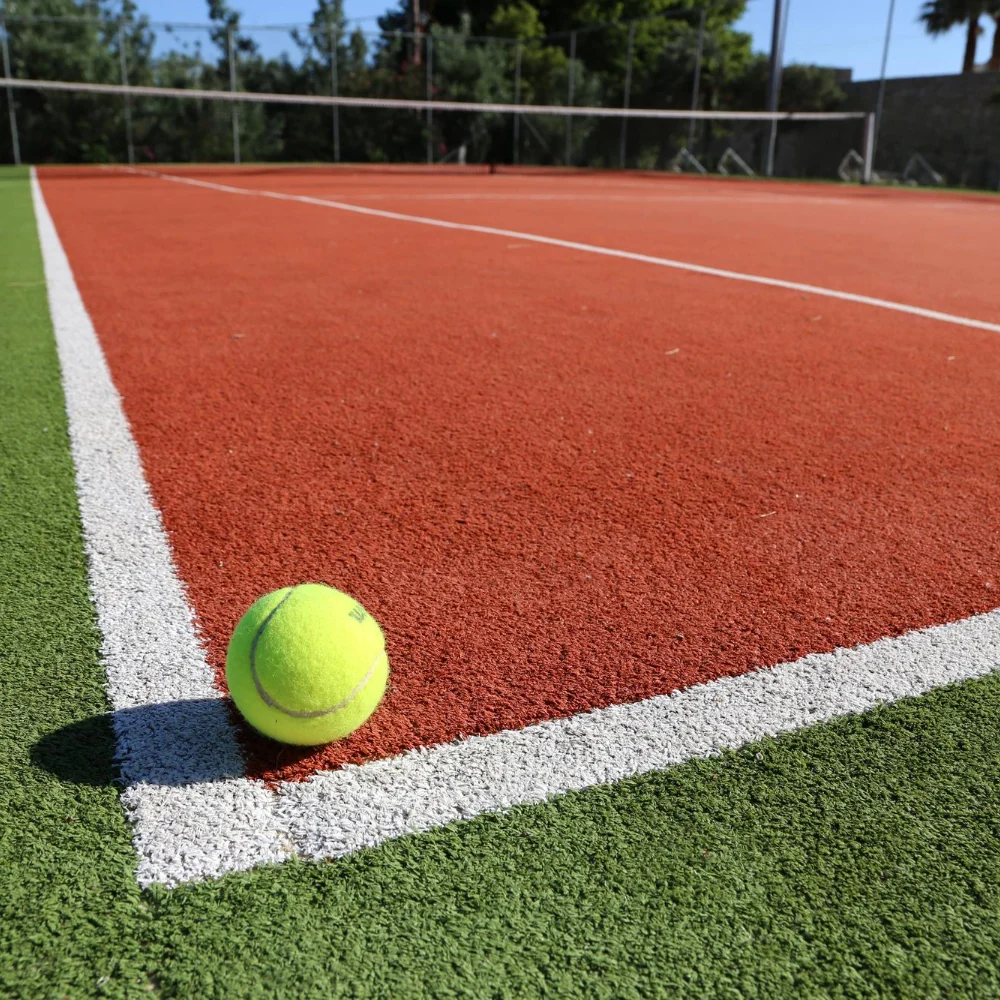
Libraries, study spaces and courts each ask something different of the floor.
What surfaces suit school play areas and sports grounds?
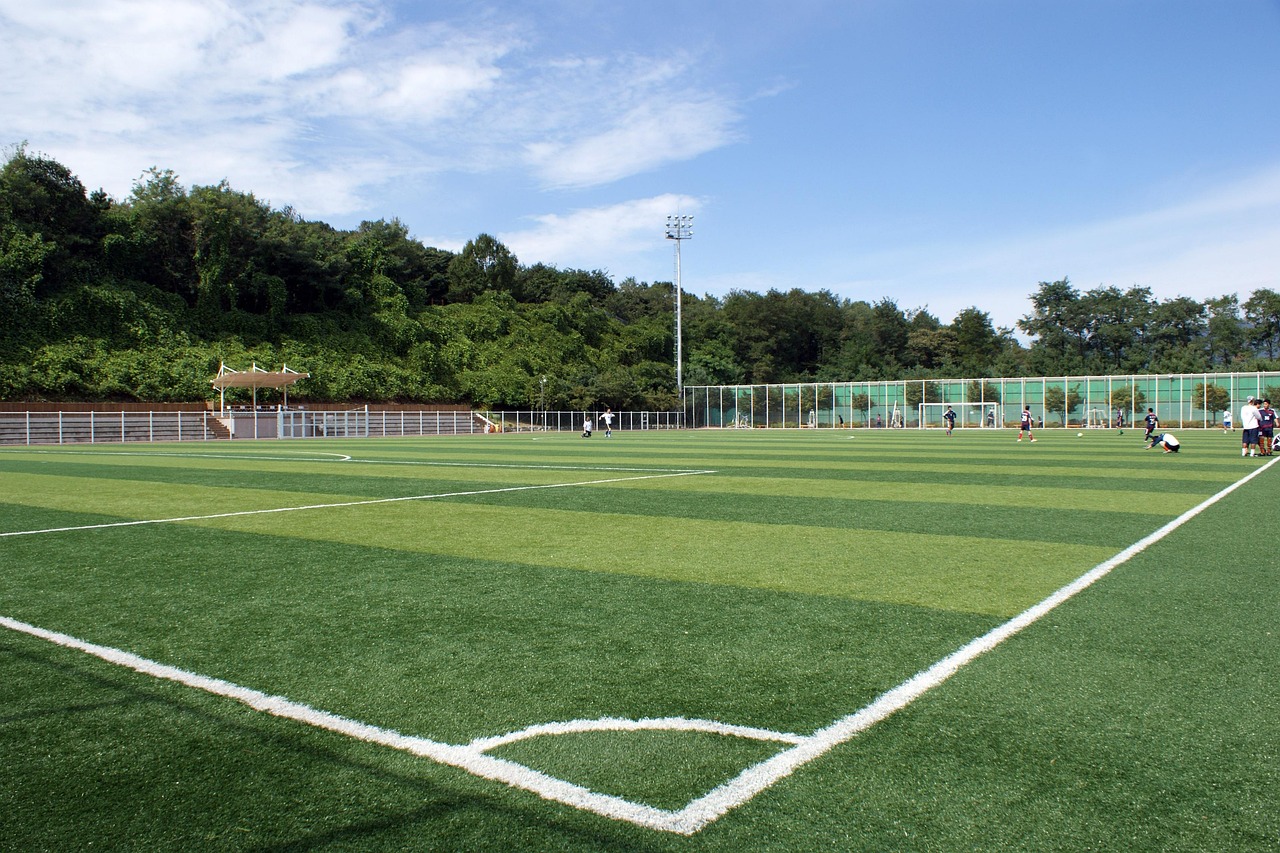
Artificial turf and multi-sport surfaces give schools green, usable ground all year, without the mud and bare patches of a heavily used lawn. GAIA MultiTurf, available at 10 mm or 15 mm, suits courts and other active areas, and is part of the GAIA MultiTurf range. For football pitches, longer football turf suits the game, and for landscaped gardens and quiet green corners, Landscape Grass softens the grounds. Where children may fall from play equipment, the surface beneath it needs proper impact-absorbing protection designed for that fall height.
School flooring checklist
- List every space type and how it is used, including after-school events.
- Specify slip-resistant hard floors for wet, messy and heavy-traffic areas.
- Use carpet tiles where quiet, comfort or floor seating matter.
- Plan entrance matting and lighting at every change of level.
- Keep spare tiles and fit installation into holidays.
What to send us
- floor plans, or a list of rooms with sizes;
- the age groups taught in each area;
- any rooms with noise or wear problems today;
- photographs of outdoor areas you want to resurface.
Our team will recommend carpet tiles, turf or MultiTurf for each space and plan the work around your school calendar.
School flooring questions
Are carpet tiles safe for schools?
In libraries, classrooms and staff rooms, yes. Keep them out of wet areas such as toilets, labs and canteens, and maintain them with regular vacuuming and prompt spot cleaning.
Which flooring lasts longest in school corridors?
A hard, slip-resistant floor designed for heavy commercial traffic, supported by good entrance matting to stop grit being carried in.
How long do carpet tiles last in a school?
With regular vacuuming and prompt spot cleaning, many years in libraries and classrooms. Worn or stained tiles near doors can be swapped individually, so the floor never needs replacing all at once.
Can schools lay new flooring during term time?
Carpet tiles can go down room by room over a weekend, but most schools plan larger areas for holidays so rooms are clear and adhesives have time to cure.
Floors that last the school year
Plan your school flooring
Share your school's plans with GAIA by Sanson Floorings, and we will recommend flooring and turf for classrooms, libraries and play areas.