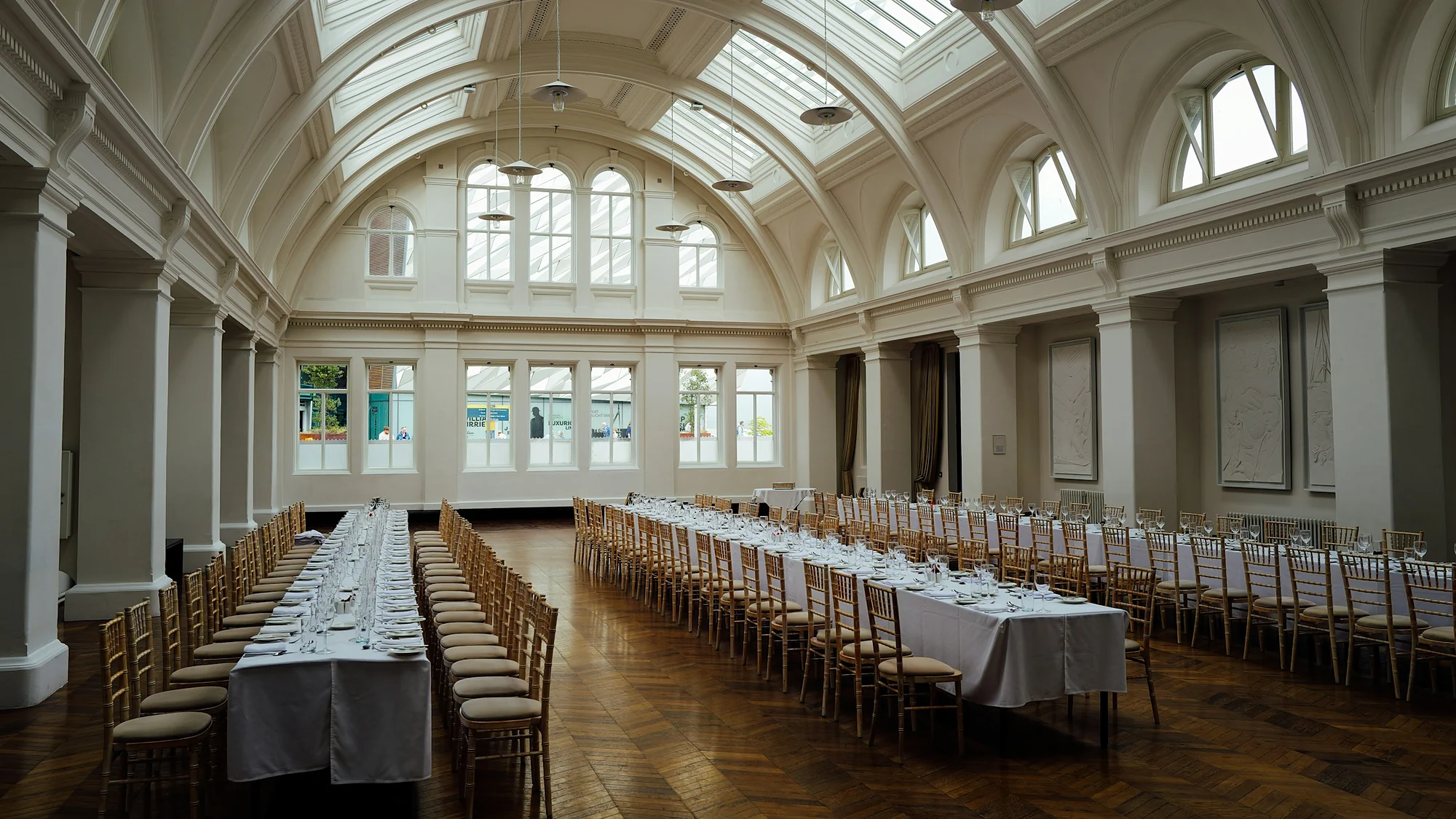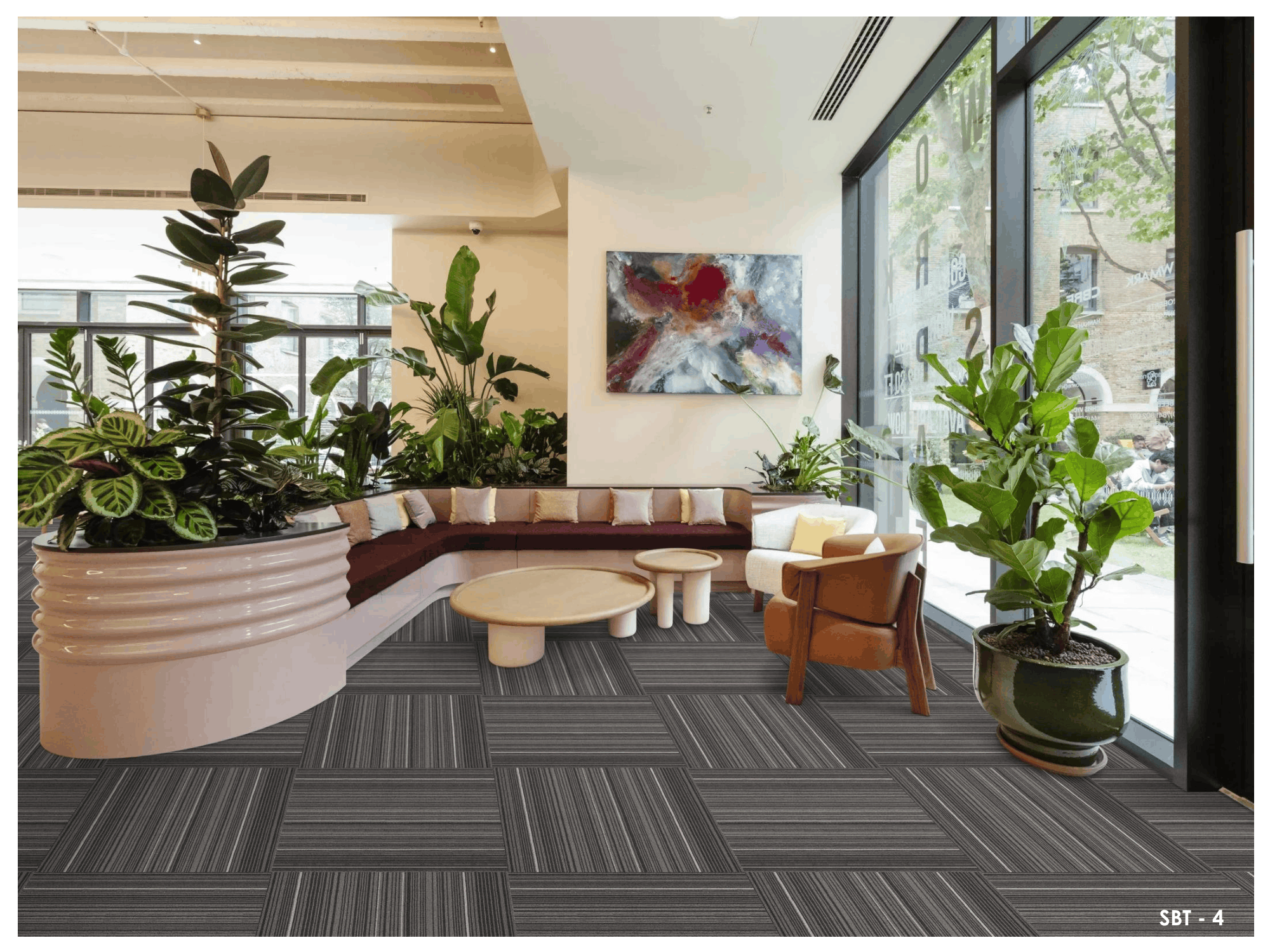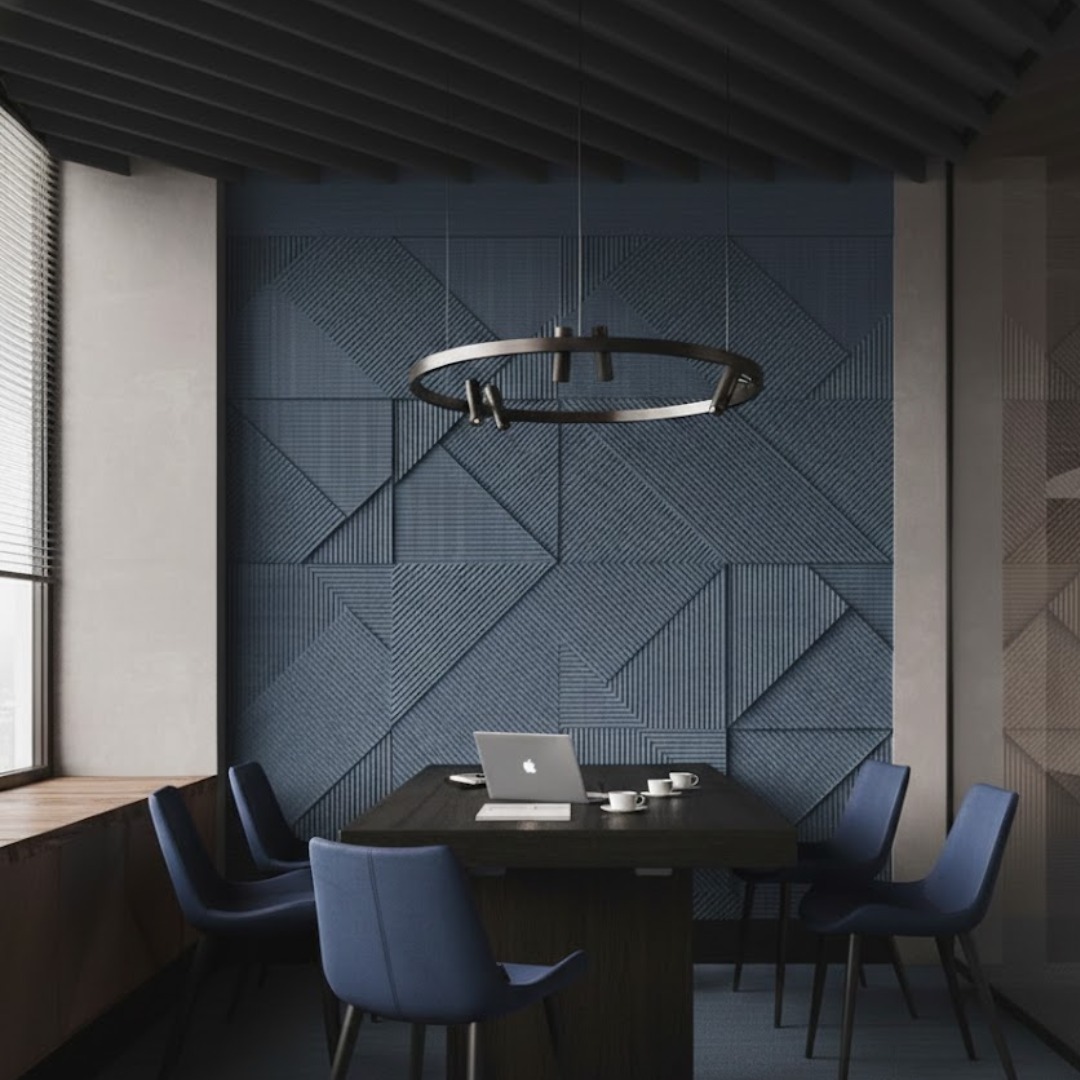
Good acoustics in a place of worship keeps spoken words clear while kirtan, hymns and music still feel full. Most halls echo too much: absorb sound on the rear and side walls and ceiling, keep the front reflective, then tune the sound system. GAIA by Sanson Floorings makes PET panels.
Temples, gurdwaras, churches, mosques, satsang bhawans and prayer halls share a familiar problem. A sermon, a katha or an announcement dissolves into echo by the time it reaches the back rows, and turning up the speakers only makes it louder, not clearer. Many of these buildings have high ceilings, marble or stone floors and plastered walls, which reflect almost every sound. At the same time, the congregation wants singing and music to feel uplifting, not dead. This article explains how to balance the two.
Worship space acoustics at a glance
- The problem: hard floors, walls and high ceilings make speech echo.
- The balance: speech needs a drier room; singing and music like some liveliness.
- Where to absorb: rear wall, upper side walls and the ceiling.
- Where to reflect: near the speaker or musicians, to carry sound forward.
- The sound system: works far better once the room is treated.
Why do places of worship echo so much?
Because they are large rooms built from hard materials. Sound reflects off marble floors, stone or plaster walls and high domes or roofs, and keeps arriving at the listener's ear long after the words were spoken. The time it takes a sound to die away is called the reverberation time. An article on worship space design in Construction Canada notes that many worship spaces have reverberation times of three to six seconds, and suggests about 1.5 seconds as a better target where speech matters. In a hall like that, each syllable is still ringing when the next one starts, so words blur.
How do you balance clear speech with music?
By deciding what the space is mainly for, then treating it to suit. A study of the acoustics of worship spaces published by the UK Institute of Acoustics explains the tension: speech needs a short reverberation time, because a long one lets earlier sounds mask later ones, while singing and music benefit from a longer one. Spaces where the spoken word dominates, such as prayer halls for sermons and recitation, should be treated towards clarity. Spaces where congregational singing, kirtan or bhajans lead can keep more liveliness, with absorption placed carefully so speech still carries. Many Indian halls serve both, plus weddings, langar and community events, so aim for clarity and let the sound system support music.
Where should acoustic panels go in a worship hall?
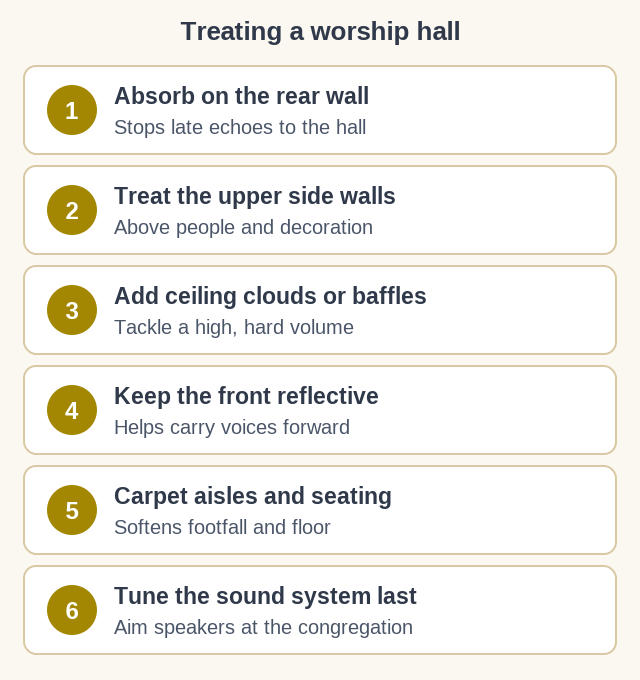
Start with the surfaces that send echoes back to the listeners. The rear wall faces the speaker and returns a strong, late reflection to the congregation, so treat it before anything else. Treat the upper parts of the side walls next, along with large areas of ceiling if it is flat or domed. Keep surfaces near the speaker, the altar, the stage or the musicians more reflective, so they help carry sound forward. Construction Canada's guide suggests treating roughly 20 to 30 per cent of the wall surface, depending on the room's size and finishes, and prioritising the sides and rear in a retrofit. Soft floors in seating areas, aisles and stages help too. The same principles apply to banquet and community halls, as described in how to reduce echo in a hall.


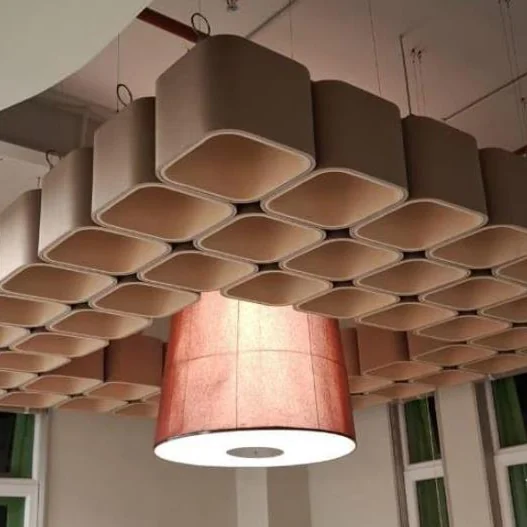
Large ceiling elements treat big volumes without crowding the walls.
Can acoustic panels suit a traditional interior?
Yes. PET panels need not look technical. GAIA's printed acoustic panels can carry patterns, motifs or custom artwork, so a rear wall can feature a design that belongs to the space while it absorbs sound; see printed acoustic panels for feature walls. Grooved and fluted panels add texture in plain, calm colours. For high ceilings, GAIA ceiling clouds in custom shapes and Linear or Wave baffles treat the volume above the congregation; how they compare is in acoustic baffles vs ceiling clouds. GAIA PET panels achieve NRC 0.85 to 0.9 when installed with an air gap, and they are made from recycled polyester fibres. The range is shown under GAIA acoustic PET panels.
Will a better sound system fix the echo?
Not on its own. Louder speakers in an echoing hall add more sound for the room to reflect, so clarity hardly improves. Treat the room, then have the sound system tuned to it, with loudspeakers aimed at the congregation rather than at the walls and ceiling. In a treated hall, the system can often run at a lower level and still be clearer. For larger halls and stages, see auditorium acoustics.
Worship hall checklist
- Note how the hall is used: sermons, recitation, singing, music and events.
- Clap once and listen to how long the sound rings.
- Treat the rear wall, then the upper side walls and the ceiling.
- Keep the front reflective and soften seating areas and aisles.
- Re-tune the sound system after the treatment.
What to send us
- the hall's dimensions, including ceiling height;
- photographs of the walls, ceiling and floor;
- how the hall is used through the week;
- any designs, motifs or colours the panels should follow.
Our team will propose where to place panels and how many are needed.
Worship space acoustics questions
Will acoustic panels make singing sound dull?
Not if they are placed well. Treating the rear, upper walls and ceiling while keeping the front reflective keeps singing full and makes speech clearer.
Can acoustic panels be fitted to a heritage building?
Often, with care. Suspended clouds and panels on battens can avoid fixing into fragile surfaces. Seek approval for any listed or protected building.
Do carpets help in a prayer hall?
Yes. Carpet in seating areas and aisles softens footfall and adds absorption at floor level, though walls and ceiling do most of the work.
Every word heard clearly
Plan acoustics for your hall
Send GAIA by Sanson Floorings photographs and dimensions of your place of worship, and we will propose an acoustic treatment that suits it.