Carpet tile backing keeps each tile flat, heavy and in place without an underlay. Bitumen backs are dense and stable, PVC backs are lighter and stiffer, and cushion backs add softness underfoot. GAIA by Sanson Floorings makes its carpet tiles and planks with a bitumen backing.
The face of a carpet tile gets most of the attention: colour, pattern, yarn and pile. The backing is hidden once the floor is down, yet it decides whether the tiles stay flat through a Delhi summer, whether edges lift where chairs roll, and how easily a damaged tile can be lifted and replaced years later. On a specification, the backing is often a single word. This article explains what sits behind that word, how the common backing types differ, and how to choose one for the space you are fitting out.
Carpet tile backing at a glance
- Job of the backing: weight, flatness and dimensional stability, so tiles lie still without an underlay.
- Bitumen: heavy and stable; the backing on every GAIA carpet tile and plank.
- PVC: lighter and stiffer, widely used on commercial tiles.
- Cushion: a soft layer for comfort and quieter footfall.
- Always check: how the backing copes with heat, damp and the adhesive specified.
What does the backing on a carpet tile do?
It turns a piece of carpet into a floor tile. Broadloom carpet is stretched or glued over an underlay; a carpet tile has to lie flat on its own, butt tightly against its neighbours and stay put under foot traffic and chair castors. The backing supplies the weight and rigidity for that. A good backing also resists curling at the corners, keeps the tile's size steady as temperature and humidity change, and lets a single tile be lifted without disturbing the rest of the floor. The carpet fundamentals bulletin from the US National Institutes of Health describes the backing as one of the layers that give carpet its stability and durability, alongside the face yarn and the primary backing it is tufted into.
Bitumen, PVC or cushion: what is the difference?
Each one balances weight, stiffness and comfort differently.
Bitumen backing is a dense layer that gives the tile real weight. That weight helps tiles lie flat and stay flat, and it makes bitumen-backed tiles a long-standing choice for offices and other commercial floors. Every GAIA carpet tile and plank is made with a bitumen backing, tufted in olefin or nylon depending on the collection.
PVC backing is a vinyl compound that makes a lighter, stiffer tile. It is common on commercial tiles worldwide. The trade-offs to ask about are how it behaves when the subfloor is warm and whether recycled content is used.
Cushion backing adds a soft layer, usually foam or felt, beneath the tile. It makes the floor more comfortable to stand on and helps reduce the sound of footsteps reaching the room below. Cushioned tiles are thicker, so they need care where they meet other floor finishes.
What is an Eco Back carpet tile?
It is one of the styles GAIA makes on its bitumen-backed construction. The GAIA Rhythm and SBT collections are both made in the Eco Back style: 50 × 50 cm tiles tufted in olefin at 1/10 gauge, with a 500 g/m² pile (±5 per cent), a 5.75 mm tile height and a bitumen backing. GAIA's GreenPro certificates include Bitumen PP Carpet Tiles Eco Back (GPSFP576005) and Bitumen Nylon Tiles Eco Back (GPSFP576007), both issued to Sanson Floorings LLP for its Hyderabad, Telangana plant and valid until December 2027. If your project needs the backing's full make-up for a submission, our team will send the product documents.
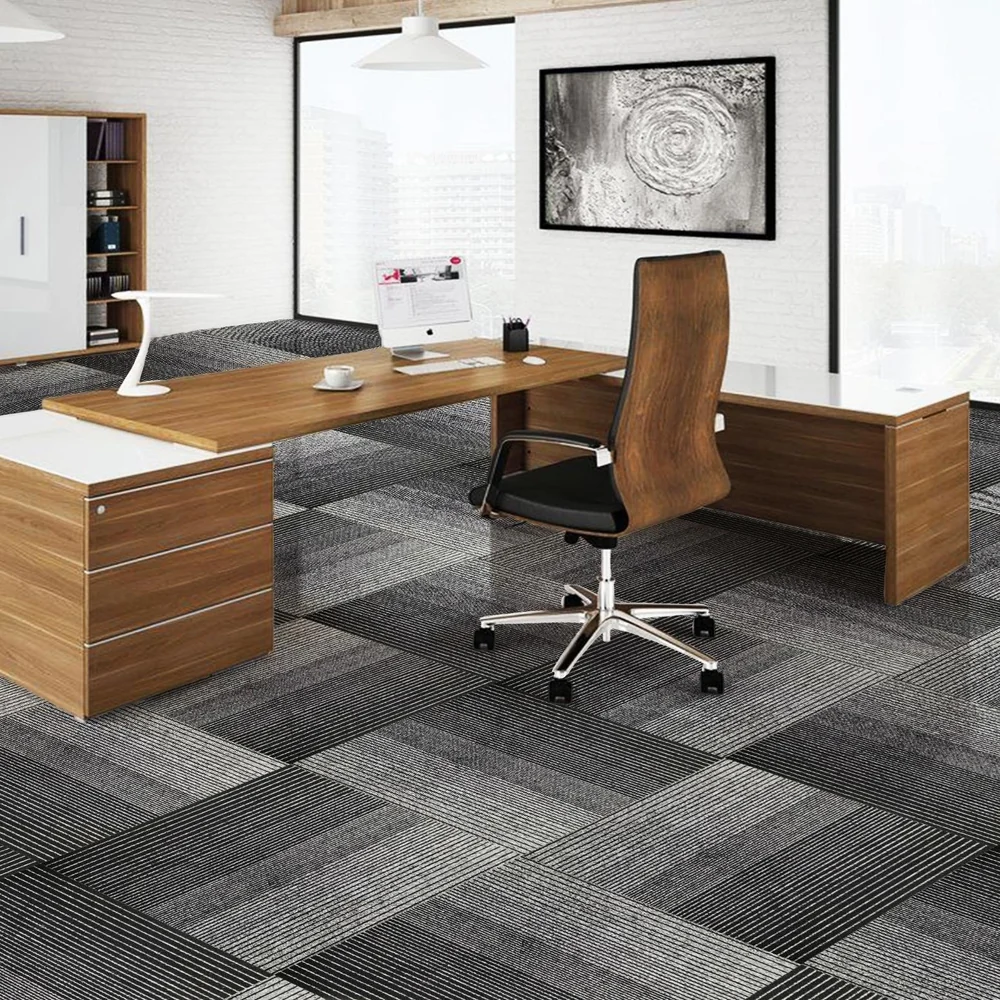
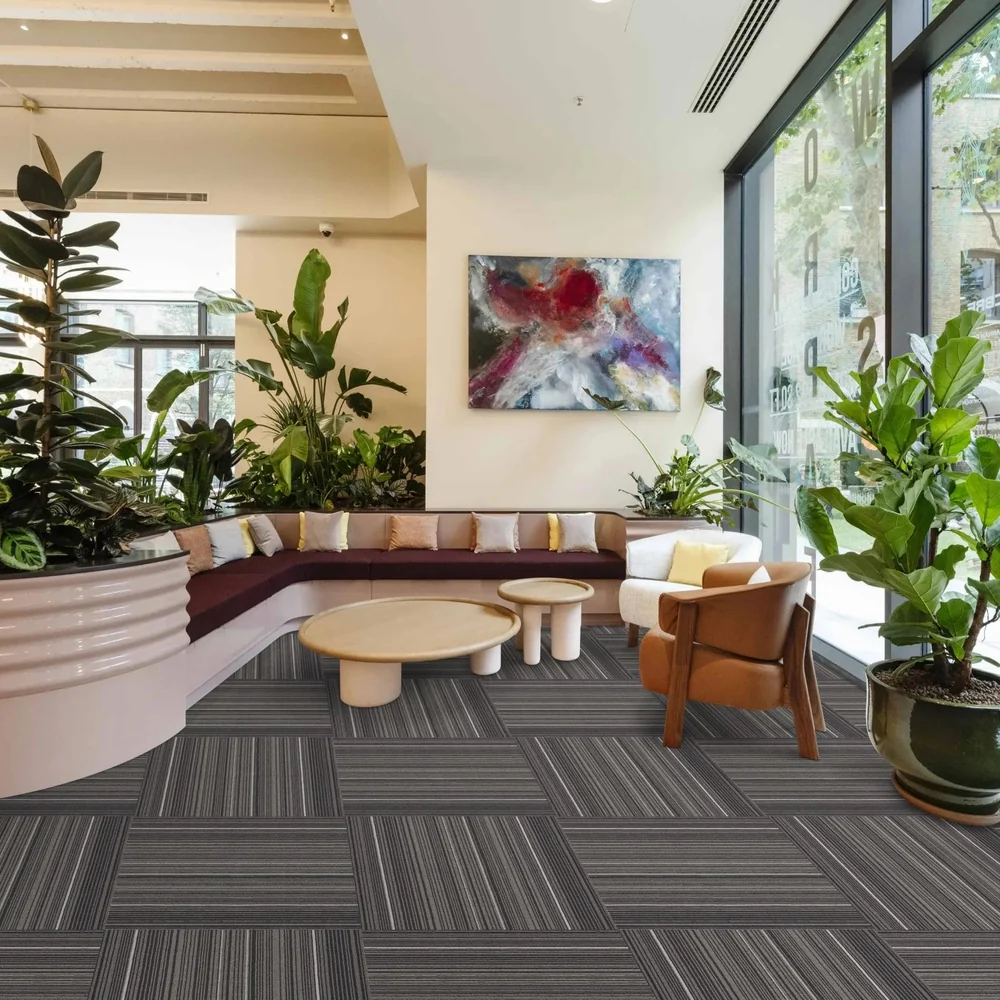
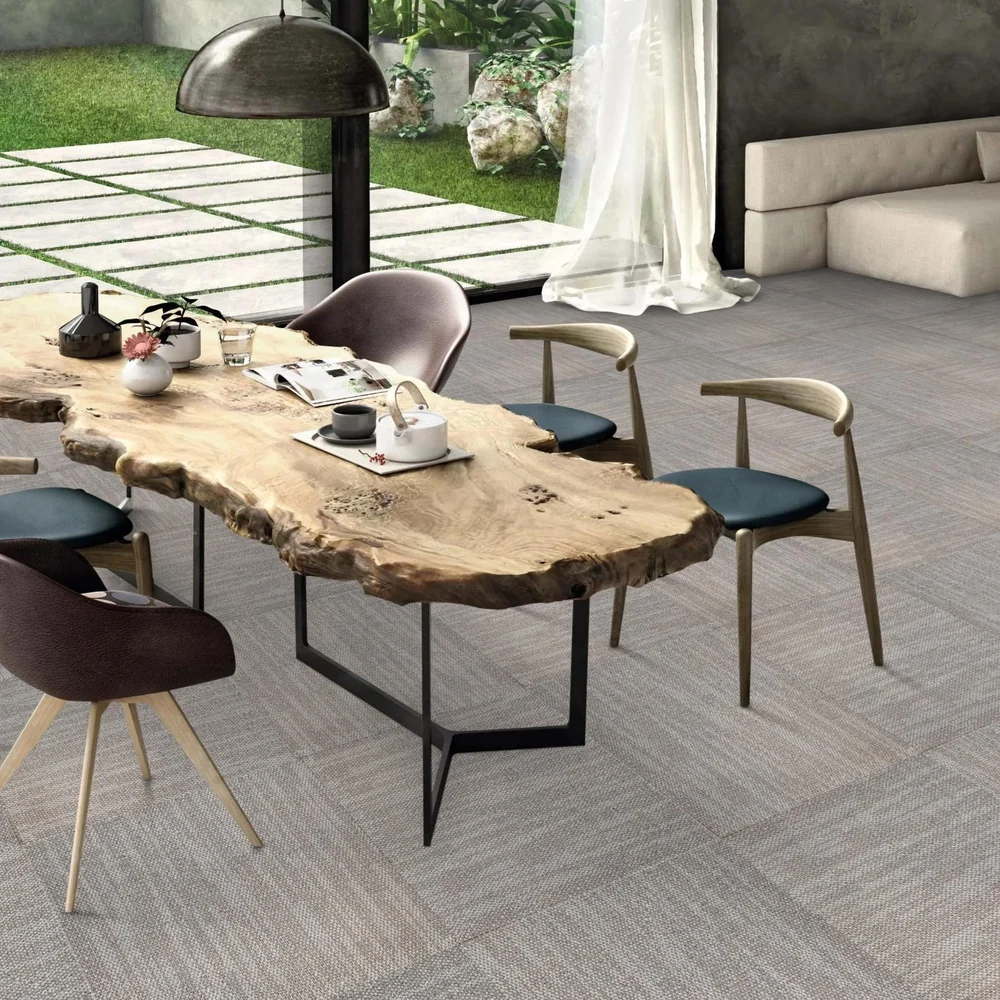
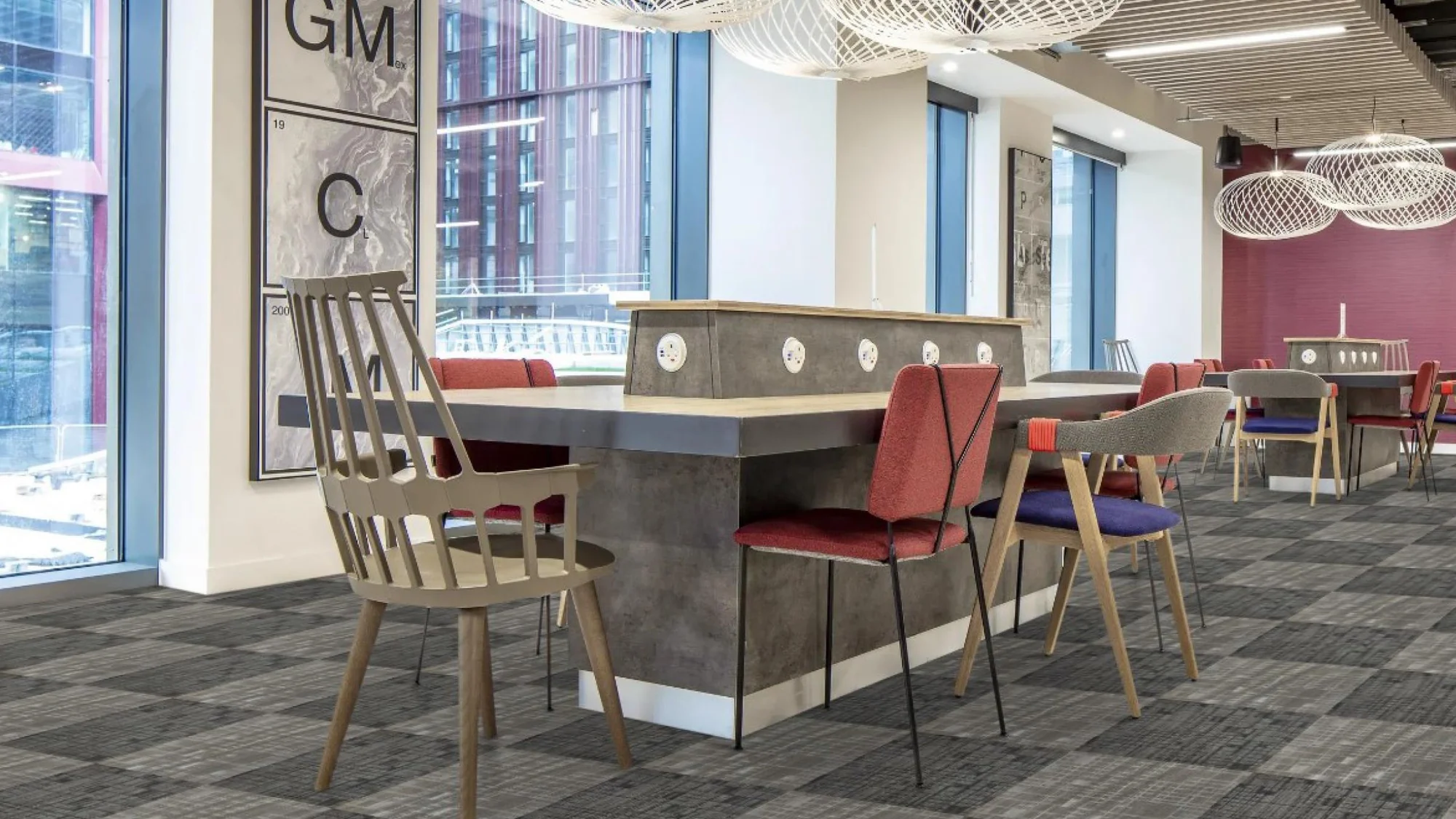
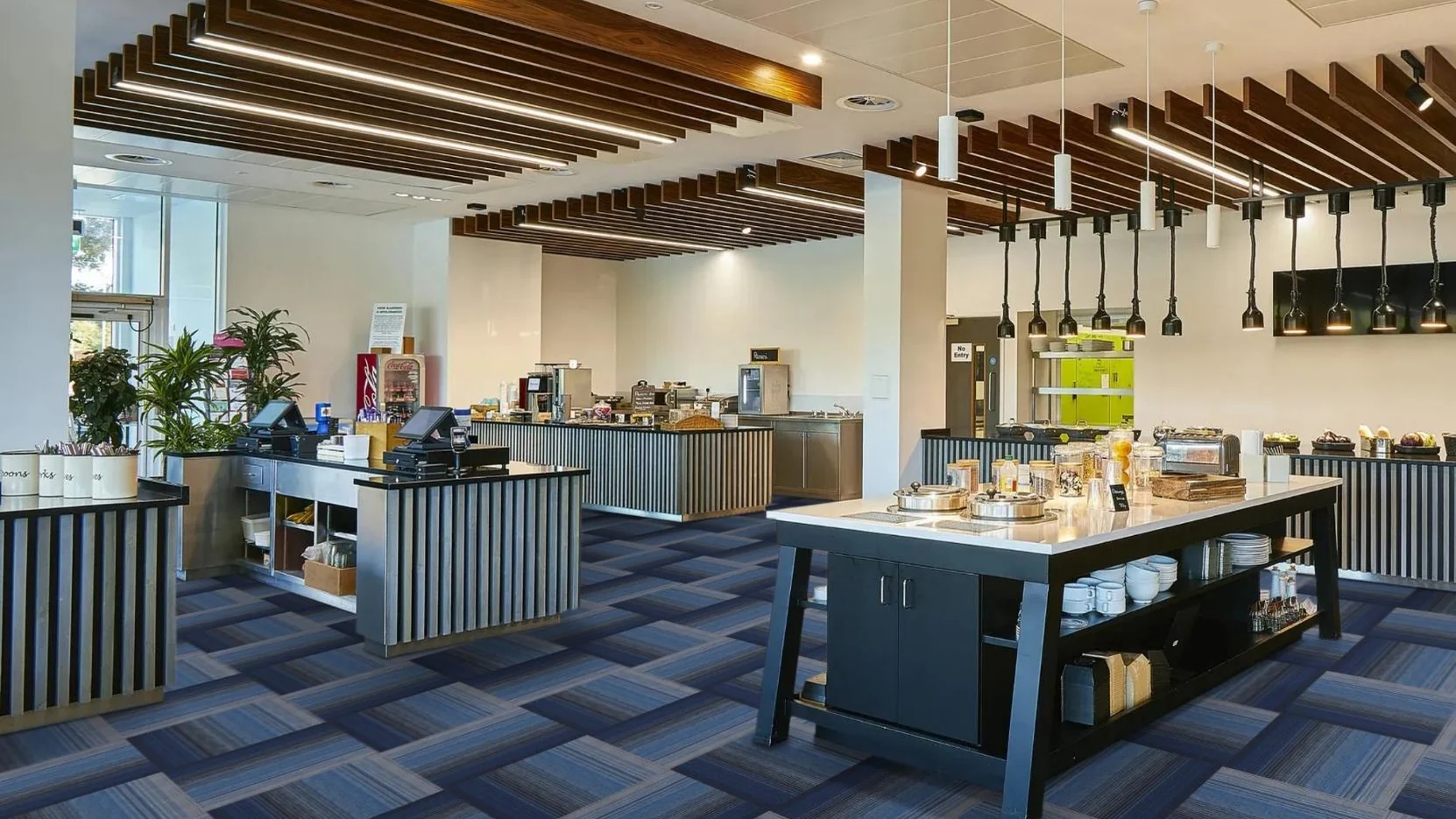
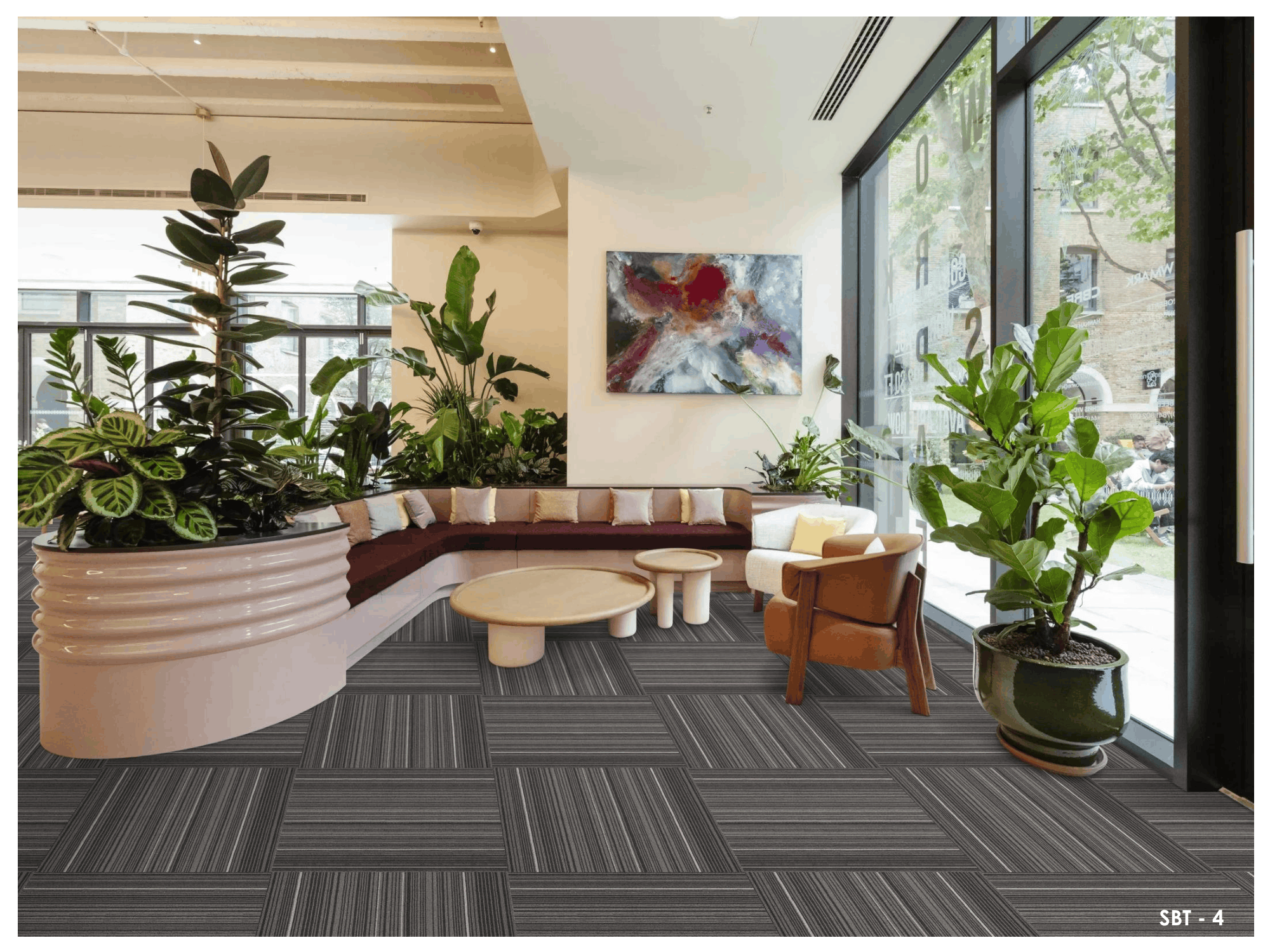
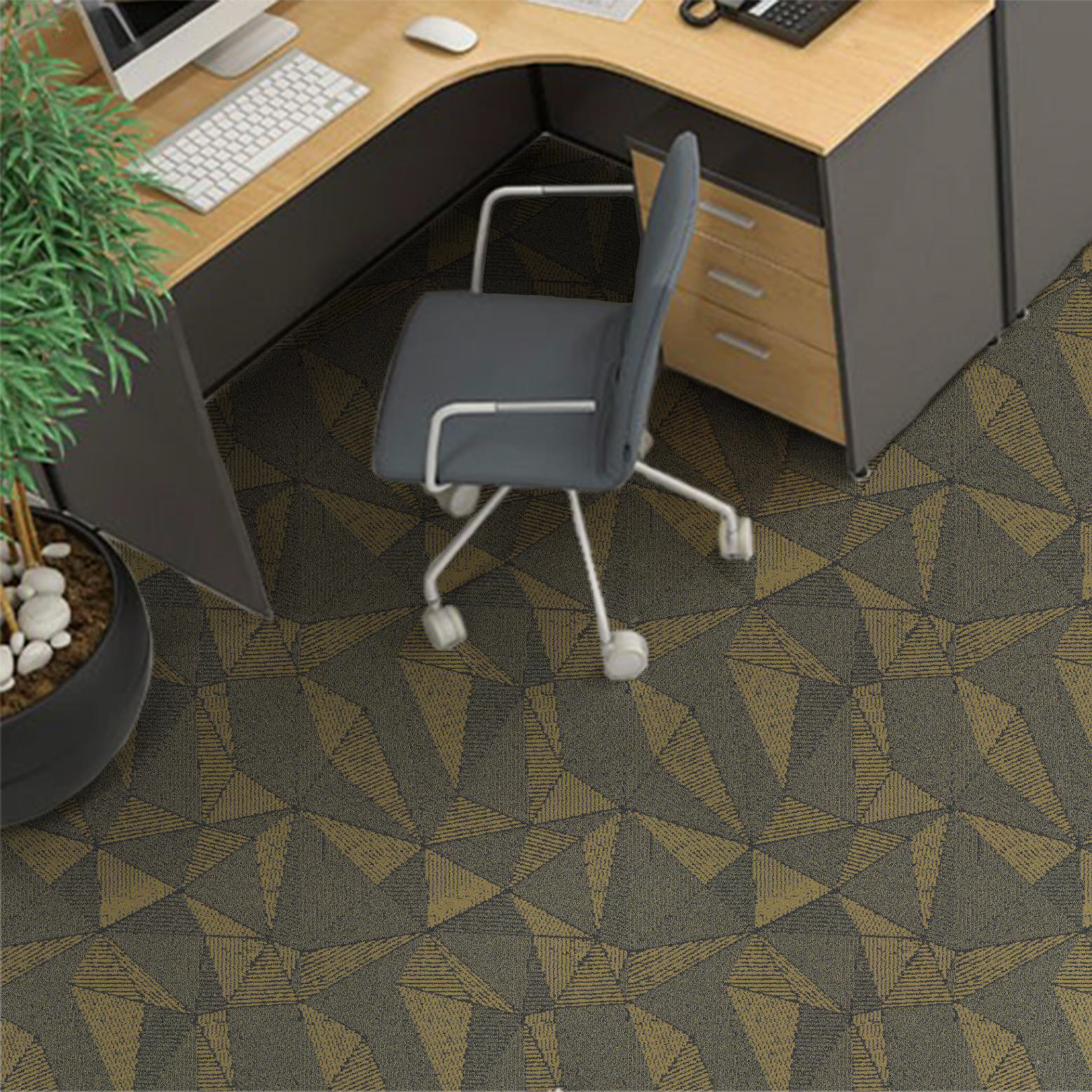
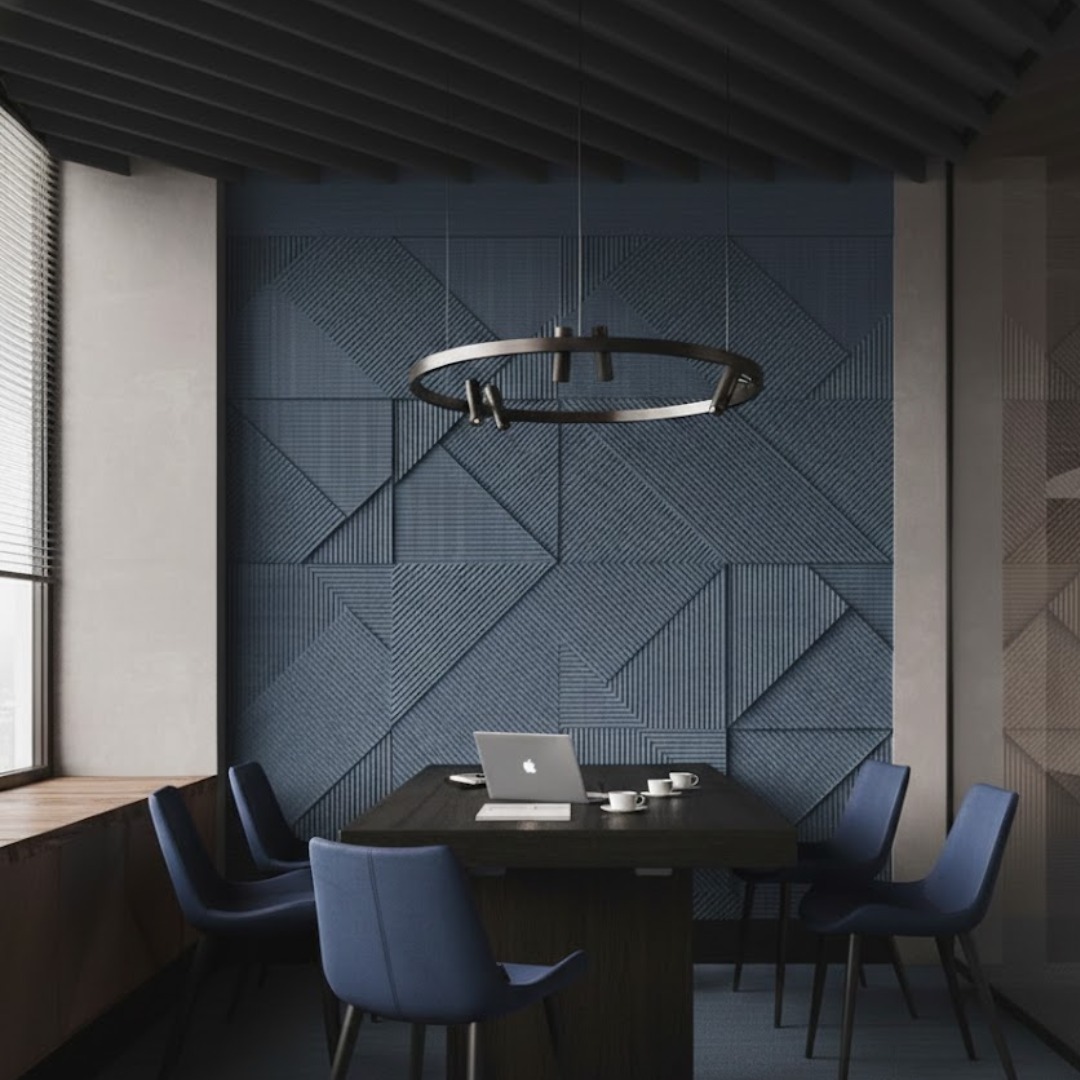
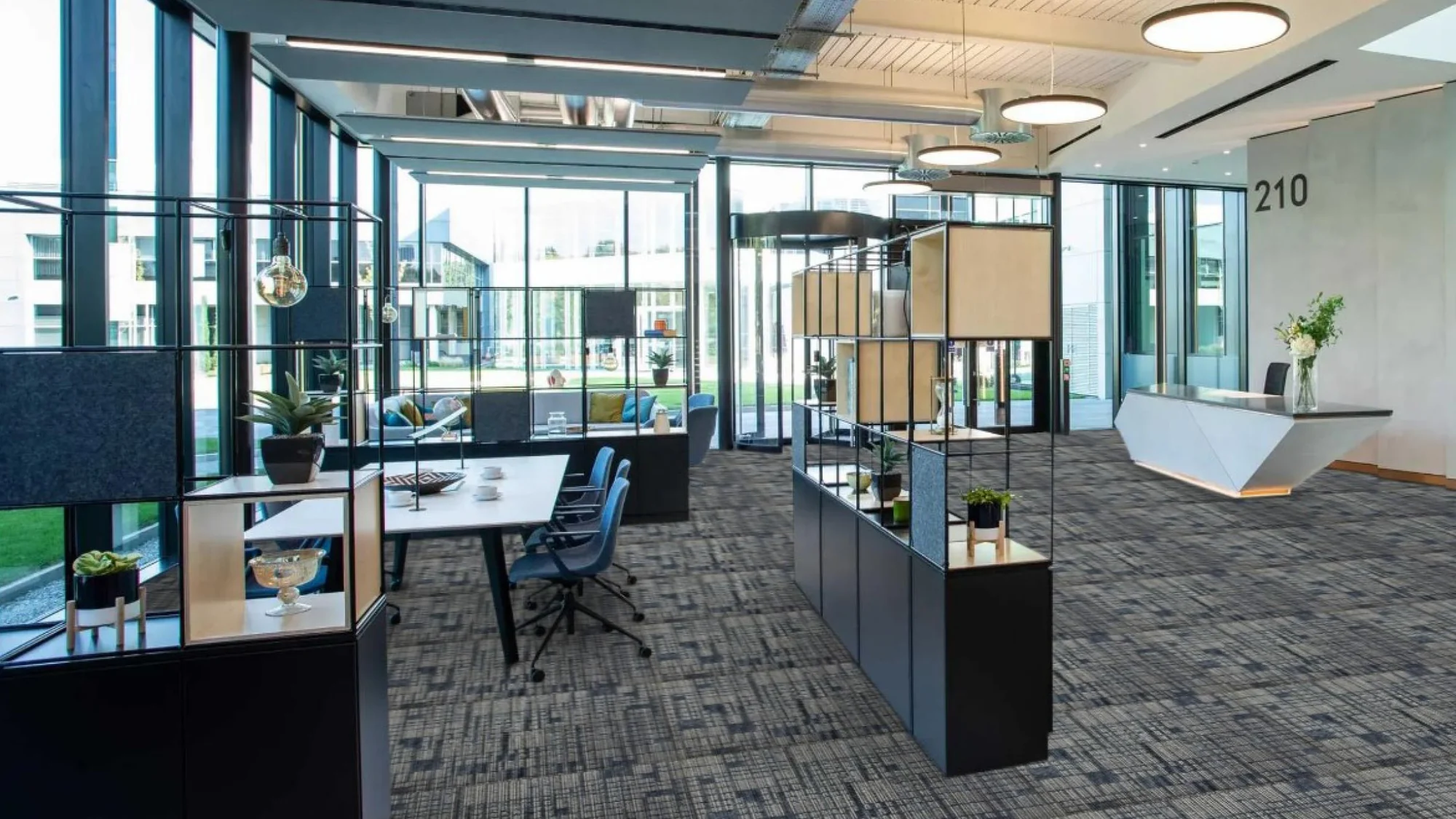
GAIA Rhythm, SBT and Nevada carpet tiles, all made with a bitumen backing.
Which backing suits Indian conditions?
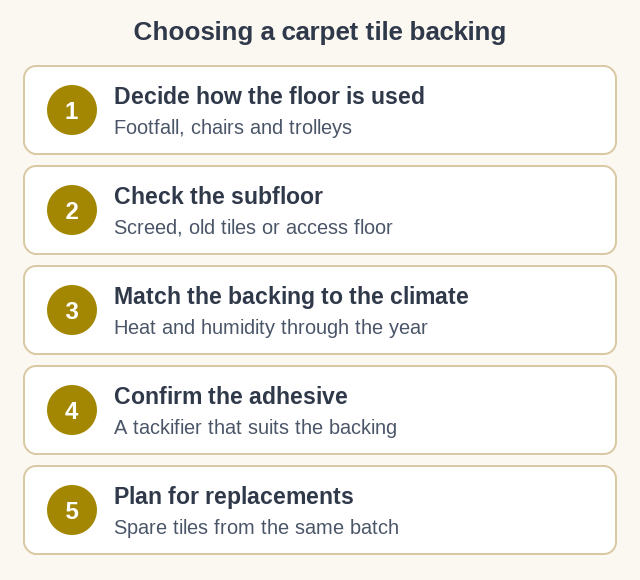
One that stays stable through heat and humidity, laid on a subfloor that is dry. Indian buildings put carpet tiles through wide swings: sun-warmed floors near west-facing glass, air-conditioned offices left closed over a long weekend, ground floors in the monsoon. Weight and dimensional stability matter more than usual, which is one reason heavy backings are widely used. Whatever the backing, moisture coming up through a new concrete slab is the most common cause of trouble, so test the slab before laying. The Carpet and Rug Institute's CRI 104 installation standard sets out subfloor moisture checks and preparation that apply to every carpet tile.
Does the backing affect installation?
Yes. The backing decides which adhesive is used and how tiles come up later. Most commercial carpet tiles are laid with a pressure-sensitive tackifier rather than a permanent glue. It holds each tile in place but lets it be lifted, so a stained or worn tile can be swapped in minutes. The tackifier must suit the backing, so use what the manufacturer recommends. On a raised access floor, tiles with a heavy, stable backing help the floor sit flat over the panel joints. The full sequence is in our guide to installing carpet tiles, and laying over an old floor is covered in carpet tiles over existing tiles.
Backing checklist
- Ask which backing the tile uses and request its documents.
- Test the subfloor for moisture before ordering.
- Confirm the adhesive suits the backing and the subfloor.
- Check the tile height where it meets other floor finishes.
- Keep spare tiles from the same batch for future replacements.
The backing is one line of a full carpet tile specification; the others are explained in how to read a carpet tile specification. GAIA's collections are shown under GAIA carpet tiles.
What to send us
- the floor area and how each zone is used;
- the subfloor type: new screed, old tiles, timber or raised access floor;
- any specification clause on backing, adhesive or recycled content;
- the collections or colours you are considering.
Our team will recommend the collection and adhesive for your subfloor.
Carpet tile backing questions
Which carpet tile backing is best?
No backing is best everywhere. A heavy bitumen backing suits busy commercial floors, PVC gives a lighter, stiffer tile, and a cushion backing suits areas where comfort and quieter footfall matter most.
Do carpet tiles need an underlay?
No. The backing does the job of an underlay. Cushion-backed tiles build softness into the tile itself.
Can carpet tiles be laid without glue?
Most are laid with a releasable tackifier rather than permanent glue, which holds them in place but lets single tiles be lifted. Small areas are sometimes loose-laid, but adhesive keeps tiles from shifting in busy spaces.
What backing do GAIA carpet tiles have?
All GAIA carpet tiles and planks have a bitumen backing. The Rhythm and SBT collections are made in GAIA's Eco Back style.
Built to lie flat
Choose carpet tiles for your subfloor
Tell GAIA by Sanson Floorings about your space and subfloor, and we will recommend the collection, backing and adhesive that suit it.