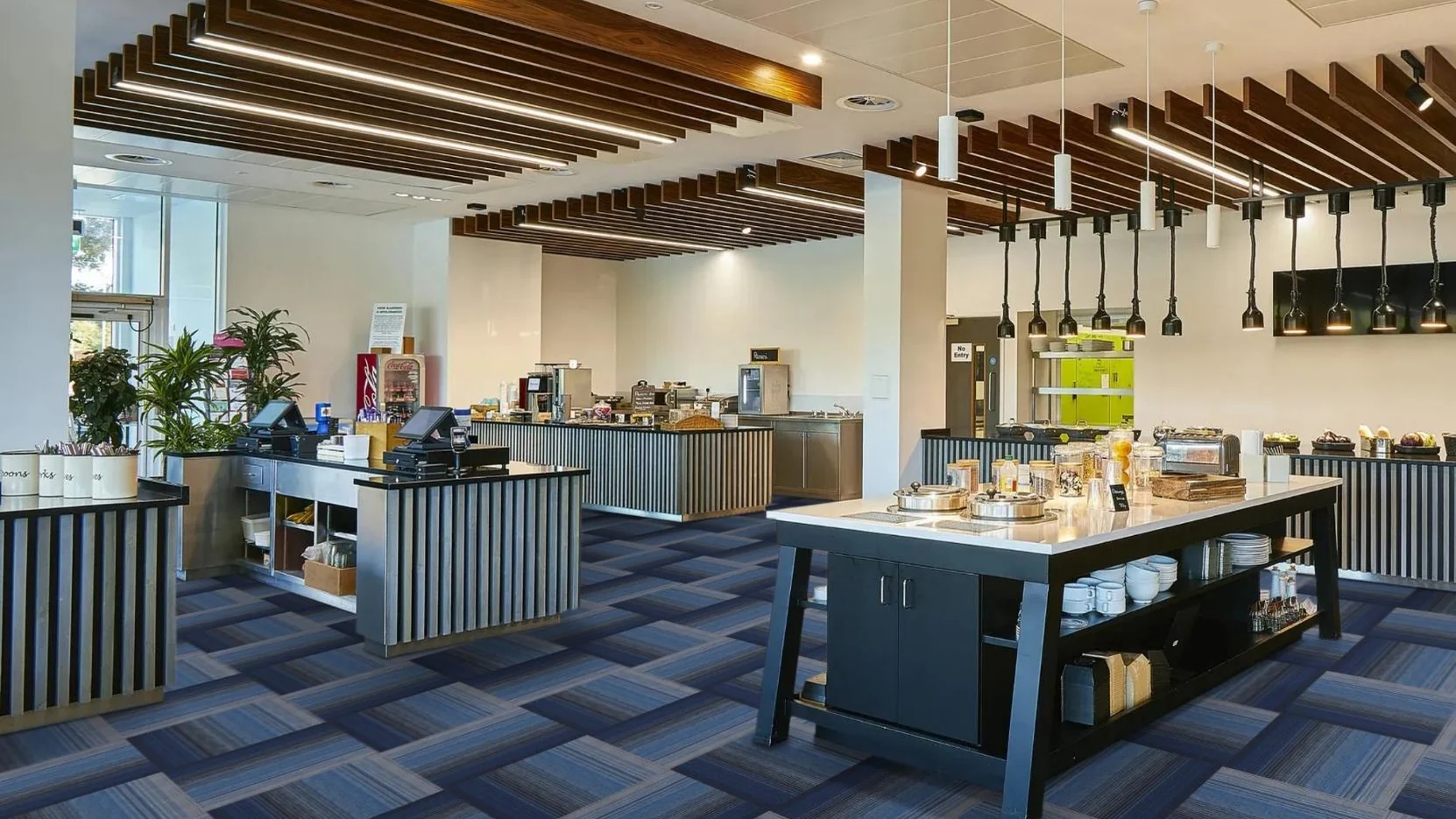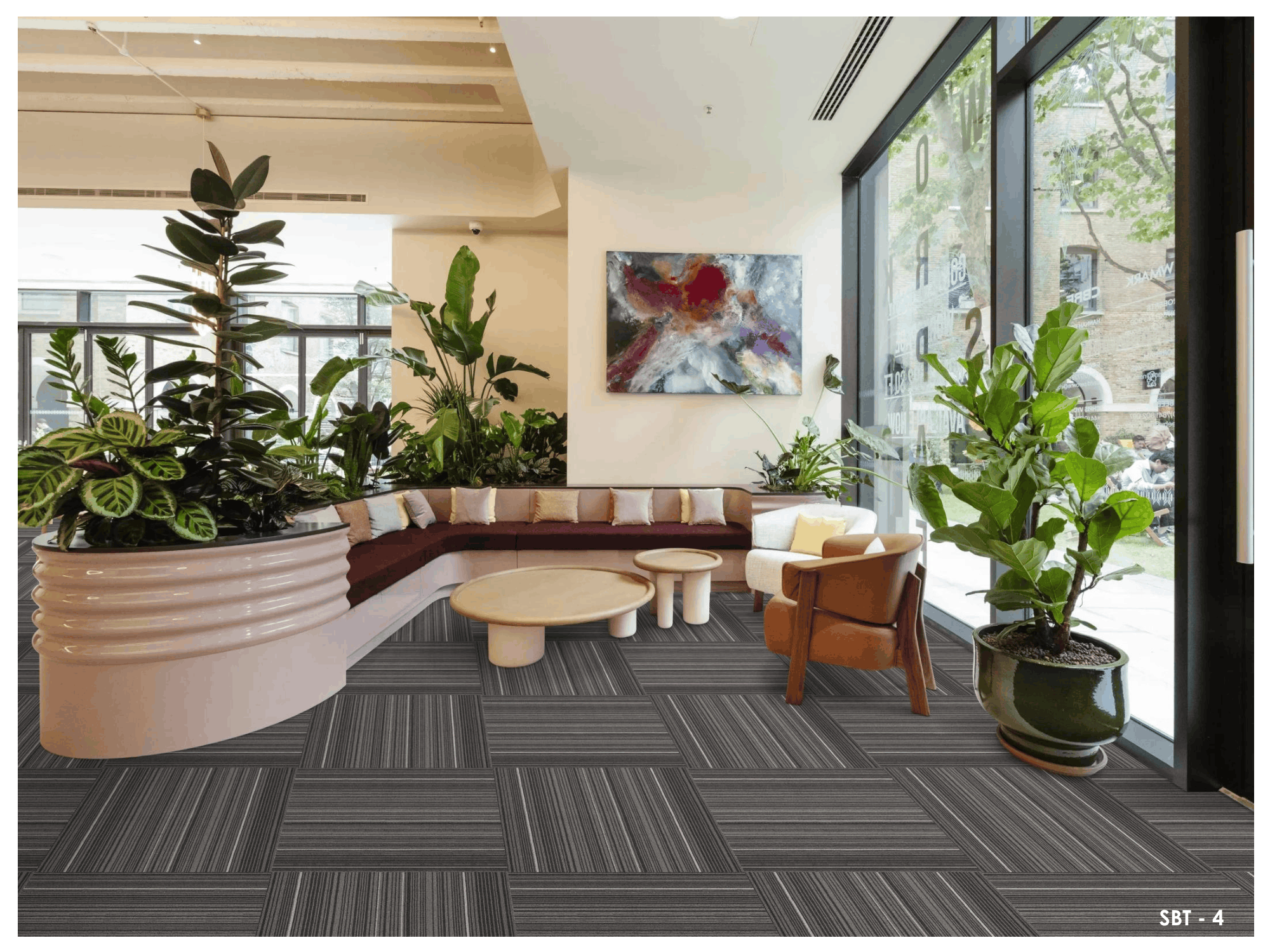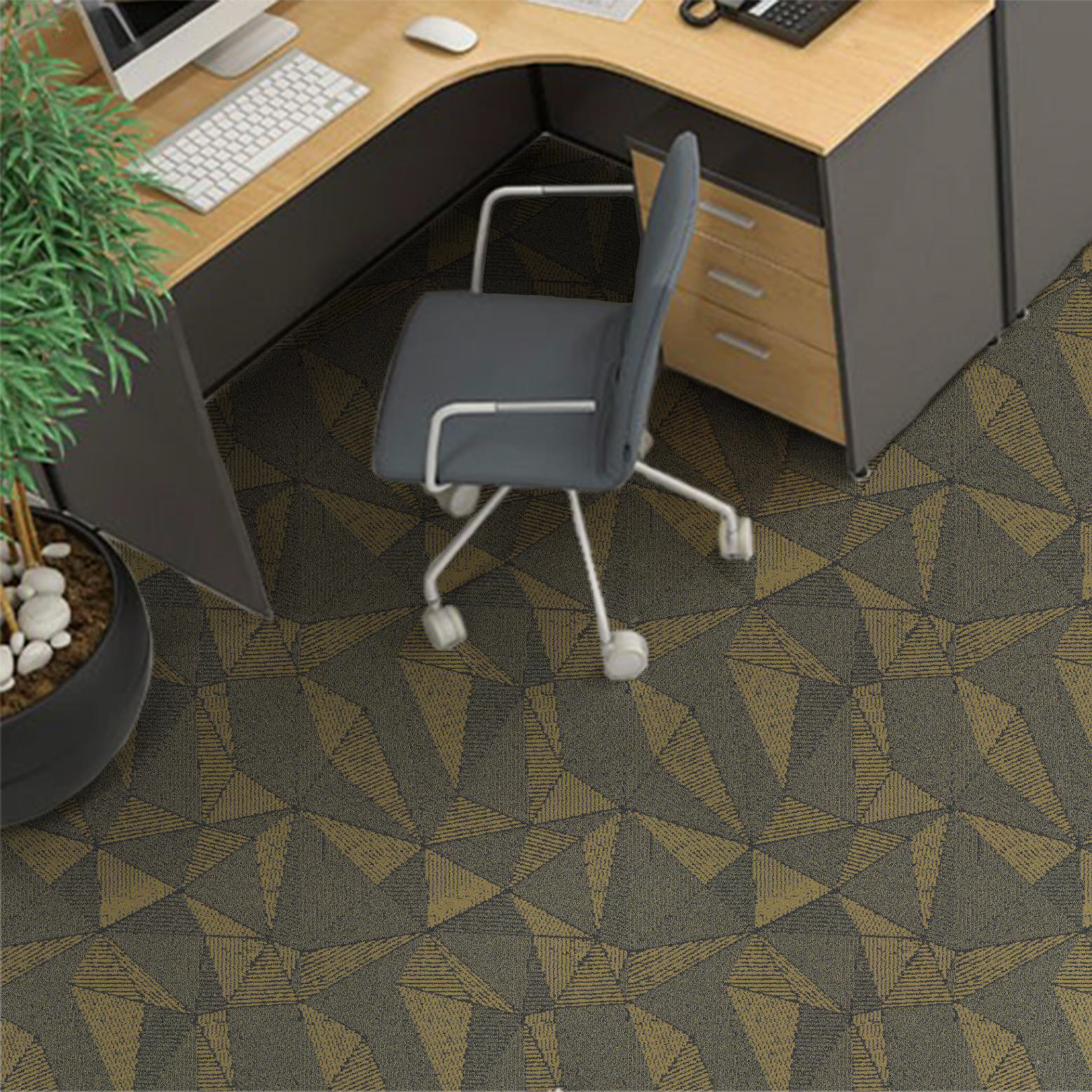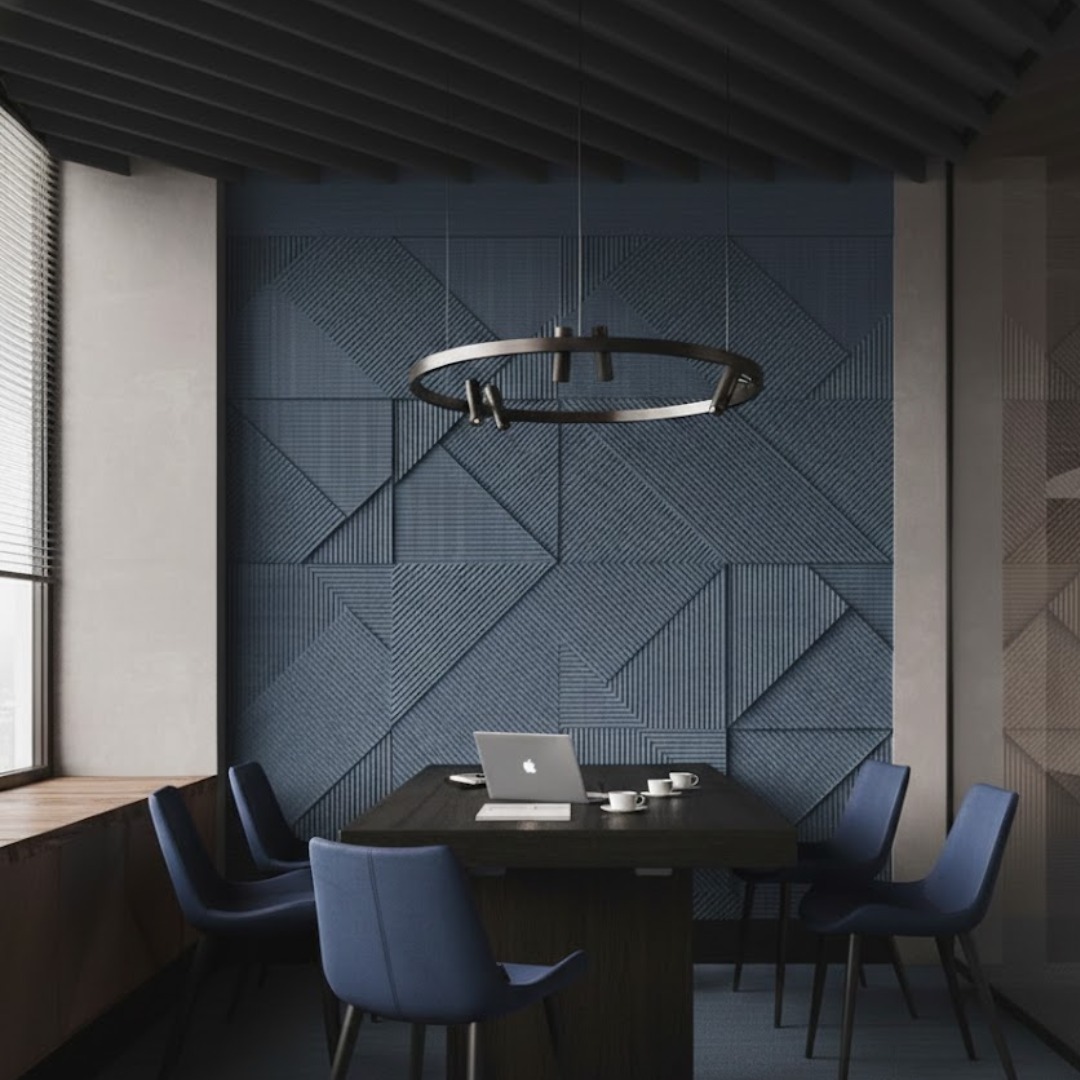
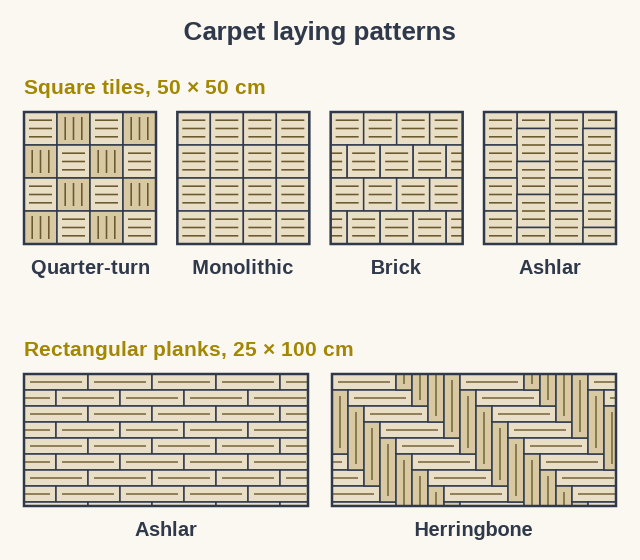
Square carpet tiles are laid in four main patterns: Quarter-turn, Brick, Ashlar and Monolithic. Rectangular carpet planks, such as those from GAIA by Sanson Floorings, are laid in Ashlar or Herringbone. The pattern changes how seams show, how a room reads and how much cutting is needed.
Two floors made from exactly the same carpet tiles can look completely different. Turn every other tile by 90 degrees and a plain grey becomes a soft checkerboard; line every tile up the same way and the floor reads almost like broadloom. Carpet tile laying patterns are one of the cheapest design tools on a project, because they change the look of a floor without changing the product. They also have practical effects on seams, shading and wastage. This article sets out each pattern, which format it belongs to, and how to choose.
Laying patterns at a glance
- Quarter-turn: each tile turned 90 degrees from its neighbours; a checkerboard texture that hides seams.
- Monolithic: every tile facing the same way; the most uniform, broadloom-like look.
- Brick: each row shifted by half a tile, like brickwork.
- Ashlar: each column shifted by half a tile for tiles; staggered rows for planks.
- Herringbone: for planks only, set at right angles in a zigzag.
What are the main carpet tile laying patterns?
For square tiles, Quarter-turn, Brick, Ashlar and Monolithic. Most carpet tiles carry an arrow on the back showing the direction of the pile, and the pattern is defined by how those arrows are arranged. In a Quarter-turn layout, each tile is rotated a quarter-turn from the one beside it, so light catches the pile differently on alternate tiles. In a Monolithic layout, every arrow points the same way. Brick and Ashlar keep the arrows aligned but offset the tiles: Brick shifts each row sideways by half a tile, and Ashlar shifts each column by half a tile. The Carpet and Rug Institute's CRI 104 installation standard names monolithic, ashlar and quarter-turn installation and tells installers to follow the manufacturer's recommendation for each product.
Which pattern hides seams best?
Quarter-turn. Because neighbouring tiles face different directions, the eye reads a gentle checkerboard rather than a grid of joins, and small differences between tiles disappear into the pattern. That makes it forgiving in large open offices and in busy corridors, where the odd replacement tile has to blend in. Monolithic is the least forgiving: with every tile facing the same way, seams and any shading between batches are easier to see, which is why it suits designs where a continuous, uniform look matters and the installer is careful about direction.
Can carpet tiles be laid in a herringbone pattern?
Not square tiles. Herringbone needs rectangular pieces set at right angles to each other, so it is a carpet plank pattern. GAIA's planks are 25 × 100 cm: GAIA Miami and Plateau can be laid in Ashlar or Herringbone. Planks in Ashlar are staggered row by row, much like a timber floor, which draws the eye along the length of a room. Herringbone adds movement and a crafted feel, and suits receptions, lounges and hospitality spaces. Both plank formats are compared with tiles in carpet tiles vs carpet planks.
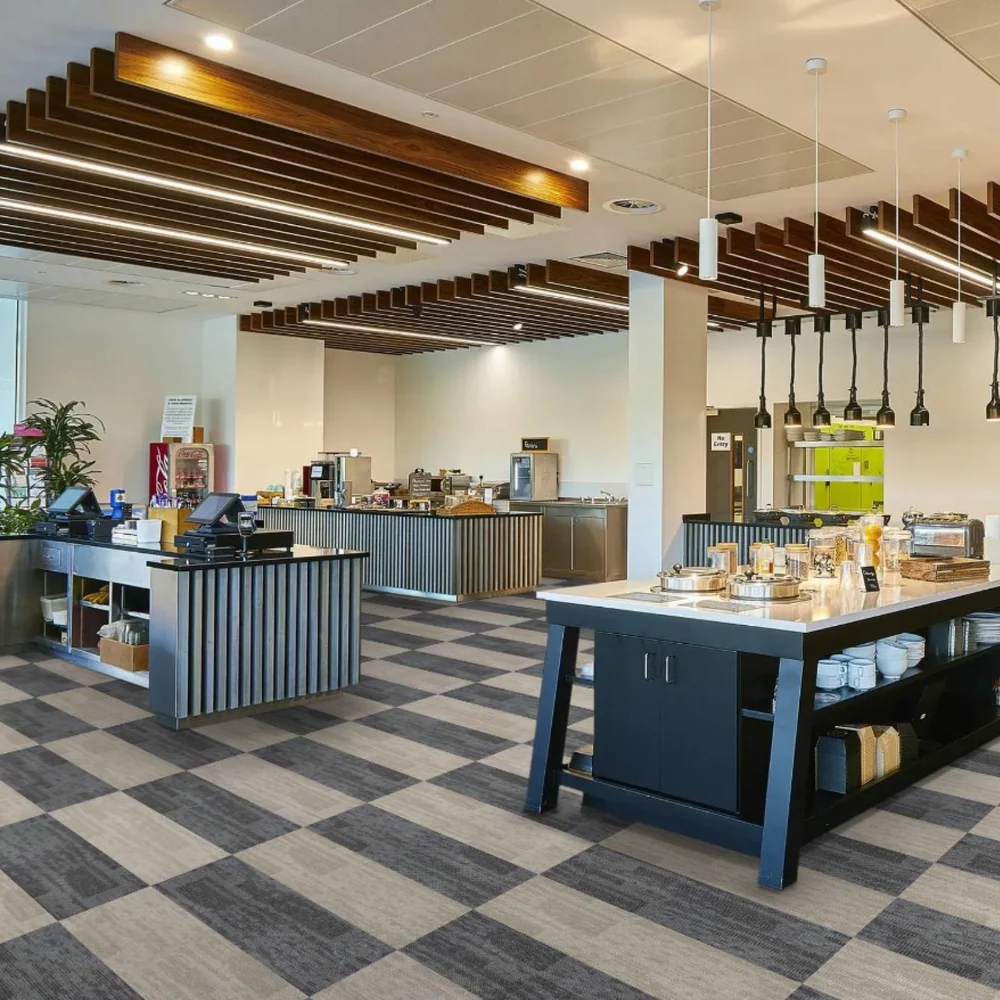

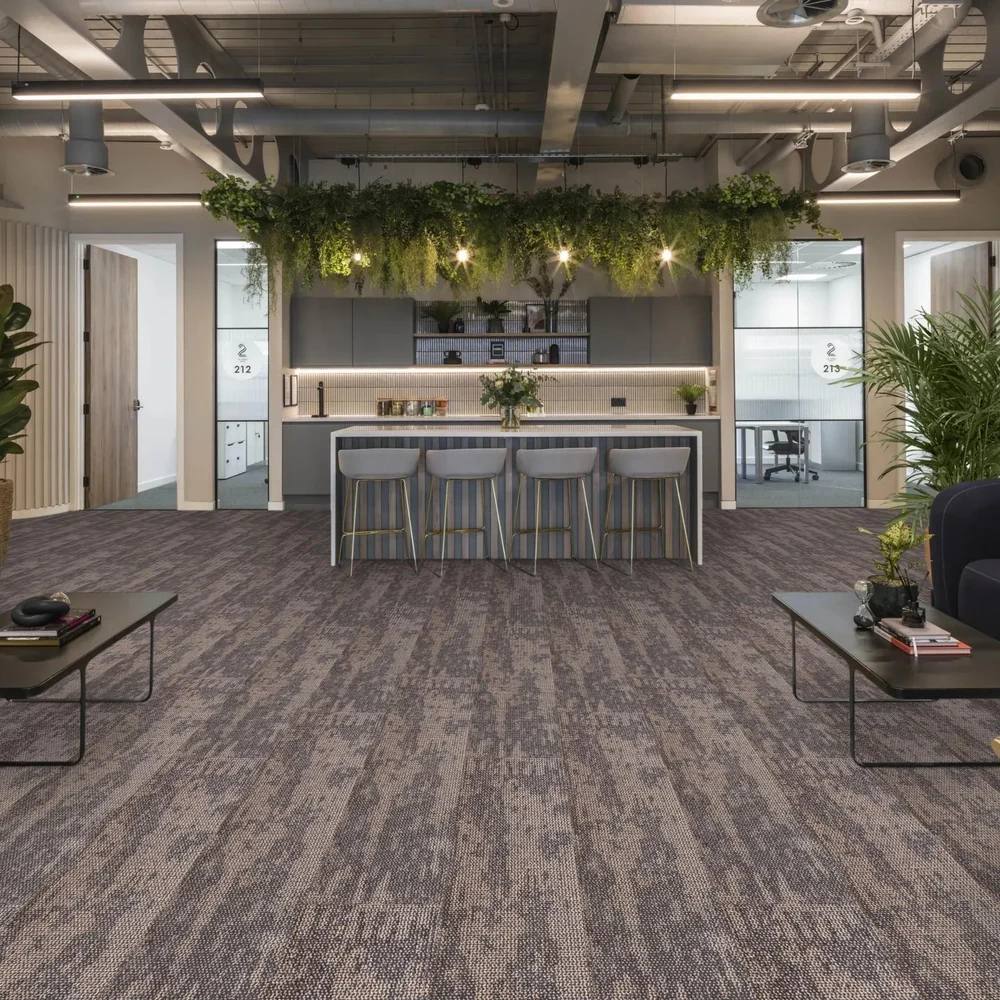
A checkerboard of tiles, an alternating striped layout, and planks laid along a room.
Which pattern should you choose for each space?
Match the pattern to how the space is used and how it should feel.
- Open offices and corridors: Quarter-turn, for a forgiving texture that hides wear and replacements.
- Boardrooms and executive cabins: Monolithic, for a calm, continuous surface.
- Breakout areas and cafés: Brick or Ashlar, for a subtle sense of direction.
- Receptions, lounges and hotels: planks in Herringbone or Ashlar, for a crafted look.
Pattern also interacts with the design of the tile itself. Striped and graded designs, such as GAIA Trends, change character dramatically between a Monolithic and a Quarter-turn layout, so lay out a few sample tiles in each pattern before deciding. GAIA Gridwork and ArchiBrown tiles can be laid in Ashlar, Brick or Quarter-turn.
Does the pattern change how many tiles you need?
Slightly. Straight layouts such as Quarter-turn and Monolithic waste the least, because every cut falls at the room's edges. Offset layouts create more part-tiles at the walls, and Herringbone creates the most cutting of all, particularly in small or irregular rooms. Allow for that in the order, and keep spare tiles from the same batch for future replacements: Missouri State University's carpet tile design standard, for example, asks for 5 per cent of the installed area, or at least one box, as spare stock. Our method for quantities is in how many carpet tiles you need.
Laying pattern checklist
- Confirm whether the product is a tile or a plank before choosing a pattern.
- Check which layouts the collection is recommended for.
- Lay sample tiles in two or three patterns and look at them in the room's light.
- Mark the pattern and the starting point on the drawing for the installer.
- Add wastage for offset and Herringbone layouts.
The full range is shown under GAIA carpet tiles, and the laying sequence is in our guide to installing carpet tiles.
What to send us
- the floor plan with room sizes;
- the look you want for each area;
- the collections you are considering;
- any reference images of patterns you like.
Our team will suggest a pattern for each zone and mark the setting-out on your plan.
Laying pattern questions
What is the most popular carpet tile pattern?
Quarter-turn is widely used in offices because it hides seams and replacements well. Monolithic is chosen where a uniform, broadloom-like look matters.
What is the difference between Ashlar and Brick?
Both offset the tiles by half a tile. Brick shifts each row sideways; Ashlar shifts each column. For planks, Ashlar means rows staggered like a timber floor.
Do carpet tile arrows matter?
Yes. The arrow shows the pile direction, and the pattern depends on how the arrows are arranged. Ignoring them produces a patchy floor.
Can carpet planks be laid in a Quarter-turn pattern?
Quarter-turn is a pattern for square tiles. GAIA's 25 × 100 cm planks are laid in Ashlar or Herringbone.
Same tiles, a different floor
Plan your carpet tile layout
Send GAIA by Sanson Floorings your floor plan and the look you are after, and we will recommend the collection and laying pattern for each space.