How long artificial grass lasts in India depends on sun, use and care, not a fixed number of years. UV-resistant yarn slows fading, a well-built base stops ripples and puddles, and brushing keeps fibres upright. GAIA by Sanson Floorings makes Landscape Grass with UV-resistant yarn.
Artificial grass is bought partly to save effort and money over time, so how long it lasts matters. In India, it faces harder conditions than in many of the places where lifespan figures are quoted: intense sun for much of the year, dust, monsoon rain and, on terraces, heat radiating from the slab. Some lawns look good for many years; others fade, flatten or ripple within a couple of seasons. The difference usually comes down to a few choices made at the start and a simple routine afterwards. This article explains what they are, and how to spot when a lawn needs attention.
Artificial grass lifespan at a glance
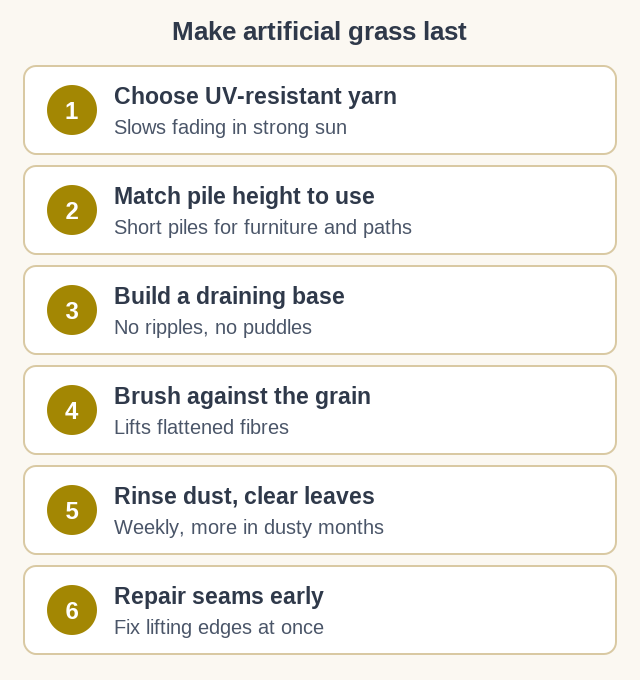
- Sun: UV light fades and weakens yarn; UV-resistant yarn slows it.
- Use: busy paths, play and furniture flatten fibres faster than light use.
- Base: a poor base causes ripples, puddles and early wear.
- Care: brushing, rinsing and clearing debris keep the lawn standing.
- Choice: the right pile height for the use avoids early matting.
What shortens the life of artificial grass?
Four things, mostly. Strong sunlight breaks down yarn that lacks UV protection, so it fades and becomes brittle. Heavy, repeated use on the same route flattens and mats the fibres, especially on long piles. A base that does not drain or was not compacted lets water sit and the surface move, which causes ripples, seams that open and patches that wear through. And neglect: dust, leaves and grit left in the pile hold moisture and abrade the fibres. Fixing these is cheaper than replacing a lawn early.
Does artificial grass fade in the Indian sun?
Grass made without good UV protection can, which is why the yarn matters. UV resistance in synthetic turf yarn is tested under the European method EN 14836, which exposes the yarn to artificial weathering and checks how it holds up. GAIA Landscape Grass is made with UV-resistant yarn certified to UNE 14836, the Spanish edition of that standard, in a two-tone green across nine pile heights from 20 to 60 mm. Shade still helps: a lawn under a pergola or trees fades more slowly and stays cooler. The subject is covered in does artificial grass fade in the sun.
How does pile height affect lifespan?
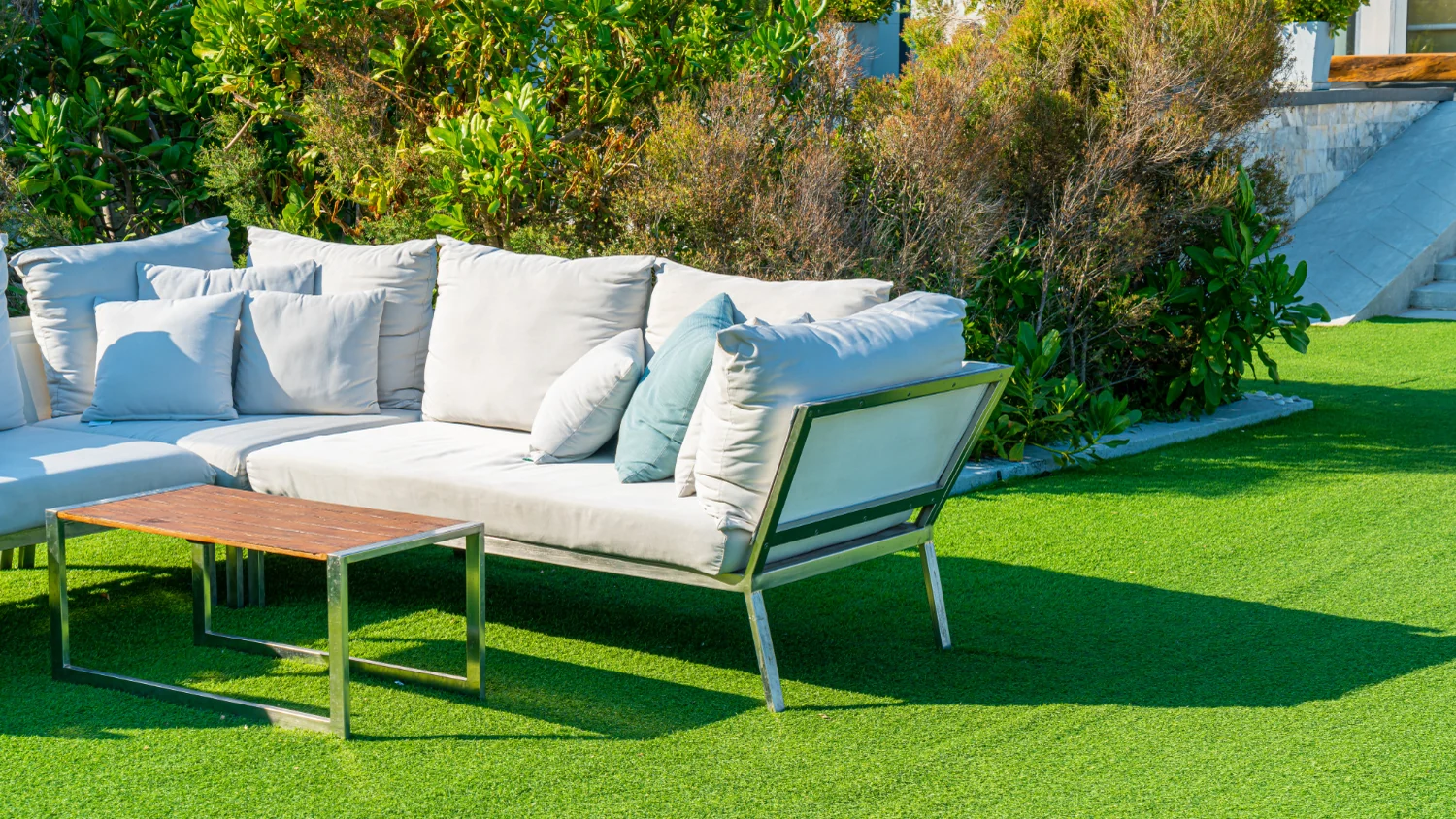
A pile that suits the use lasts better. Long, soft piles of 40 mm and above look lush but lean and mat where people walk and where furniture stands, and they hold more dust. Shorter piles of 20 to 35 mm stand up better to furniture and footfall on balconies and terraces. For courts and wheels, even shorter turf is used. Choosing too long a pile for a busy area is one of the commonest reasons a lawn looks tired early. The options are compared in artificial grass pile height, and the full range is under GAIA Landscape Grass.
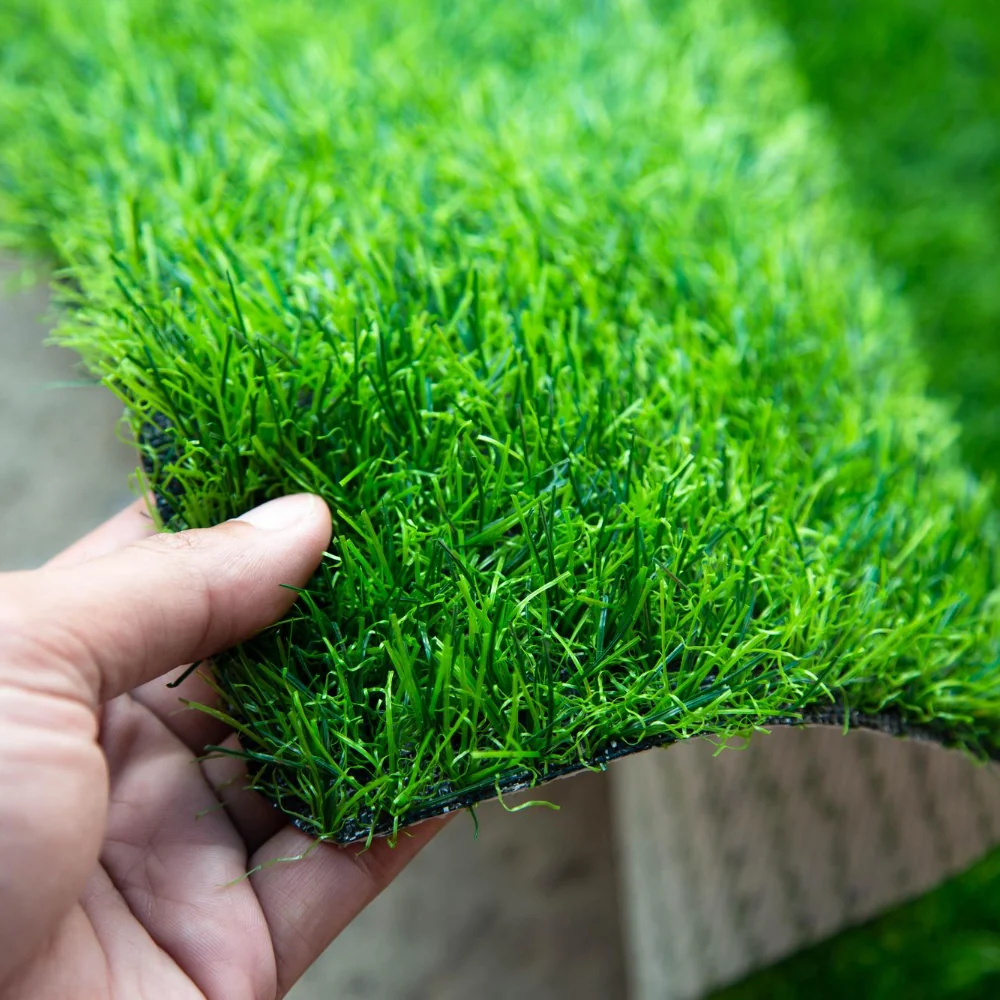
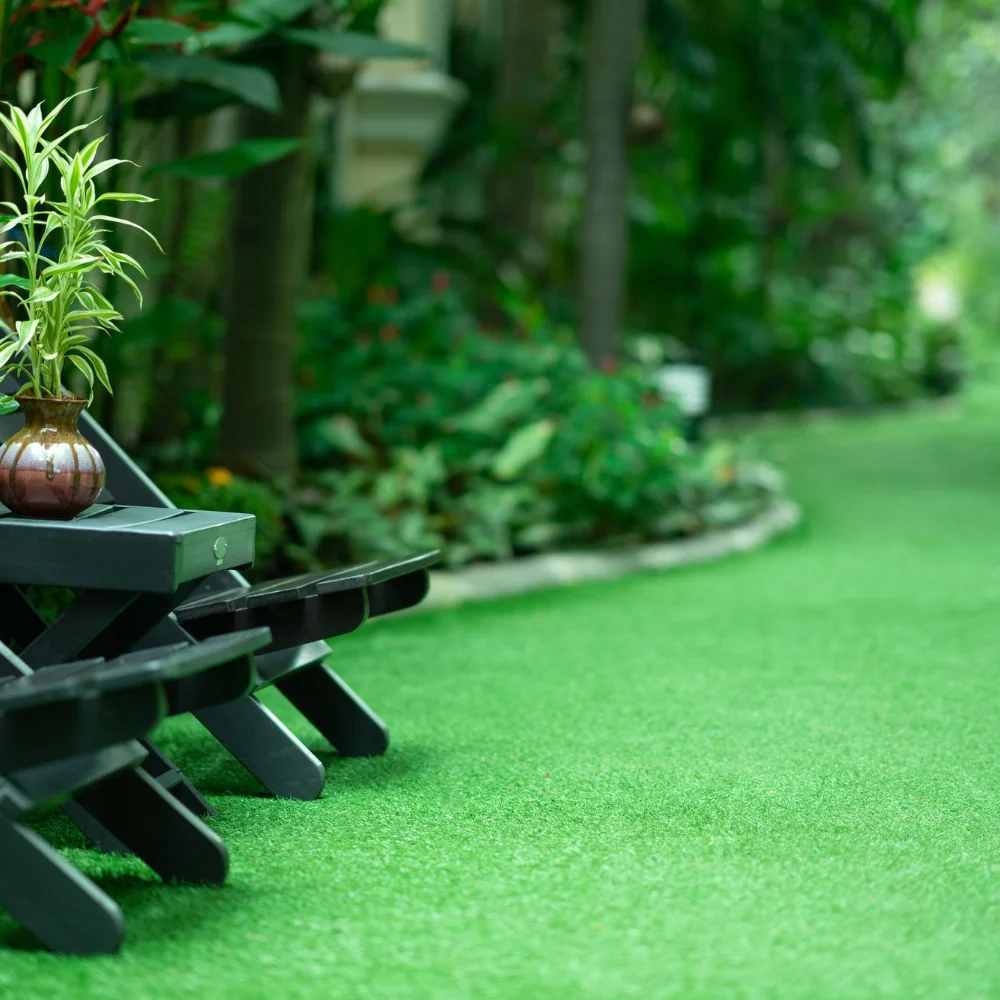
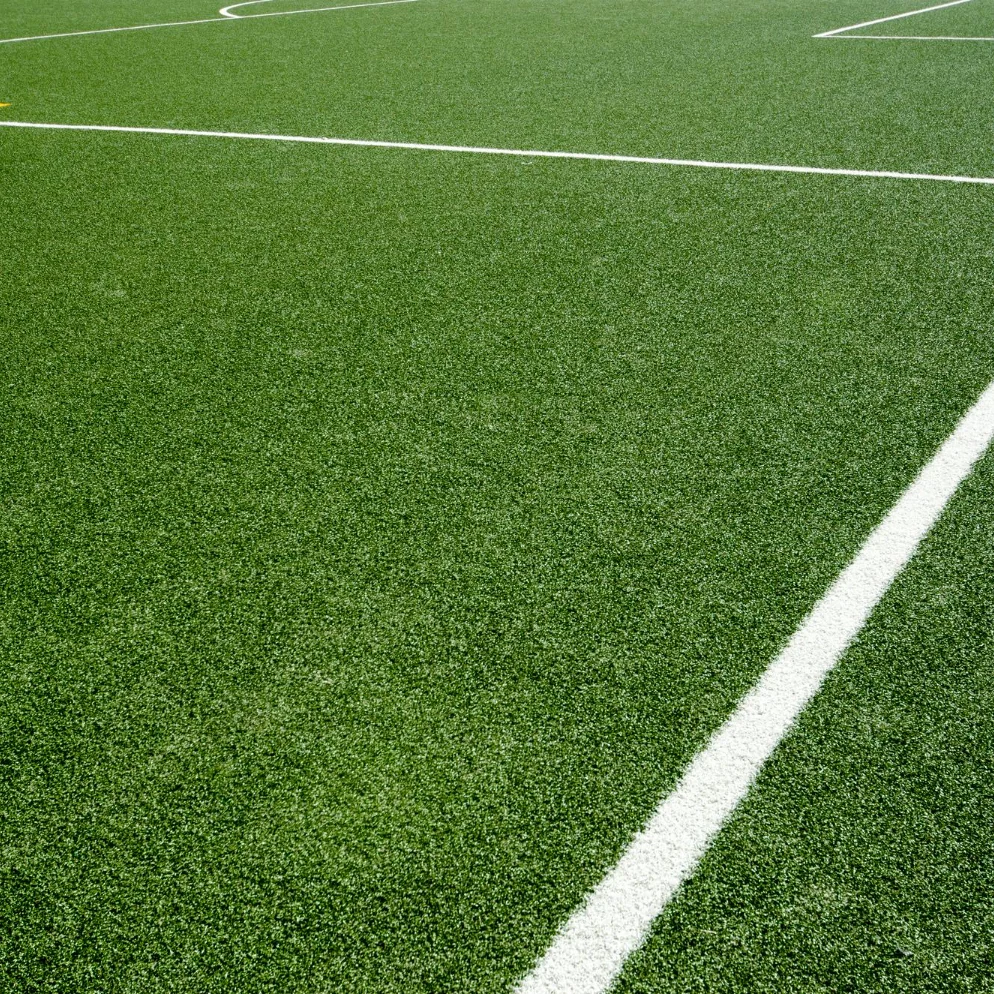
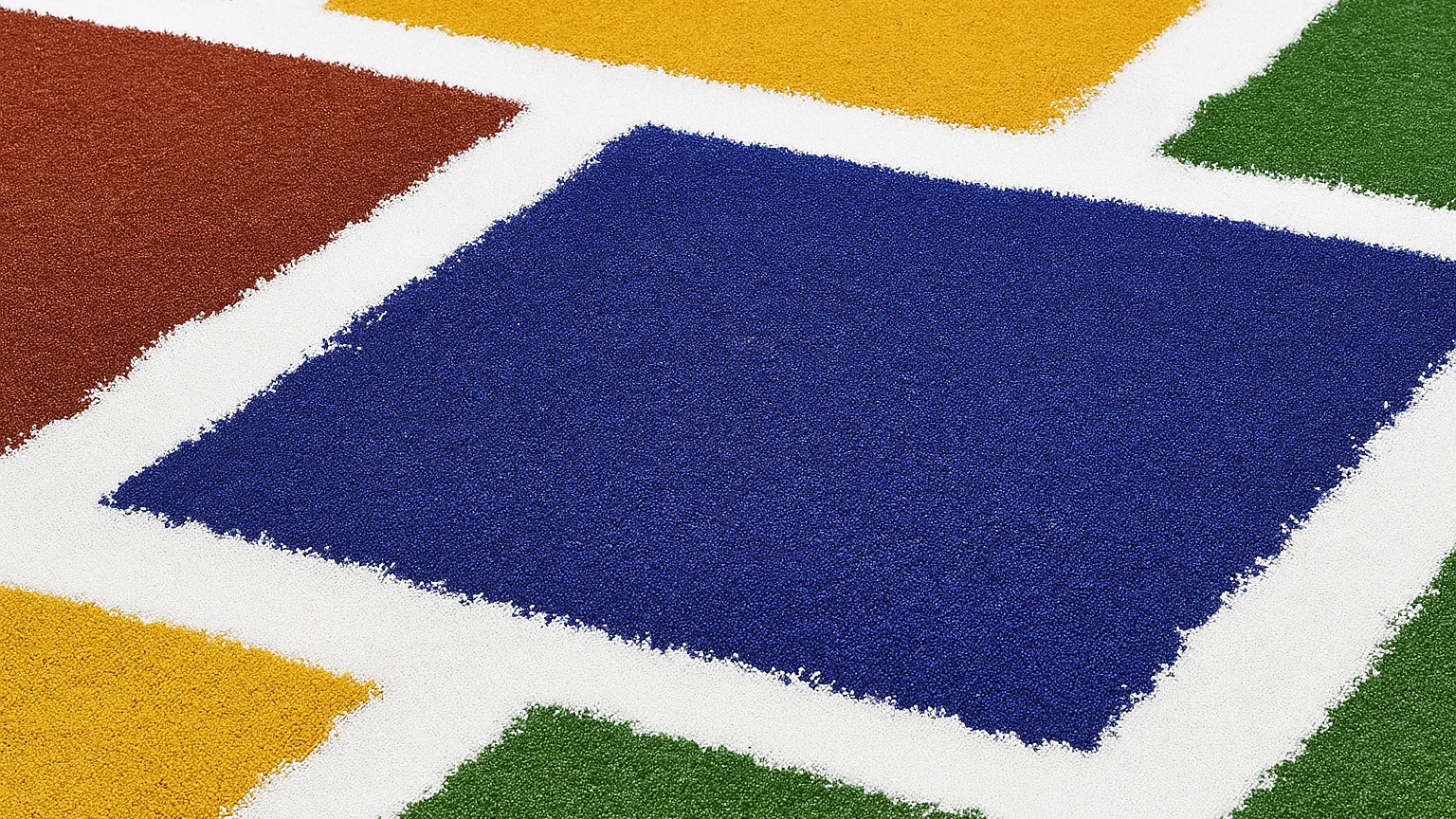
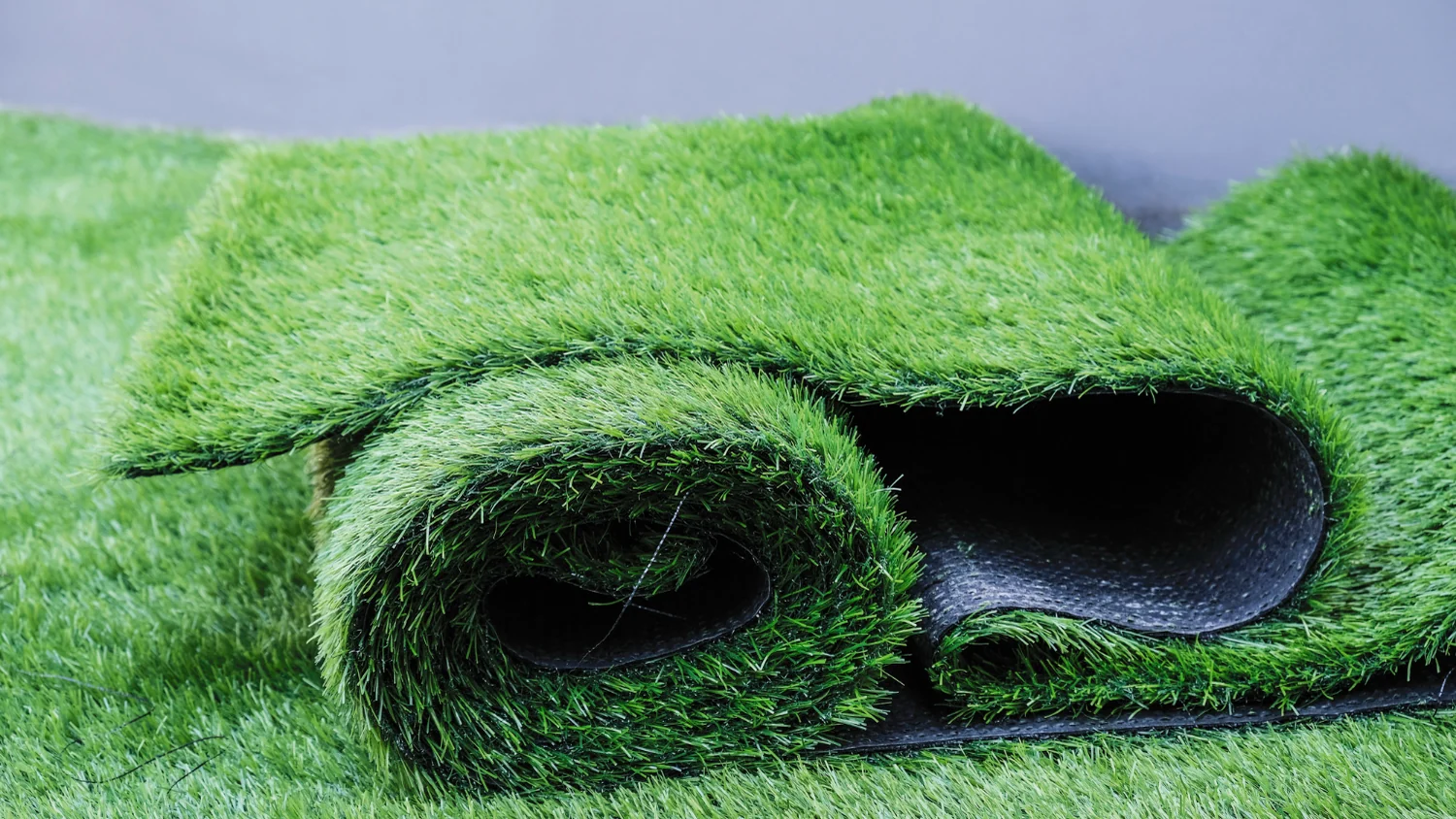
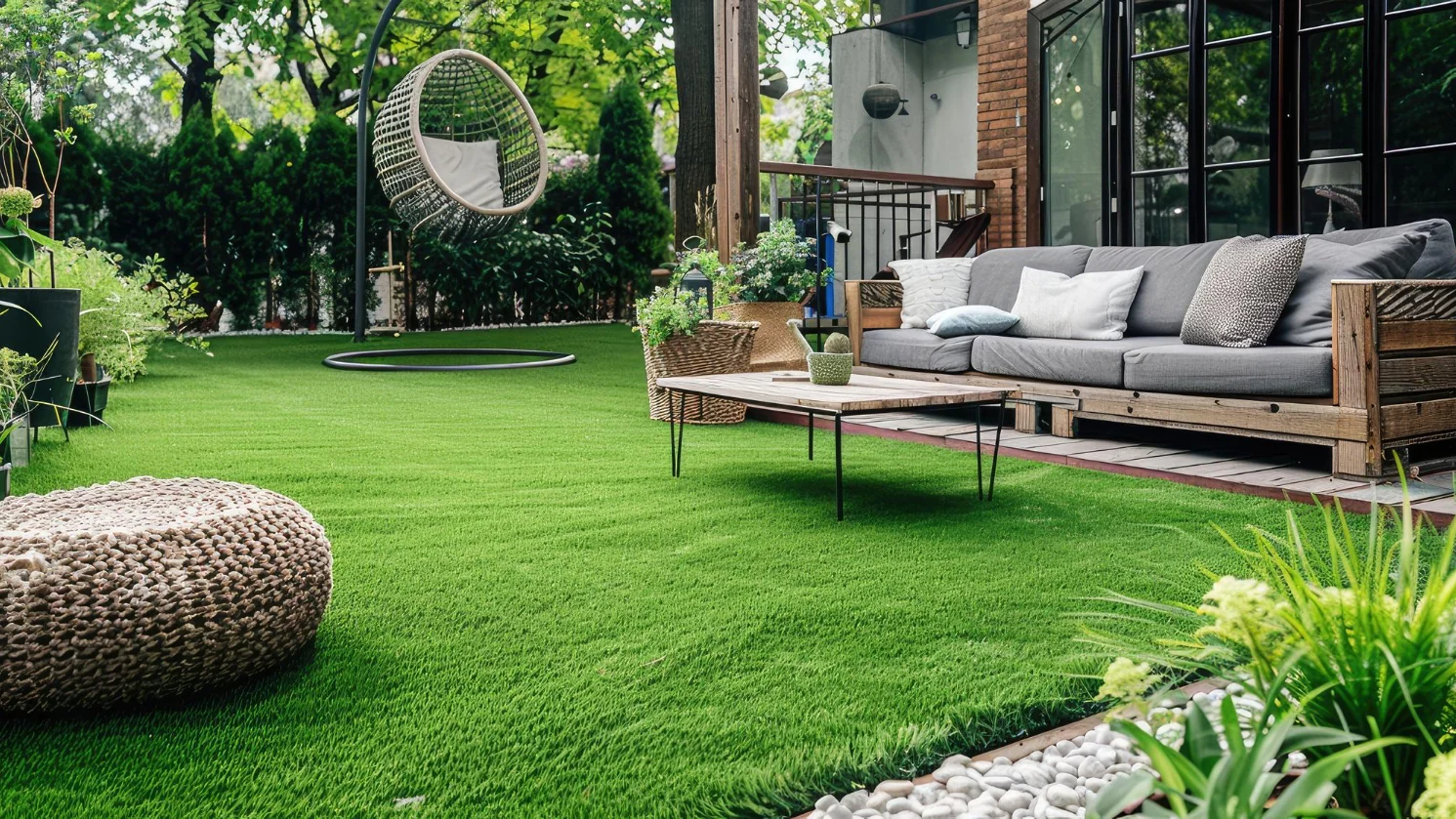
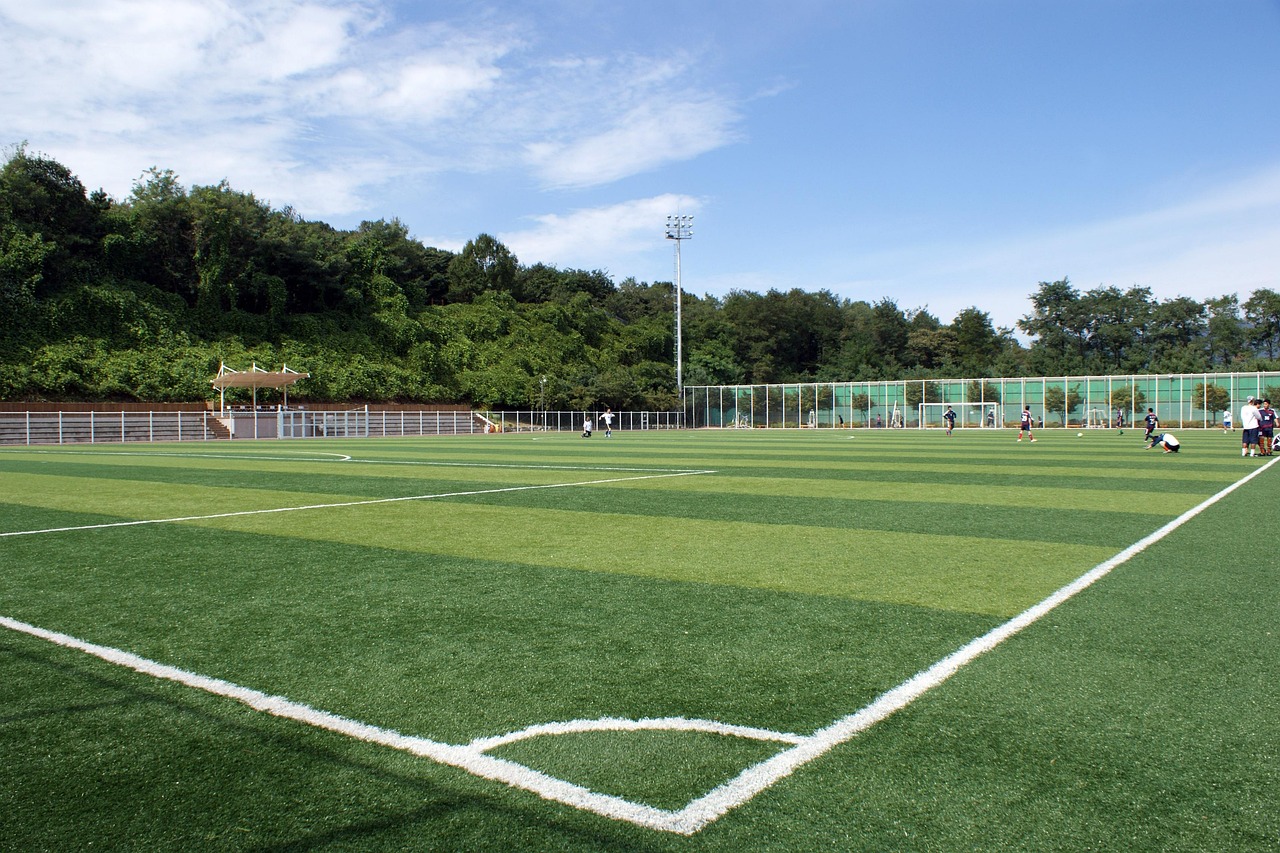
Dense pile, a well-used garden path and line-marked turf: each wears in its own way.
What maintenance makes artificial grass last?
A light, regular routine. Clear leaves and litter weekly, as they hold moisture and stain. Brush the pile against the grain every few weeks, more often on paths and under furniture, to lift flattened fibres. Rinse off dust, which in Indian cities builds up quickly, and rinse pet areas often. Check seams and edges each season and fix any lifting at once. Before the monsoon, clear drains and outlets so water leaves quickly. The Synthetic Turf Council's guidelines make the same point for all synthetic turf: routine maintenance is what keeps it performing. A full routine is in how to clean artificial grass.
When does artificial grass need replacing?
When brushing and cleaning no longer bring it back. Signs include fibres that stay flat and matted, a clear loss of colour, a backing that shows through or has become brittle, and seams or edges that will not stay down. Localised wear can sometimes be cut out and patched with a new piece from the same product. Widespread problems usually trace back to the base or the wrong grass for the use, so fix those causes when replacing. Which grass suits which job is in types of artificial grass.
What to send us
- where the grass will go and how it will be used;
- how much sun the area gets;
- what is underneath: soil, concrete or a roof slab;
- for an existing lawn, photographs of the problem areas.
Our team will recommend the grass and base for a long-lasting lawn.
Artificial grass lifespan questions
Does artificial grass last longer on a terrace or in a garden?
It depends more on sun, use and drainage than on location. Terraces need a sound slab that falls to working drains; gardens need a compacted, free-draining base.
Can faded artificial grass be restored?
Not really. Cleaning and brushing improve its look, but UV fading cannot be reversed. UV-resistant yarn and shade prevent it.
Does brushing artificial grass damage it?
No. Brushing with a stiff brush, not a wire one, lifts the fibres and helps the lawn last longer.
Does heavy rain shorten the life of artificial grass?
Not if it drains. Water that sits on a poor base causes ripples and wear, so a free-draining base and clear outlets protect the lawn through the monsoon.
Can damaged artificial grass be patched?
Small areas can be cut out and replaced with a piece of the same product, laid with the pile in the same direction and joined with seaming tape and adhesive.
Green for longer
Choose grass that lasts
Tell GAIA by Sanson Floorings where your grass will go and how it will be used, and we will recommend the grass and pile height that will last.