Artificial grass can be safe for children and pets when chosen and maintained well. The real risks are heat in direct sun, poor drainage under pet areas, hard falls and loose infill, so plan shade, drainage, rinsing and the right base. GAIA by Sanson Floorings makes Landscape Grass.
Families choose artificial grass for balconies, terraces and gardens because it stays green, has no mud and needs no watering. Parents and pet owners then ask a fair question: is it safe for the people and animals who will use it most? The honest answer is that the grass itself is only part of it. How hot it gets, what is underneath it, how it drains and how it is cleaned matter at least as much. This article goes through each concern, from heat and hygiene to falls and infill, and the practical, low-cost steps that deal with each one in Indian homes.
Artificial grass safety at a glance
- Heat: any artificial grass gets hot in direct sun; shade the areas children and pets use.
- Hygiene: pet areas need a free-draining base and regular rinsing.
- Falls: under climbing frames and swings, add proper impact protection.
- Infill: ask what infill is used, if any, and where it can end up.
- Edges and seams: fixed flat so nothing lifts or trips.
Is artificial grass safe for children to play on?
Yes, for everyday play, with three precautions. Keep it cool: in an Indian summer, artificial grass in full sun can get too hot for bare feet in the afternoon, so plan shade over play areas and check the surface before play. Keep it soft where children fall: grass on its own cushions ordinary trips, but under swings, slides and climbing frames the surface needs proper impact protection, tested against the height a child could fall from; the method is set out in EN 1177, the European standard for impact-absorbing playground surfacing. And keep it clean, with a simple routine of brushing and rinsing. More on surfaces for children is in play area flooring.
Is artificial grass safe for dogs and cats?
It works well for pets when it drains well and is rinsed regularly. Urine has to pass through the grass and away, so the base beneath must let water drain freely: on soil, a compacted, free-draining stone base; on a terrace or balcony, a surface that falls to a working drain. Rinse pet areas with water often, especially in hot weather, and pick up solid waste promptly. A short to mid pile, around 20 to 35 mm, is easier to keep clean than a long one. Watch for dogs that dig or chew at edges, and fix edges firmly. The cleaning routine is in how to clean artificial grass.
Does artificial grass get too hot for pets and children?
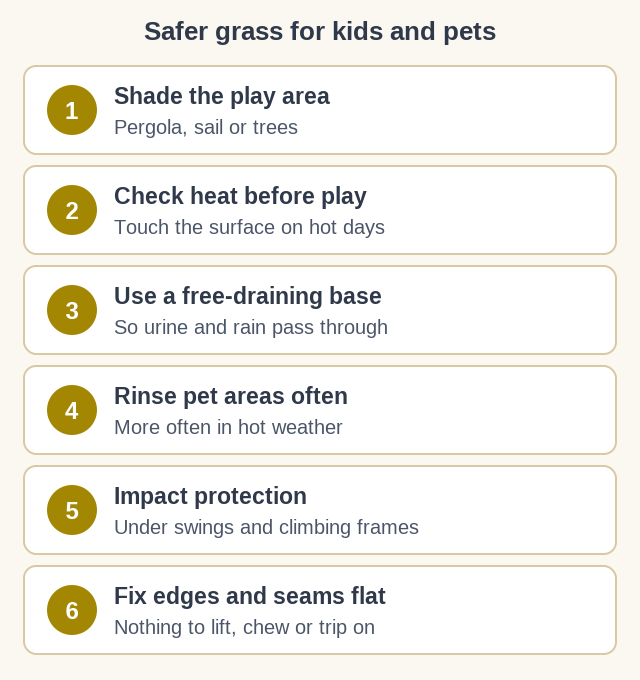
It can, in direct sun. Researchers at the University of Nevada, Las Vegas found that artificial turf can become too hot for summer use in strong sun, much hotter than natural grass. Pets feel it through their paws and children through bare feet. Shade from a pergola, sail or trees is the most effective fix, and a quick rinse cools the surface for a while. Avoid laying grass where pets will lie in the sun for long periods. The detail is in does artificial grass get hot.
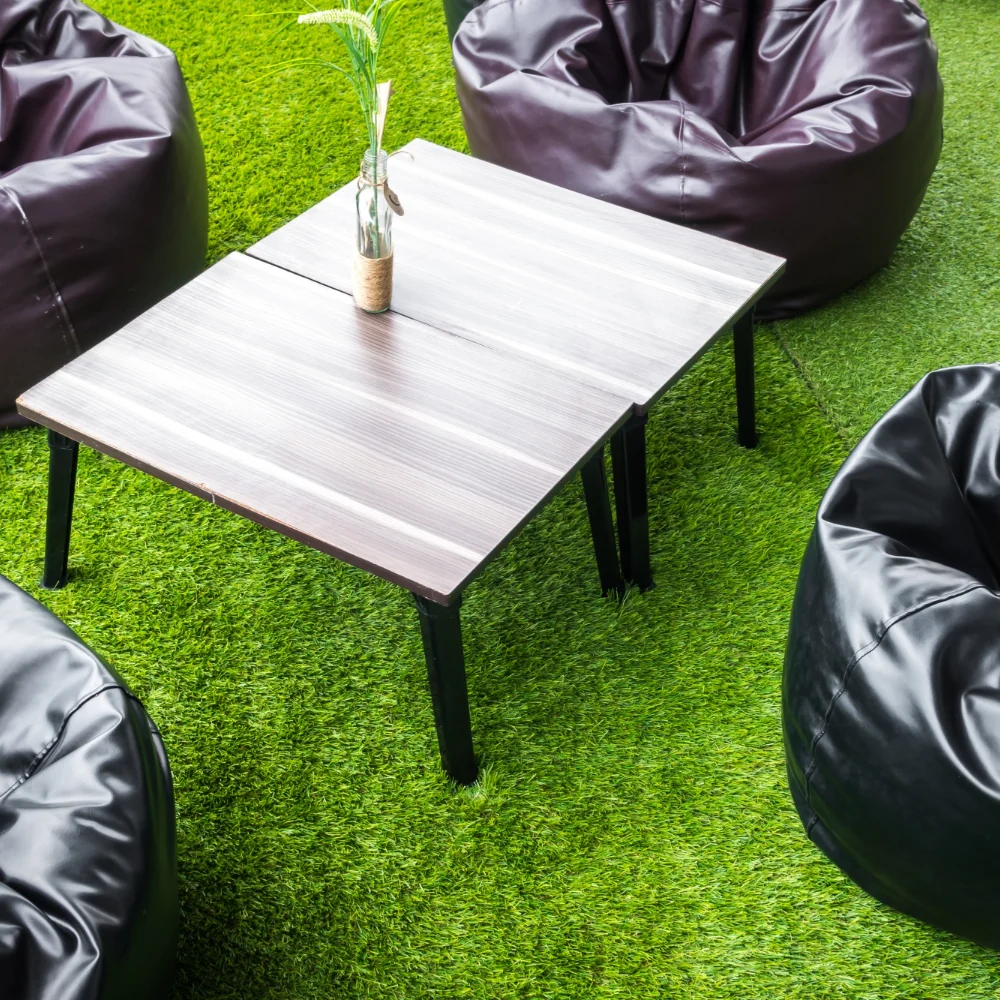
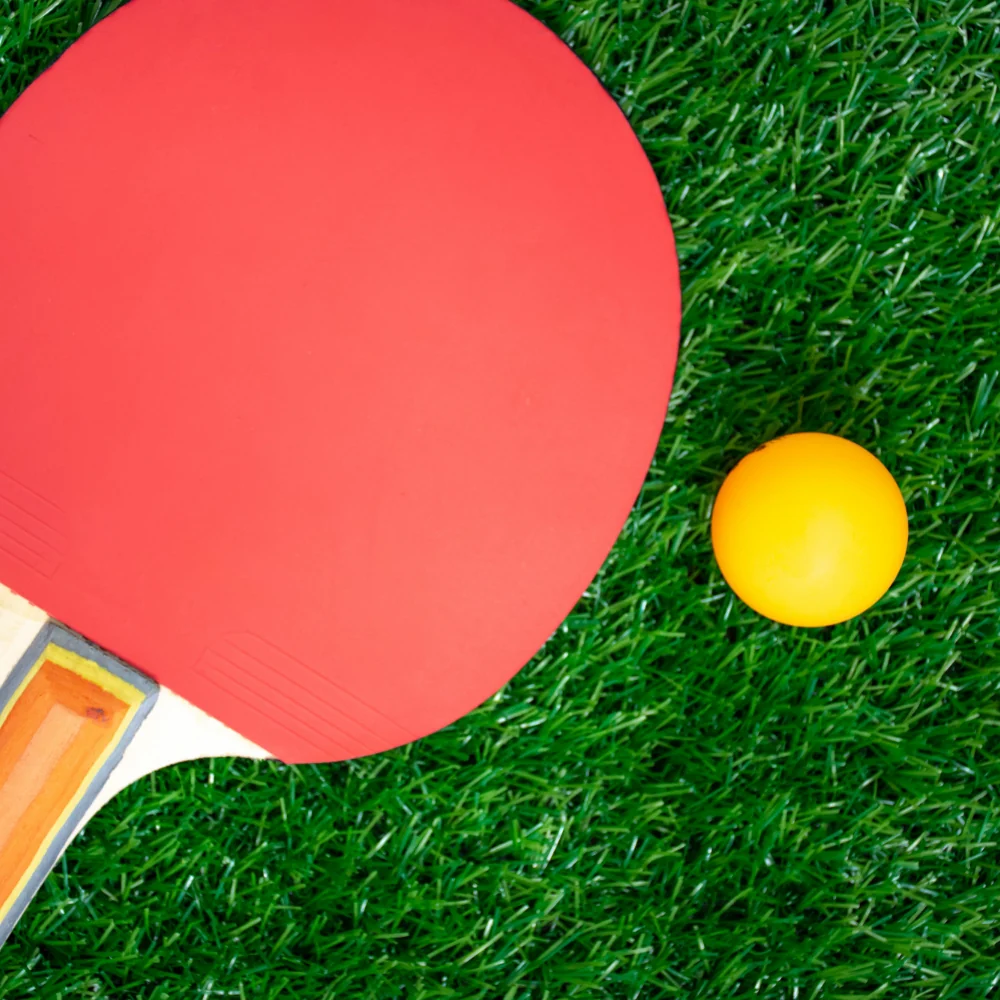
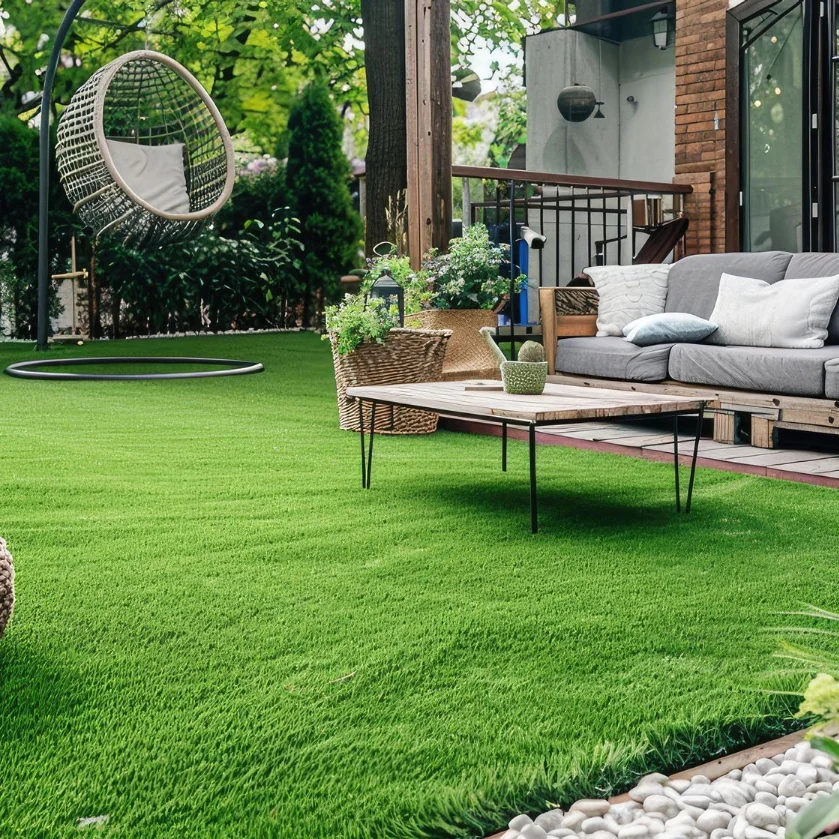
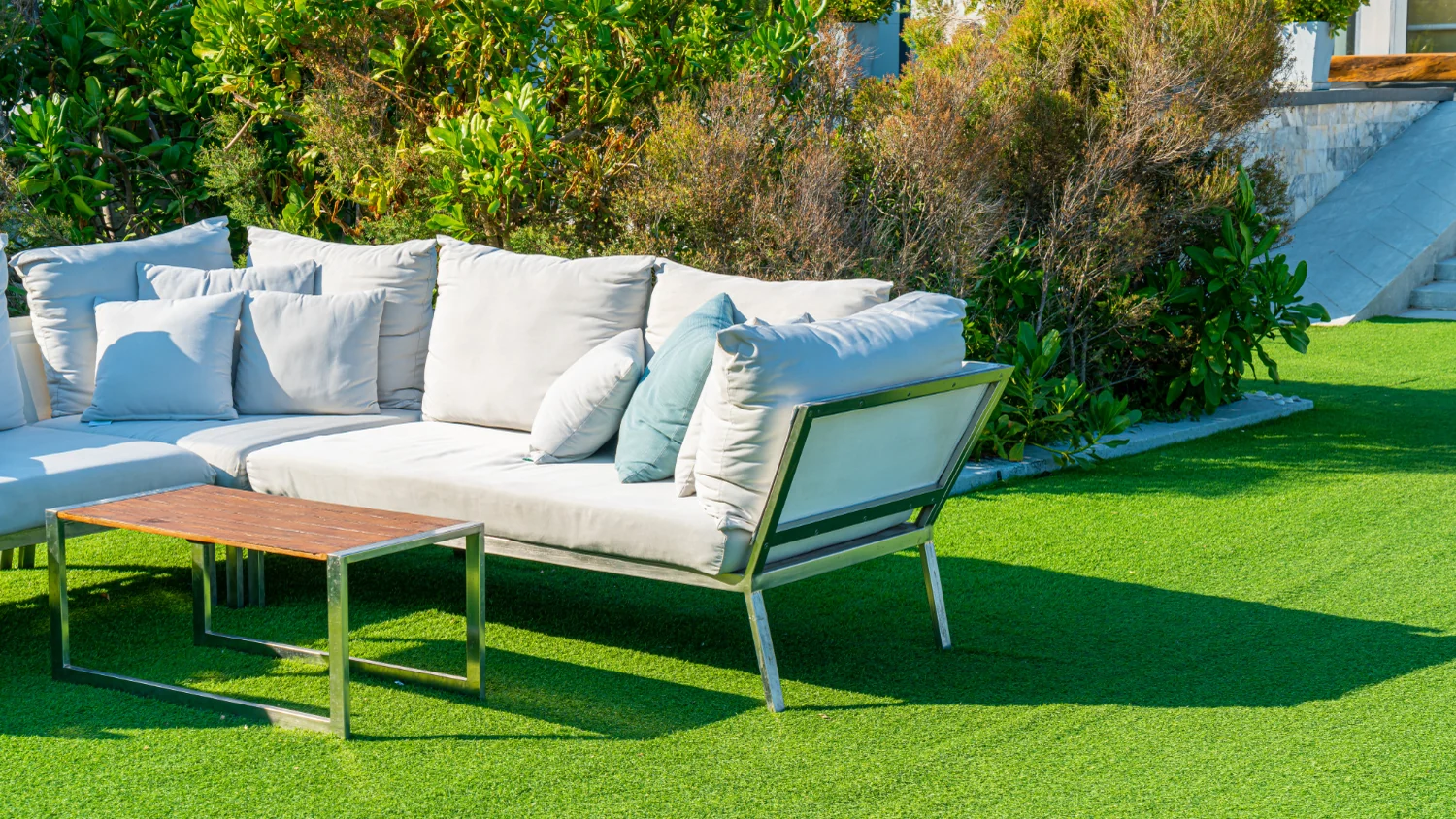
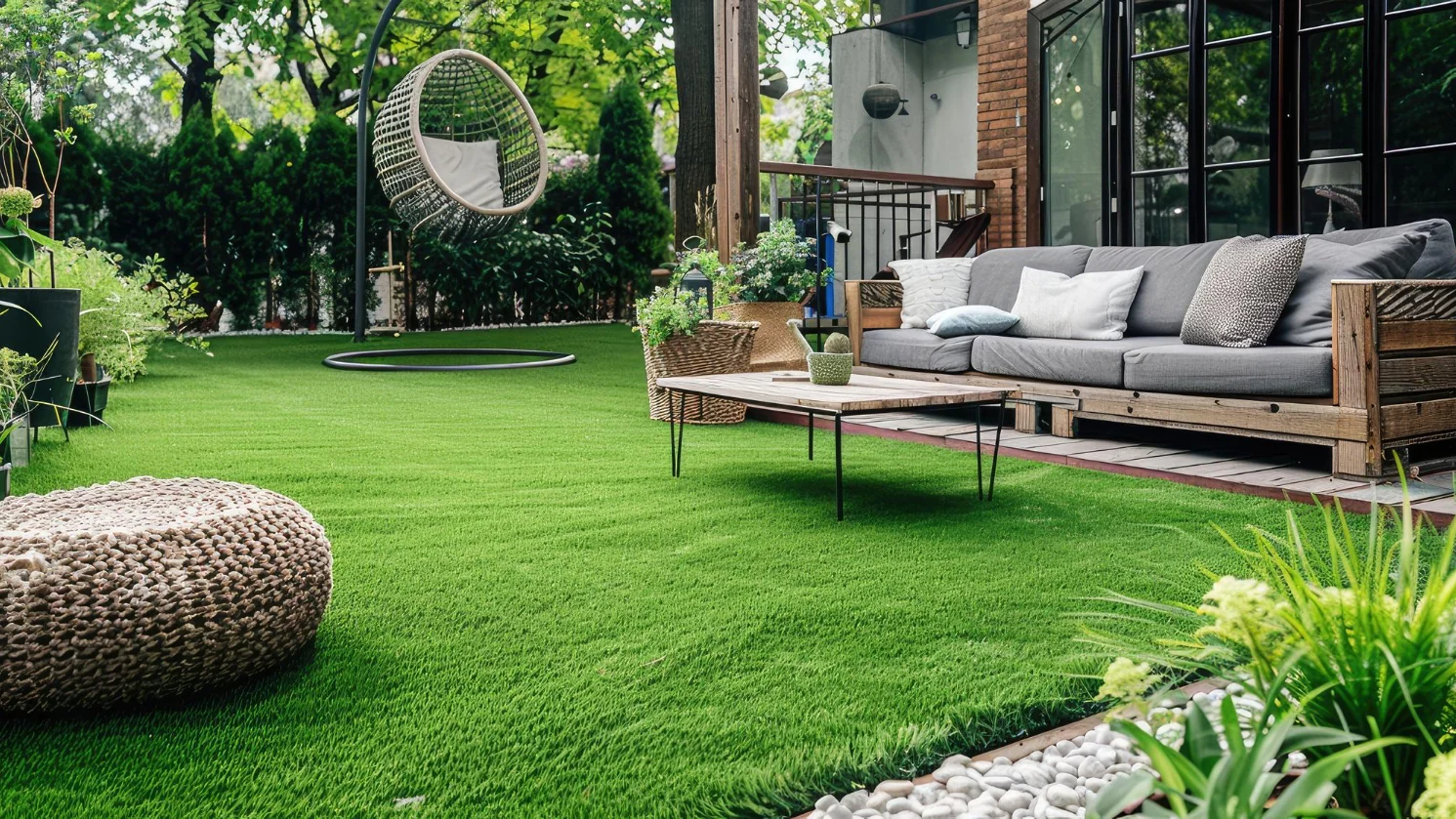
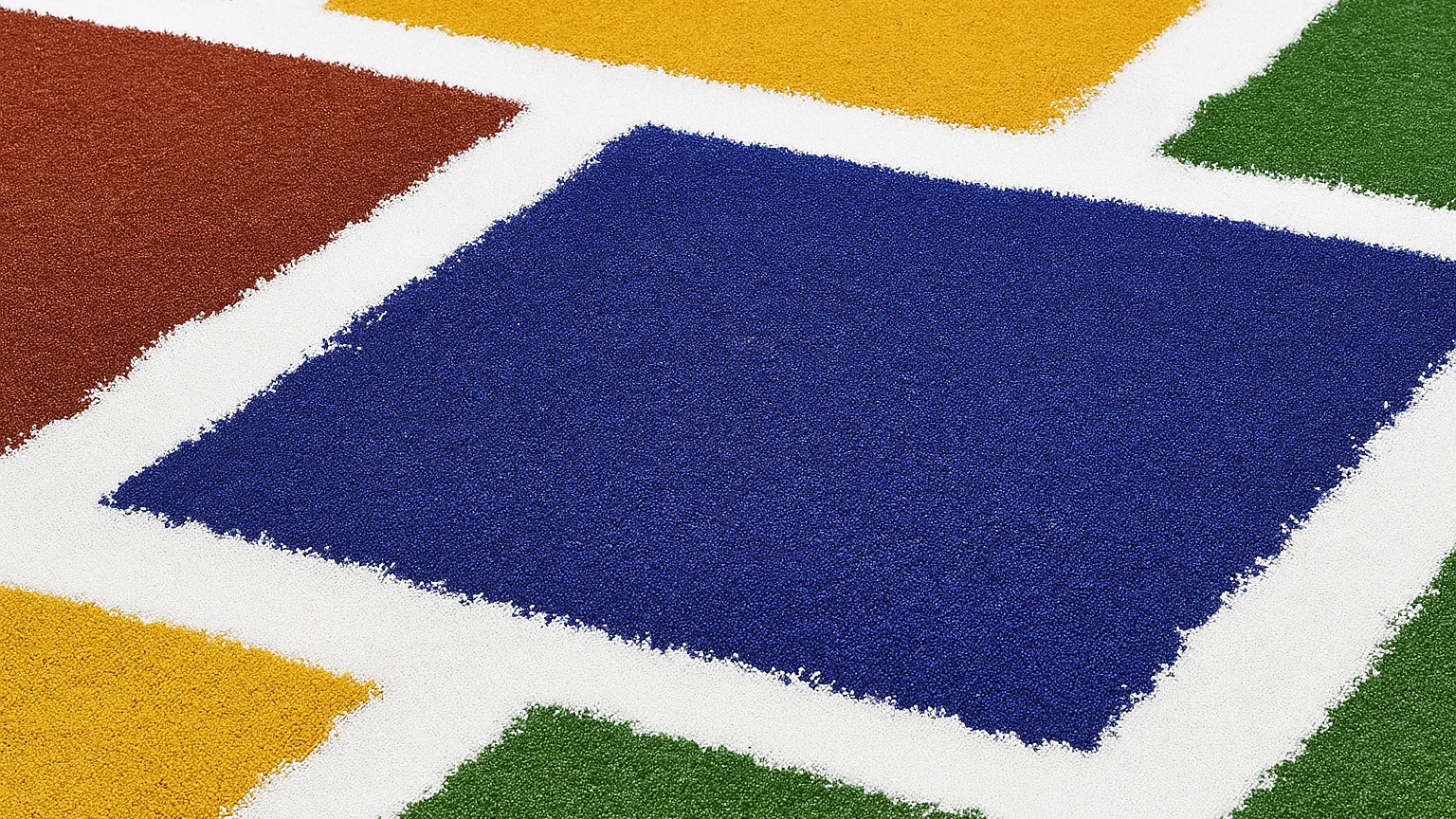
Lounging, games and colourful play zones: artificial grass gets daily use in family spaces.
What about infill and chemicals?
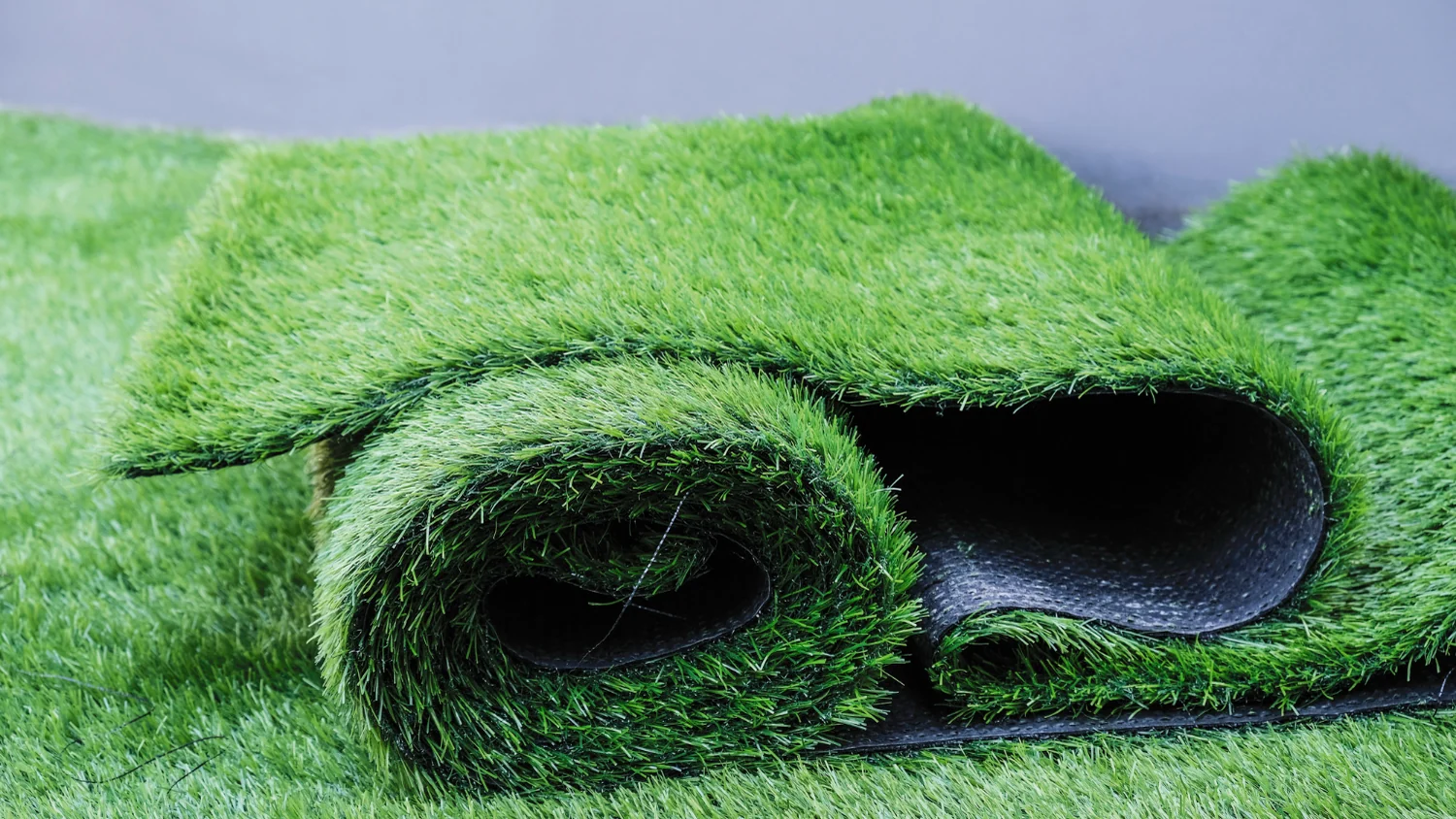
Ask what is in the system you are buying. Most landscape lawns for homes are laid without rubber infill; sports pitches often use sand and a performance infill. Recycled tyre crumb has been studied widely: the US Environmental Protection Agency's federal research on tyre crumb found that while exposures to its chemicals can occur, they are likely limited. If you prefer to avoid rubber infill, choose a landscape grass that does not need it, or a sand infill, and see artificial turf infill explained. GAIA Landscape Grass is made with UV-resistant yarn certified to UNE 14836, in nine pile heights from 20 to 60 mm. The range is under GAIA Landscape Grass.
Which pile height suits pets and children?
A short to mid pile for pets, around 20 to 35 mm, because it rinses clean easily. For children's lawns, 30 to 40 mm balances softness and resilience. Very long piles look lush but trap more dirt and flatten in play areas. All the options are compared in artificial grass pile height.
What to send us
- the area, its dimensions and what is underneath;
- who will use it: young children, pets or both;
- how much sun it gets, with midday photographs;
- where water drains today.
Our team will recommend the grass, pile height and base for your space.
Pets and children questions
Can dogs pee on artificial grass?
Yes, if the base drains freely and the area is rinsed regularly with water. Pick up solid waste promptly.
Is artificial grass good for a toddler's play area?
It is soft and clean for everyday play. Shade it in summer and add proper impact protection under any play equipment.
Does artificial grass have a smell with pets?
It can if urine is not rinsed away or the base does not drain. Regular rinsing and good drainage prevent it.
Can pets damage artificial grass?
Dogs that dig or chew can pull at edges and seams. Fix edges firmly, keep seams well glued and discourage digging in one spot.
Is artificial grass slippery when wet?
Grass gives better grip than wet tiles or stone, but rinse off spills and keep it free of algae and debris, especially in shaded corners that stay damp.
Green space for the whole family
Plan a lawn for children and pets
Tell GAIA by Sanson Floorings who will use your space and send us a few photographs, and we will recommend the grass and base that suit it.