GreenPro, CRI Green Label Plus and FloorScore are the certifications most often asked for on low-VOC flooring. GreenPro is India's Type 1 ecolabel covering a product's whole life cycle; the other two test indoor air emissions. GAIA by Sanson Floorings holds GreenPro for its carpet tiles and acoustic panels.
Green building projects in India increasingly ask for flooring with low emissions of volatile organic compounds, or VOCs: the chemicals that give new materials their smell and can affect indoor air for weeks after a fit-out. Specifications often list several labels at once, and suppliers answer with logos rather than explanations. This article explains what each of the three common certifications actually checks, how they differ, and how to verify a claim before it goes into a submission.
Low-VOC flooring certifications at a glance
- GreenPro: India's Type 1 ecolabel from CII, assessing a product across its life cycle.
- CRI Green Label Plus: the Carpet and Rug Institute's emissions test for carpet, cushion and adhesive.
- FloorScore: an emissions certification for hard surface flooring, adhesives and underlayments.
- What to check: the certificate names the exact product type and plant, and is in date.
- Adhesives count: a low-emission floor laid with a high-emission glue is not a low-emission floor.
What does low-VOC flooring mean?
Flooring that releases only small amounts of volatile organic compounds into indoor air. VOCs come from many building products: binders, backings, finishes and especially adhesives. Emissions are highest when products are new, which is why freshly fitted offices and classrooms can smell strongly. Low-VOC products are tested in a sealed chamber that measures what they give off over set periods, and certifications set limits on the results. A low-VOC claim is only meaningful when it names the test and the certificate behind it.
What is GreenPro certification?
GreenPro is India's Type 1 ecolabel, run by the Confederation of Indian Industry through its Green Business Centre. It assesses a named product from a named plant across its life cycle: raw materials, manufacturing, product performance, use and end of life. Because it is recognised by India's green building rating systems, it is often the certification Indian projects ask for. GAIA's GreenPro certificates, issued to Sanson Floorings LLP for its Hyderabad, Telangana plant and valid until December 2027, cover its PET acoustic panels in 9, 12, 18 and 24 mm (GPSFP576001 to GPSFP576004) and its bitumen-backed carpet tiles and planks in polypropylene and nylon, including GPSFP576011 for Bitumen PP Carpet Tiles. More on the scheme is in what GreenPro certification means.
What is CRI Green Label Plus?
An indoor air quality certification from the Carpet and Rug Institute for carpet, cushion and adhesive. Products are tested for chemical emissions in a dynamic environmental chamber, using a method developed with the US Environmental Protection Agency and adopted by ASTM as D5116, according to the Green Label Plus programme page. It is the label international carpet specifications most often name. If a project specification asks for it, confirm whether the clause will also accept an equivalent emissions test, as many do.
What is FloorScore?
An emissions certification for hard surface flooring and the products laid with it. It was developed by SCS Global Services with the Resilient Floor Covering Institute, and products are tested for 35 individual VOCs under the California Standard Method for VOC Emissions Testing, as set out on the FloorScore programme page. It covers vinyl, laminate, rubber, timber, ceramic, adhesives and underlayments rather than carpet. Where a project mixes carpet tiles with hard flooring, the specification may ask for Green Label Plus on the carpet and FloorScore on the hard floors. How the two floor types compare in use is covered in carpet tiles vs vinyl flooring.
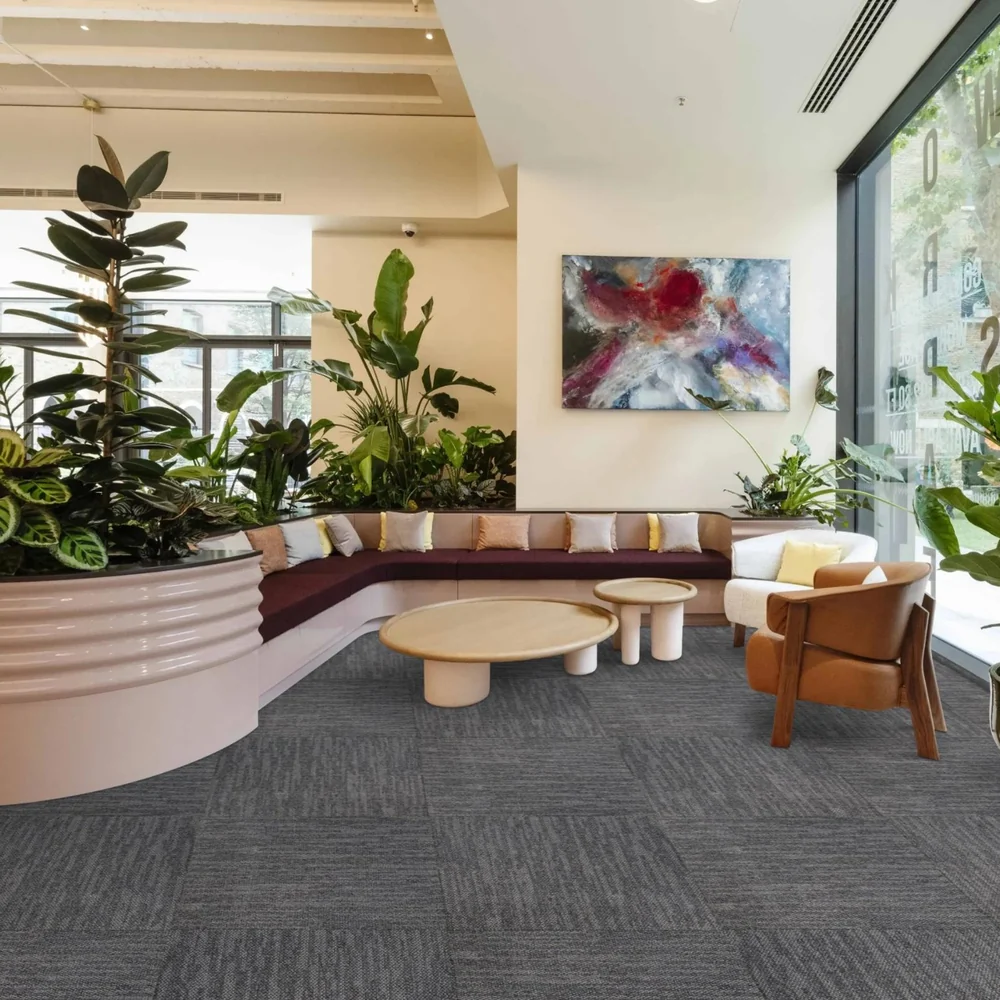
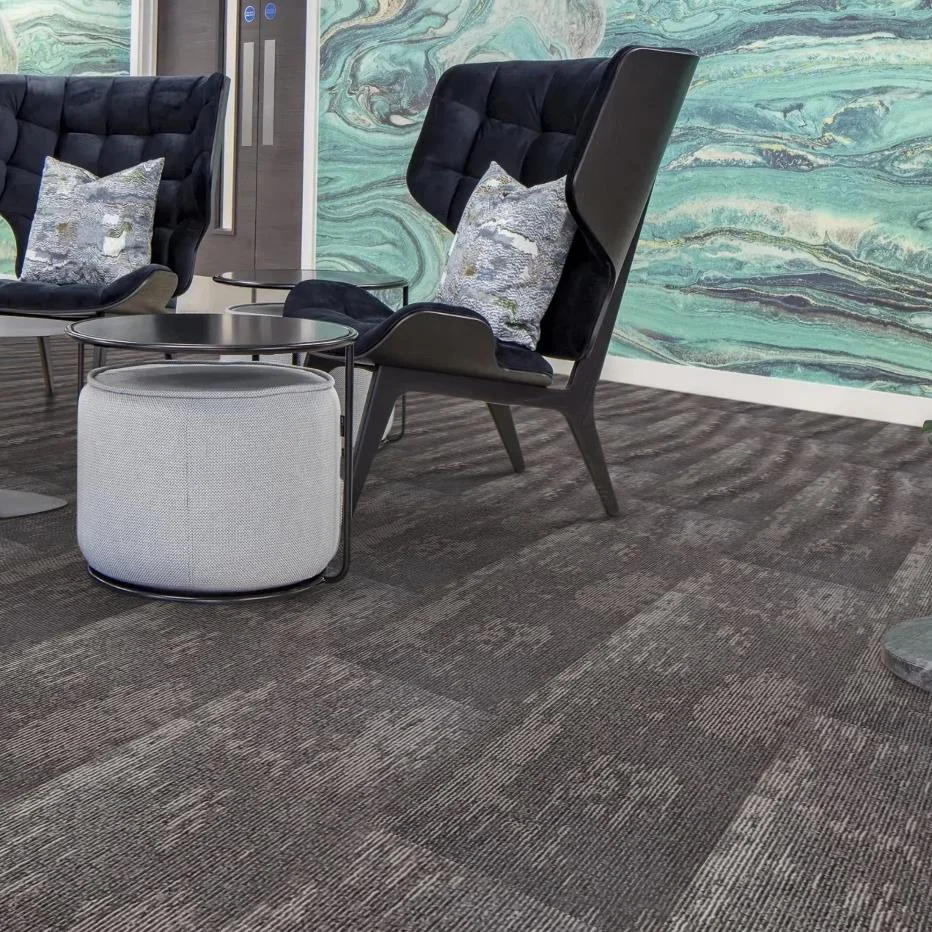

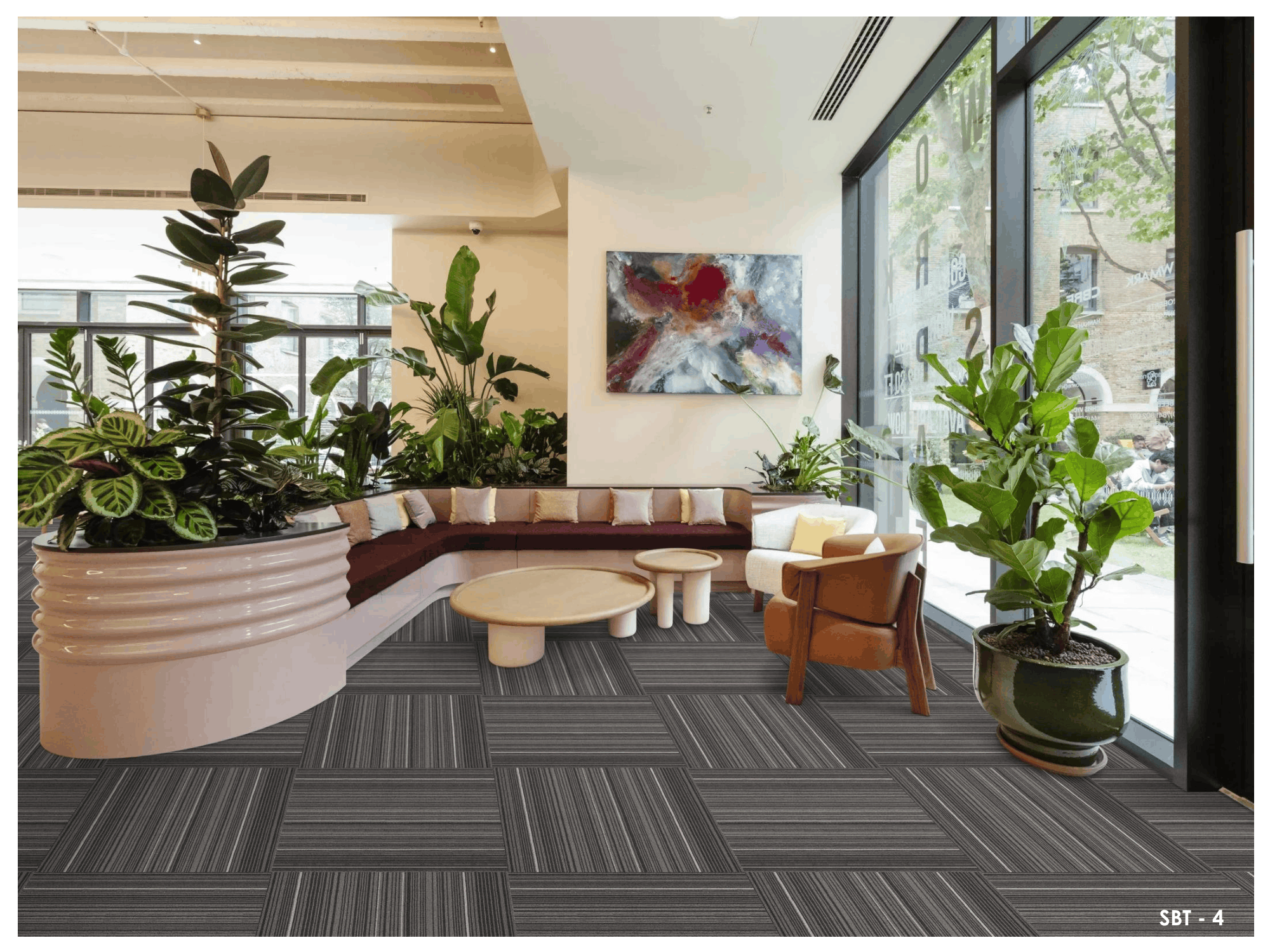
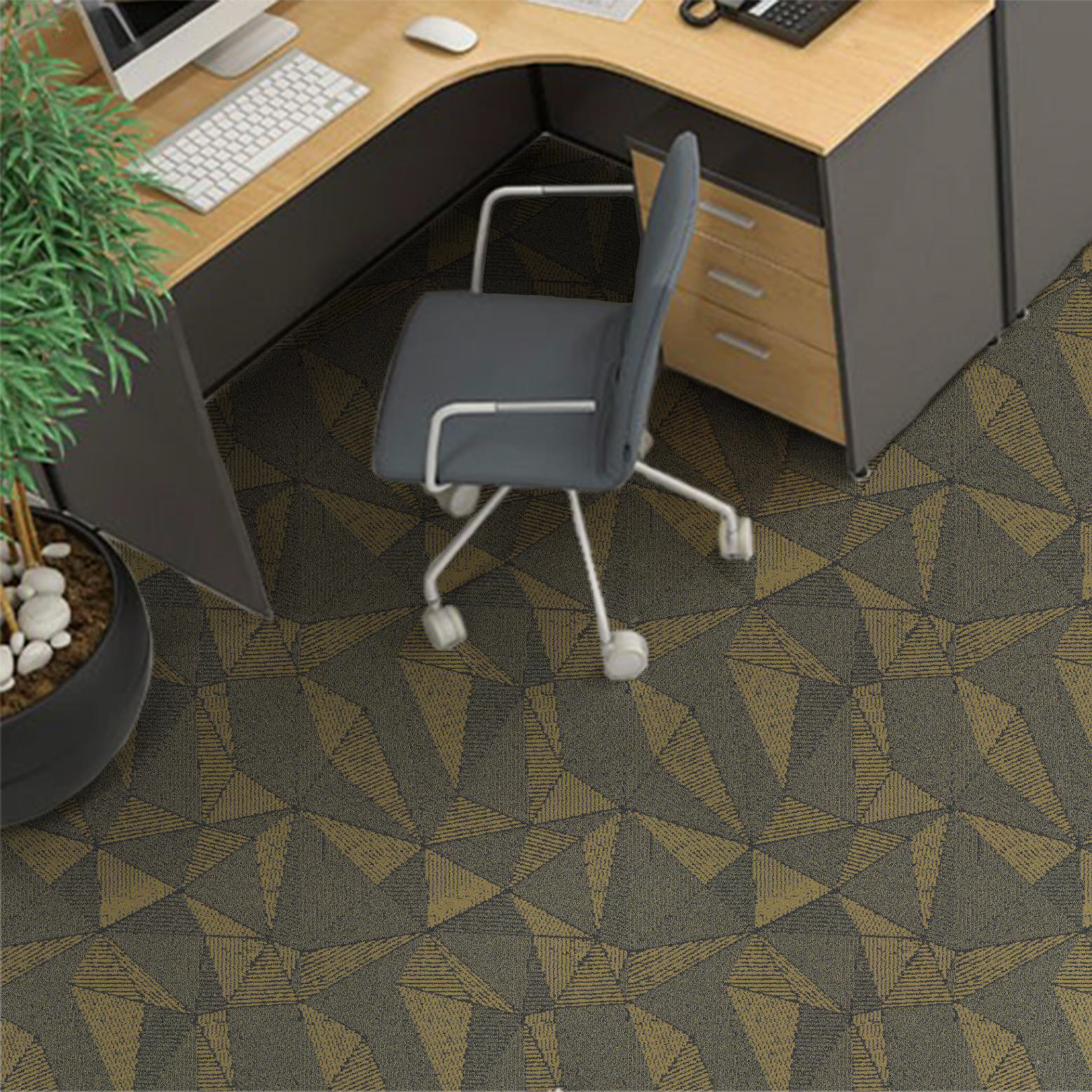
GAIA Nevada tiles and Salt and Plateau planks, made at GAIA's GreenPro-certified Hyderabad plant.
How do you check a flooring certificate?
Read the certificate itself, not the logo. Check four things: that it names the manufacturer, the product type you are buying and the plant that makes it; that it is in date on the day of submission; that the certificate number can be checked with the issuing body; and that the adhesive and any underlay are covered too, either by the same certificate or by their own. A carpet tile certified as a polypropylene tile does not cover a nylon plank from the same maker, so match each certificate to each product line in your schedule.
Low-VOC flooring checklist
- List the certifications your rating system or client actually requires.
- Ask each supplier for the certificate, not just a logo.
- Match each certificate to the product type and plant.
- Specify a low-emission adhesive for every floor.
- Ventilate the space well after installation, before occupation.
GAIA's certified collections are shown under GAIA carpet tiles.
What to send us
- the certification clauses in your specification;
- the green building rating your project is targeting;
- the product types and quantities you need;
- your submission deadline.
Our team will send the GreenPro certificates that match each product line.
Low-VOC flooring questions
Is GreenPro the same as CRI Green Label Plus?
No. GreenPro is an Indian ecolabel that assesses a product across its life cycle. Green Label Plus is a carpet emissions test from the US Carpet and Rug Institute.
Do carpet tiles give off VOCs?
Most new building products give off some VOCs, mainly in the early weeks. Choosing certified products and low-emission adhesives, and ventilating after fitting, keeps emissions low.
Which GAIA products are GreenPro certified?
GAIA's PET acoustic panels in 9, 12, 18 and 24 mm, and its bitumen-backed carpet tiles and planks in polypropylene and nylon. The certificates are valid until December 2027.
Do acoustic panels need a VOC certificate?
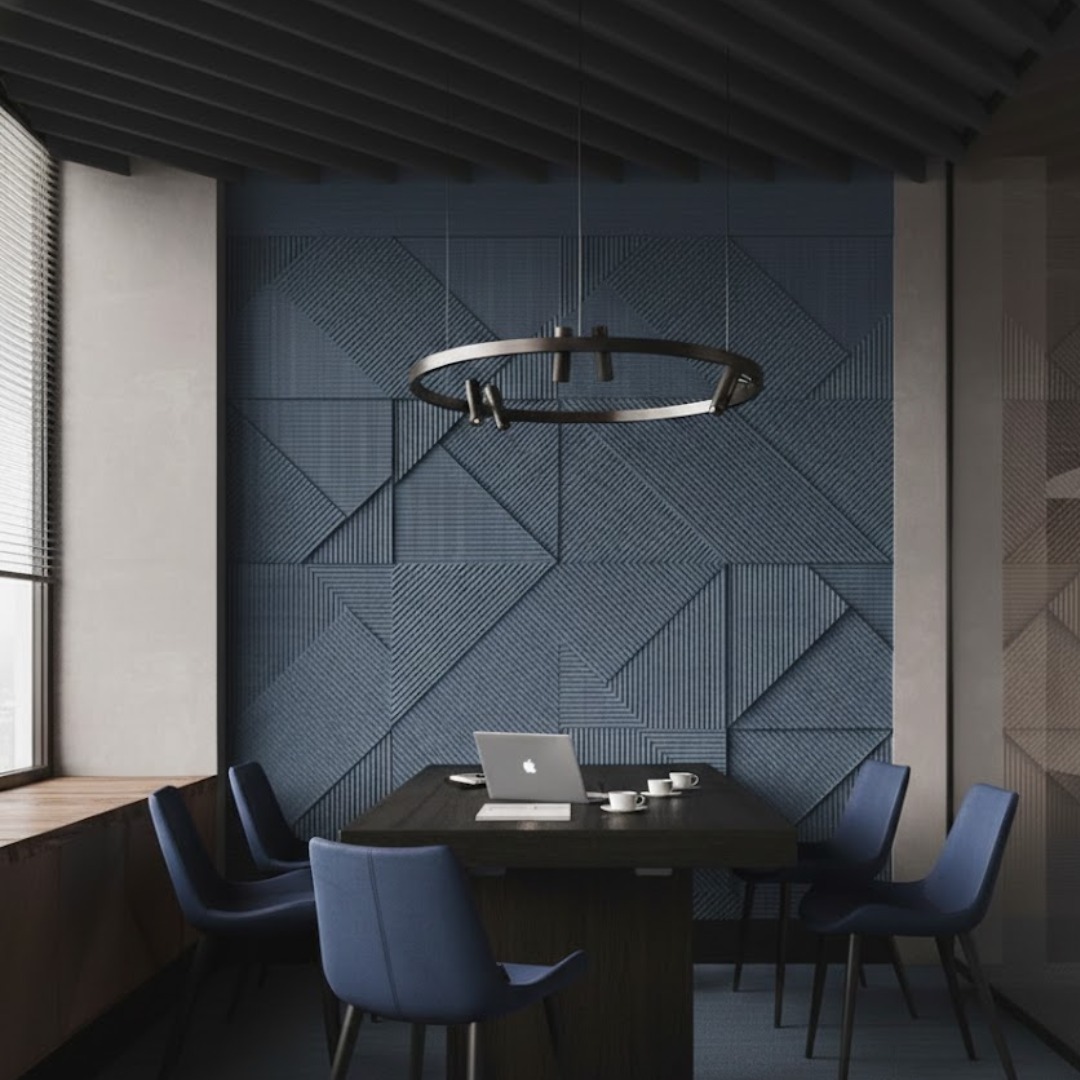
Many green building projects ask for emission data on wall and ceiling finishes as well as floors. GAIA PET acoustic panels are GreenPro certified in 9, 12, 18 and 24 mm, and our team will send the certificates for your submission.
Certificates for your submission
Specify certified flooring
Tell GAIA by Sanson Floorings what your project needs to certify, and we will send the GreenPro certificates for each product.