Choose PET acoustic panel thickness by room: 9 or 12 mm for offices, classrooms and feature walls; 18 or 24 mm for low voices, music or film. Mounting matters more: a GAIA by Sanson Floorings panel rates NRC 0.3 glued flat and NRC 0.85–0.9 on an air gap.
Thickness is usually the first question on a PET panel enquiry, and the instinct is to buy the thickest board the budget allows. That is not always the best use of money. A thin panel on an air gap can outperform a thick one glued flat, and some rooms simply do not need the low-frequency control a 24 mm board provides. GAIA by Sanson Floorings makes PET acoustic panels in four thicknesses, 9, 12, 18 and 24 mm, on a standard 1220 × 2440 mm sheet, so the choice can follow the room rather than a single stock size.
PET panel thickness at a glance
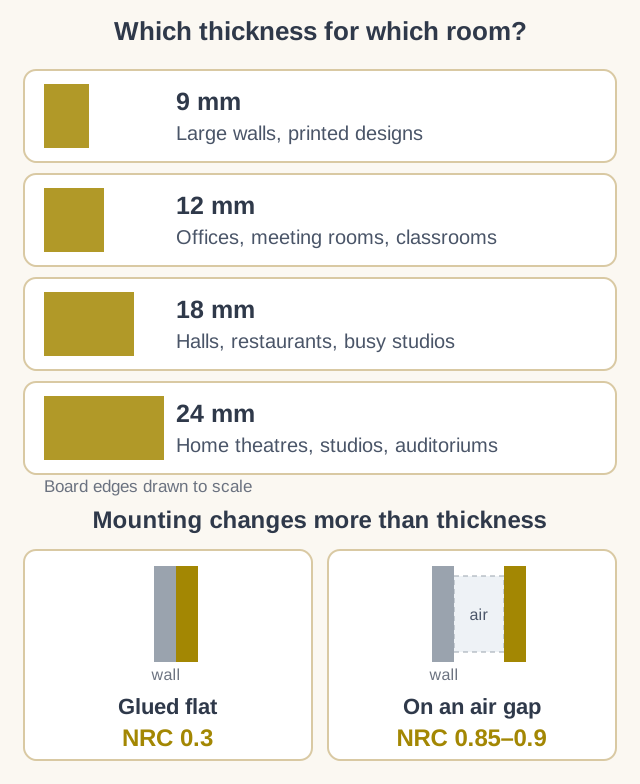
- 9 mm: light and economical for large wall areas, pinboard walls and printed designs.
- 12 mm: the everyday choice for offices, meeting rooms and classrooms.
- 18 mm: more control of voices in halls, restaurants and busy studios.
- 24 mm: the most low-frequency absorption, for home theatres, recording rooms and auditoriums.
- Any thickness: an air gap behind the panel raises absorption far more than a few extra millimetres.
Does a thicker acoustic panel absorb more sound?
Yes, mainly at lower frequencies. A porous absorber such as PET fibre works by turning sound energy into a little heat as air moves through the fibres. High-pitched sounds, with short wavelengths, are absorbed well even by thin boards. Lower sounds, such as male voices, music and the hum of building services, have much longer wavelengths and need more depth before the fibres can act on them. Adding thickness, or adding air behind the board, gives those longer waves more material to pass through. That is why a thicker board shows its biggest gains in the 250 to 500 Hz range rather than in the higher bands.
Absorption is measured in a reverberation room under ASTM C423 or ISO 354, frequency by frequency, and averaged into the NRC. Because the average leans on speech frequencies, two boards can share a similar NRC and still sound different in a room used for music or film. What NRC includes is explained in our NRC explainer.
Why does mounting matter more than thickness?
Because the air gap adds depth without adding material. Fixed flat against a wall, a GAIA PET acoustic panel achieves NRC 0.3. Stood off the wall on battens or clips, with an air cavity behind it, the same panel reaches NRC 0.85–0.9. Few changes in thickness produce a jump that large. For most rooms, the first decision is whether the wall can take a cavity, and only then how thick the board should be. Our article on acoustic panels and air gaps covers gap depths and fixing.
When is 9 or 12 mm enough?
In most offices, meeting rooms, classrooms and shops, where the aim is clearer speech and a less noisy room. The problem in these spaces is mostly mid- and high-frequency: conversation, phones, chairs and keyboards. Thin boards handle that well, especially when they cover enough wall and ceiling area and are mounted on a gap where possible. A 9 mm GAIA sheet weighs 1,650 g/m² and a 12 mm sheet 2,250 g/m², so both are easy to handle, cut and fix, and the thinner board is the economical way to cover a large area or carry a printed design. The 12 mm board is the safer default where chairs and bags will knock the wall, because the thicker, heavier board stands up better to everyday wear.
When should you choose 18 or 24 mm?
When voices or sound sources are low, loud or both. Restaurants and banquet halls build up a low rumble of many voices; home theatres and music rooms carry bass; auditoriums and podcast rooms need control across the full speech range. In these rooms 18 and 24 mm boards, ideally on an air gap, do work that thin boards cannot. They also suit ceiling baffles, where both faces of the board are exposed to the room. For rooms built around sound, see home theatre acoustics.
Is every thickness certified?
At GAIA, yes. Each thickness carries its own GreenPro certificate from the CII Green Products and Services Council, issued for panels made at GAIA's Hyderabad, Telangana plant and valid until December 2027: 9 mm GPSFP576001, 12 mm GPSFP576002, 18 mm GPSFP576003 and 24 mm GPSFP576004. When comparing suppliers, check that a green certificate names the thickness you are buying, not just the product family. Other points to check are listed in what to check when buying PET panels.
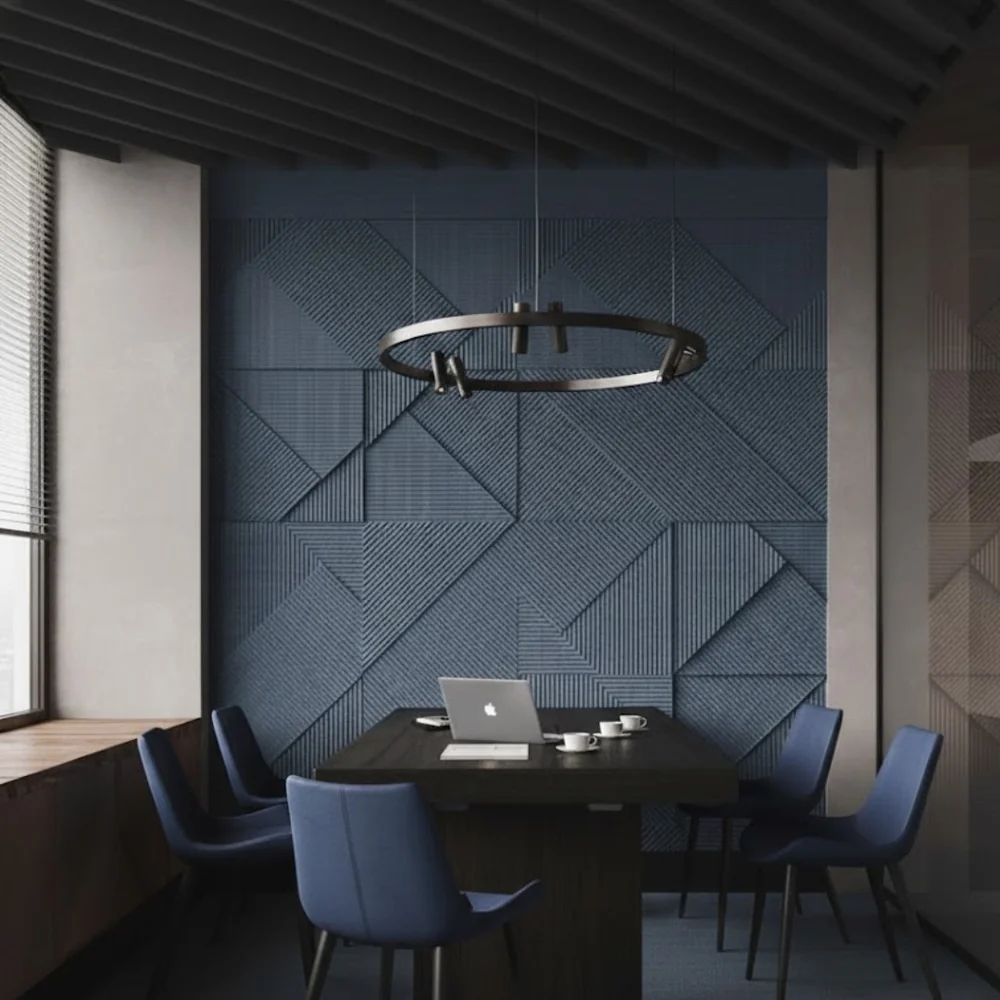

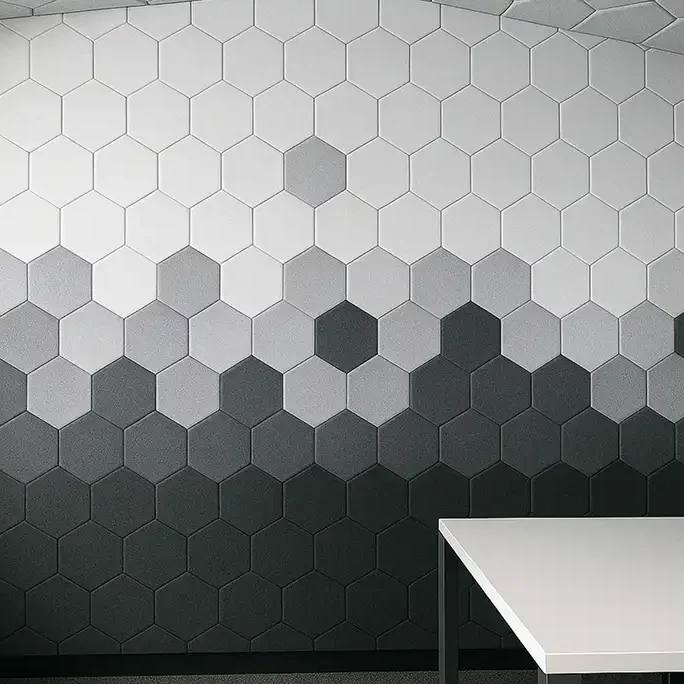
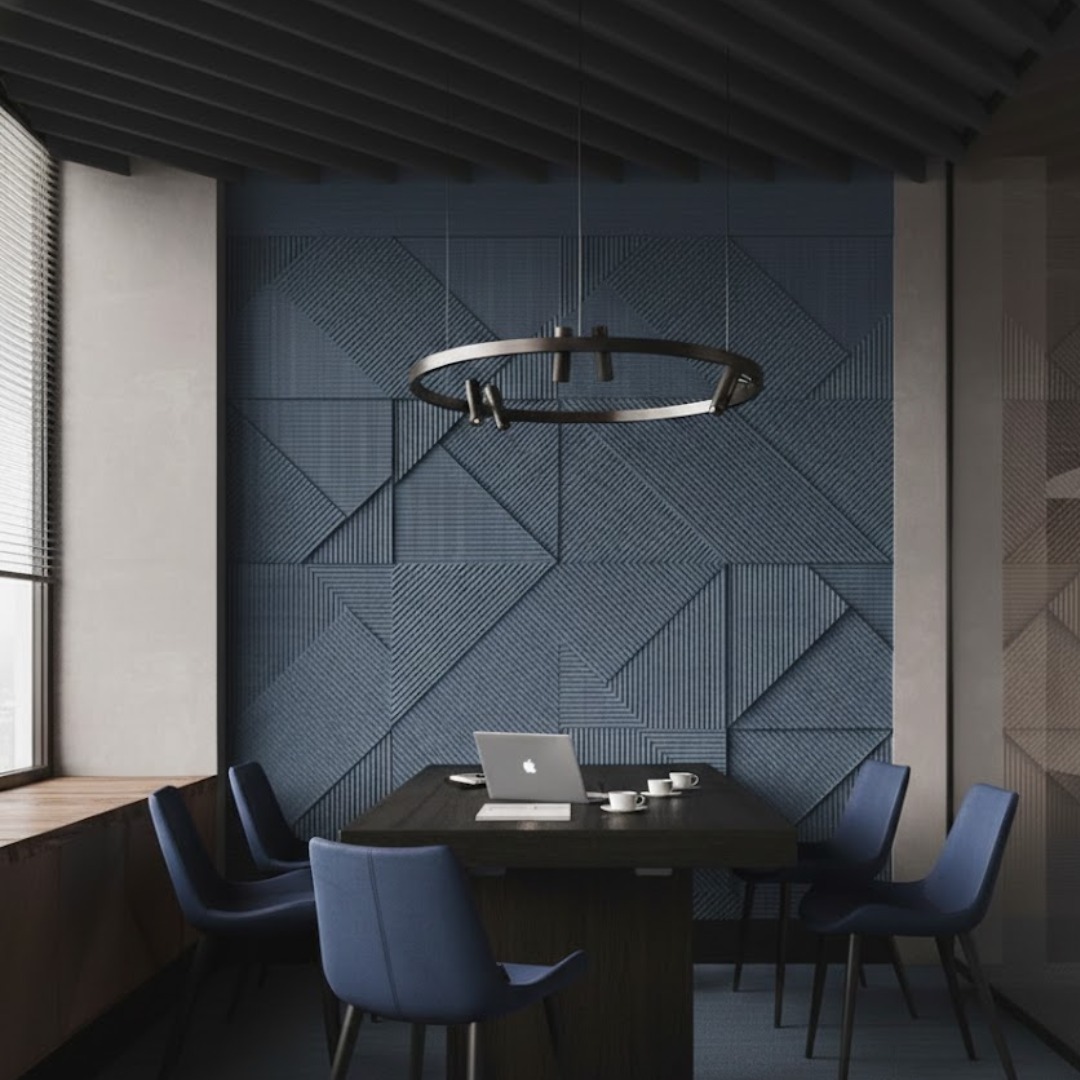
Wall panels, cut screens and shaped tiles: each thickness can be cut, carved or printed to suit the design.
How do thickness and quantity work together?
They trade off. A room needs a certain total amount of absorption, and that total comes from the area of panels multiplied by how well each square metre absorbs. Mounting on a gap or moving up a thickness means fewer square metres are needed for the same result; thin boards glued flat need much more area. Estimate the area first, then decide whether thicker boards or a cavity is the cheaper way to reach it. The method is set out step by step in how many acoustic panels you need, and the range is shown under GAIA acoustic panels.
Thickness checklist
- Name the main sound problem: voices, music, film or general noise.
- Check whether the walls can take an air gap.
- Use 9 or 12 mm for speech rooms, 18 or 24 mm for low or loud sound.
- Compare boards by weight per square metre as well as thickness.
- Confirm the certificate names the thickness you are ordering.
What to send us
- the room's use, size and ceiling height;
- photographs of the walls and ceiling;
- whether the walls can take battens or a cavity;
- the look you want: plain, grooved, printed or shaped.
Our team will recommend the thickness, mounting and area for your room.
Panel thickness questions
Is 9 mm acoustic panel good enough?
For offices, classrooms and feature walls, often yes, especially on an air gap. For home theatres, music rooms or loud halls, 18 or 24 mm boards control low sound better.
Is 12 mm or 24 mm better for a home theatre?
24 mm, mounted with an air gap. Film soundtracks carry a lot of low-frequency energy, and the thicker board absorbs more of it than a 12 mm panel can.
Can thin panels be layered to make a thicker one?
It is rarely worth it. Mounting a single board on an air gap adds far more absorption than stacking two thin boards, and it costs less.
What size sheets do PET panels come in?
GAIA PET panels come as 1220 × 2440 mm sheets in all four thicknesses, and can be cut into tiles, strips and shapes on site.
The right board for the room
Choose your panel thickness
Tell GAIA by Sanson Floorings how the room is used and what is on its walls, and we will recommend the panel thickness and mounting that suit it.