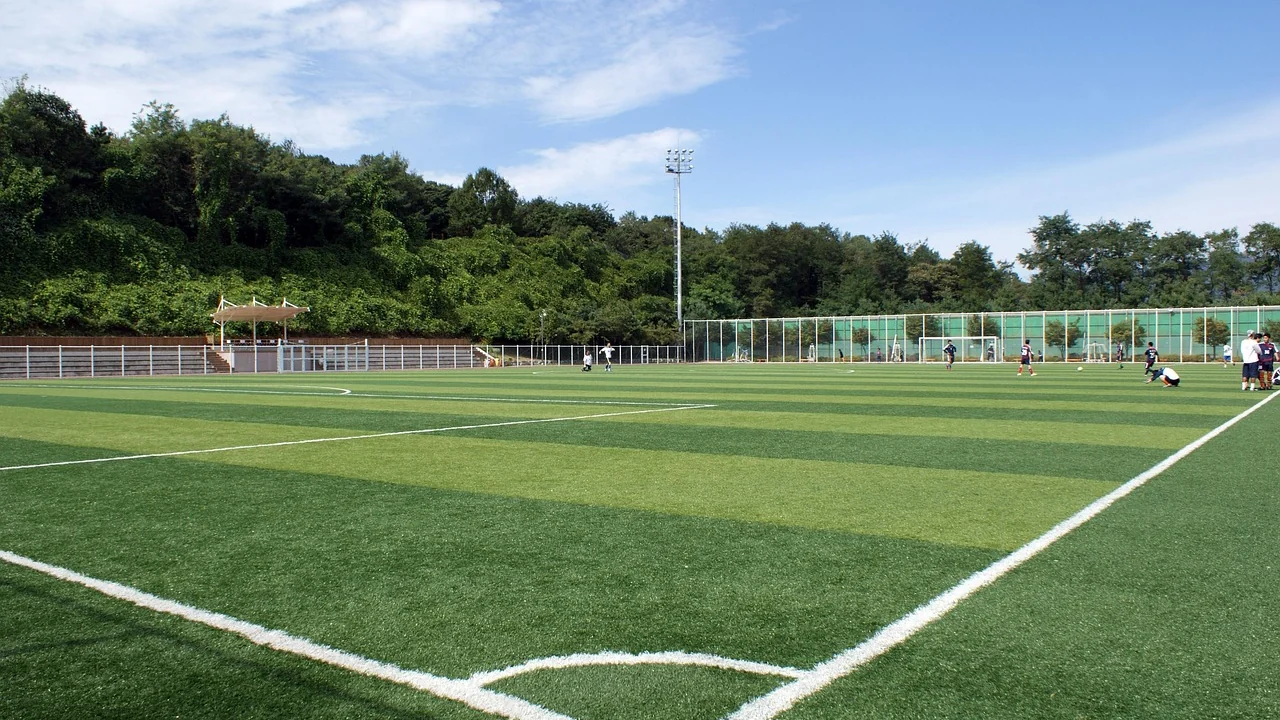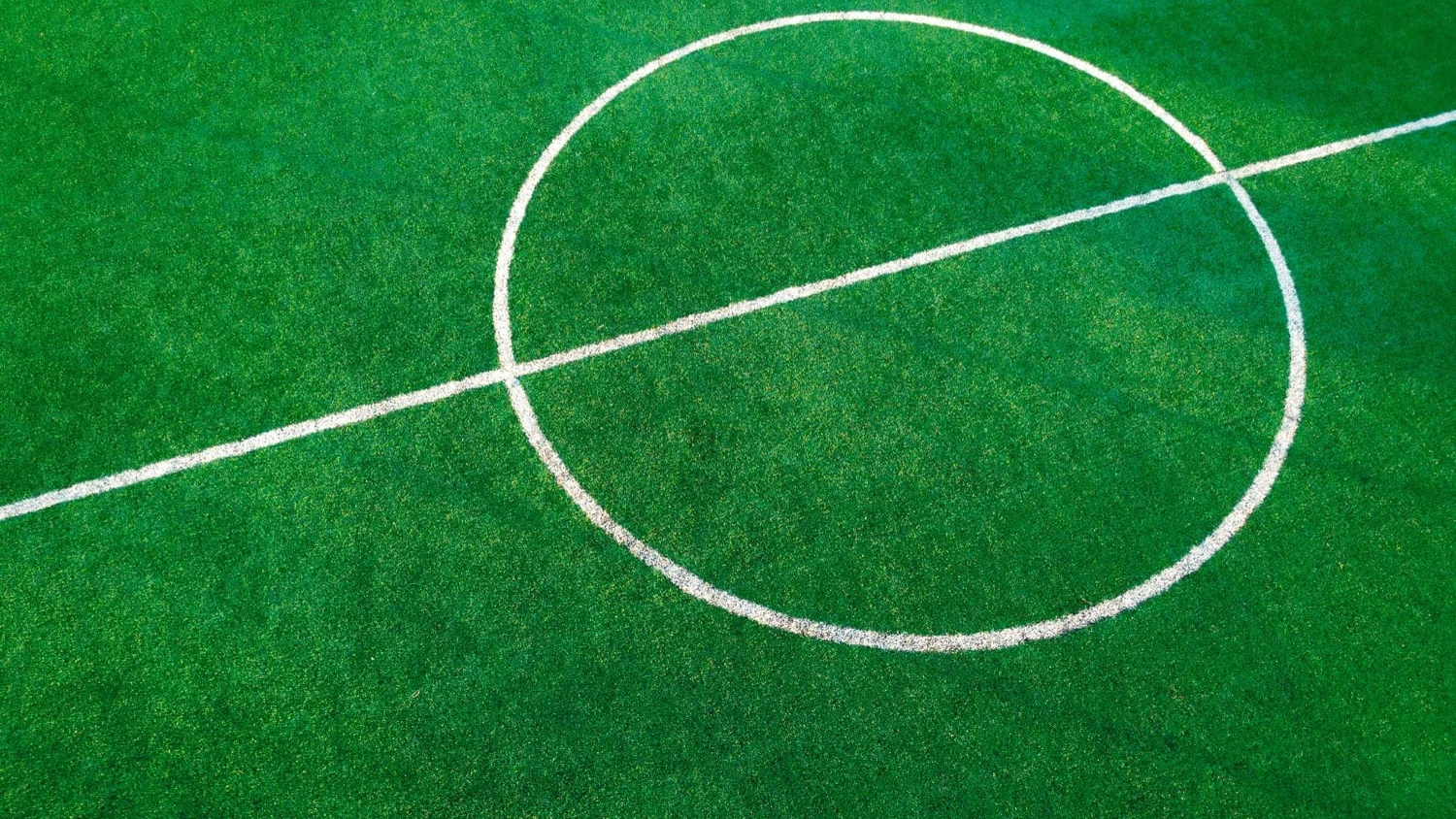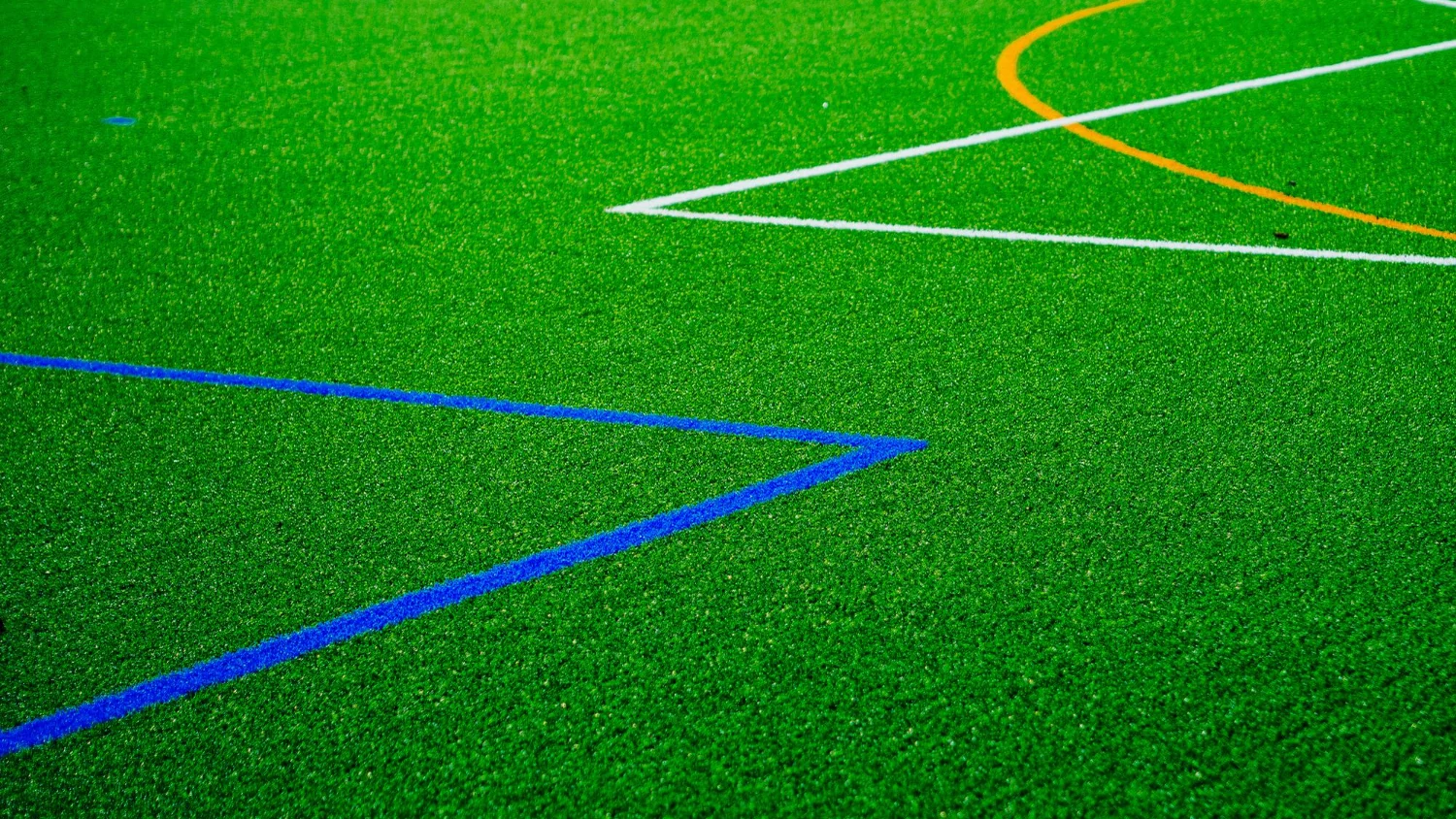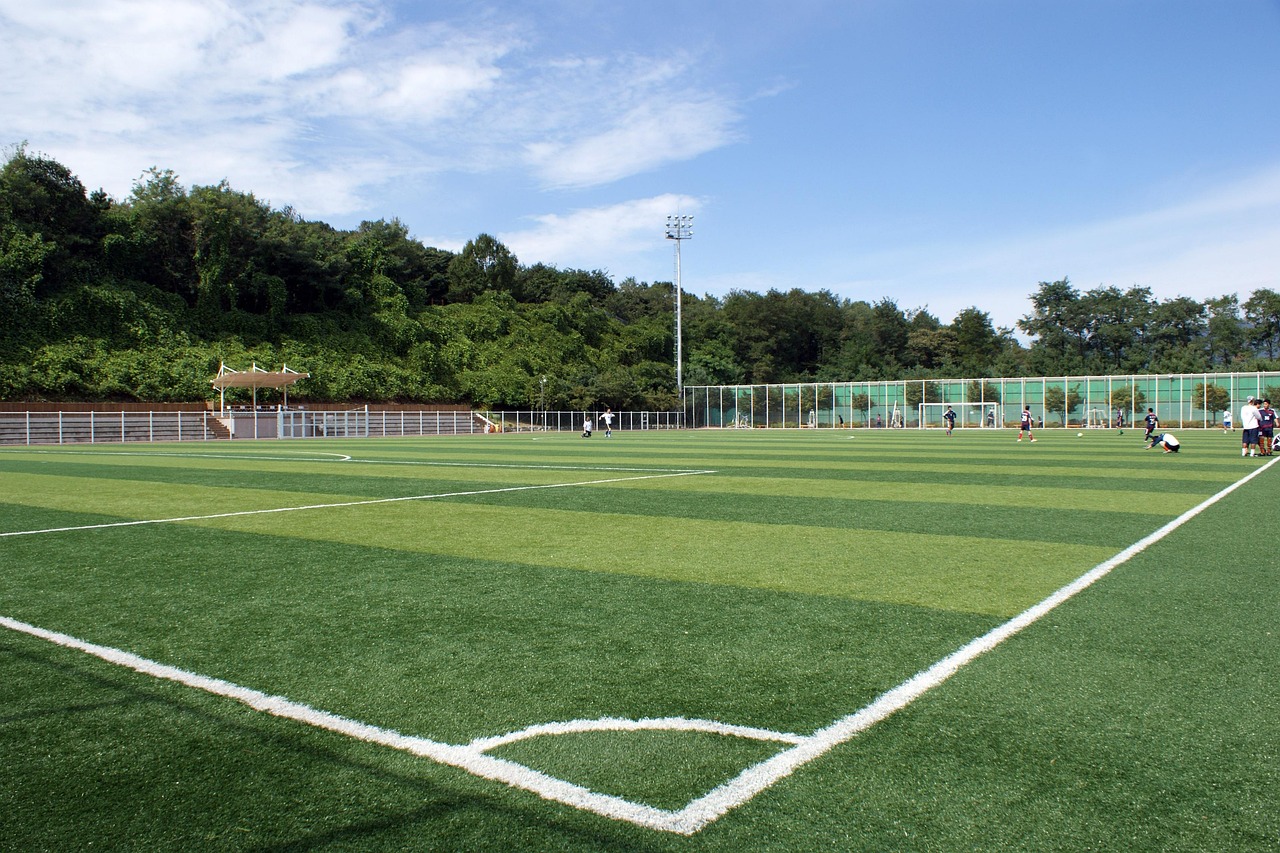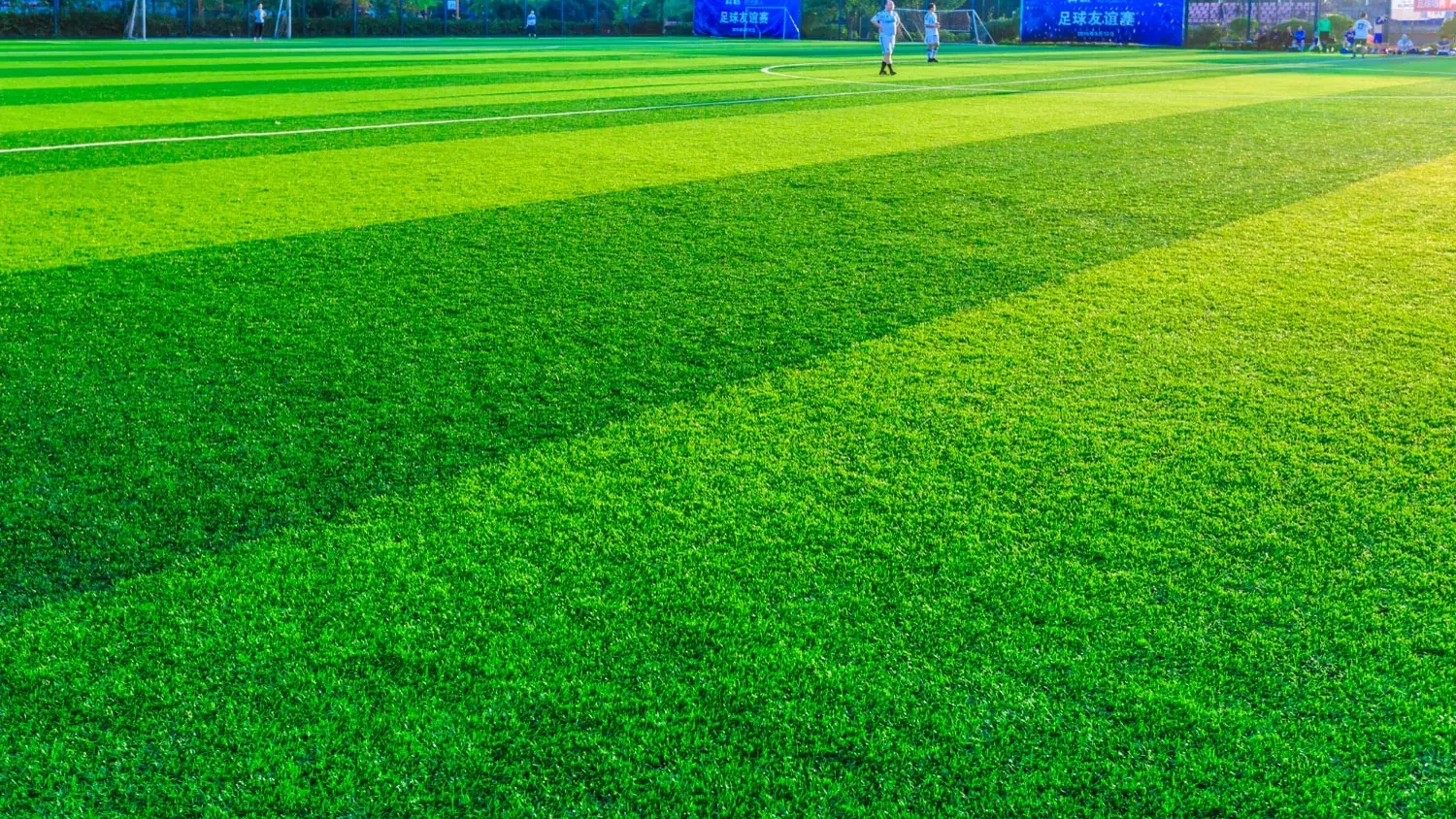
Artificial turf infill is the granular material brushed into the pile to hold fibres upright, weigh the turf down and control bounce, grip and cushioning. Sand forms the base layer, often topped with rubber, EPDM, TPE, cork or coconut. Football turf from GAIA by Sanson Floorings is laid with infill.
Look closely at a football pitch made of artificial turf and you will see small black, green or brown granules between the blades. That is the infill, and it does far more than most buyers realise. It decides how the ball rolls, how hard a fall feels, how hot the surface gets and how much maintenance the pitch needs. It is also the part of a turf system people ask most questions about. This article explains what infill does, the main types, how to choose between them and how to look after them over the life of a pitch.
Artificial turf infill at a glance
- Purpose: supports the fibres, stabilises the turf and shapes how it plays.
- Sand: the stabilising layer at the bottom of most sports systems.
- Performance infill: rubber, EPDM, TPE or organic granules on top for cushioning.
- Amount: depends on pile height; longer piles take more.
- Upkeep: infill migrates and needs brushing back and topping up.
What does infill do in artificial turf?
Four jobs. It holds the blades upright, so they do not flatten under play. It adds weight that keeps the turf stable on its base. It controls how the surface plays: how far the ball rolls, how high it bounces and how much grip players get. And it adds cushioning, so tackles and falls are less harsh. On football turf, the infill and the pile work as one system: the pile height sets how much infill is needed, and the infill sets much of how the pitch feels. GAIA football turf comes in 30 mm and 50 mm; the longer pile takes more infill and gives a deeper, more cushioned surface. See football turf for a 5-a-side pitch.
What are the main types of infill?
A review of infill materials by the Toxics Use Reduction Institute at the University of Massachusetts Lowell, the infills overview, groups the common options:
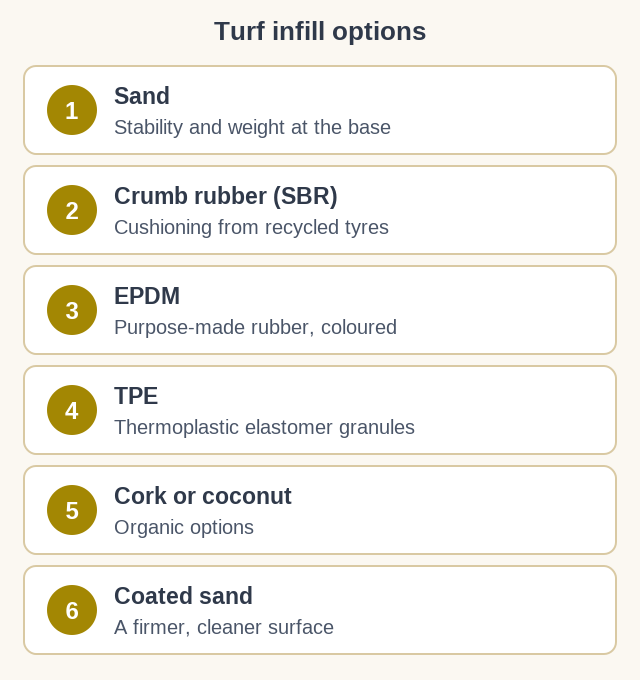
- Sand: mineral infill used alone or as the base layer beneath other infills.
- Crumb rubber (SBR): granules from recycled tyres, the most commonly used performance infill.
- EPDM: a synthetic rubber made for the purpose, available in colours.
- TPE: a thermoplastic elastomer that can be melted and re-formed.
- Organic infills: cork and coconut fibre or hulls.
- Coated sand: sand with an acrylic or other coating.
Is rubber infill safe?
It has been studied widely. The US Environmental Protection Agency's federal research on recycled tyre crumb found that while exposures to chemicals in tyre crumb can occur, they are likely limited; it notes that its reports are not a formal risk assessment. Some clients still prefer to avoid tyre crumb, particularly for children's spaces, and choose EPDM, TPE, organic or coated-sand infills instead. Infill also affects heat: dark rubber granules absorb sunlight, so in an Indian summer they add to surface temperature, as explained in does artificial grass get hot. Safety in family spaces is covered in is artificial grass safe for pets and children.
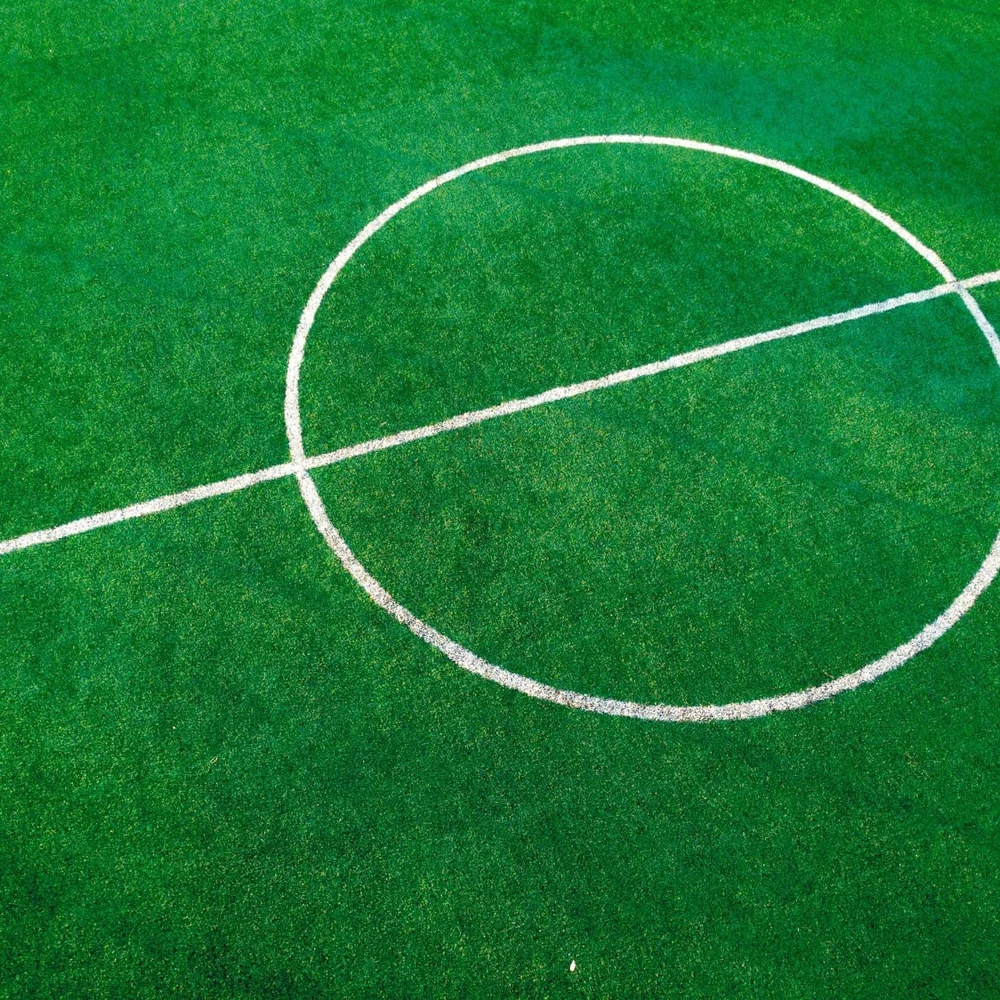
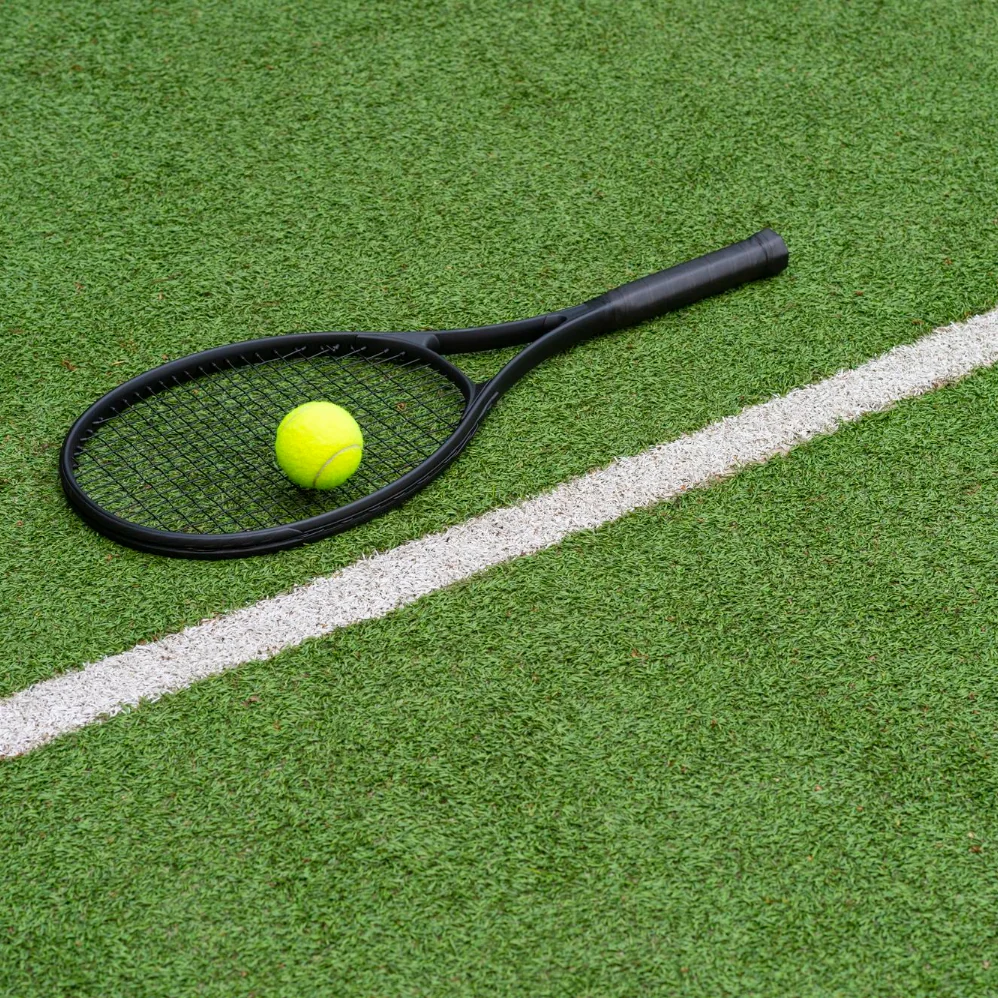
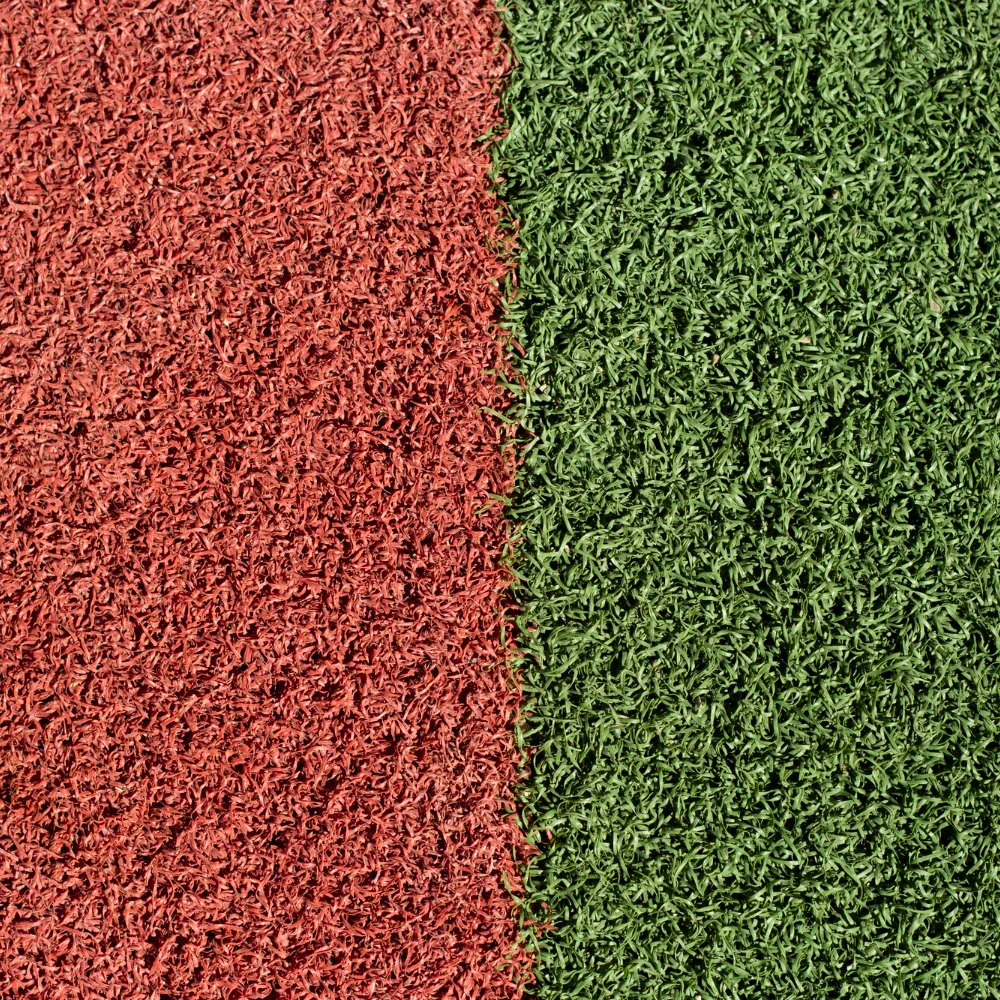
Football turf is filled; short court turf needs far less infill.
Does every artificial grass need infill?
No. Football and other sports turf with longer piles usually do, because the fibres need support under hard play. Short court turf, such as GAIA MultiTurf at 10 or 15 mm, needs much less, which keeps the load on rooftops lower. Home lawns are often laid with no infill or a light sand infill to weigh the grass down. Pile heights for each use are compared in artificial grass pile height.
How do you maintain infill?
Infill moves with play. It gathers in goalmouths, along the centre and at edges, and thins in the busiest areas, which leaves the fibres unsupported and the surface harder and less even. Brush the pitch regularly to redistribute it, top it up where it thins, and keep it from washing into drains in heavy rain. Sports surfaces are tested for properties that infill controls, such as ball roll, bounce and shock absorption, under the FIFA Quality Programme for football turf; ask any supplier which properties their system has been tested for. A shock pad beneath the turf can reduce the amount of performance infill needed, as shock pads under artificial grass explains. Football turf is shown under GAIA Sports Grass.
What to send us
- the sport or use, and how often the surface will be played on;
- the site: open ground, slab or rooftop;
- any preference on infill type;
- the pitch dimensions.
Our team will recommend the turf and infill system for your pitch.
Artificial turf infill questions
Does more infill make turf softer?
Up to a point. The right depth of performance infill adds cushioning, but too much makes the surface loose and slows the ball. Follow the depth specified for the system.
Can artificial turf be laid without infill?
Short court turf and many home lawns can. Longer sports turf usually needs infill to support the fibres.
Which infill stays coolest?
Lighter-coloured and organic infills absorb less heat than dark rubber granules, but any surface in direct sun warms up. Shade helps most.
Does infill get washed away in heavy rain?
Some can migrate in heavy rain, especially at edges and near drains. Good edging, clear drains and regular brushing keep it in place, with top-ups where it thins.
Can infill be changed later?
Yes, though it is a substantial job. Old infill is extracted and new infill brushed in, which is easier on a pitch built with good edges and a sound base.
The layer that shapes the game
Choose turf and infill for your pitch
Tell GAIA by Sanson Floorings about your pitch and how it will be used, and we will recommend the turf and infill system.