The best flooring for most offices in India is carpet tiles across the working floor, with a hard, moppable floor in pantries, washroom lobbies and entrances, and broadloom where a boardroom or reception should feel bespoke. No single material suits every room, so the right answer is a plan that matches each floor to how the space is used.
Office flooring in India has to cope with more than a sample board suggests. Fine dust settles every day, the monsoon brings water and mud to the door, offices run late shifts and weekend cleaning, and many fit-outs sit in leased space that will be reconfigured or handed back within a few years. Air-conditioned glass buildings add their own problem: hard floors under glazed walls and exposed ceilings make open offices loud. The floor has to handle all of that while looking good on the day the client visits. This guide brings together everything GAIA has written on office floors, with links to the detailed articles.
Office flooring decisions at a glance
- Sound: where people sit and talk, a soft floor makes the biggest everyday difference.
- Change: if the layout will move, choose a floor that can be taken up and put down again.
- Water and food: wet zones need a floor that can be mopped.
- Access: raised floors and floor boxes need a finish that lifts in small pieces.
- Life cost: add cleaning, repairs and replacement to the purchase price.
- Evidence: projects with green targets will ask for certificates, so check them early.
What is the best flooring for an office?
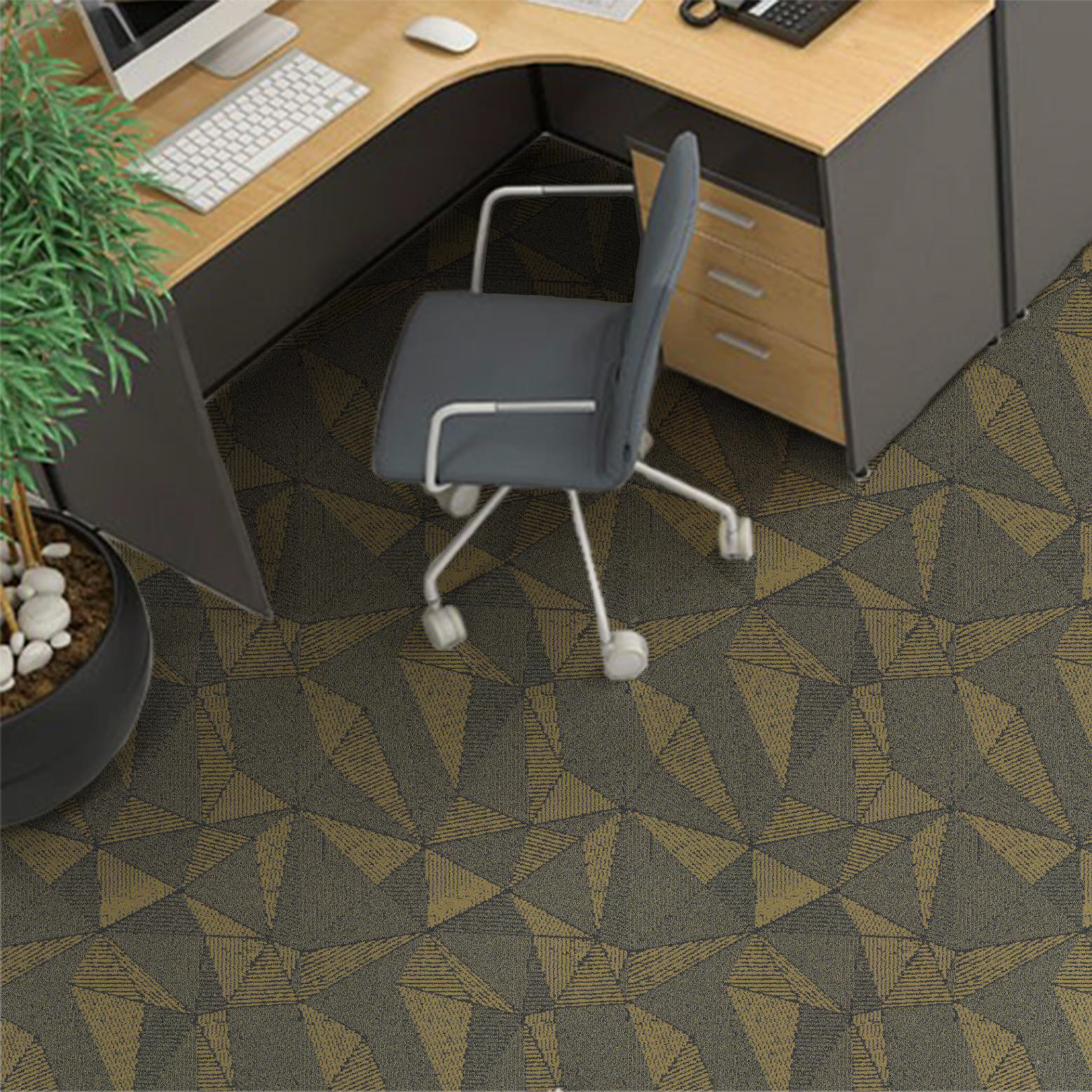
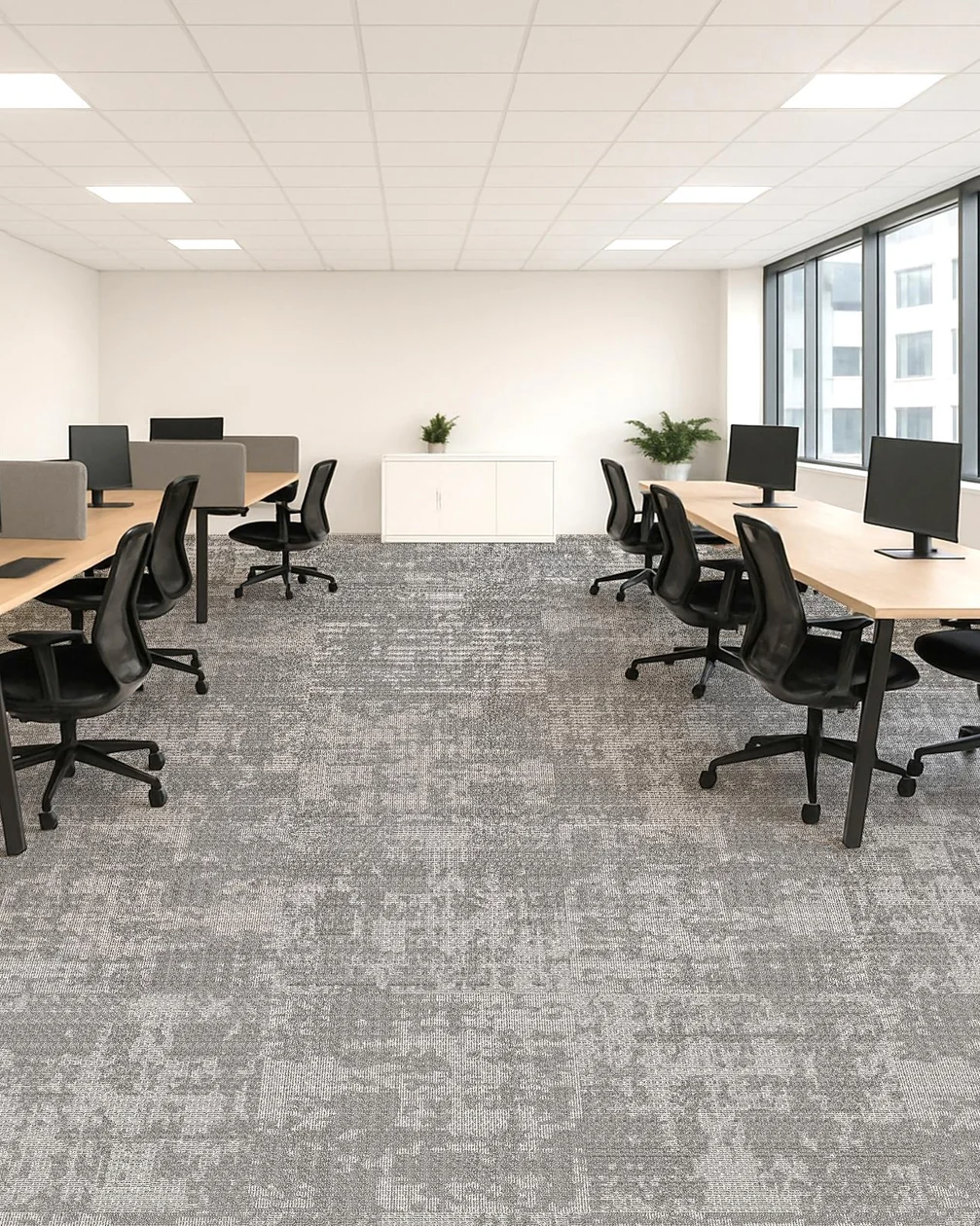
For the working floor, carpet tiles. They quieten footsteps and chairs, feel comfortable for people who are on their feet or at a desk all day, and come up in single pieces for repairs, cabling or a new layout. GAIA carpet tiles are made as 50 × 50 cm squares and 25 × 100 cm planks across a wide range of collections. Rooms where water and food are daily events are better served by vinyl or vitrified tile. For a boardroom, a director's cabin or a reception that should carry a custom design, GAIA broadloom gives one continuous, bespoke surface. Mixing the three, zone by zone, gives better results than forcing one material everywhere.
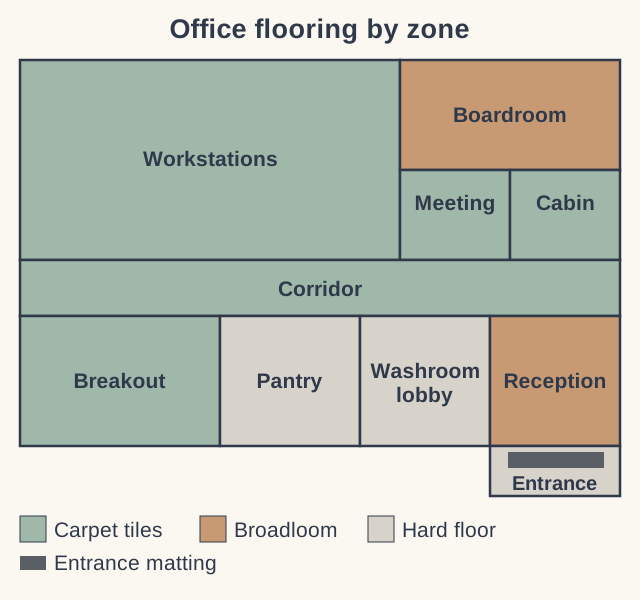
Which flooring materials are used in offices?
- Carpet tiles and carpet planks: modular textile flooring, laid piece by piece; the usual choice for workstations, meeting rooms and corridors.
- Broadloom carpet: carpet from wide rolls, fitted wall to wall; suits boardrooms, receptions and executive floors.
- Vinyl: sheet or LVT; mopped clean, so it suits pantries and service areas.
- Vitrified tile and stone: hard-wearing and easy to wash; common in lobbies, washrooms and lift areas, but loud and cold in work areas.
- Epoxy and polished concrete: continuous and tough; found in industrial-style offices and back-of-house areas, and the loudest of the options.
A raised access floor is not a finish but a system of lifting panels with cables beneath; it still needs one of the finishes above on top.
How do you choose flooring for each zone of an office?
Start from what happens in each zone rather than from the materials. Mark up the floor plan with how each area is used, then apply these principles:
- Where people sit for hours: a soft, quiet floor. Workstations, cabins, meeting rooms and phone booths all fall here.
- Where people pass constantly: a floor that hides soil and can be repaired locally, which is why corridors and the busiest paths across the floor plate suit carpet tiles in a mid-tone.
- Where the brand is on show: the reception and boardroom, where a custom broadloom design or a distinctive carpet tile layout carries the identity.
- Where water arrives: entrances, pantries, cafés and the approach to washrooms, which need a hard floor, with matting inside the door.
- Where equipment rules: server and comms rooms follow the IT team's specification for the floor and its static performance.
For a detailed comparison of soft and hard floors in each of these zones, see our guide to carpet tiles versus vinyl.
Does flooring affect office noise?
More than most fit-out decisions. A hard floor adds footfall, chair castors and dropped objects to the noise of conversation, and reflects speech across an open office. Carpet removes much of that at the source across the entire floor plate in one move. It does not replace treatment on the ceiling and walls in a loud open office; our ranked list of fixes for a noisy open-plan office puts the floor in context.
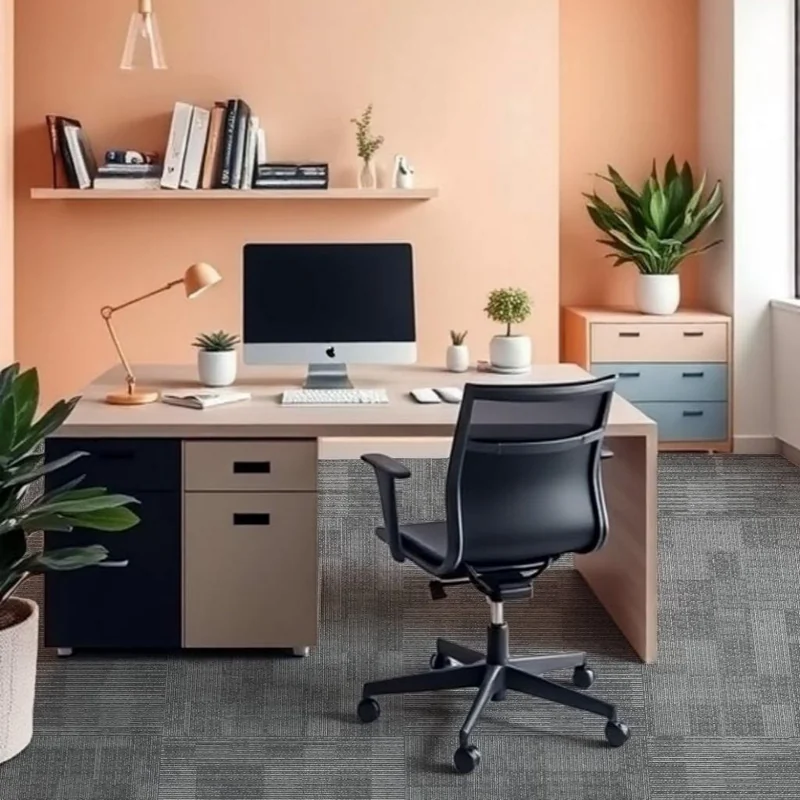
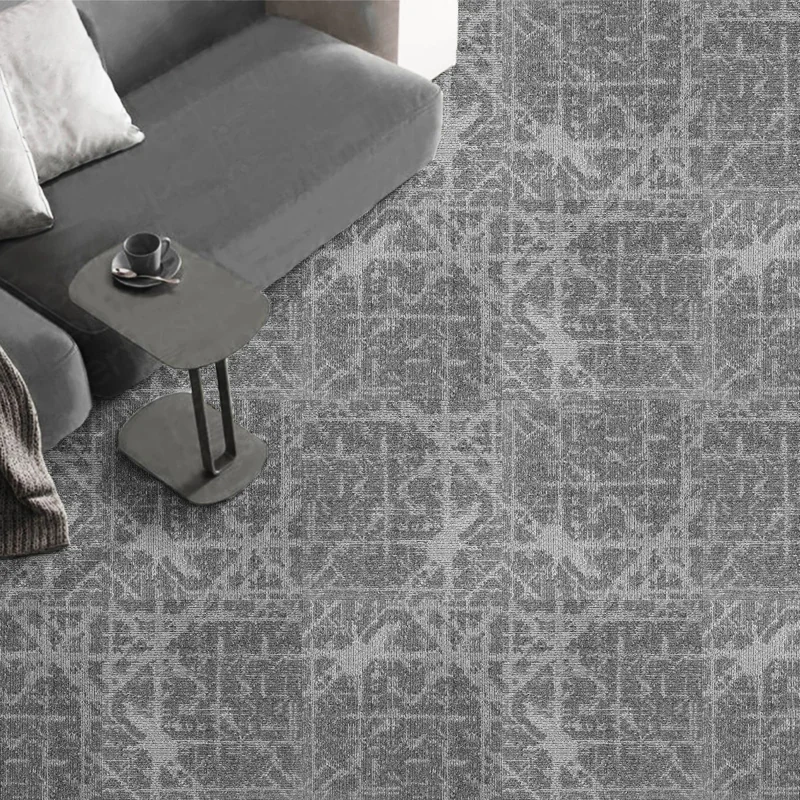
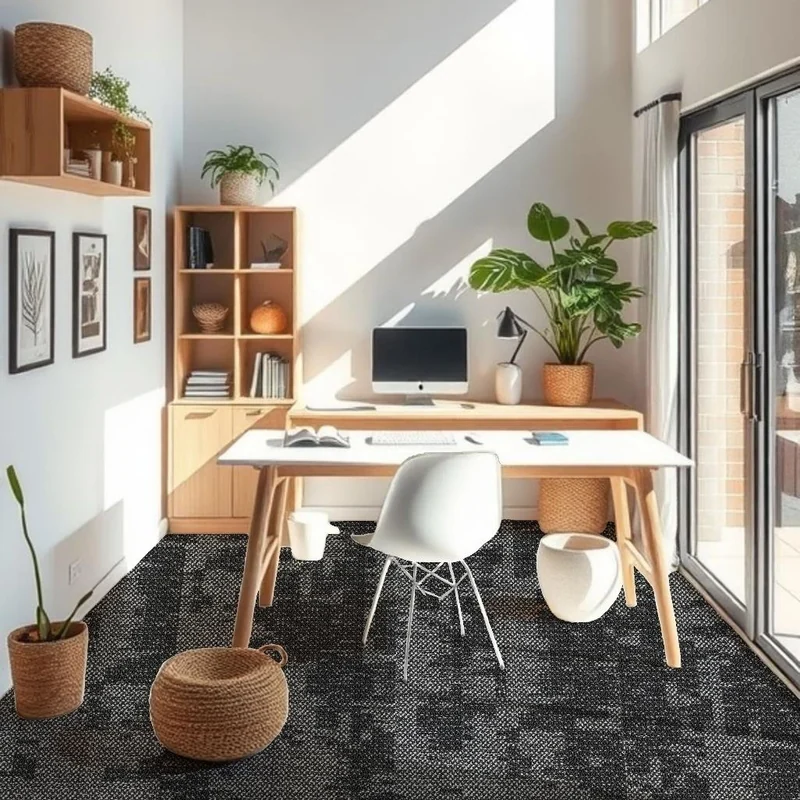
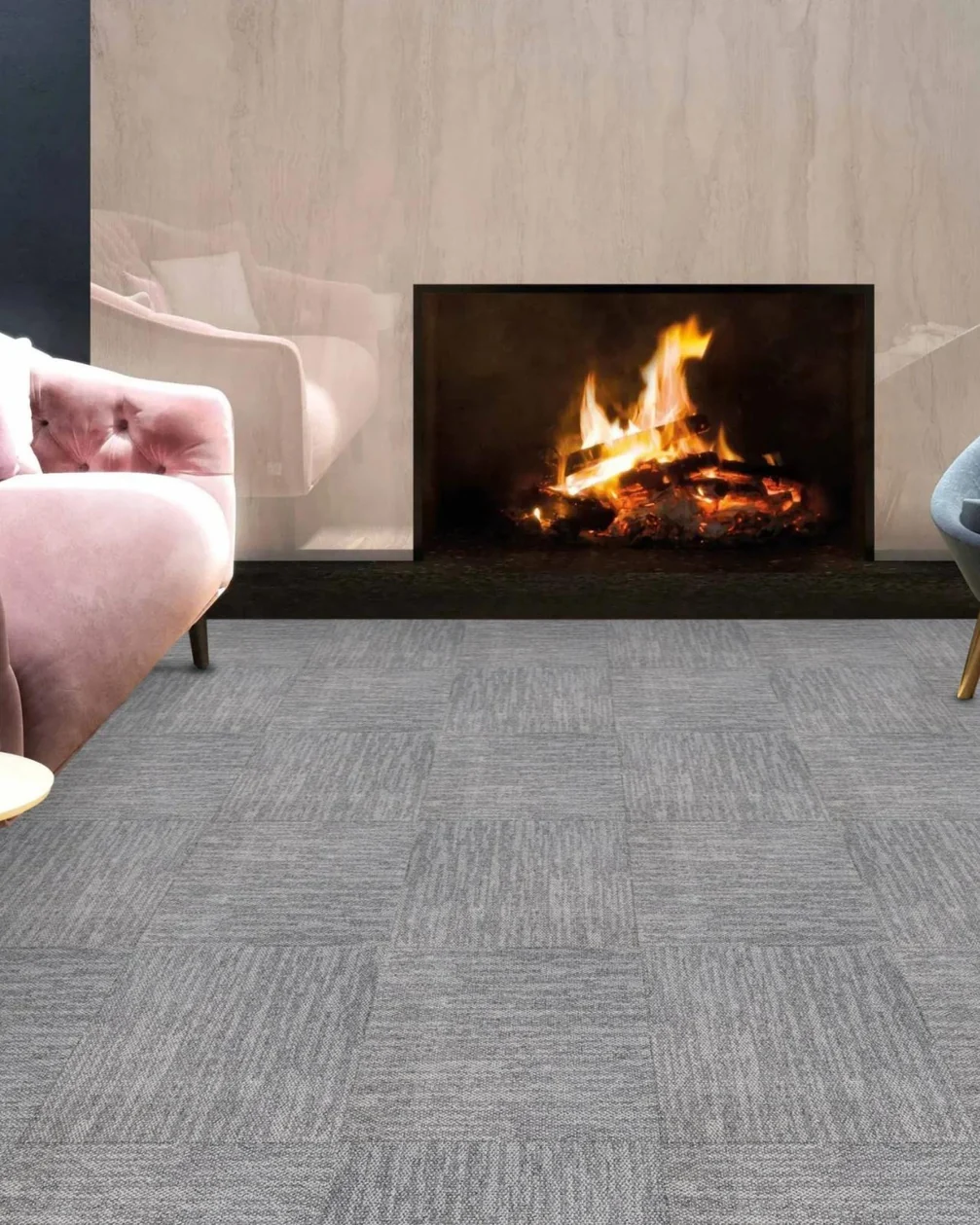
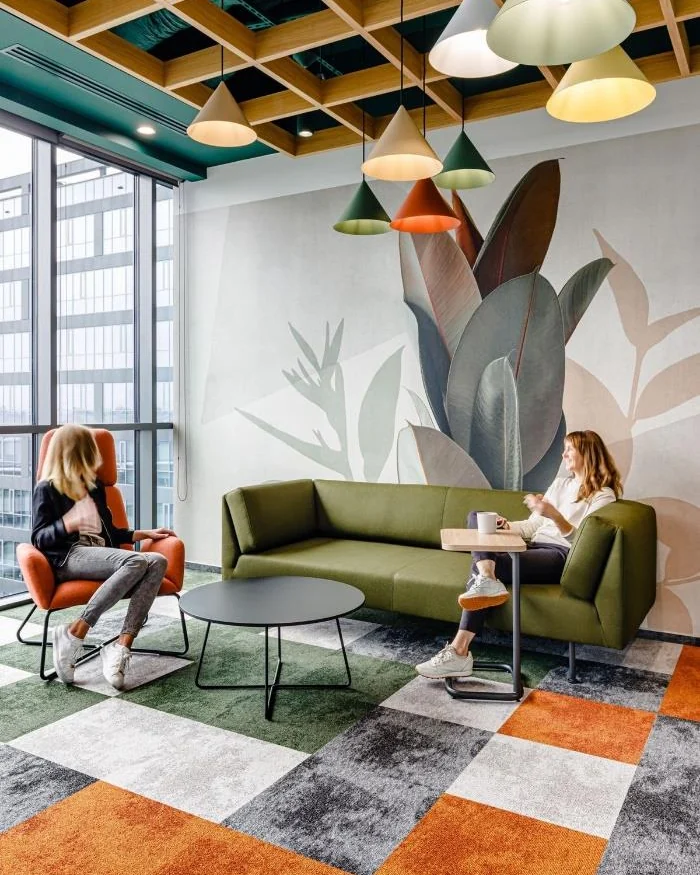
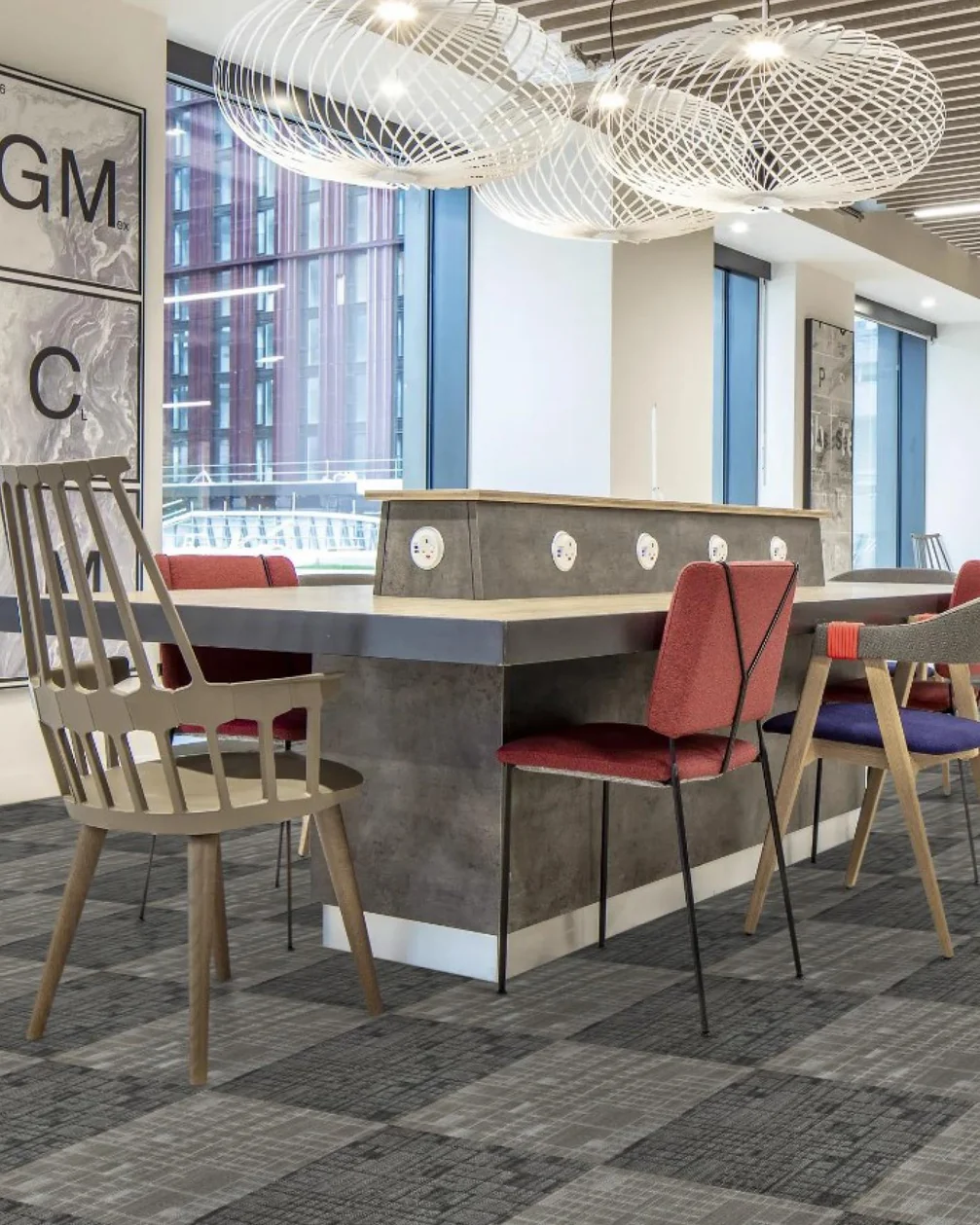
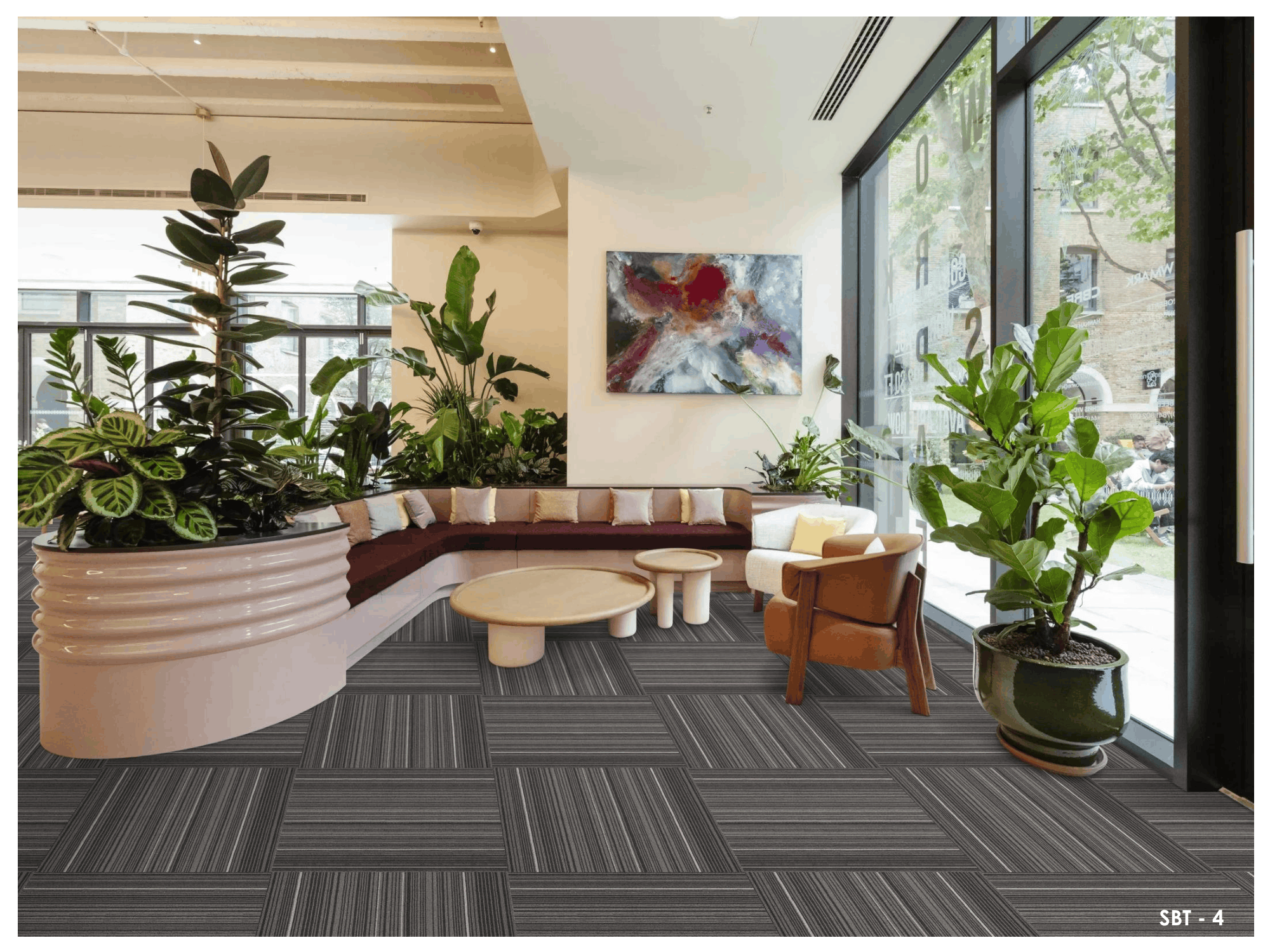
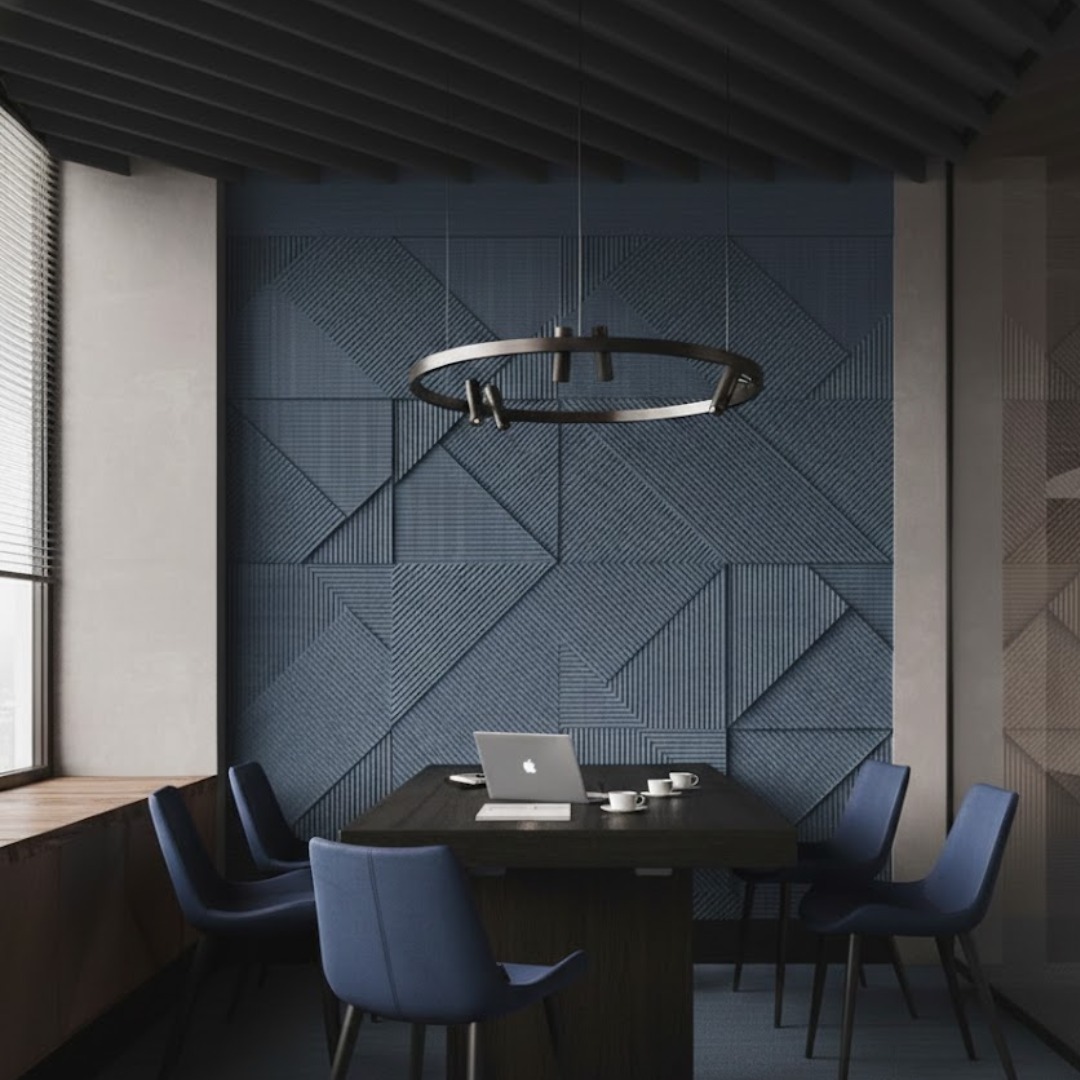
GAIA carpet in a cabin, a lounge and a quiet study: the soft, quiet floor belongs wherever people sit for hours.
Which floor suits meeting rooms and phone booths?
Carpet, because these are the rooms where people talk most. Glass-fronted meeting rooms with a hard floor and a plasterboard ceiling ring badly, and video calls pick up every reflection. A carpet floor removes one of the largest hard surfaces in the room before any wall panel goes up. Phone booths and focus rooms are small enough that a soft floor, with absorption on their solid walls, makes a noticeable difference to how calls sound. Where a meeting room doubles as a lunch room, choose a darker, patterned colourway rather than switching to a hard floor.
How should flooring be planned in a leased office?
With the end of the lease in mind. Many Indian offices are fitted out in leased space and must be reinstated or reconfigured when the lease ends or the company grows. A modular floor suits that cycle: tiles can be taken up in sections for a new layout, and worn areas can be renewed without replacing the whole floor. Agree with the landlord early what has to be left behind, and keep spare tiles stored on site for repairs during the lease.
What flooring works in a co-working space?
A hard-wearing carpet tile in the work areas, with clear zoning by colour, and hard floors in the café and any lounge where members eat. Co-working spaces change layouts more often than any other office, host members who treat the space like a café, and need the floor to look fresh for every tour. Mid-tone, patterned tiles disguise heavy use, colour blocks help members find quiet zones and meeting rooms without signs, and the ability to replace single tiles keeps the space presentable between refurbishments.
Carpet tiles or broadloom for an office?
Carpet tiles for the general floor, broadloom for the showpiece rooms. Tiles win wherever layouts change, cables run underneath or areas wear unevenly, because single pieces can be lifted, moved and replaced. Broadloom wins where the room stays the same for years and a continuous custom design matters, as in a boardroom or a formal reception. A four-question chooser for each room is in tiles or broadloom.
Squares or planks?
Both are carpet tiles, and the choice is about how the floor should read. Square tiles give an even field that is easy to zone in blocks of colour; planks lead the eye along a room and open up herringbone. A GAIA tile and a GAIA plank are each a quarter of a square metre, so quantities work the same way. The differences, collection by collection, are in our guide to carpet tiles and carpet planks.
Which flooring works on a raised access floor?
Carpet tiles, almost always. Many IT offices and data-heavy workplaces in India sit on raised access floors, with power and data running beneath removable panels. A modular carpet lets the facilities team lift a few tiles and then the panel below, without cutting or re-stretching a carpet. Plan with the installer how the tile layout relates to the panel grid, so that the panels people open most often are easy to reach.
What does office flooring cost over its life?
More than its purchase price suggests, and the gap between materials narrows or reverses over time. Add up installation, daily cleaning, periodic deep cleaning, repairs and the cost of replacing or reinstating the floor when a lease ends or a layout changes. A carpet tile floor in a busy office can be refreshed by replacing worn tiles in the main walkways rather than the whole floor, and tiles can often be taken up and reused when teams move. For an accurate order, see counting carpet tiles, boxes and spares.
How do you keep an office floor looking new?
Choose a colour that forgives, then follow a written cleaning routine. Mid-tones with some texture keep a busy floor presentable between cleans, and a colour plan with a base, a zone colour and an accent keeps the office coherent; the method is set out in office carpet colours. Vacuuming schedules, stain removal and deep cleaning are covered in how to clean carpet tiles. Entrance matting is the single cheapest way to cut cleaning, because it stops most of the soil at the door.
Should office flooring be certified sustainable?
If the project has a green building target or an ESG commitment, yes, and the evidence should be collected at specification stage rather than at handover. GAIA carpet tiles are GreenPro certified. Our article on GreenPro certification explains what the label covers and how to check a certificate against the product you are buying.
Office flooring checklist
- Mark every zone on the floor plan by how it is used.
- Note raised access floors, floor boxes and where cables run.
- Identify the wet zones and the entrances that need matting.
- Decide where a bespoke broadloom design is worth it.
- Choose a base carpet colour for soil and light, then zone and accent colours.
- Agree the cleaning routine with the facilities team before ordering.
- Order every area, plus spares, from one production batch.
- Collect certificates and test reports the project requires.
What to send us
- a drawing that shows what happens in each area;
- whether the office has raised access floors;
- brand colours and the look you want;
- any certificates your project requires;
- your timeline, and whether people will be working on the floor while it is laid.
Our team will map carpet tiles, broadloom and transitions onto your plan, with quantities for each area.
Office flooring questions
What is the most durable flooring for an office?
Durability depends on how a floor is used and maintained. In work areas, carpet tiles last well because worn pieces in busy routes can be replaced individually; in wet areas, vinyl and vitrified tile cope best.
Is carpet hygienic for an office?
Yes, when it is vacuumed regularly, spills are dealt with the same day and the floor is deep-cleaned on schedule. A written routine for each zone keeps it that way.
What flooring is best for an office reception?
A hard floor and matting at the door, then carpet in the waiting area. Broadloom suits a reception built around a bespoke design; carpet tiles suit one that may change.
One plan for the whole floor
Plan your office flooring with GAIA
Share your office plan with GAIA by Sanson Floorings, and we will recommend the right floor for every zone, from workstations to the boardroom.