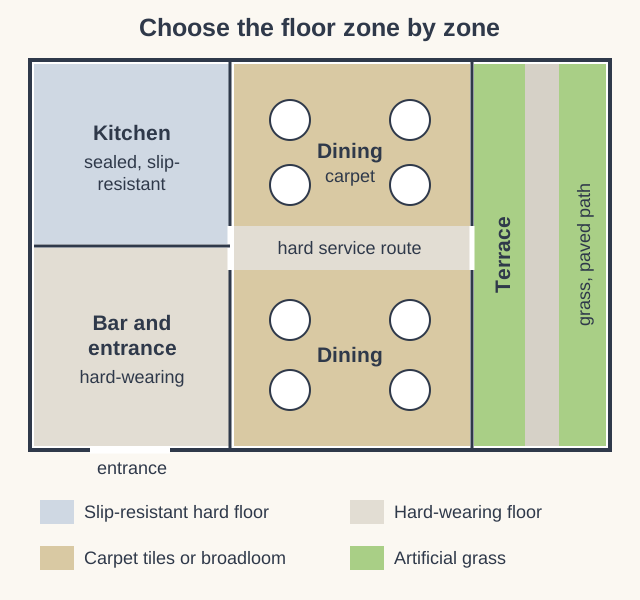
The best restaurant flooring changes zone by zone. Kitchens need sealed, slip-resistant hard floors; entrances and bars need surfaces that clean in minutes; dining rooms gain comfort and quieter conversation from carpet tiles or broadloom; terraces can use artificial grass. GAIA by Sanson Floorings supplies the soft-floor zones.
Choosing one floor for an entire restaurant is the most common and most expensive mistake in a fit-out. The kitchen, the bar, the dining room and the terrace face completely different conditions: grease and water in one, heels and spilled drinks in another, long dinners and conversation in the third, sun and rain in the last. Plan the floor by zone and each part of the restaurant can be both practical and pleasant, with transitions that guests barely notice.
Restaurant flooring at a glance
- Kitchen: sealed, slip-resistant, coved at the walls and easy to wash down.
- Entrance and bar: hard-wearing and quick to clean between services.
- Dining room: carpet tiles or broadloom where comfort and quiet matter.
- Terrace: artificial grass for green areas, hard paving for service routes.
- Transitions: flush, trimmed and planned around trolleys and staff routes.
What flooring is best for a restaurant kitchen?
A hard, impervious floor with good slip resistance when wet, such as slip-rated tiles or a resin system, with coved edges so water and grease cannot collect at the walls. Carpet has no place here. Britain's workplace safety regulator, the Health and Safety Executive, notes that slips and trips are the single most common cause of major injury in workplaces and that chefs, kitchen assistants and waiting staff are among the people most affected; its guidance on slips in catering puts most of the blame on wet or contaminated floors. A kitchen floor should be chosen for how it performs wet, and cleaned on a routine that keeps it dry during service.
Should a restaurant dining room have carpet?
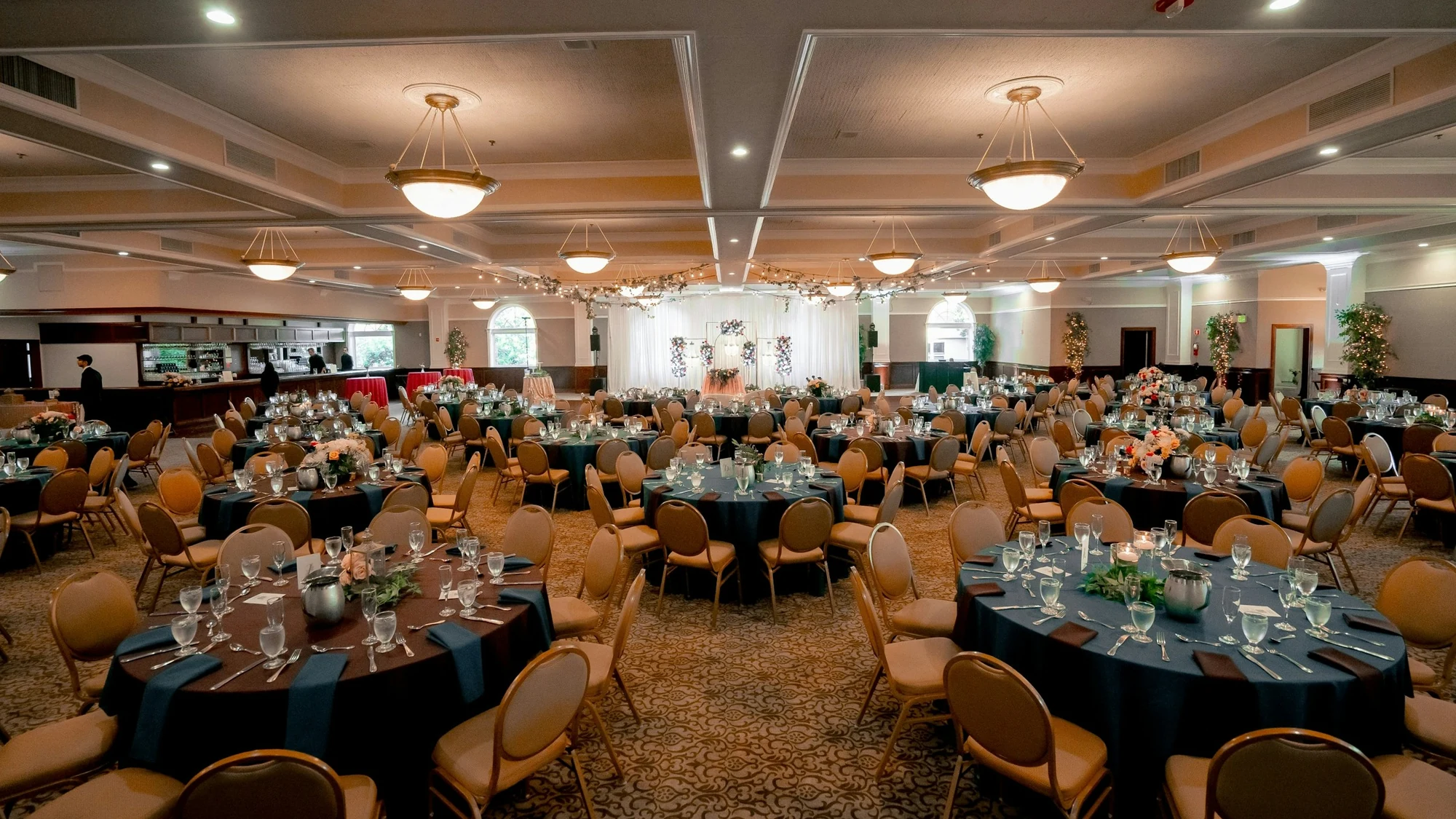
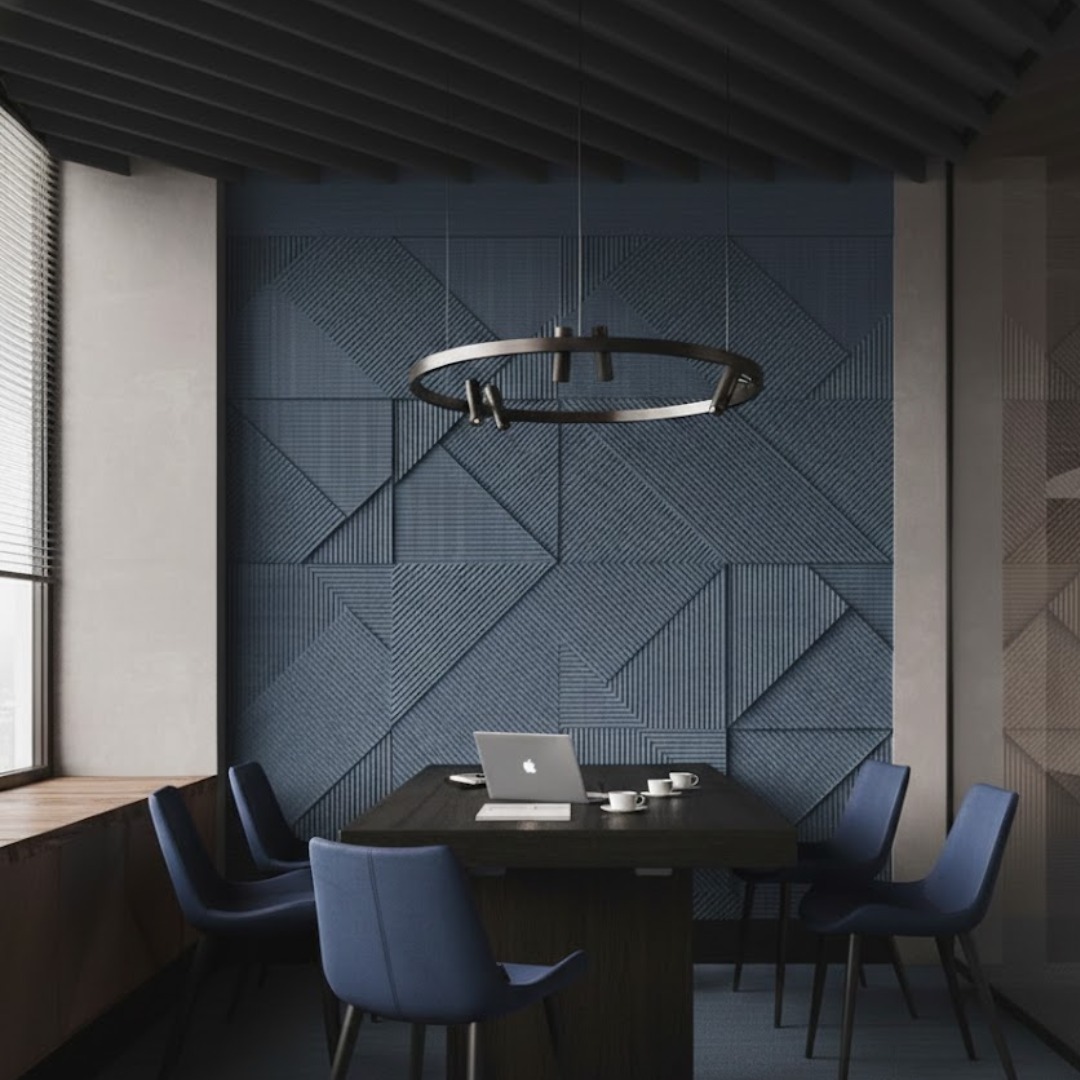
In many restaurants, yes. Carpet makes a dining room warmer to sit in, takes the clatter out of chairs and footsteps, and helps keep the room at a level where guests can talk across the table. It suits fine dining, hotel restaurants, private dining rooms and any space where people stay for a long meal. In fast, high-turnover venues, many operators lay carpet in the seating zones and keep the routes waiters use on a hard surface, so the parts that see spills from trays are the parts easiest to mop. Noise is a big part of the decision. As a room fills, guests raise their voices to be heard over each other, the Lombard effect, and researchers presenting to the Acoustical Society of America found that noisier dining rooms change how diners judge a restaurant. Soft floors take some of that build-up out of the room, and restaurant acoustics covers how carpet works with wall and ceiling treatment.
Carpet tiles or broadloom for a restaurant?
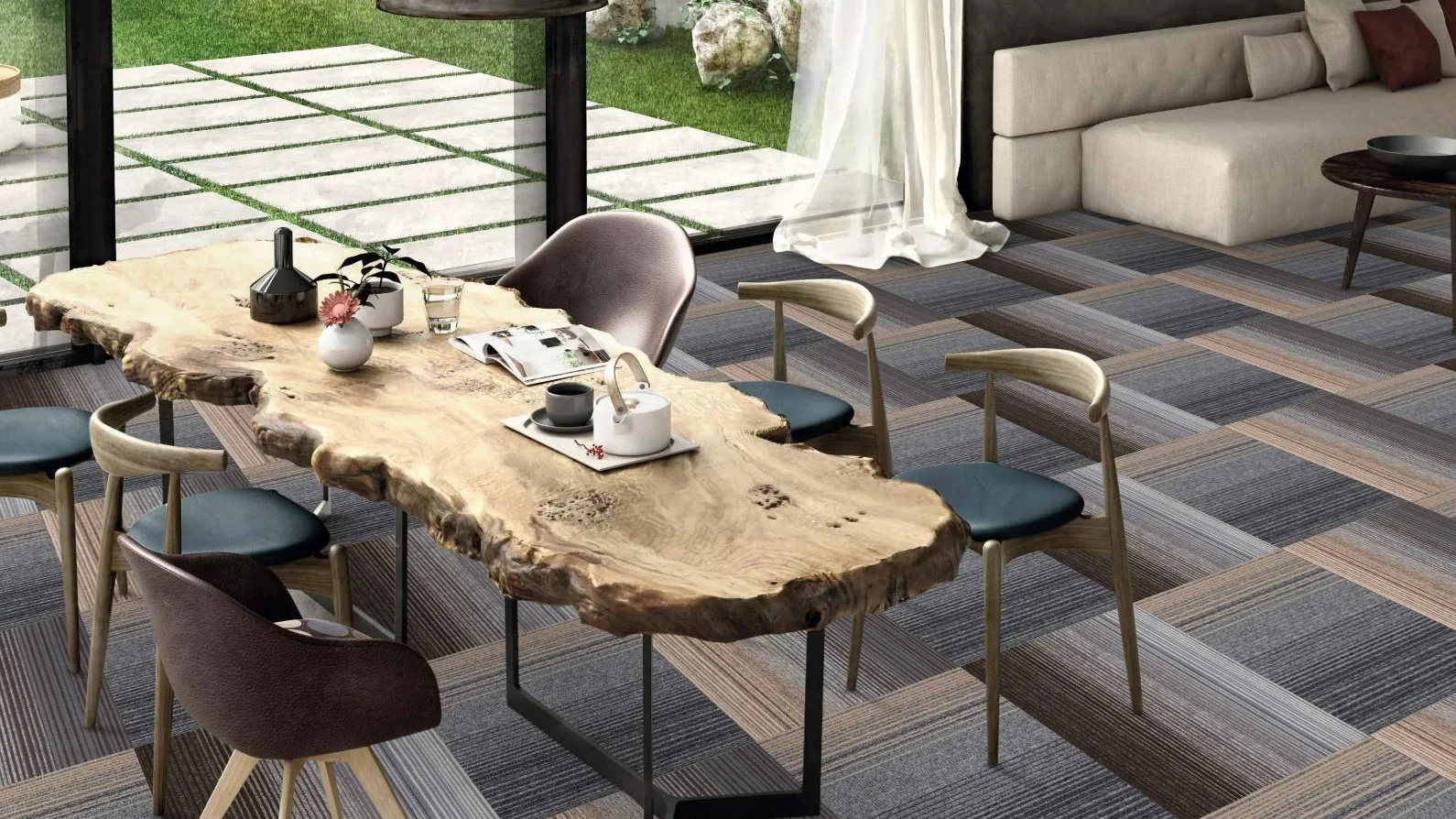
For most dining rooms, carpet tiles make the most practical sense. When a stain will not come out or a section wears near the kitchen door, you swap that one tile for a spare and leave everything around it untouched. GAIA carpet tiles are made in two formats, square tiles of 50 × 50 cm and planks measuring 25 × 100 cm, which can be laid in patterns that zone a room without changing the product. A box of 20 tiles covers 5 m², which makes keeping spares simple. Colours and collections are shown under GAIA carpet tiles.
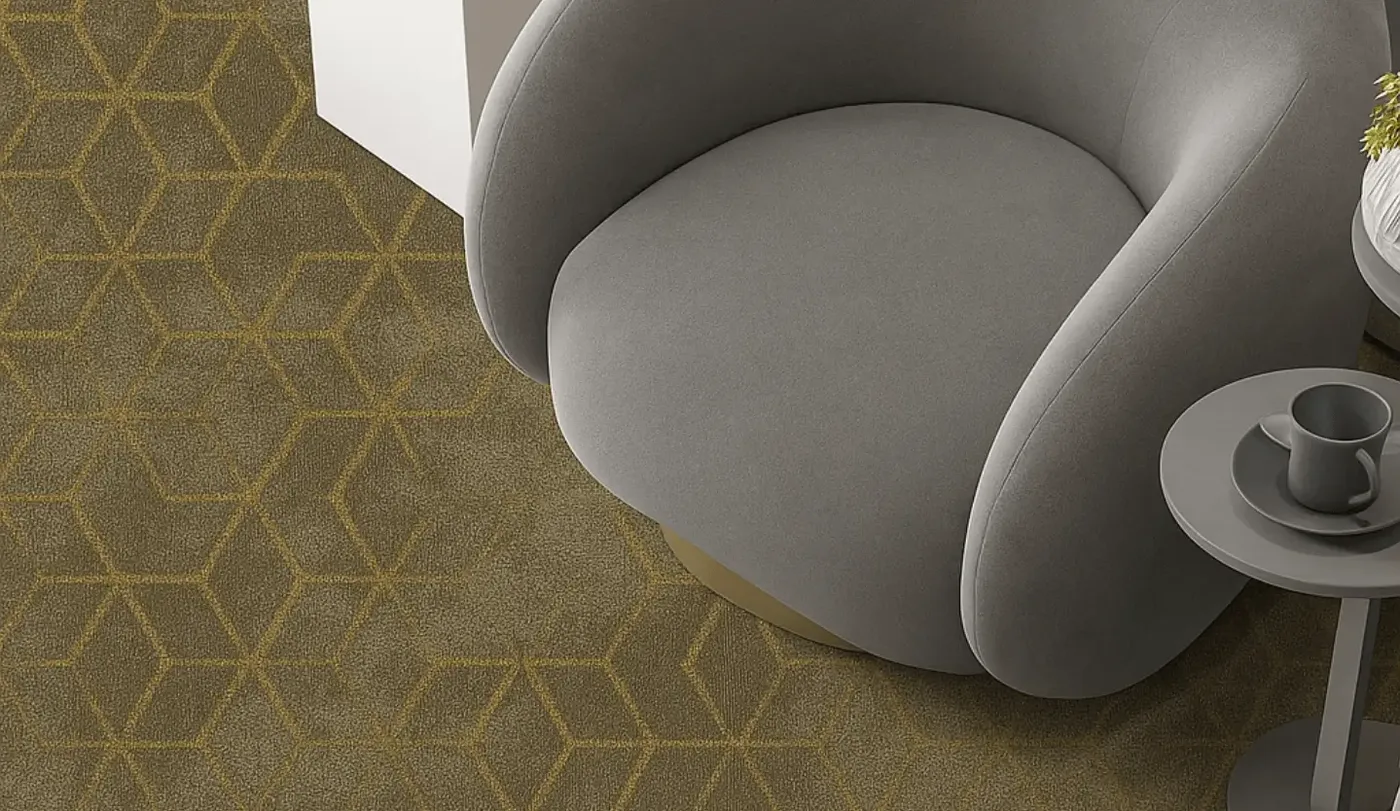
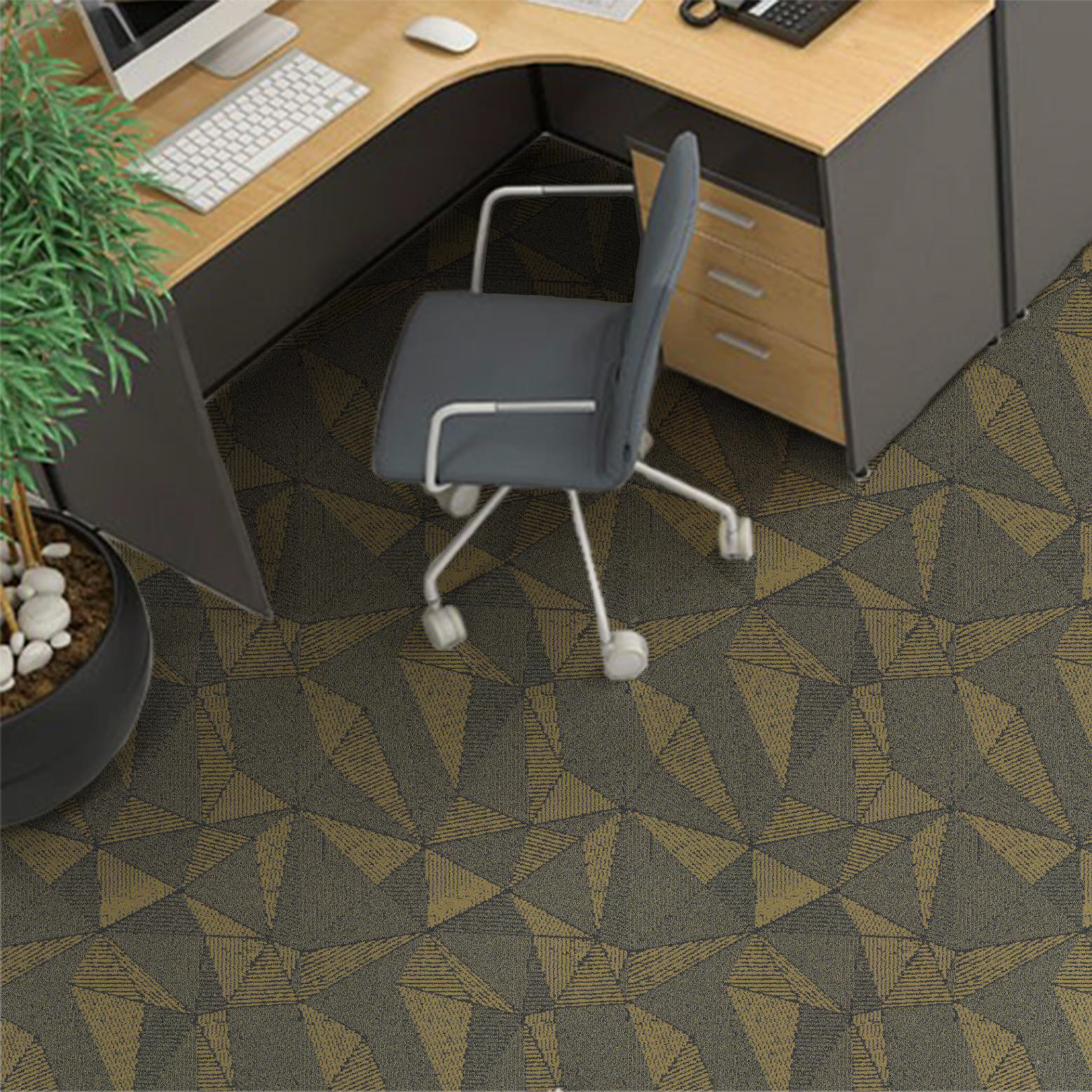
The yarn matters in a dining room. Polypropylene, sold as olefin, absorbs no water and resists the tea, juice and gravy spills that a busy service brings, while nylon recovers better on the routes waiters walk all evening. GAIA makes tiles and planks in both yarns at its plant in Kothur, near Hyderabad, and both hold GreenPro certification; patterned olefin tiles such as GAIA Shining Glow suit dining rooms. How to choose between them is set out in nylon vs polypropylene carpet tiles, and what to look for on a specification in how to read a carpet tile specification.
Broadloom suits restaurants where the carpet is part of the identity: a hotel dining room, a heritage interior or a fine-dining room with a custom pattern. Each GAIA broadloom order is made for the project, in the colours and design it needs. Whichever you choose, darker tones with a pattern or tonal variation hide everyday marks far better than a flat pale colour. A daily and periodic routine for busy floors is laid out in carpet tile cleaning, and it keeps a busy dining room looking fresh.
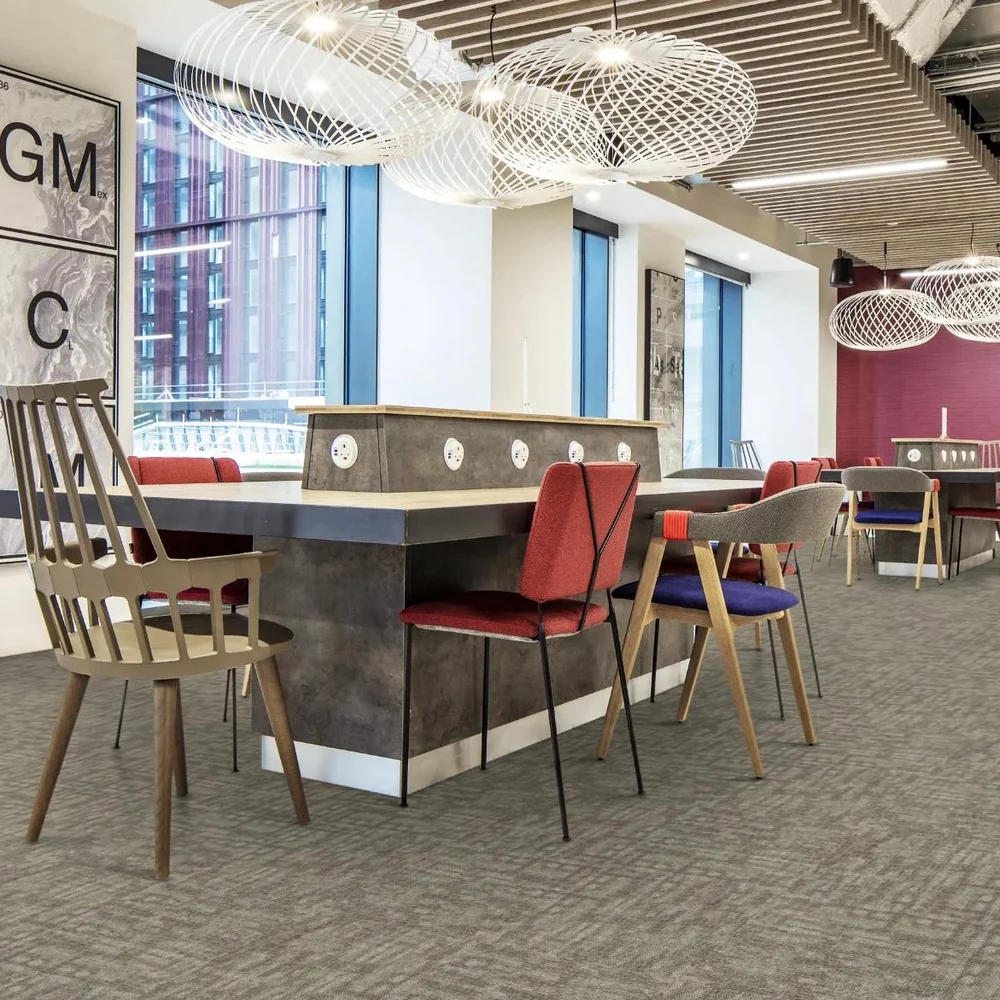
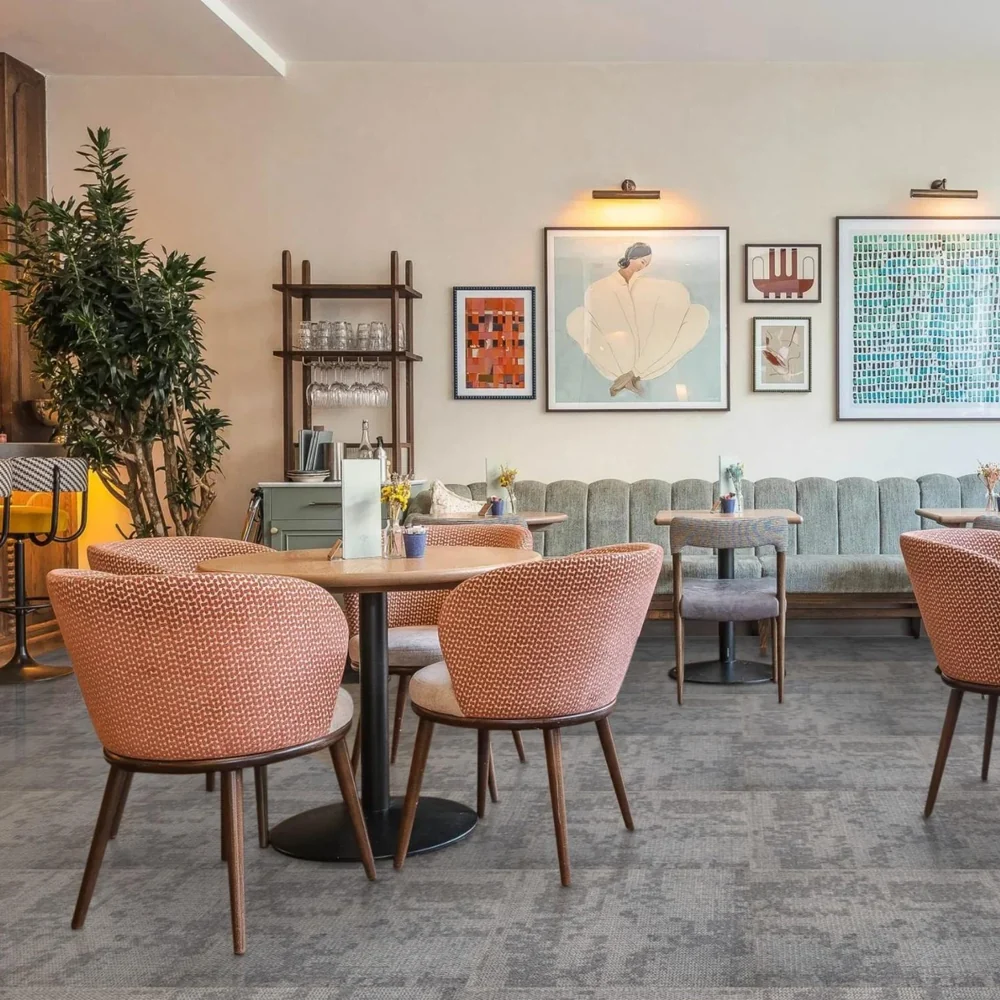
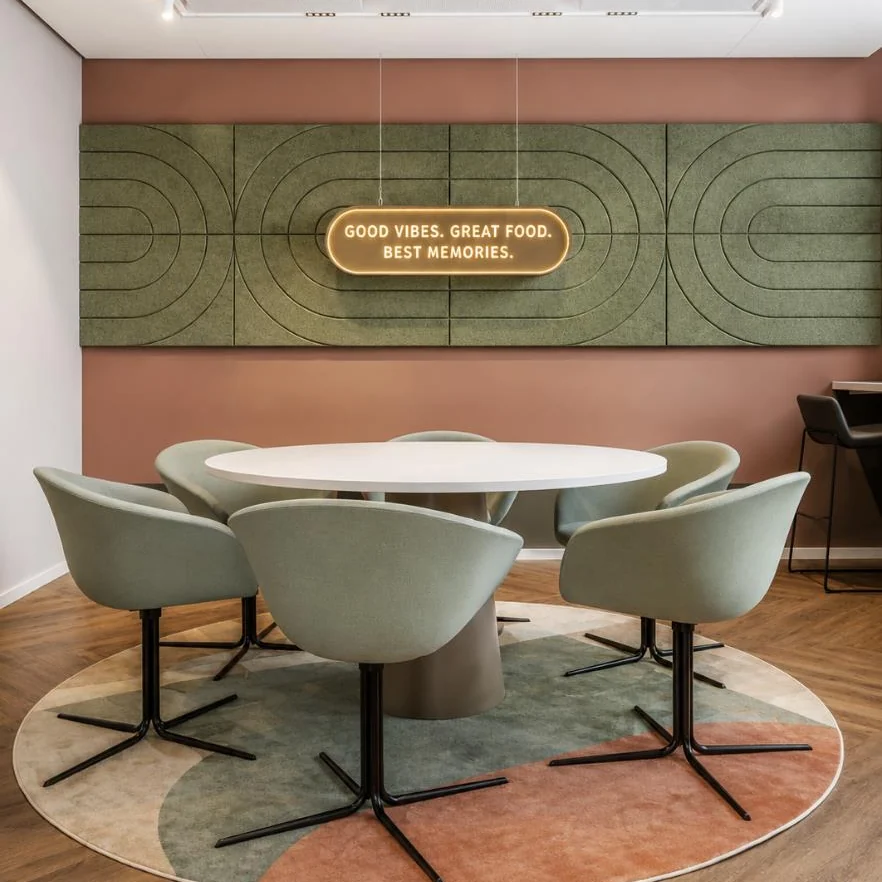
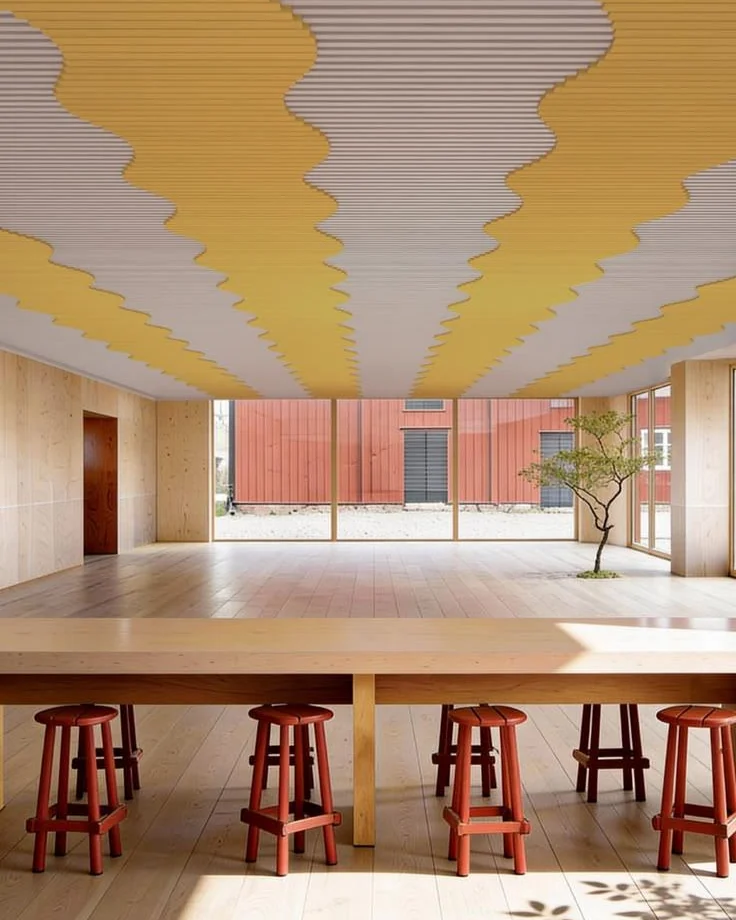
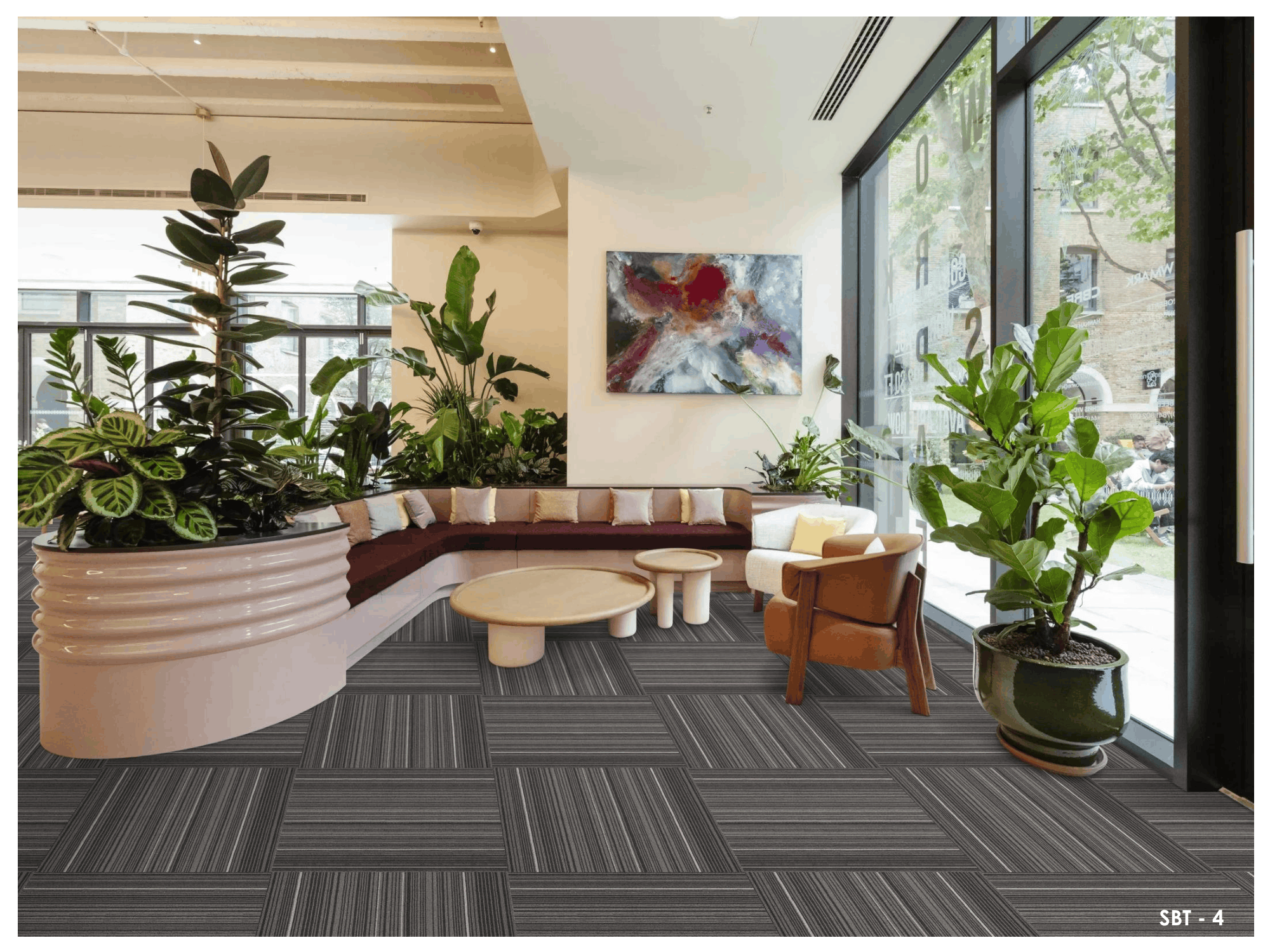
GAIA Brixx and Shining Glow carpet tiles in dining settings, and a carved PET acoustic wall: soft surfaces keep conversation comfortable.
What flooring works for a rooftop or terrace restaurant?
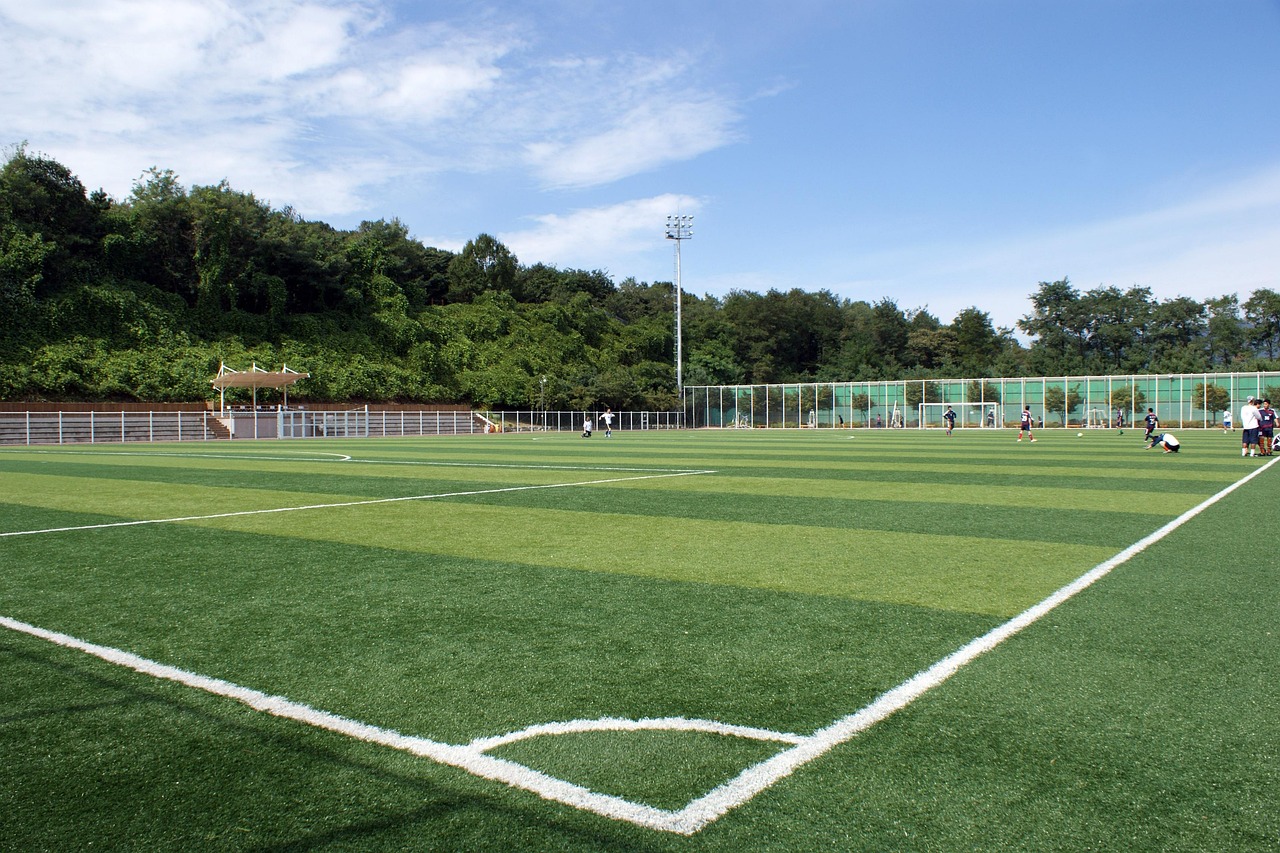
A mix of hard paths for service and a softer, green surface where guests sit or gather. On terraces where a real lawn cannot take the foot traffic, the shade or the dry season, artificial grass gives a green floor all year. GAIA Landscape Grass uses a two-tone green yarn that resists UV, in pile heights between 20 and 60 mm; shorter piles stand up better to chairs and footfall, and the range is at GAIA Landscape Grass. In open sun, any synthetic surface warms up, so plan shade over seating, as explained in whether artificial grass gets hot. Keep trolley and service routes on paving.
How should floors meet between zones?
Flush, with a proper trim, and in places that make sense on plan. Staff carry hot plates and trays at speed, so any lip or ramp on the route from kitchen to table is a hazard. Set the change from hard floor to carpet along a line that follows the furniture layout, not the middle of a walkway, and make sure carpet and hard floor finish at the same level. Decide this early, because it affects screed levels and door thresholds.
Restaurant flooring checklist
- Mark the kitchen, bar, dining, service routes and terrace on the plan.
- Choose slip resistance for wet zones first, then appearance.
- Put carpet where guests sit longest and keep tray routes on hard floor.
- Pick patterned or mid-to-dark carpet colours that hide marks.
- Order spare carpet tiles and agree a nightly cleaning routine.
What to send us
- the restaurant plan with seating and service routes marked;
- the style of food and service, and typical covers per day;
- colour schemes or mood boards;
- photographs of any terrace or outdoor area.
Our team will suggest carpet, broadloom or grass for each zone and the layout patterns that suit your plan.
Restaurant flooring questions
Is carpet hygienic for a restaurant?
In dining areas, yes, when it is vacuumed daily, spills are treated at once and it is deep-cleaned on a schedule. Keep carpet out of kitchens, wash areas and food preparation zones.
What restaurant flooring is easiest to maintain?
Hard floors are quickest to mop in wet and busy zones, while carpet tiles are easiest to repair in dining rooms, because single damaged tiles can be replaced.
Which carpet colours hide stains best in a restaurant?
Mid to dark tones with a pattern or tonal variation. Flat pale colours show every mark, while a patterned grey, brown or blue hides daily spills between cleans.
Can a restaurant mix carpet and hard flooring?
Yes, and most do. Carpet goes in the seating zones and hard floors on the kitchen side and the routes trays travel, joined with flush transition strips.
Right floor, every zone
Plan your restaurant flooring
Send GAIA by Sanson Floorings your floor plan and design brief, and we will recommend carpet, broadloom and grass options for each area.