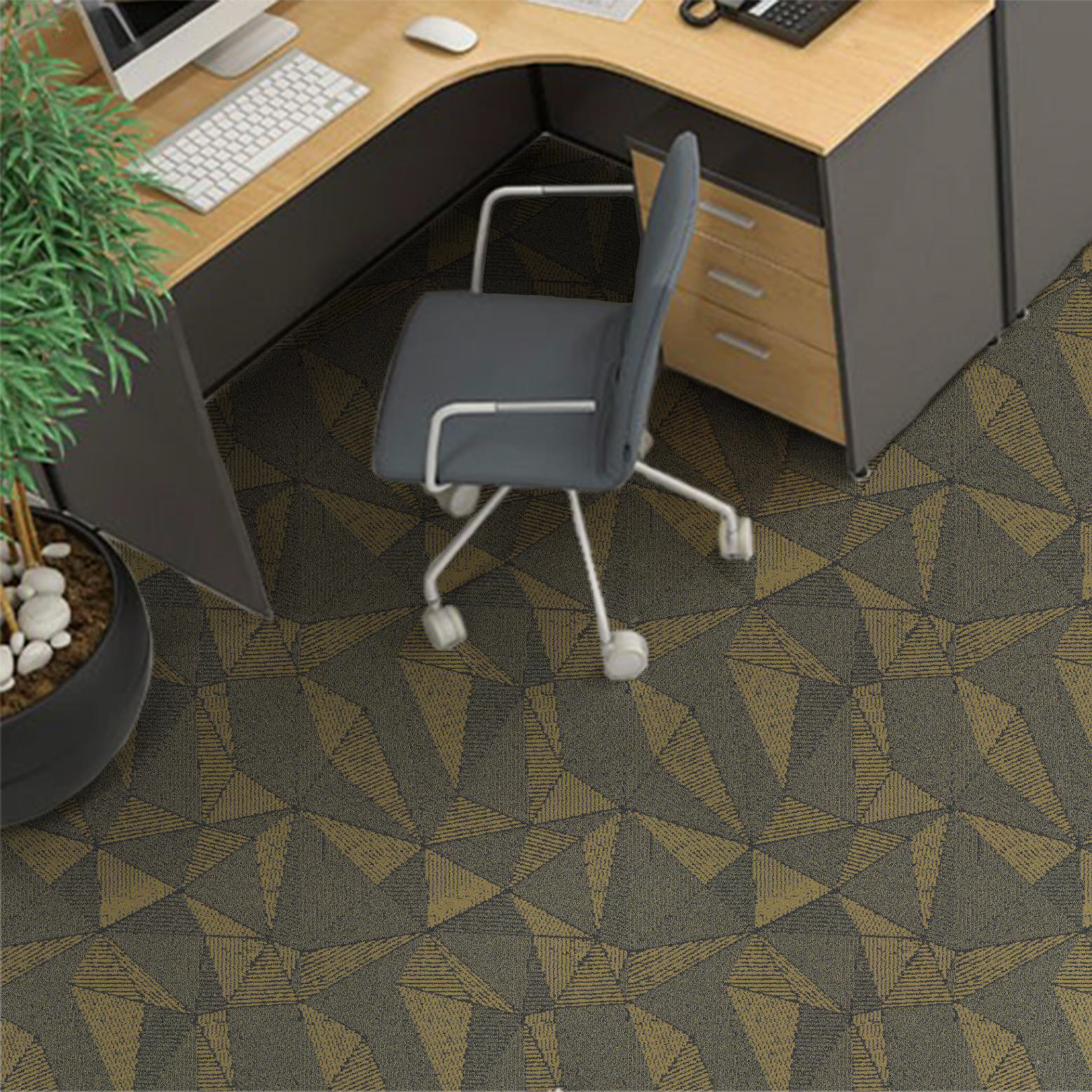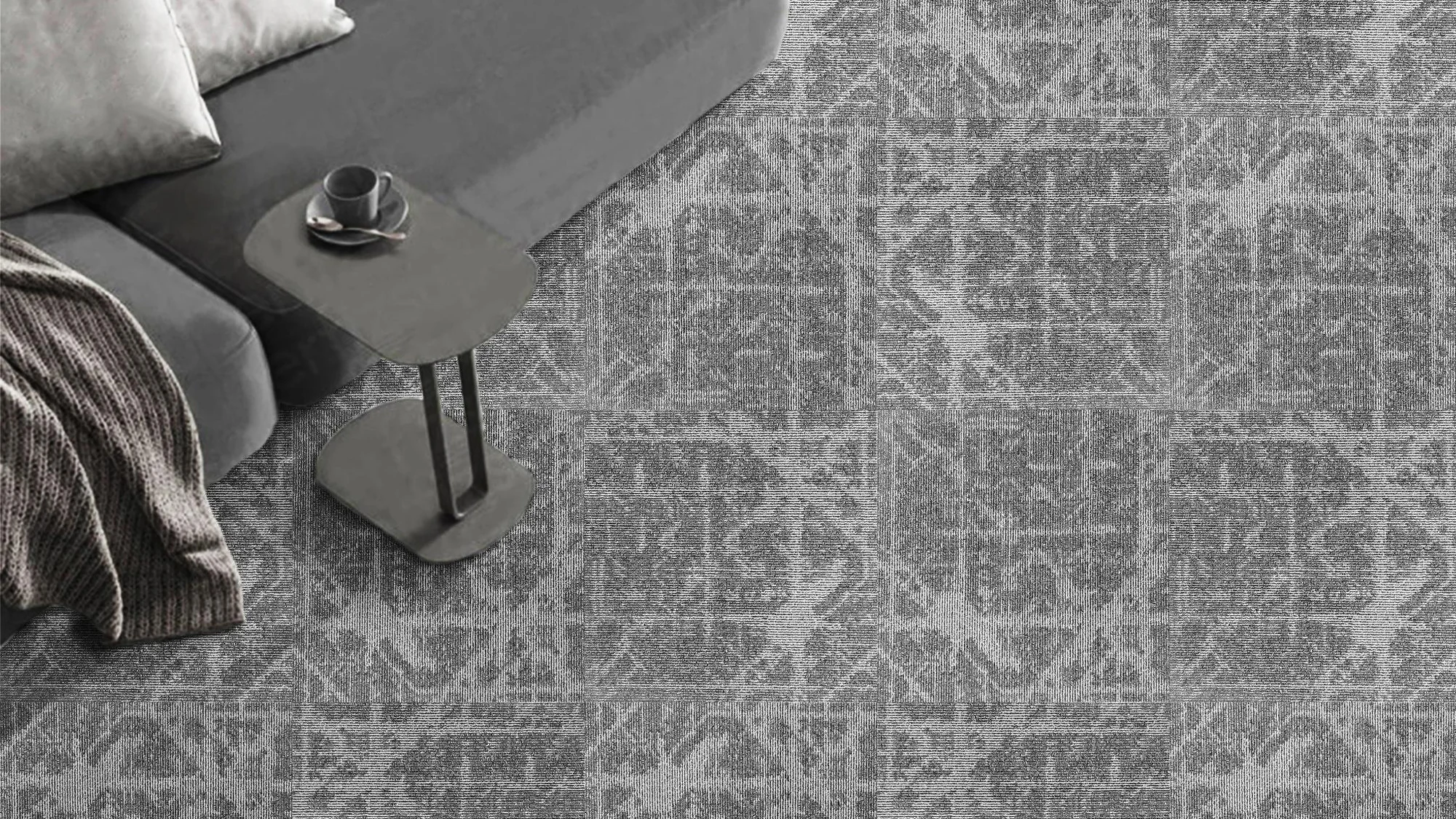
To replace a damaged carpet tile, lift it with a putty knife, clean off loose adhesive, refresh the tackifier if needed, and press in a spare from the same batch, arrow facing the right way. It takes minutes, one reason buyers choose carpet tiles from GAIA by Sanson Floorings.
A coffee spill that will not lift, a cigarette burn, a tile ruined by a leaking planter: on a wall-to-wall carpet, any of these means a visible patch or a whole new room of carpet. On a carpet tile floor, it means swapping one tile. Done well, the repair is close to invisible. Done badly, with the wrong spare or the arrow turned the wrong way, it sticks out for years. This article walks through the job step by step and explains how to make sure you always have a matching tile to hand.
Replacing a carpet tile at a glance
- Tools: a stiff putty knife or tile lifter, a vacuum, and the right tackifier.
- Spare: a tile from the same production batch, stored flat and dry.
- Direction: match the pile arrow to the pattern around it.
- Adhesive: remove loose residue; refresh tackifier only where it has lost grip.
- Time: a few minutes per tile, with the room in use around it.
How do you replace a single carpet tile?
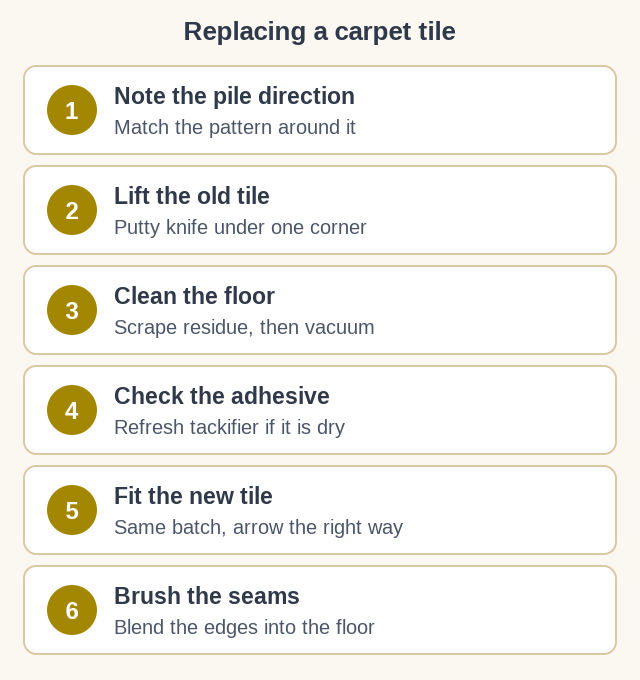
- Note the direction. Look at the tiles around the damaged one and work out which way its pile runs, so the new tile matches the laying pattern.
- Lift the old tile. Slide a stiff putty knife or a carpet tile lifter under one corner and lever it up, then peel the tile away. Tiles laid on a releasable tackifier come up cleanly.
- Clean the floor. Scrape off lumps of old adhesive and fibres, and vacuum the space so the new tile sits flat.
- Check the adhesive. If the tackifier still feels tacky, leave it. If it has dried out or was scraped away, apply a thin coat of the tackifier recommended for the tile and let it turn tacky.
- Fit the new tile. Set one edge tight against its neighbour, lower the tile into place with the arrow in the right direction, and press it down firmly, working from the centre to the edges.
- Brush the seams. Brush the pile across the joins so the edges blend into the surrounding floor.
The Carpet and Rug Institute's CRI 104 installation standard describes carpet tile adhesive as designed for easy removal and replacement, and notes that old adhesive residue must be removed or encapsulated before new adhesive is applied.
Why does a new carpet tile look different?
Usually for one of three reasons. The tile is from a different production batch, so its colour is very slightly different. It has been turned the wrong way, so light catches its pile differently from its neighbours. Or the floor around it has faded and worn over the years while the spare sat in a store. Batch and direction are easy to control. Wear is harder: a brand-new tile can look brighter than a floor that has been in use for years. Facilities teams often handle this by moving a slightly worn tile from a quiet corner into the busy spot and putting the new tile in the corner instead.
How many spare carpet tiles should you keep?
Enough to cover likely damage over the life of the floor, bought at the same time as the main order. The US National Institutes of Health's carpet fundamentals bulletin advises buying and storing adequate spare tiles for replacements, and some university design standards ask for 5 per cent of the installed area or at least one box. GAIA packs its tiles and planks 20 to a box, with each box covering 5 m², so a spare box is a practical minimum for most rooms. Label the boxes with the collection, colour and batch, and store them flat in a dry place.


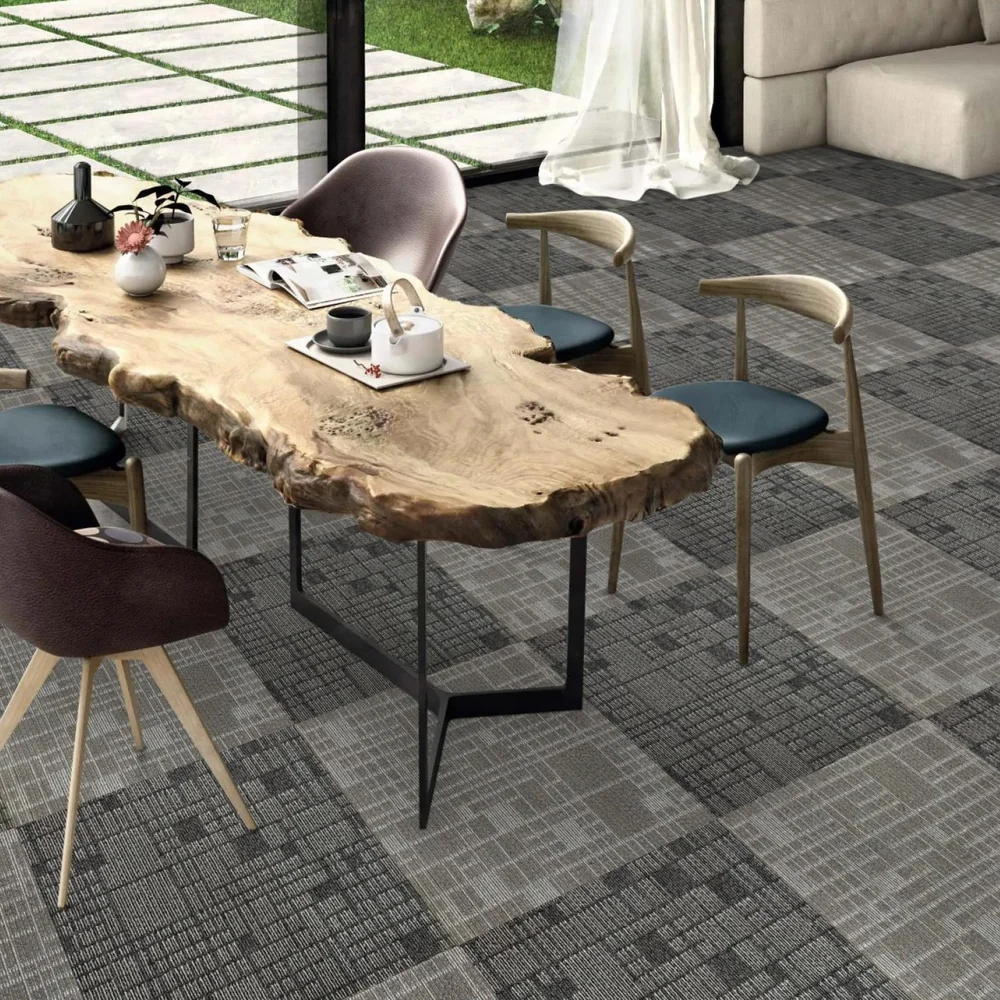
Patterned and checkerboard floors hide a replaced tile well when the direction is matched.
Can you replace carpet tiles laid with permanent glue?
Yes, but it takes more effort. A tile stuck with a permanent adhesive has to be cut or scraped out, and the hardened glue ground or scraped off the floor so the new tile does not sit proud. That is why releasable tackifiers are the usual choice for carpet tiles: they hold the floor in place but keep every tile removable. How tiles are laid originally is covered in how to install carpet tiles, and backings are explained in carpet tile backing explained.
When is it time to replace more than one tile?
When the damage follows a route rather than a spill. A line of flattened, dull tiles from the entrance to the lifts is wear, not an accident, and cleaning will not bring it back. Replace those tiles together, and consider a heavier construction or nylon yarn on that route. How long carpet tiles last, and what shortens their life, is in how long carpet tiles last, and everyday cleaning is in how to clean carpet tiles.
What to send us
- the collection and colour of your existing tiles, if known;
- a photograph of the damaged area and a label from a spare box;
- how many tiles need replacing;
- where the floor is and how it is used.
Our team will help you match the tile and supply replacements. The range is shown under GAIA carpet tiles, including GAIA Gridwork.
Carpet tile replacement questions
Can I replace a carpet tile myself?
Yes. On tiles laid with a releasable tackifier, it needs only a putty knife, a vacuum and a matching spare.
What if I have no spare carpet tiles?
Take a tile from an area hidden under furniture and use it as the replacement, then fill the hidden spot with the nearest available match.
Do I need new adhesive for a replacement tile?
Only if the old tackifier has lost its grip or was scraped away. Clean off loose residue and apply a thin coat of the recommended tackifier.
A repair, not a refit
Replace damaged carpet tiles
Send GAIA by Sanson Floorings a photograph of your floor, and we will help you match and replace the damaged tiles.