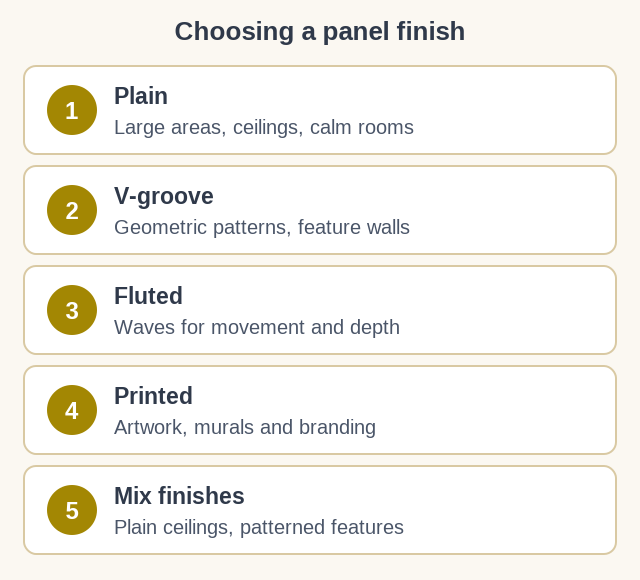
PET acoustic panels come in four main finishes: plain colour, V-groove, fluted and printed. Plain panels are the simplest and calmest, V-grooves add geometric pattern, fluted panels add flowing waves and depth, and printed panels carry any image or pattern. GAIA by Sanson Floorings makes all four from recycled PET.
Acoustic panels used to be chosen for how they sounded and then hidden. Now they are often the feature wall of a reception, the backdrop of a café or the artwork in a meeting room, and the finish matters as much as the performance. The choice of finish changes how a panel looks under light, how it ages, how easily it cleans and, to a degree, how it behaves acoustically. This article explains each finish and where it works best.
Acoustic panel finishes at a glance
- Plain: a flat, felt-like colour; calm and easy to combine.
- V-groove: V-shaped grooves carved into the surface in geometric patterns.
- Fluted: wave profiles formed into the panel for movement and depth.
- Printed: images, patterns or custom artwork printed on the face.
- All four: made from the same recycled PET acoustic material.
What are the main finishes for acoustic panels?
Plain, V-groove, fluted and printed. A plain panel shows the soft, felt-like surface of the PET in a single colour, and is the most flexible choice for large areas and ceilings. A V-groove panel has grooves cut into its face, which create lines, grids, diagonals, curves or other geometric patterns that catch the light. A fluted panel is heated and formed into flowing wave profiles that give the wall rhythm and depth. A printed panel carries a design on its face, from a subtle texture to a full mural. GAIA makes its panels in 9, 12, 18 and 24 mm thicknesses, from standard sheets of 1,220 × 2,440 mm.
When should you choose V-groove panels?
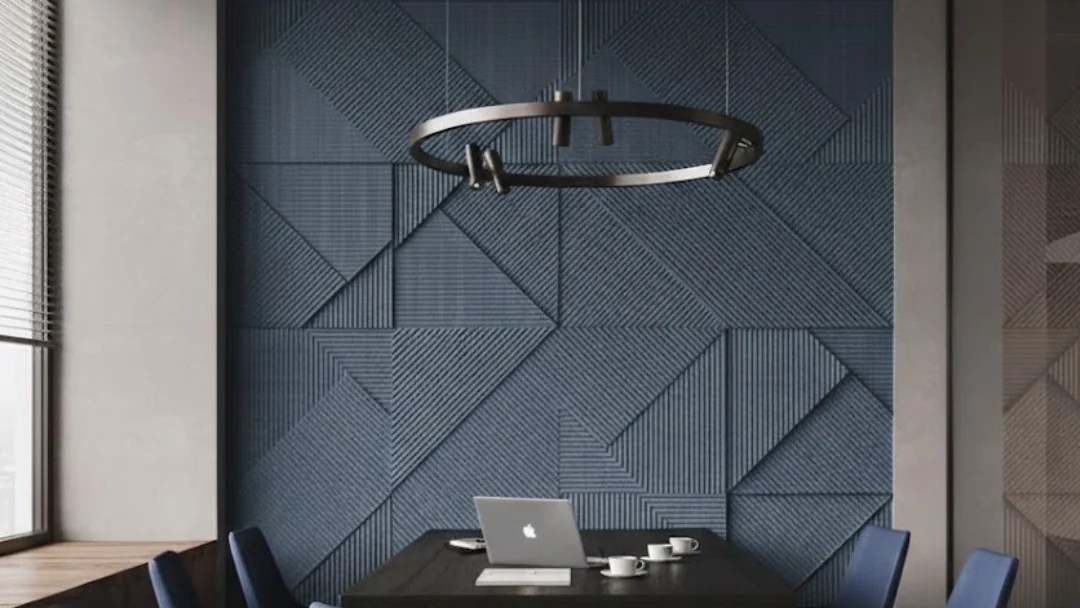
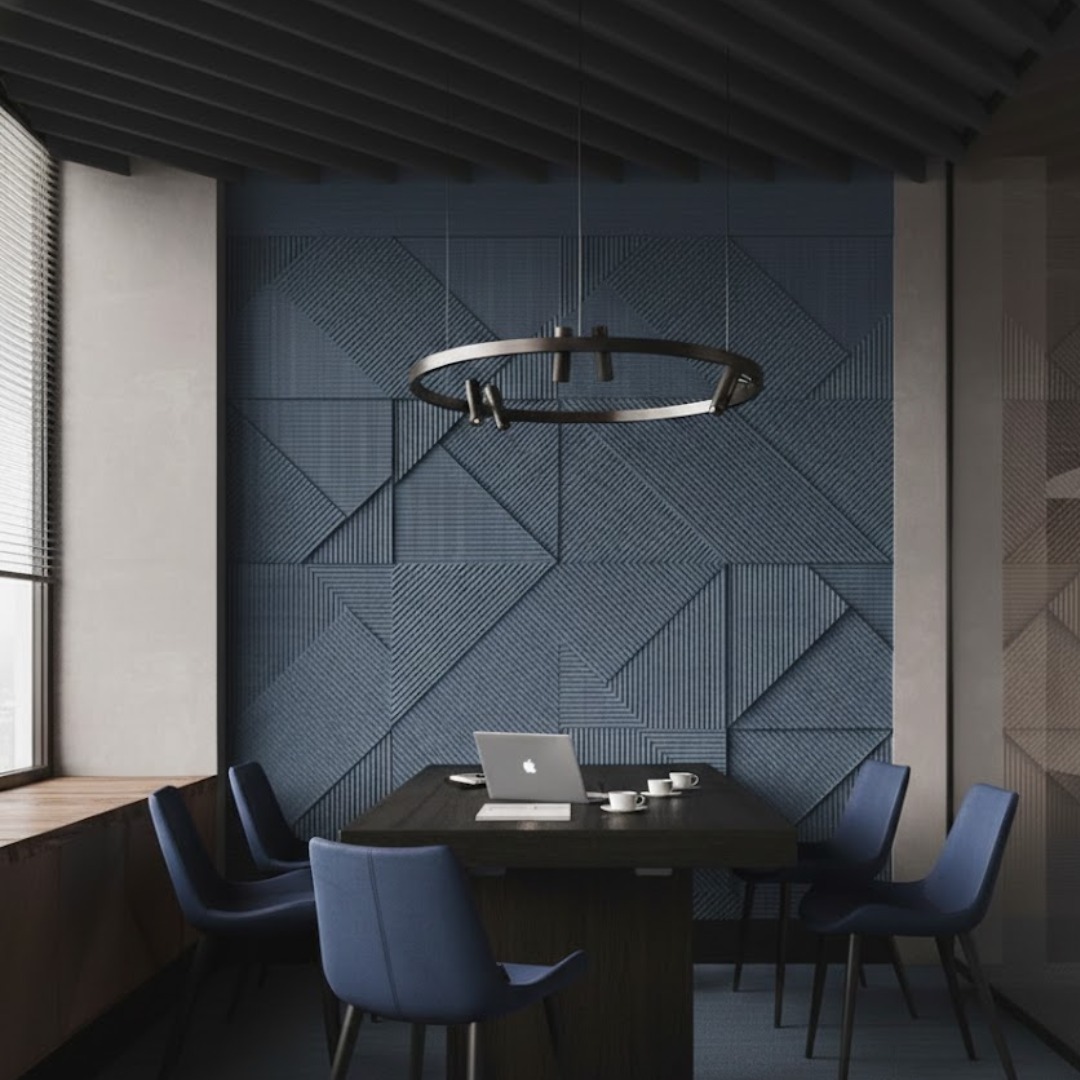
When you want pattern without colour. GAIA grooved panels have V-shaped carved grooves inspired by geometry, which turn a flat panel into a textured surface that changes as light moves across it. Straight vertical grooves give a linear, timber-like rhythm; grids, diagonals and circles create stronger feature walls. Because the pattern comes from the surface itself, a single calm colour can still look rich. Grooved panels suit receptions, boardrooms, restaurants and residential feature walls. If a slatted look is the goal, the comparison in PET vs wooden acoustic panels may help.
What are fluted acoustic panels?
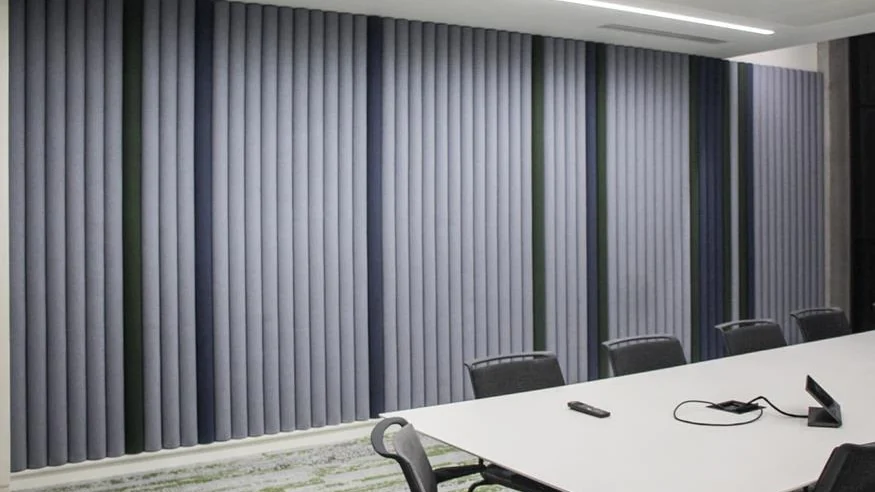
Panels formed into flowing wave patterns by heating and shaping the PET. The waves bring movement and depth to a wall, and the varied surface spreads reflected sound in different directions rather than sending it straight back. GAIA fluted panels are made from recycled polyester and are designed for offices, home theatres, hospitality venues and auditoriums. They work well as a single strong feature, behind a sofa or a reception desk, where their shadows are seen to best effect.
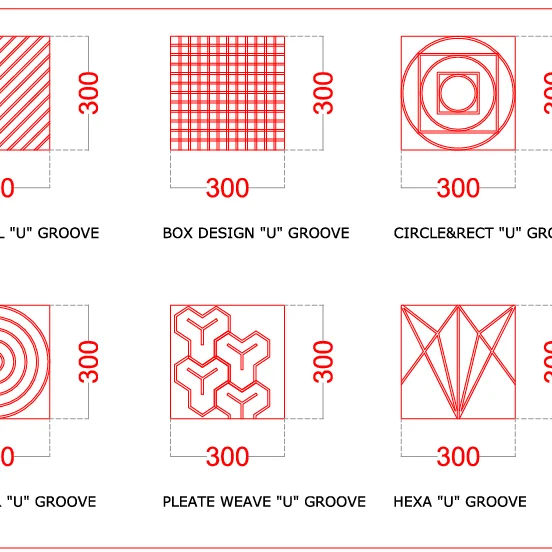
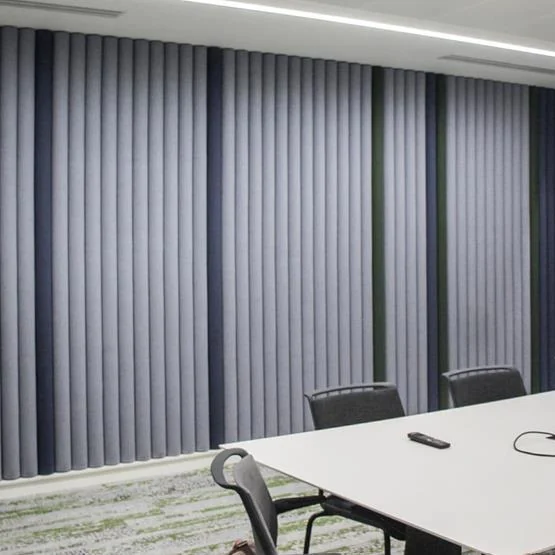

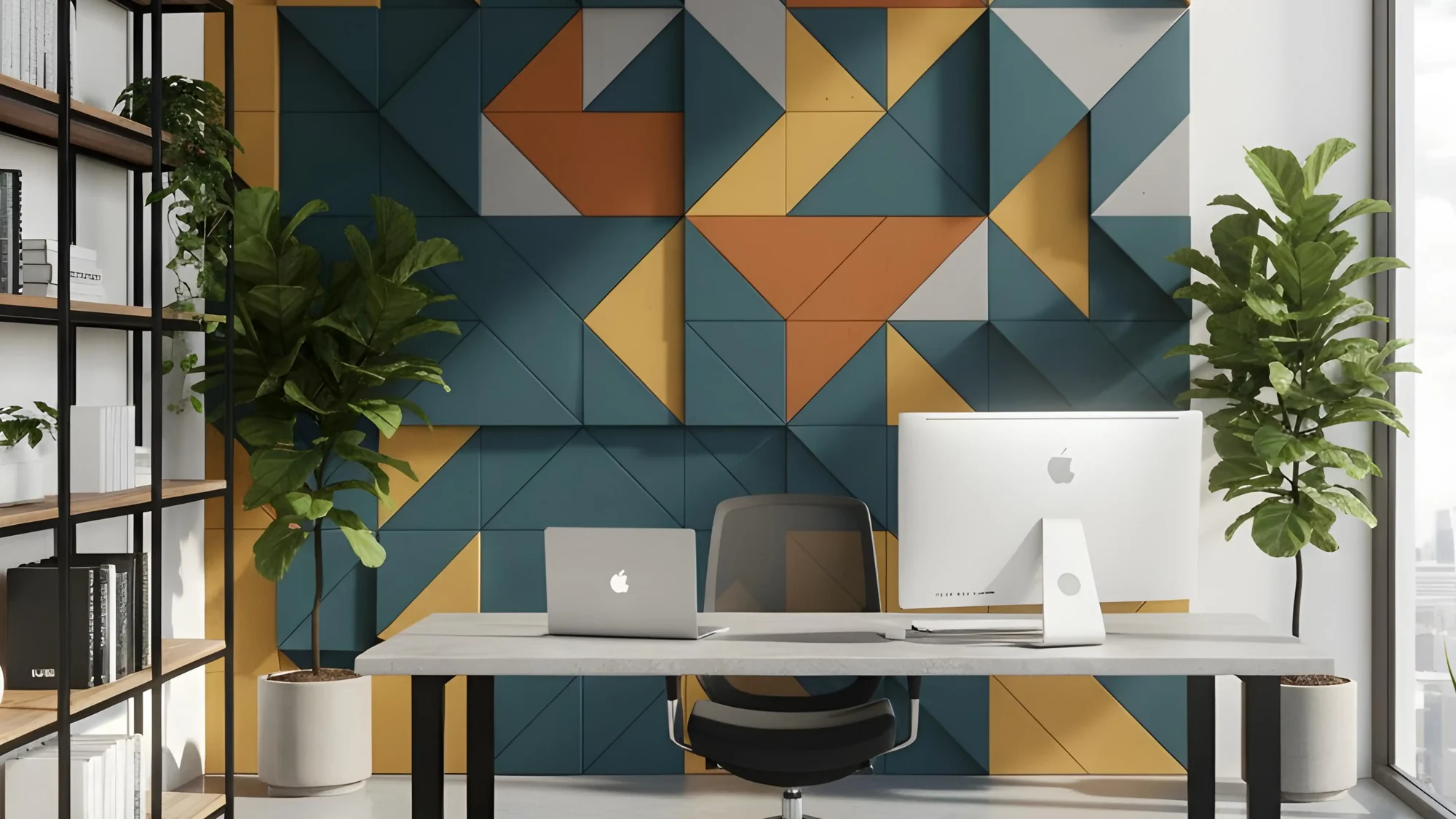
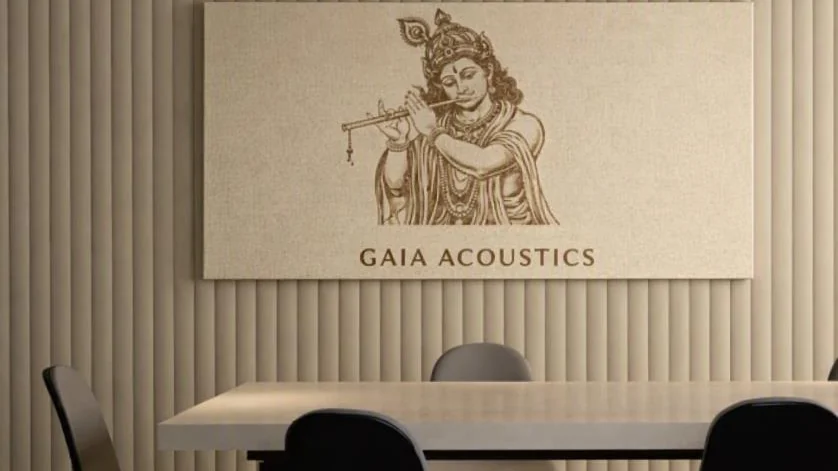
V-groove patterns, vertical panels in a boardroom and a printed floral design.
When do printed acoustic panels make sense?
When the wall should carry an image, a pattern or a brand. GAIA printed panels are available in 9, 12, 18 and 24 mm, with patterns that can be customised to the design, so a panel can carry a mural in a children's room, a logo in a reception or artwork in a restaurant while absorbing sound. Lighting matters with printed panels, as colour and detail depend on it; see printed acoustic panels and feature wall lighting.
Does the finish change how much sound a panel absorbs?
The thickness and the mounting matter more than the finish. Fixed flat against a wall, a GAIA PET panel achieves NRC 0.3; installed with an air gap, NRC 0.85 to 0.9. Grooves and flutes add surface and shape that can help scatter sound, but no finish replaces an air gap or a thicker panel when strong absorption is needed. Where a specification sets a target, ask for test results for the panel as it will be mounted: absorption is tested under ASTM C423 and is often expressed as an absorption class under ISO 11654, explained on the Arup absorption class reference. Thickness is compared in which PET acoustic panel thickness to choose.
Which finish is easiest to keep clean?
Plain and printed panels are the simplest: a gentle vacuum with a soft brush removes dust. Grooves and flutes gather dust in their recesses and take a little longer, so run the brush along each groove. Avoid deep grooves in kitchens or anywhere greasy fumes can settle. Care is covered in how to clean acoustic panels.
Finish checklist
- Decide whether the wall is a feature or a background.
- Choose the thickness and mounting for the absorption you need.
- Pick the finish and colour under the room's own lighting.
- Combine finishes to mark zones: plain for ceilings, patterned for features.
- Check how the finish will be cleaned in that space.
All finishes are shown under GAIA acoustic PET panels, and placement is covered in acoustic panels for walls.
What to send us
- photographs and dimensions of the walls;
- the style or mood you want;
- any artwork, logo or pattern for printing;
- how the room is used and lit.
Our team will send finish and colour options for your space.
Acoustic panel finish questions
Can acoustic panels be printed with my own design?
Yes. GAIA printed acoustic panels can carry custom patterns and artwork.
Are fluted panels better for acoustics than flat panels?
The wave profile helps spread reflected sound, but absorption depends mainly on thickness and mounting.
Can different finishes be combined in one room?
Yes. A common approach is plain panels on the ceiling and a grooved, fluted or printed feature wall.
Sound control that looks the part
Choose your acoustic panel finish
Send GAIA by Sanson Floorings photographs of your space and the look you want, and we will suggest finishes and colours.