Choose PET acoustic panels when absorption, colour choice, light weight and moisture resistance matter most. Choose wooden slat panels when a timber look is the priority and the room is dry and stable. GAIA by Sanson Floorings makes PET panels reaching NRC 0.85 to 0.9 with an air gap.
Wooden slat walls have become one of the most popular looks in Indian offices, restaurants and living rooms, and many are sold as acoustic panels. PET panels, made from recycled polyester fibre, are the other common choice, available in plain colours, grooved patterns, flutes and prints. Both can make a room sound better, but they work differently, suit different conditions and cost different amounts to install and maintain. This article compares them on the points that decide a real project.
PET vs wooden acoustic panels at a glance
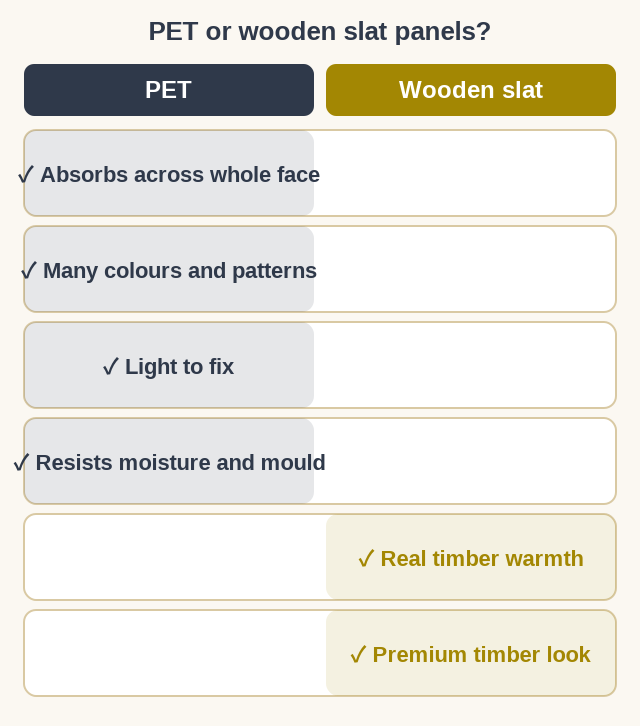
- How they absorb: PET absorbs across its whole face; slat panels absorb mainly through the gaps into a felt backing.
- Look: PET offers colours, grooves, flutes and prints; slats offer real or veneered timber.
- Weight: PET is light; timber slat panels are heavier to fix.
- Humidity: PET resists moisture, insects and mould; timber needs a stable, dry room.
- Both: perform best with an air gap behind them.
How do PET and wooden slat panels absorb sound?
In different ways. A PET panel is a porous mat of polyester fibres. Sound enters the surface and loses energy as it moves through the fibres, so the whole face of the panel does useful work. A wooden slat panel is made of hard timber strips mounted on an absorbent backing, usually felt. The timber itself reflects sound; the absorption happens where sound passes through the gaps between slats into the backing and the cavity behind. That makes the ratio of gap to slat, and the backing, decisive for how much a slat panel absorbs. Absorption is measured in the same way for both, in a reverberation room under ASTM C423, which is where NRC values come from. NRC is explained in what NRC means.
Which absorbs more sound?
It depends on the products being compared, so compare tested NRC values, not appearances. A slat panel with wide slats and narrow gaps leaves much of its face reflective, while a PET panel absorbs across its full surface. GAIA's PET panels achieve NRC 0.3 when fixed flat against a wall and NRC 0.85 to 0.9 when installed with an air gap behind them. The air gap matters for slat panels too, which are usually mounted on battens. Ratings can also be expressed as an absorption class from A to E under ISO 11654, explained on the Arup absorption class reference; ask for test reports in either form. Why the gap makes such a difference is in acoustic panels and the air gap.
Which suits Indian conditions better?
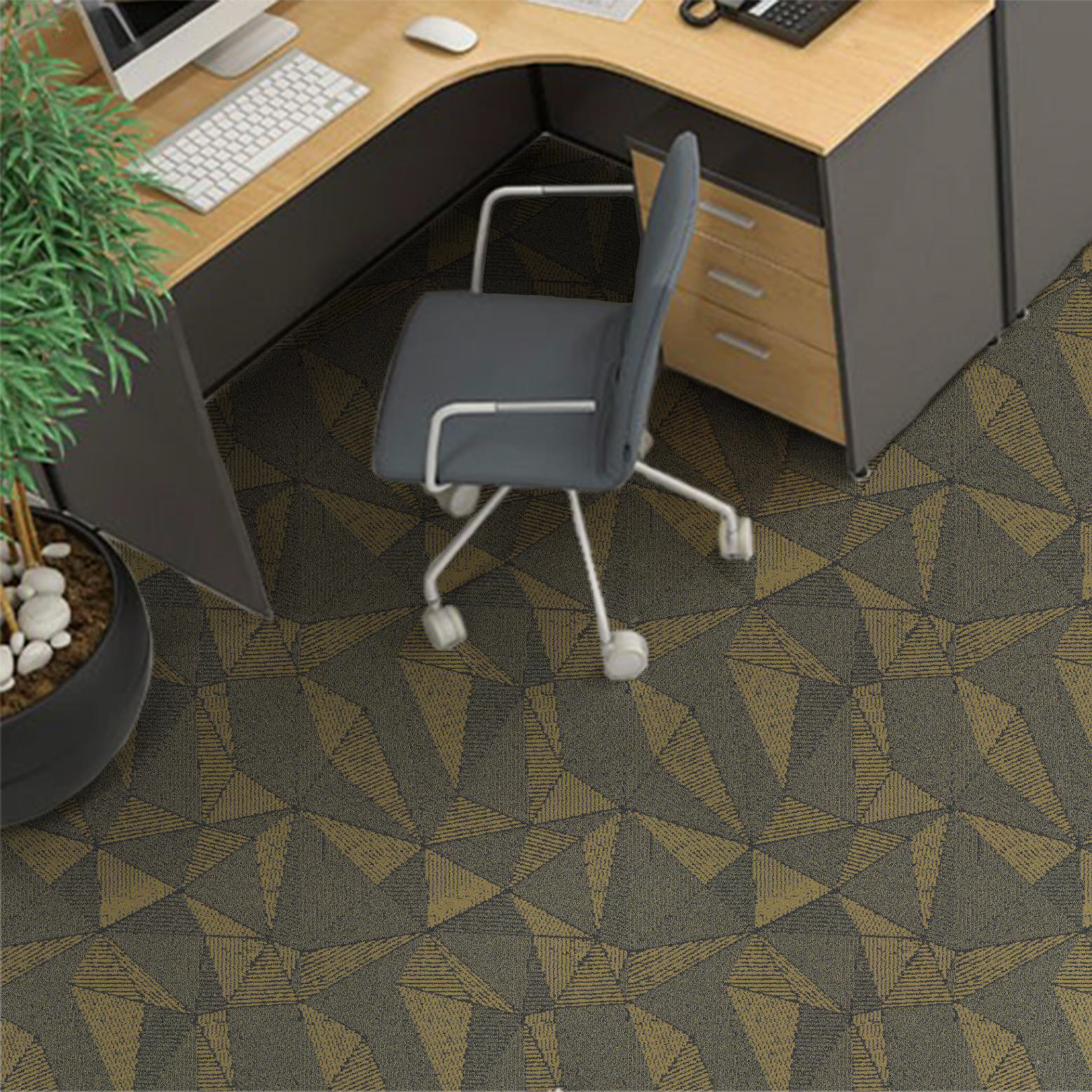
PET has the edge where humidity changes. Timber moves with moisture, and a slat wall in a coastal city, a room cooled only in office hours or a monsoon-season basement can warp, gap or grow mould on its felt backing if it is not well specified and sealed. GAIA's PET panels are made from recycled polyester fibres bonded with heat rather than chemicals, which makes them resistant to moisture, insects and mould. They are also light, so they fix easily to walls and ceilings and suit retrofits. Timber is at its best in dry, stable, air-conditioned interiors, where its warmth is the point of the design.
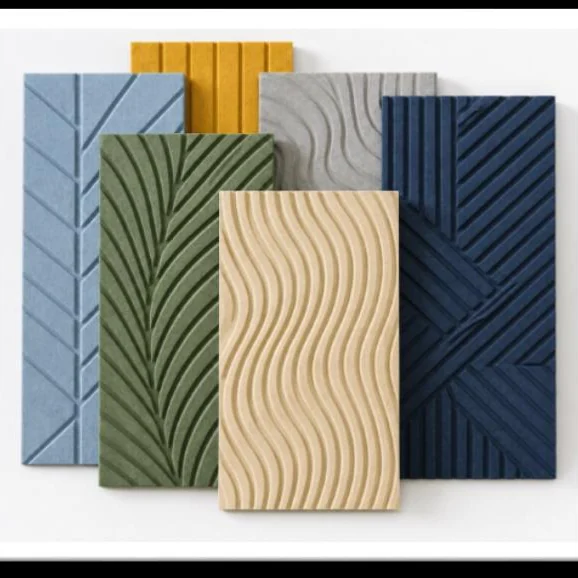


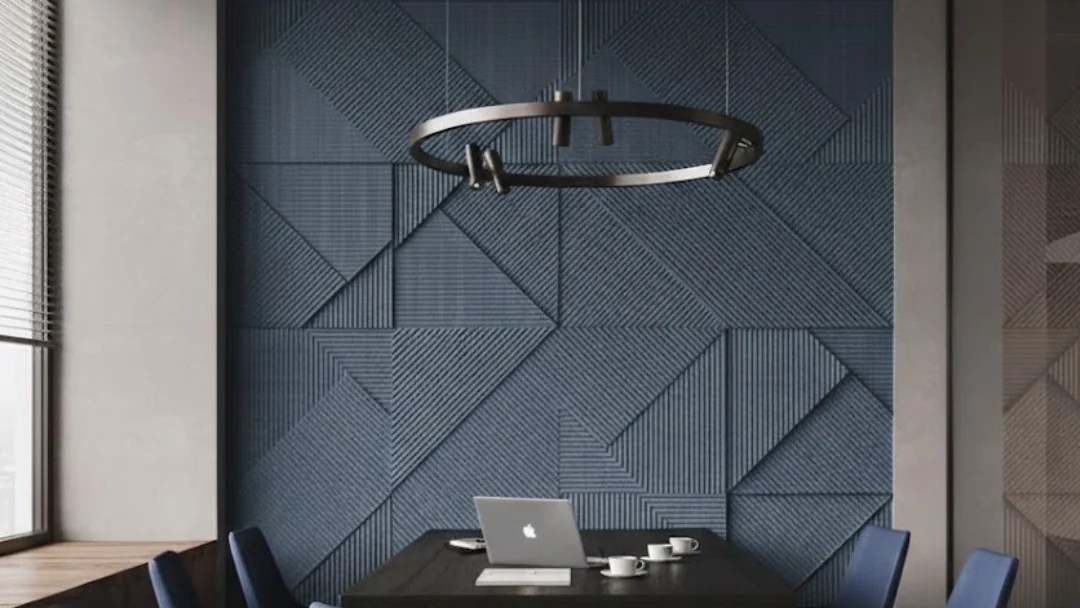
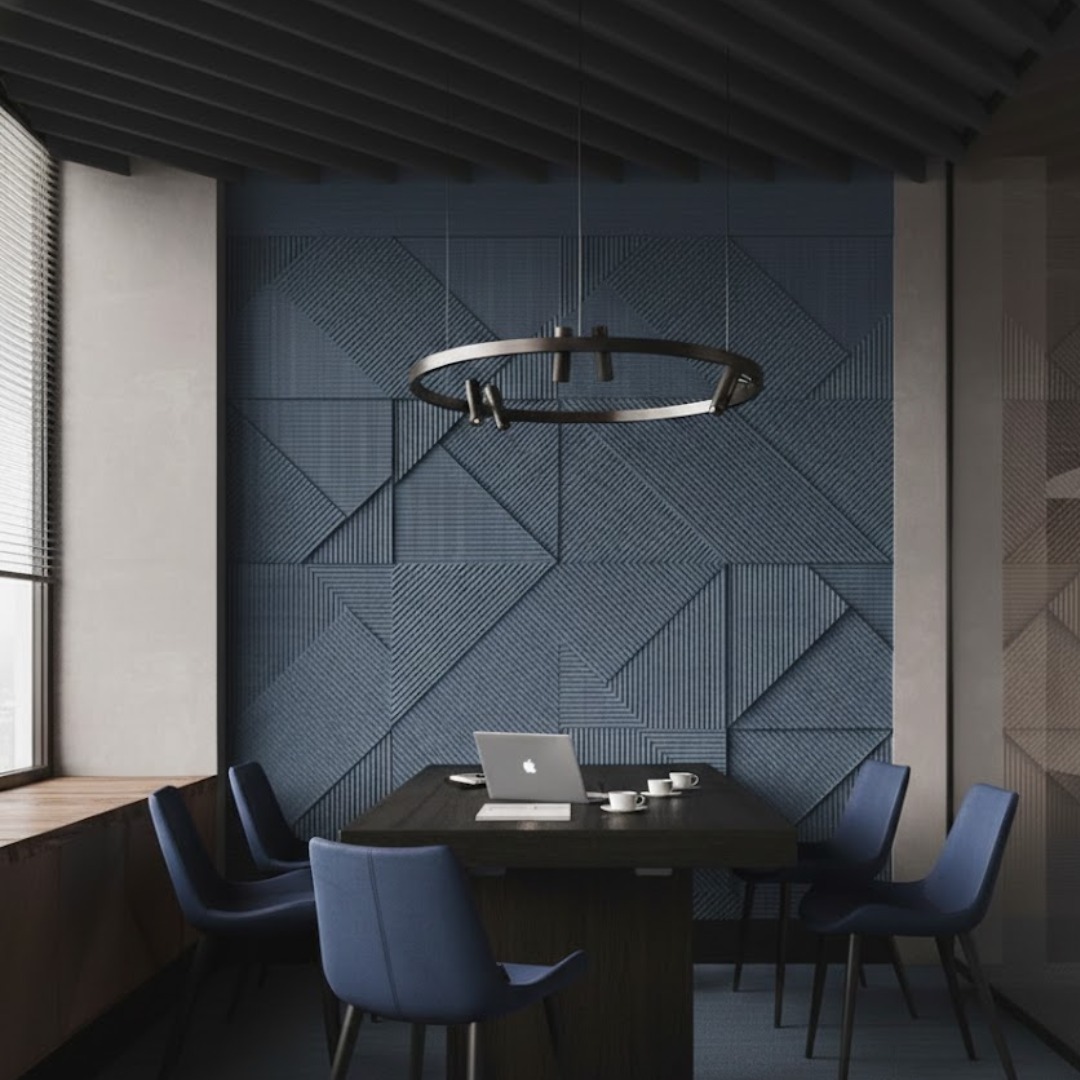
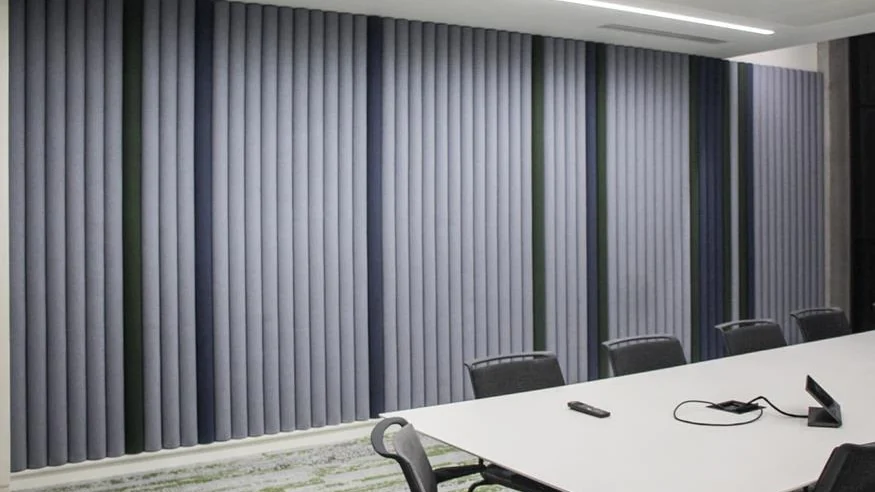
PET panels can be fluted, grooved or printed, giving a crafted look without timber.
Can PET panels look like a slat wall?
They can give a similar rhythm. GAIA PET panels come with V-shaped carved grooves in many patterns, and fluted panels formed with flowing wave profiles. A pattern of straight vertical grooves in a warm colour gives the linear look many people want from slats, while absorbing across the whole face. Printed panels add images or patterns, including custom designs. The finishes are compared in acoustic panel finishes.
Which is easier to install and maintain?
PET, generally. The panels are light and can be cut on site, fixed directly with adhesive or mounted on battens with an air gap. GAIA's standard sheets measure 1,220 × 2,440 mm, in 9, 12, 18 and 24 mm thicknesses. Slat panels are heavier and need secure fixings and careful alignment. Both gather dust and need occasional gentle cleaning. Installation is set out in how to install acoustic panels.
PET or timber checklist
- Decide whether absorption or the timber look matters more.
- Check how humid the room gets through the year.
- Compare tested NRC values at the same mounting.
- Check the wall or ceiling can carry the panel weight.
- Plan an air gap if you need strong absorption.
See the range under GAIA acoustic PET panels, and the wider guide in PET acoustic panels in India.
What to send us
- the room size and how it is used;
- the wall and ceiling areas available;
- photographs and the look you want;
- whether the room is air-conditioned all the time.
Our team will recommend panel thickness, finish and mounting.
PET vs wooden panels questions
Are wooden slat panels good for acoustics?
They can be, when the gaps between slats and the felt backing are well designed and the panel is mounted over an air gap. Compare tested NRC values before buying.
Are PET acoustic panels eco-friendly?
GAIA PET panels are made from recycled polyester fibres and are GreenPro certified in 9, 12, 18 and 24 mm thicknesses.
Can PET and wooden panels be used together?
Yes. A timber feature wall can be paired with PET panels on other walls and the ceiling to reach the absorption the room needs.
Sound control with a finish you like
Compare acoustic panels for your room
Tell GAIA by Sanson Floorings about your room and the look you want, and we will recommend the panel, finish and mounting.