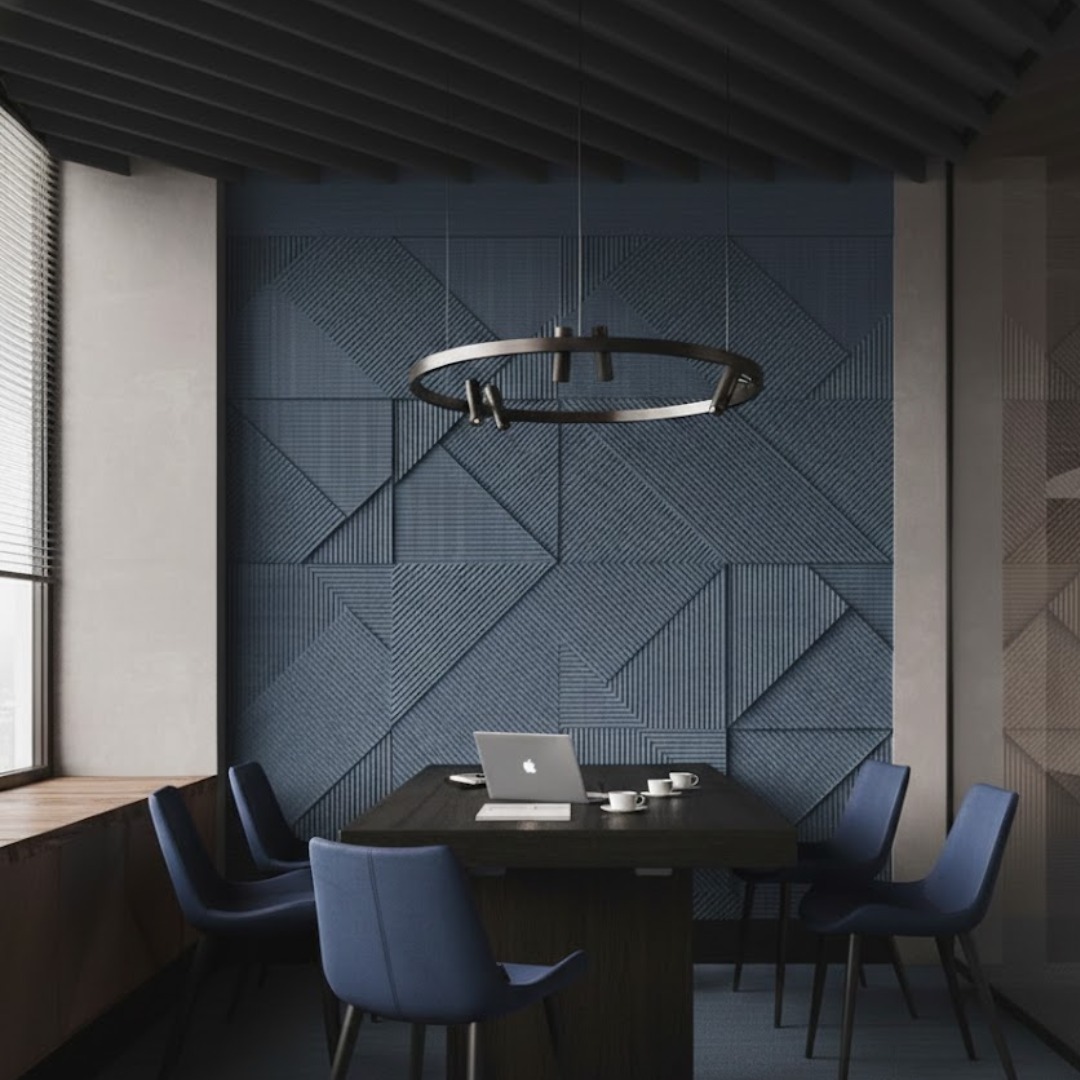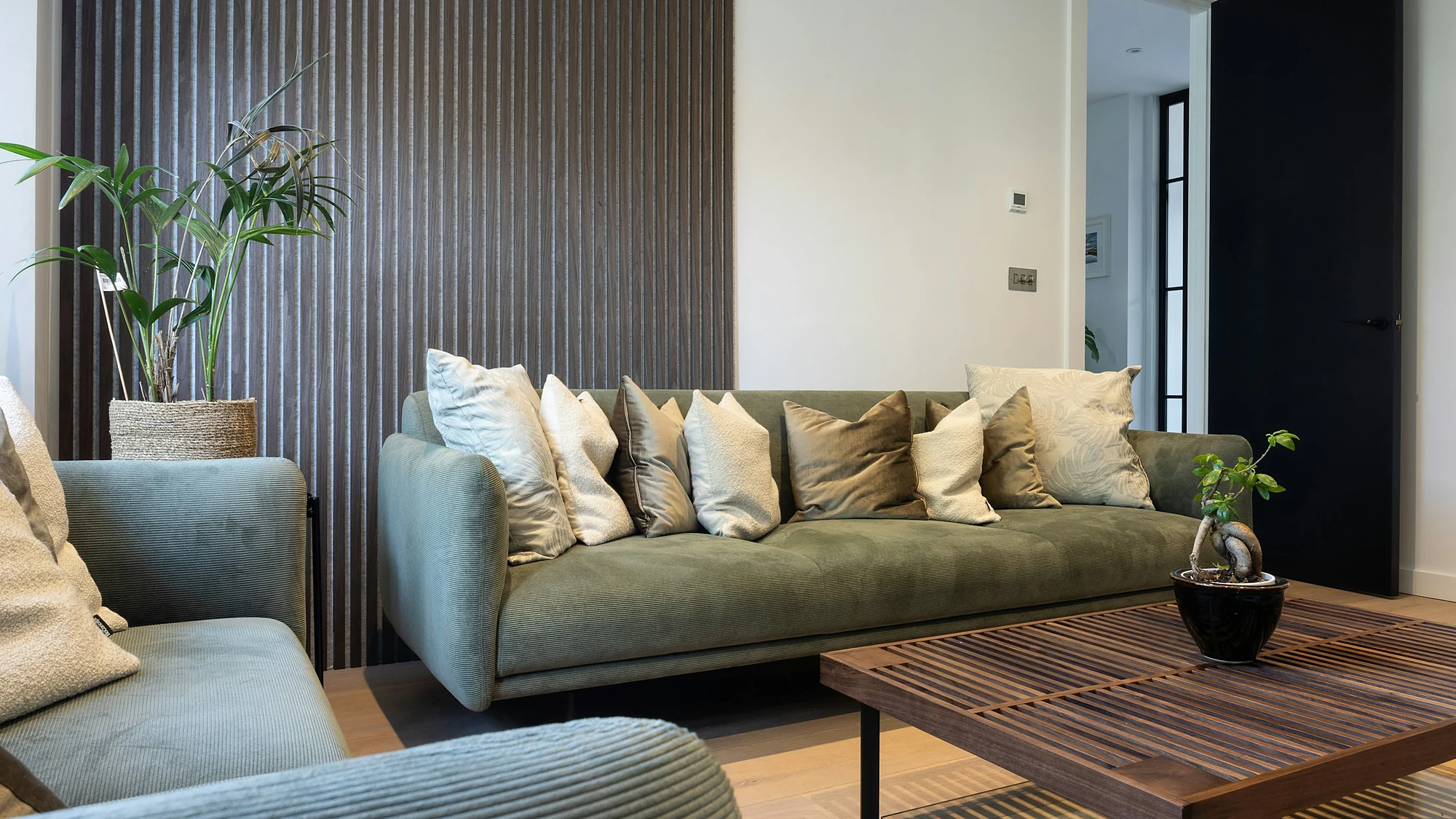
Acoustic panels make a home quieter by absorbing the echo that hard floors, glass and bare walls create. They help most in high-ceilinged living rooms, home offices used for calls, bedrooms and playrooms. GAIA by Sanson Floorings makes plain, grooved and printed PET panels that look like a finished wall.
Indian homes have become harder and brighter: vitrified tile or marble floors, large windows, minimal furniture and open kitchens joined to living rooms. They look beautiful and sound like an empty hall. Voices carry from the kitchen to the bedrooms, the television has to be turned up to be understood, and video calls from the spare room sound as if they come from a bathroom. Acoustic panels fix this without construction, and they can look like part of the design rather than an afterthought.
Acoustic panels at home at a glance
- Living room: panels on the TV wall or the long wall, plus a large rug.
- Home office: panel the screen wall and the one opposite it.
- Bedroom: a panelled headboard wall softens the room.
- Playroom: panels at child height and a soft floor calm the noise.
- Outside noise: traffic and neighbours need better windows and seals, not panels.
Do acoustic panels work in a home?
Yes, for noise made inside the room. Panels absorb reflected sound, so voices, television and music stop bouncing off hard surfaces and the room feels calmer. They do not keep out street noise or stop sound travelling into the neighbouring room; that needs heavier construction, sealed doors and better glazing. If you are unsure which problem you have, this comparison of soundproofing and absorption sorts it out in a few questions.
Which living room walls need panels?
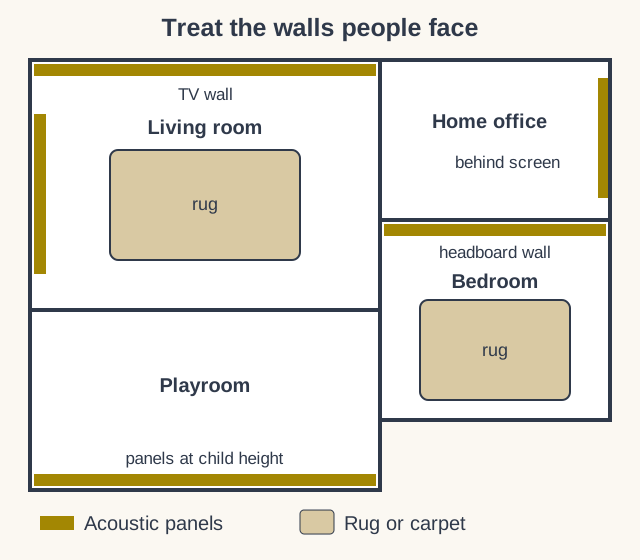
On the wall you face and the wall facing it. The TV wall is the natural place for a panelled feature, because it also hides cables and frames the screen; the long wall behind the sofa catches the reflections that make dialogue hard to follow. In double-height living rooms, some absorption overhead helps more than anything on the walls. A large rug on a tiled floor does a surprising amount of the work too. If the living room doubles as a cinema, see home theatre acoustics.
How do you make a home office sound better on calls?
Panel two walls: the one in front of you and the one at your back. The microphone picks up your voice reflected off the wall you face, and the camera shows the wall behind you, so one panelled wall of each improves both sound and picture. A rug under the desk and curtains at the window finish the job. A printed or grooved panel behind you makes a better background than a bare wall or a bookcase.
Can acoustic panels help you sleep?
They help a bedroom feel quieter, but they cannot block outside noise. The WHO recommends less than 30 dB(A) in bedrooms at night for good-quality sleep; reaching that in a city depends mainly on windows, door seals and where the bed sits. Inside the room, a panelled headboard wall, curtains and a rug soften echo and sounds from within the home. Keep the room's construction and the panels in mind as two separate jobs.


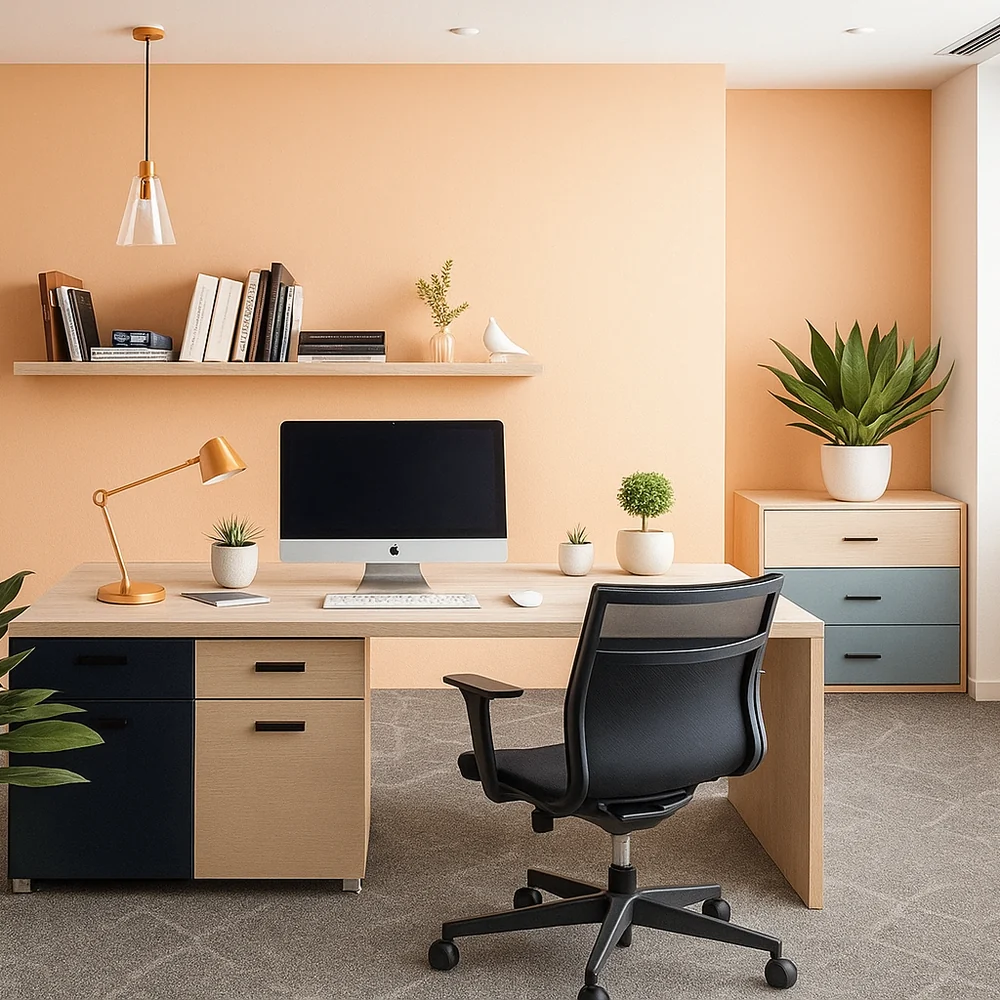
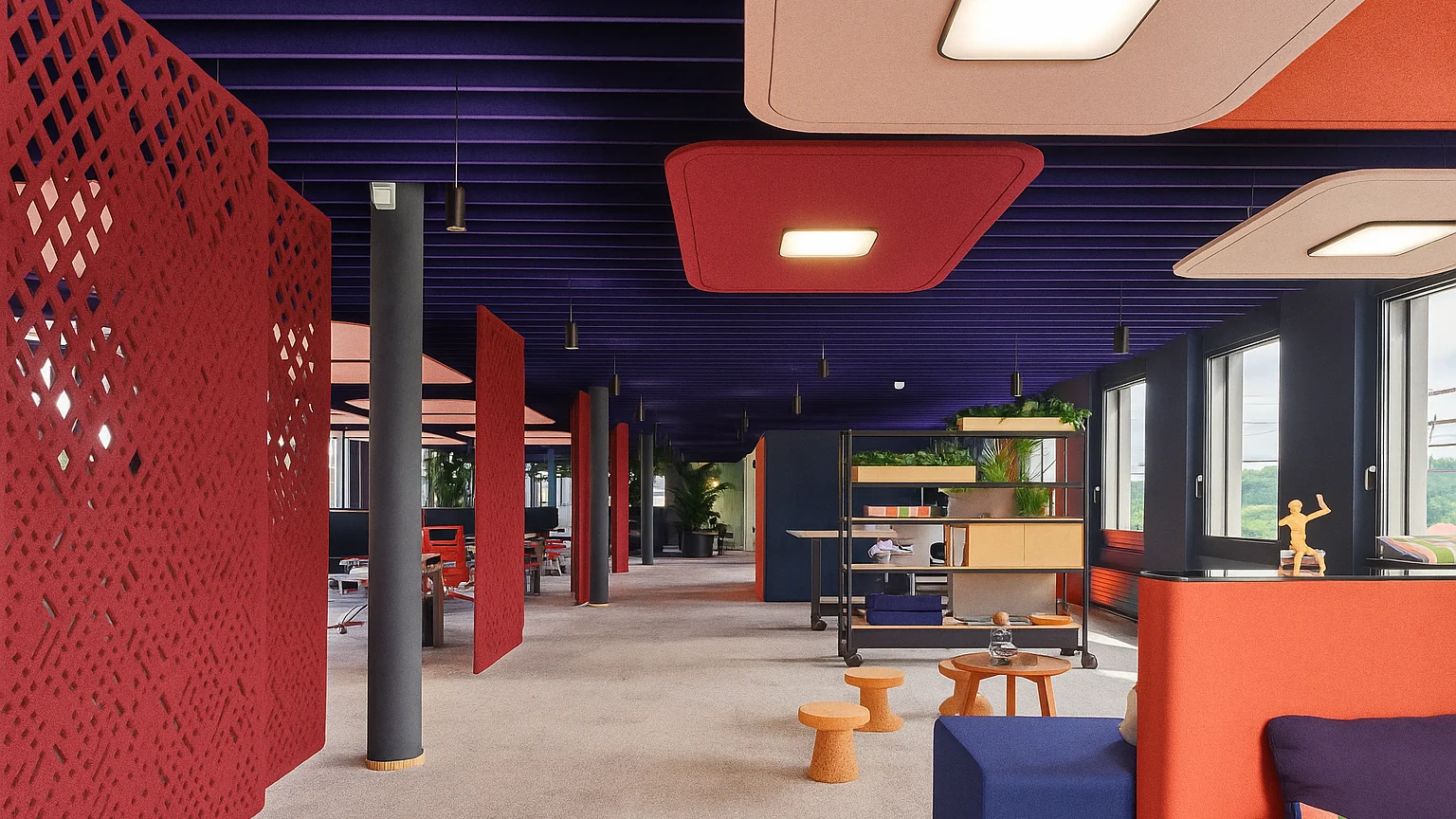
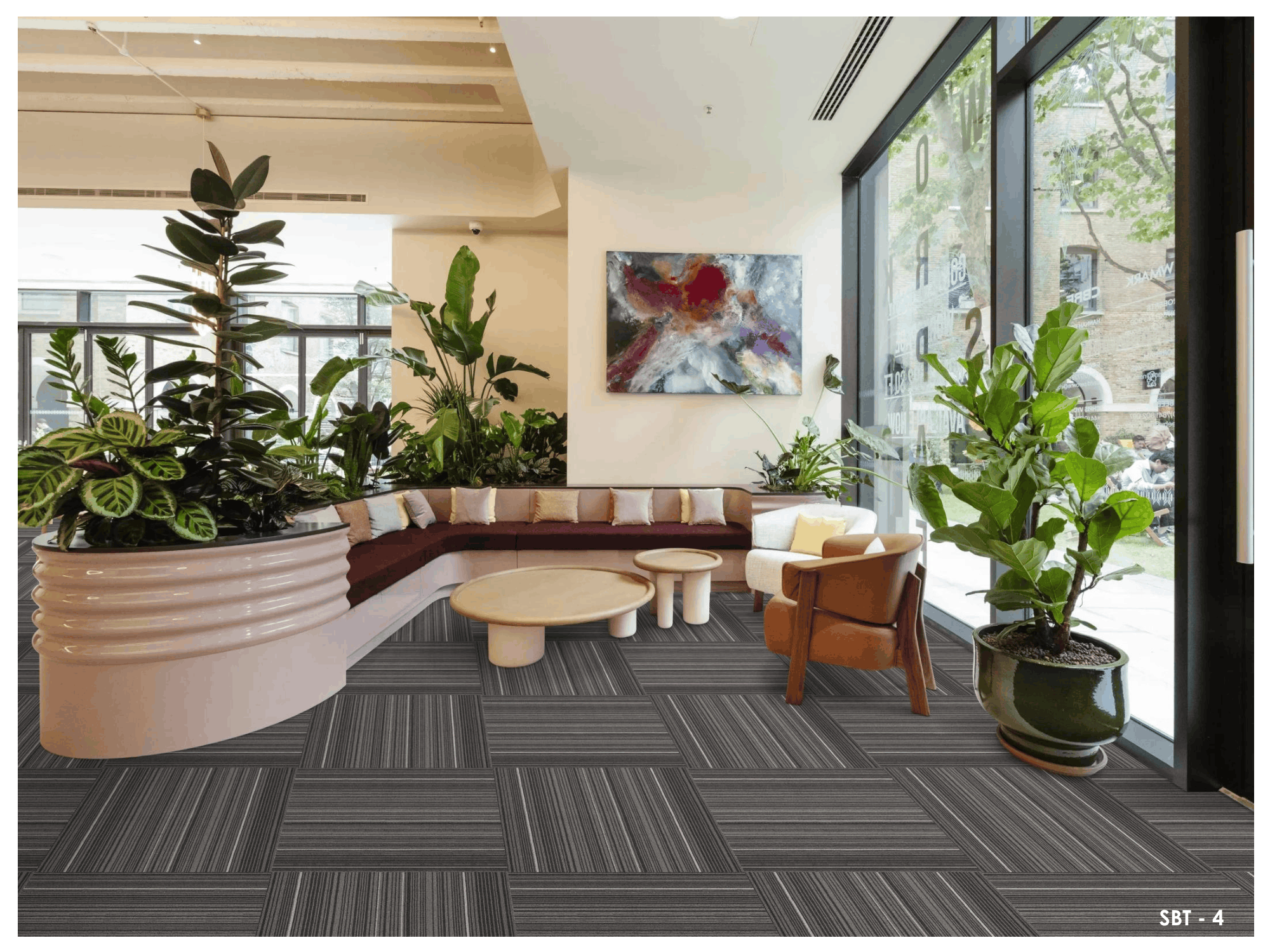
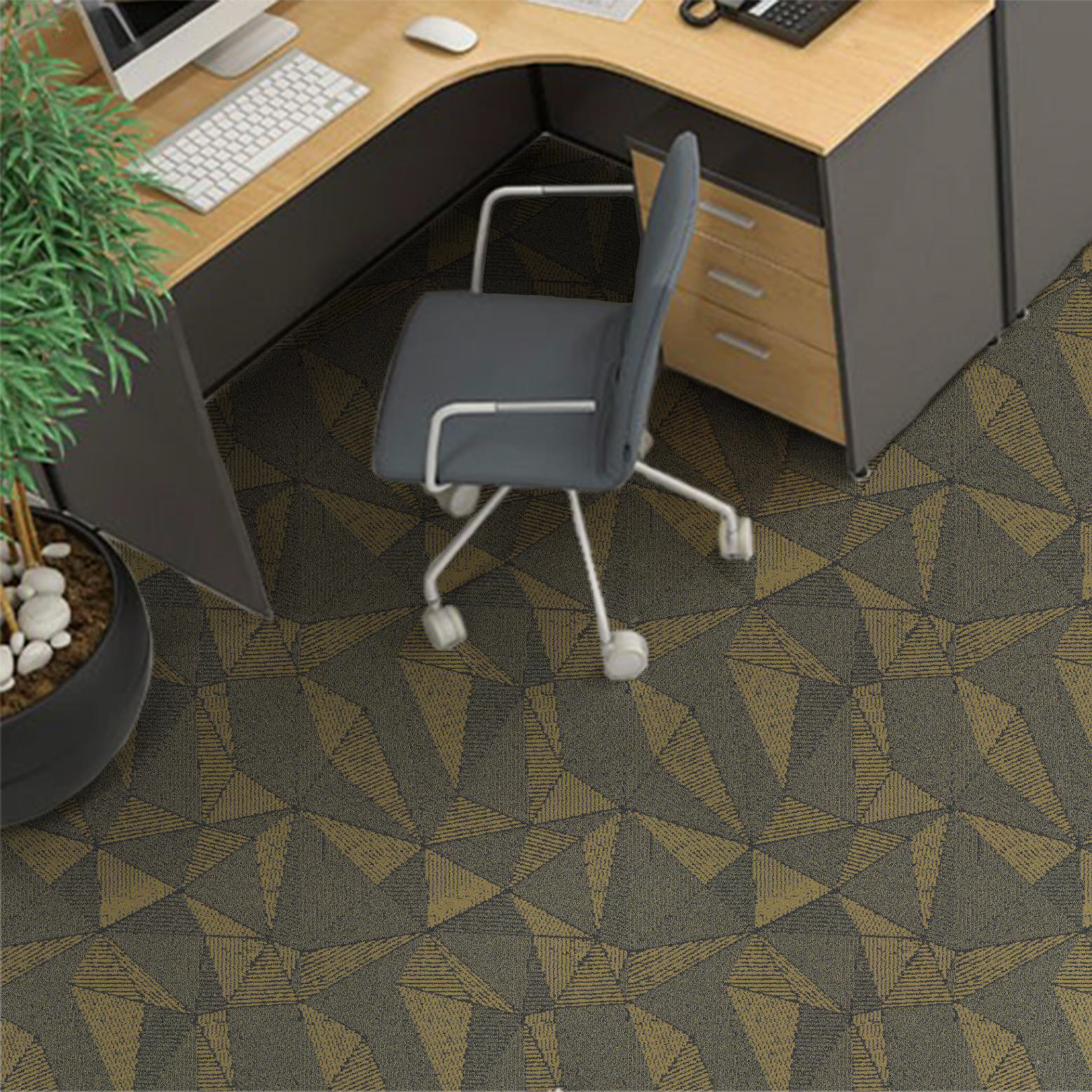
Printed panels for a living room, a decorative panel for a bedroom wall and soft flooring for a home office.
Home acoustic panel ideas
- A panelled TV wall in a deep colour, with the screen and storage built in.
- A headboard wall in a soft colour running the width of the bed.
- Printed artwork that absorbs sound: a mural, a repeating motif or a family photograph.
- Grooved panels along a long corridor or staircase, where footsteps and voices echo.
- Colourful shapes at child height in a playroom.
- A quiet reading corner with panels on two walls and a deep armchair.
What kind of panel suits a home?
Panels that look like a finish, last for years and are safe to live with. GAIA PET panels use recycled polyester fused with heat instead of chemical binders, are made at GAIA's plant in Kothur, near Hyderabad, hold a GreenPro certificate for each thickness (GPSFP576001 to GPSFP576004), and are offered in solid colours, carved grooves or prints, from 9 to 24 mm thick. On an air gap they reach NRC 0.85–0.90, which suits rooms that echo badly; fixed flat at NRC 0.3 they suit rooms needing gentler treatment. See all the options in acoustic panels for walls or browse the GAIA acoustic range.
Do acoustic panels suit Indian homes?
Yes, with a few local points in mind. Indian homes are often finished in vitrified tile, marble or stone, with plastered walls and large windows, so they echo more than carpeted homes elsewhere, and a modest area of panels makes a noticeable difference. PET panels resist moisture, insects and mould, which matters through the monsoon and in coastal cities, and they hold up in dusty months with a light vacuum using a soft brush. Outside noise is a separate problem: India's pollution control board publishes noise guidelines for residential areas, but panels inside a room do not stop traffic noise coming in; sealed windows and doors do. For thickness, 9 or 12 mm suits most living rooms and bedrooms, and thicker boards suit media rooms, as explained in which panel thickness to choose.
Does carpet help at home?
Yes, especially on tiles and marble. A soft floor stops the clatter of footsteps, toys and chairs and takes away one large reflecting surface. Carpet tiles suit bedrooms, studies and playrooms because one spoiled tile comes out without disturbing the rest; our article on carpet tiles for the home covers where they work best.
What to send us
- which rooms feel echoey, and when it bothers you most;
- room sizes and ceiling heights;
- photographs of the walls you would like to treat;
- colours, textures or artwork you have in mind.
Our team will suggest panels, positions and finishes for each room.
Home acoustic panel questions
Are acoustic panels safe in a child's room?
PET panels are a common choice in homes and schools. Fix them securely, keep them away from heaters and lamps, and choose a fixing that small hands cannot pull loose.
Will acoustic panels stop noise from my neighbours?
Not on their own. Noise coming through a shared wall or floor needs construction work: heavier linings, sealed gaps and, for floors, a soft finish above.
How many acoustic panels does a living room need?
It depends on the room's size, ceiling height and finishes. Rules of thumb such as covering a quarter of the walls are only a starting point; our panel quantity method gives a proper estimate in a few steps.
Do acoustic panels need cleaning?
Very little. Vacuum them every few weeks with a soft brush attachment, especially in dusty months, and spot-clean marks with a damp cloth.
A calmer home
Plan acoustic panels for your home
Tell GAIA by Sanson Floorings which rooms echo and share a few photographs, and we will suggest panels and finishes that suit your home.